





 Portuguese
  English
  Spanish
  5 min of reading
  12 comments


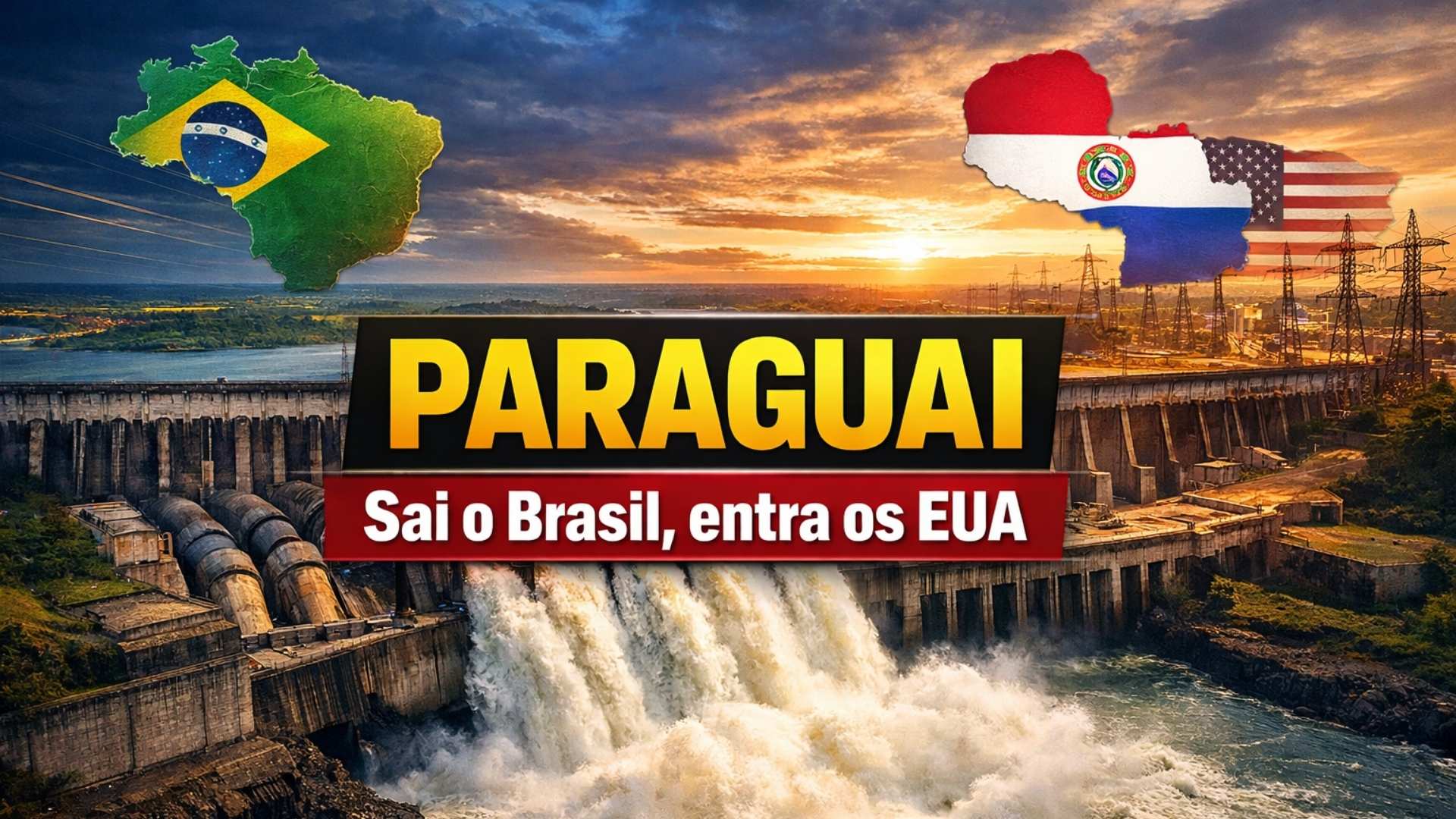


Negotiation Over Itaipu Energy Reignites International Dispute and Pressures Agreement Between Brazil and Paraguay
The possibility of Paraguay redirecting part of Itaipu’s excess energy to interests linked to the United States has returned to the debate following statements from U.S. Secretary of State Marco Rubio in May 2025, amid negotiations between Asunción and Brasília regarding the commercial and financial rules of the plant.
Itaipu has an installed capacity of 14 thousand megawatts and operates under a binational regime. Brazil and Paraguay are entitled to 50% of the energy generated.
Itaipu Energy at the Center of Brazil-Paraguay Relationship
The topic gained attention because the Itaipu Treaty stipulates that when one of the partners does not fully use its share, the excess must be ceded to the other country, within the conditions defined in the so-called Annex C.
-
He sold his share for R$ 4 thousand, saw the company become a giant worth R$ 19 trillion, and missed the opportunity of a lifetime.

-
Elon Musk’s Starship megafrocket puts $8 billion at risk, raises alarms in the market, and could affect technology, mining, and space internet startups in the coming years.

-
Airfare prices may rise with increasing fuel costs, and the government is considering urgent measures to avoid a direct impact on the wallets of Brazilians.
-
Chocolate prices soar nearly 15% and become a luxury item for Easter 2026, with increases surpassing inflation and changes in Brazilian consumption habits.


This annex deals with the financial base of the operation and the marketing rules.
It was scheduled for review after 50 years of validity, starting from 2023.
U.S. Statements on Itaipu Amplify International Repercussions
In a public hearing in the United States in May 2025, Rubio cited Paraguay as an example of a country with abundant energy and mentioned the discussion concerning the fate of Itaipu’s excess.
At the time, he stated that the U.S. should “be at the table” in partnerships with countries that have this electricity.
He also mentioned that “Paraguay was in a long-term agreement with Brazil” and that this agreement had expired while Paraguayans sought a solution for the available energy.

However, the statement does not automatically change the rules of the enterprise.
Itaipu is governed by an international treaty between the two countries.
Any significant change in the marketing format needs to go through bilateral negotiations.
It also depends on internal decisions by each government and the legal framework of the electricity sector.
Annex C Revision and Recent Diplomatic Impasse
Brazil and Paraguay reached a bilateral understanding in April 2024 as a basis for revising Annex C.
The expectation was to build a definitive agreement that reorganized costs and provided predictability for Itaipu’s energy tariff.
This process would have a direct impact on the electricity sector and Paraguay’s revenues.
The talks, however, suffered a new setback in 2025.
Paraguay suspended negotiations following allegations of espionage related to the topic.
In a joint statement released on November 17, 2025, Foreign Ministers Mauro Vieira and Rubén Ramírez Lezcano announced that the Paraguayan government considered the matter closed after receiving explanations and a report.
In the same document, the two countries agreed to resume negotiations regarding the revision of Annex C in the first half of December 2025.
The resumption was based on the bilateral understanding reached in April 2024.
Political Repercussions and Response from the Brazilian Government
In the official statement, the Brazilian side stated that it “nullified” the operation as soon as it became aware of it.
The text also notes that the Brazilian government is taking measures to identify those responsible.
According to the statement, the objective is to enable judicial accountability.
Brazil acknowledged the episode’s impact on the bilateral relationship with Paraguay.

How the Division of Itaipu Energy Works
Itaipu divides production equally between Brazil and Paraguay.
In practice, Paraguay historically does not consume all the energy it is entitled to.
The excess is transferred to the Brazilian market.
This model turns the plant into a strategic asset for Brazil’s supply.
At the same time, it represents a significant source of revenue for Paraguay.
In recent years, discussions about the excess have gained new dimension.
Paraguay seeks to increase the internal utilization of its share of energy.
Industrial projects and increased domestic demand are part of this movement.
International Interest and Limits of the Binational Treaty
Global interest in stable and relatively cheap electricity is also growing.
This interest involves high-consumption sectors such as data processing centers and digital infrastructures.
Still, the interpretation that the U.S. could “take Brazil’s place” simplifies the functioning of the agreement.
The energy from Itaipu is not an asset that can be replaced by a third country by isolated political decision.
What exists is a struggle for influence and market.
This struggle focuses on how the excess can be contracted, priced, and utilized in the future.
What’s at Stake for Both Countries

For Brazil, Itaipu is one of the central pieces of the national electric system.
The plant has a direct effect on energy supply and on tariffs in certain scenarios.
For Paraguay, the significance is even greater.
Itaipu is fundamental to the energy matrix and to the structure of revenues associated with royalties and compensations.
The debate over the new Annex C involves operating costs, tariffs, and contracting rules.
It also discusses space for new commercialization models.
International attention focuses on this transition period.
The annex revision is seen as a window to redefine mechanisms that determine who buys the excess.
These mechanisms also establish under what conditions and with what flexibility the energy will be negotiated.
Next Moves and Expectations Regarding the Agreement
If the renegotiation progresses with predictability and clear rules, Brazil and Paraguay are likely to maintain control over the energy’s fate.
They also preserve the central terms of the partnership.
If the process drags on or faces new political crises, the interest of external agents is likely to increase.
This movement includes commercial opportunities and investments associated with energy supply.
With the formal resumption of talks announced for December 2025, expectations turn to the outcome of negotiations.
Brazil and Paraguay need to turn the bilateral understanding into a final text for the revision of Annex C.
The establishment of this new arrangement could reduce historical tensions over prices, excesses, and governance: what each side is willing to concede to close this chapter without opening up space for new impasses?





a CPG, manda uma matéria com um monte de empecilhos, que fica difícil de ler…muita propaganda
Não bem assim não , fechar contrato com EUA ,na lá eu dos dois países em 1965 quando começou a discussão por construir , a usina existe m termo de ajustamento entre os dois países ,q tava em paz até pós Bolsonaro entrar na discussão tentando infiltrar nas relações bilaterais, onde este strume por o dedo pode ter certeza tem maracutaia, foi assim com a distribuidora Petrobras, com udinabpeyro no Paraná, na Bahia e outros só deu pra milionário em troca de jóias de comissão.
O nove dedo tá e lascado com USA ele botou a mão dentro de um vespeiro arrumando confusão agora se lascou
Tá botando a culpa no Bolsonaro?
Cuidado se sua mulher aparecer grávida pode ter sido ele também kkkkk!
O PT está quebrando todas as estatais e você seu ****, vem com narrativa, mentira, caso não saiba o que é narrativa, para jogar a culpa nos outros, **** é tudo igual, acusa os outros das **** que ele faz!
Pqp, mais de 20 anos o partido das **** governando e a culpa é do Bolsonaro? Vc tem extrume na cabeça?
Que me conste, foi o governo Lula que enviou agentes da ABIN para levantar quem seriam os paraguaios responsáveis pelas tratativas do acordo binacional para cooptá-los, via suborno. A CIA norte-americana entregou a patacoada ao governo paraguaio, que suspendeu as negociações. Tenho certeza que as bigtech americanas de inteligência artificial, compondo com o governo americano, irão fazer propostas irrecusáveis ao governo paraguaio. Avalanches de dólares e desenvolvimento do país. É lembrar o que aconteceu com a Europa e o Japão pós II GM, Coreia do Sul após a guerra da Coreia e o Panamá após a prisão de Manoel Noriega. O Brasil está caminhando para uma situação de insolvência. Lula falou que, em 2027, não haverá mais dinheiro. Como o Brasil vai pagar a energia excedente de Itaipu ao Paraguai?
O contrato da distribuição entre os dois países expirou. Então o Paraguai pode negociar o excedente com quem quiser.
Não pode. O Excedente só pode ser negociado entre os dois países.