





 Portuguese
  English
  Spanish
  5 min of reading
  9 comments


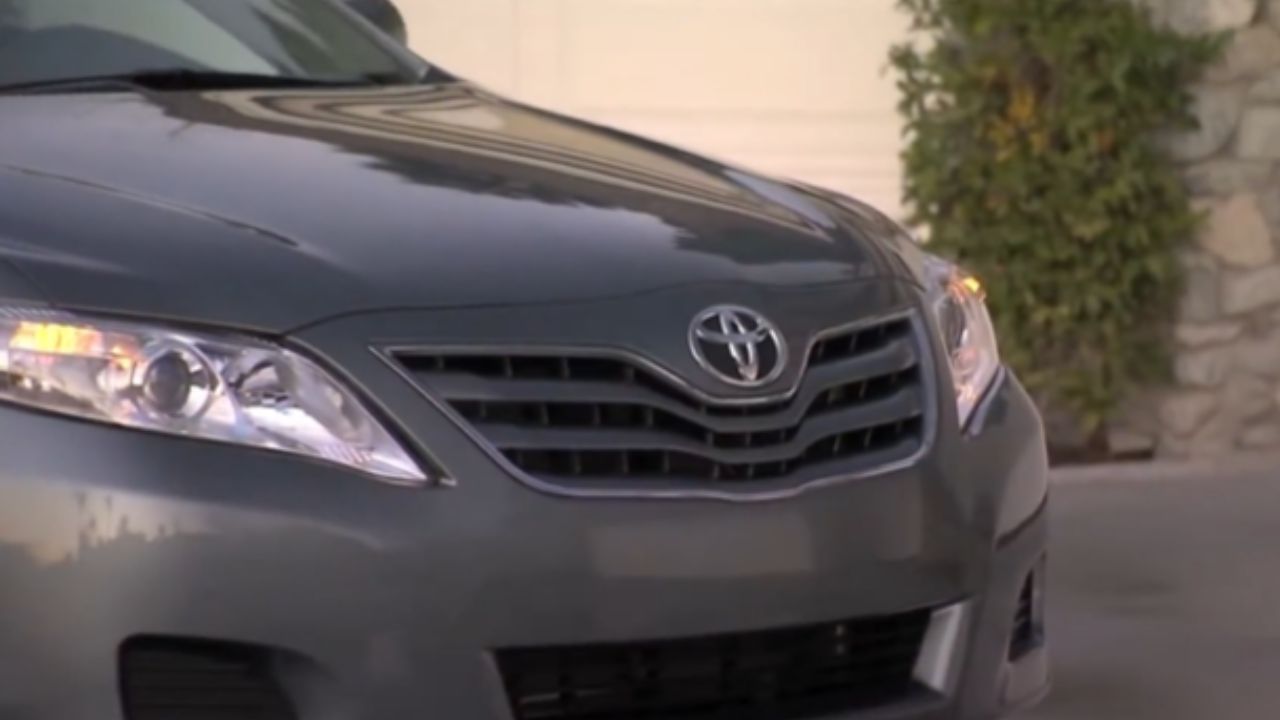


With Superior Sound Insulation, Reclining Seats, and a V6 Engine, the 2008 Japanese Sedan Costs Less Than a Bare-Bones Subcompact, But Requires Extra Attention to Preventive Maintenance to Avoid Becoming a Financial Nightmare.
In the complex Brazilian automotive landscape of 2025, consumers face a difficult financial paradox: pay over R$ 70,000 for entry-level vehicles with three-cylinder engines and plastic interiors, or look to the used market for real opportunities. It is in this niche that the Toyota Camry XLE 2008 resurfaces as an unlikely protagonist, offering a “business class” experience for an economical fare, positioned in the range of R$ 48,000 to R$ 55,000, according to current market data.
While zero-kilometer models struggle to offer the basics of comfort, the Toyota Camry from this generation, internally known as the XV40, delivers a list of features that many current luxury cars have abandoned to cut costs. However, this “rediscovery” requires caution: we are talking about a complex machine, with nearly two decades of history, where a low acquisition price can hide operational costs that challenge household budgets. The following analysis dissects the engineering, luxury, and pitfalls of this legendary sedan.
Engineering Under the Hood: The V6 2GR-FE Engine
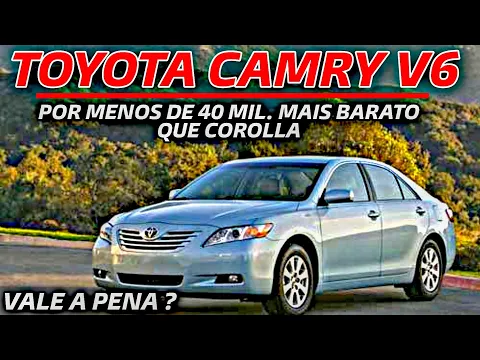

Unlike the current trend of downsizing (small engines with turbos), the Toyota Camry bets on brute force and displacement. The heart of this sedan is the 3.5 V6 engine (code 2GR-FE), a piece of engineering built entirely of aluminum. According to technical data validated by Quatro Rodas, this engine delivers a remarkable 278 hp (reaching 284 hp in some measurements) and a robust torque of 35.3 kgfm.
-
The car stored for 38 years: when opening the barn door, what appears is breathtaking and looks like a scene from a movie!

-
Fiat works miracles in the Brazilian market, lowers the price of its 0 km hatch to R$ 69,990, reestablishes the model as the cheapest car in the country, and reignites the battle against Kwid and C3.
-
Chevette with cooking gas: How the gas cylinder ends up being used in cars clandestinely and why this makeshift solution can result in leaks, explosions, damaged engines, and seized vehicles.
-
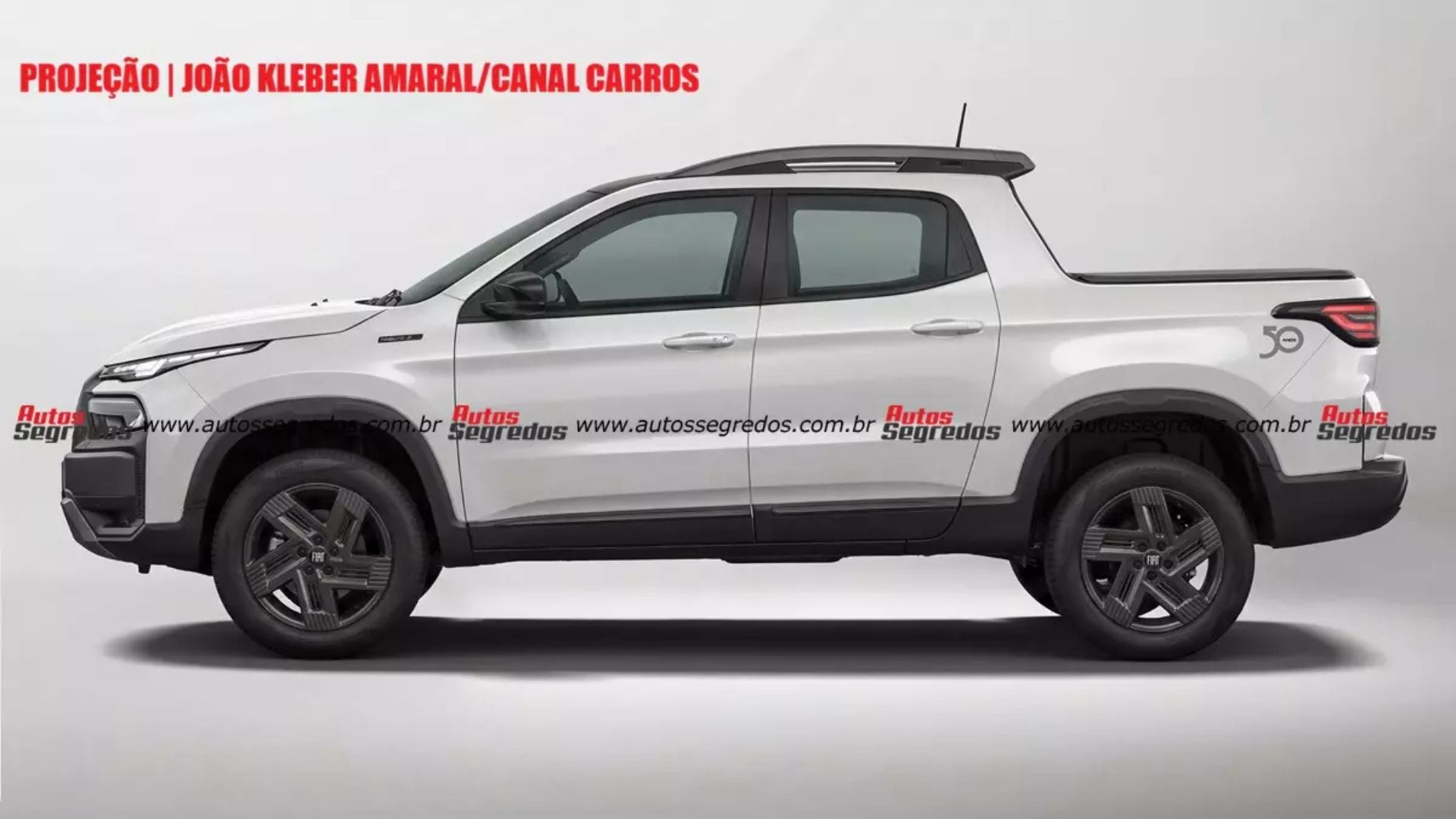
Fiat launches the new 2027 Toro hybrid with 48V, 176 hp, an electric motor of 15.5 hp, a 0.85 kWh battery, up to 7% fuel savings, 8% fewer emissions, and possible exemption from IPVA.

The great “magic” of this engine lies in the Dual VVT-i technology. This system continuously adjusts the opening of both intake and exhaust valves. In practice, this allows the car to be gentle and relatively efficient at low RPMs in urban traffic, but completely transforms when you step on the gas, accelerating from 0 to 100 km/h in about 7.4 seconds — a number that leaves many modern turbo SUVs in the dust.
However, the power comes at a price in terms of maintenance. Buyers should be aware of a documented chronic problem: the oil hose of the VVT-i system. In original units, this component had a rubber part that, over time, dries out and breaks, causing massive oil leakage and the risk of total engine loss. Replacing it with a completely metal piece is mandatory and should be the first item checked upon purchase.
Dynamics and Comfort: A “Magic Carpet” on the Asphalt
The proposal of the Toyota Camry has never been aggressive sportiness, but rather absolute isolation. The six-speed automatic transmission (U660E) has been geared to take advantage of the V6’s torque, allowing the car to cruise at 120 km/h with the engine smoothly running below 2,500 rpm. This results in a cabin silence rarely found in vehicles priced under R$ 200,000 today.
The suspension, which shares architecture with models from the luxury division Lexus, masterfully filters imperfections of the Brazilian asphalt. The car literally “floats” over potholes. However, this softness results in noticeable body roll in fast turns. It’s a car for highway cruising, not for winding mountain roads.
In terms of transmission maintenance, it is vital to ignore the old recommendation of “lifetime fluid.” Experts recommend partial transmission fluid changes every 40,000 km. Units that have never changed the fluid may exhibit the dreaded “flare” (slipping during gear shifts), indicating wear on the clutch discs or varnish in the valve body.
The Interior: Forgotten Luxury and the Dashboard Problem

Upon entering the cabin, the value of the car becomes clear. The XLE version brings “luxuries” that humiliate modern competition. The absolute highlight is the reclining rear seats, a feature found in limousines that allows rear passengers to adjust the backrest to a relaxation position. Add to this an electric curtain on the rear window and a dual-zone air conditioning system with Plasmacluster technology, which uses ions to kill mold and bacteria in the air.
However, not everything is perfect. The Toyota Camry from this generation suffers from the “Sticky Dash” dilemma. Due to a chemical flaw in the materials, the dashboard melts with heat and UV radiation, becoming shiny and sticky to the touch. Although Toyota has initiated warranty programs in the past, today the solution falls on the owner: upholstery or dash covers are necessary to correct the aesthetic flaw.
Connectivity also reveals its age. The original sound system is a JBL Synthesis with excellent sound quality, featuring an amplifier and 8 to 10 speakers. However, Bluetooth is only for calls. To listen to music from Spotify, the owner will need to invest in modern interfaces or multimedia centers, as the car is stuck in the CD-era.
The Reality of the Wallet: Consumption and Parts
Here is where rationality must prevail over emotion. The Toyota Camry is inexpensive to buy (R$ 52,000), but expensive to maintain. Gasoline consumption in the city, in heavy traffic, barely exceeds 5.0 to 6.5 km/l. It’s a car that drinks like an old V6 should drink. On the highway, it shines, achieving averages of 11 to 13 km/l thanks to the long sixth gear.
The parts basket is also not that of a popular car. A pair of quality front shocks (like KYB) costs around R$ 1,560. A set of original engine mounts can exceed R$ 2,000. Trim and body parts are hard to find and expensive. The advantage is robustness: it breaks down infrequently, but when it does, the bill is that of an imported car.
Is the Risk Worth It?
Comparing the Toyota Camry 2008 with a new popular car reveals an abyss. In safety, the sedan offers six airbags, disc brakes on all four wheels, and superior impact-absorbing structure. In comfort, it is incomparable. The purchase decision should be based on the driver’s profile: if you drive a lot in the city and have a tight budget, stay away. The cost of fuel and preventive maintenance will be prohibitive.
On the other hand, for those looking for a second car for trips, or those who understand mechanics and prioritize safety and comfort over fuel economy, the Camry is a unique opportunity. It’s a chance to travel first-class while paying an economy-class price, as long as you set aside a budget for the maintenance of the vehicle.
Would you have the courage to trade the warranty and savings of a new popular car for the comfort and power of a “luxury lasagna” like the Camry? Or do you think the maintenance cost does not compensate for the risk? Leave your opinion in the comments; we want to hear from those living this in practice.






mero transporte quis dizer.
Carro de verdade. Kwid(citado) moro transporte como bike e patinete são. E na estrada com carros de verdade pode-se ser ultrapassado pelos pequenos tranqueiras. Vale mais uma viagem confortável e segura que uma apressadinha suicida.
Tive um Corolla 2005 maravilhoso, confortável, robusto, de qualidade mecânica inquestionável. Meu carro seguinte foi um Camry 2007 3.5 v6. Acho que essa é a única maneira de achar que um Corolla não é carro.
O Camry é absurdamente superior e mais satisfatório. Na ocasião, eu rodava muito em rodovias e chegava a fazer 14 km/l com o Camry, em velocidade ajustada no piloto automático para 110km/h. Nunca consegui obter consumo melhor com o Corolla(1.8). Na cidade, porém, tinha que ter um pé bem levinho para rodar 6,0 km/l.
Não posso falar muito sobre custo de manutenção, já que o adquiri com 100. 000 km em excelente estado de conservação, vendi com 190.000 km no mesmo estado e só troquei pastilhas de freios dianteiros e 4 buchas de balanças traseiras assim que comprei. No caso das buchas, adaptei de um carro nacional com serviço de tornearia, com custo total das peças+torneiro de R$ 220,00. As originais custariam em torno de R$ 1.300,00, à época. Optei em fazer e, caso não ficassem perfeitas, partir para as originais, mas ficaram excelentes e rodei mais de 80.000 km sem mais nenhum problema. Depois dele tive duas Pajero Full sentia muita saudade do Camry. Confesso que até hoje tenho vontade de comprar outro.
Difícil é achar um com baixa quilometragem e preço atraente.
O carro é, simplesmente, maravilhoso.
Fino a un paio di mesi fa, ero intenzionato a venderla dato che sono andato ad abitare in zona rurale e avrei voluto sostituirla con una f1000, poi pero’ mi sono convinto di avere una macchina eccezzionale che vale la pena di tenere. Sarebbe stata una ottima occasione per te. Macchina impeccabile del 2008 sempre curata con manutenções preventiva in oficina autorizada toyota. Appena arrivata a 100.000km.