





 Portuguese
  English
  Spanish
  4 min of reading
  0 comments


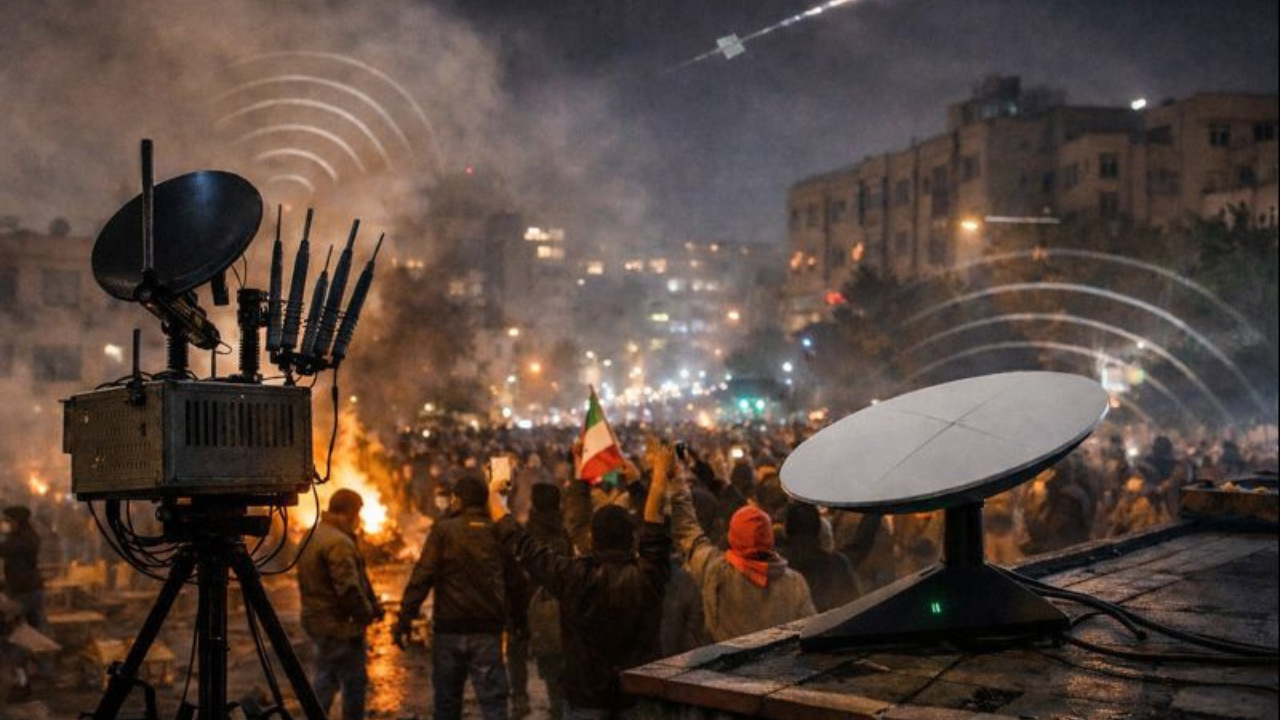
Internet Blackout in Iran Affects Starlink, Intensifies Iranian Digital Censorship, and Tries to Contain Protests.
The internet blackout in Iran came into effect last Thursday (8), determined by the Iranian regime as a direct response to the protests that have spread across the country since December 28.
The measure was implemented nationwide, drastically reducing connectivity, affecting conventional services and even Starlink in Iran, and reinforcing Iran’s digital censorship policy to contain the circulation of information and images of the protests.
According to the website NetBlocks, which monitors internet functionality globally, Iranian connectivity has fallen to about 1% of normal levels.
-
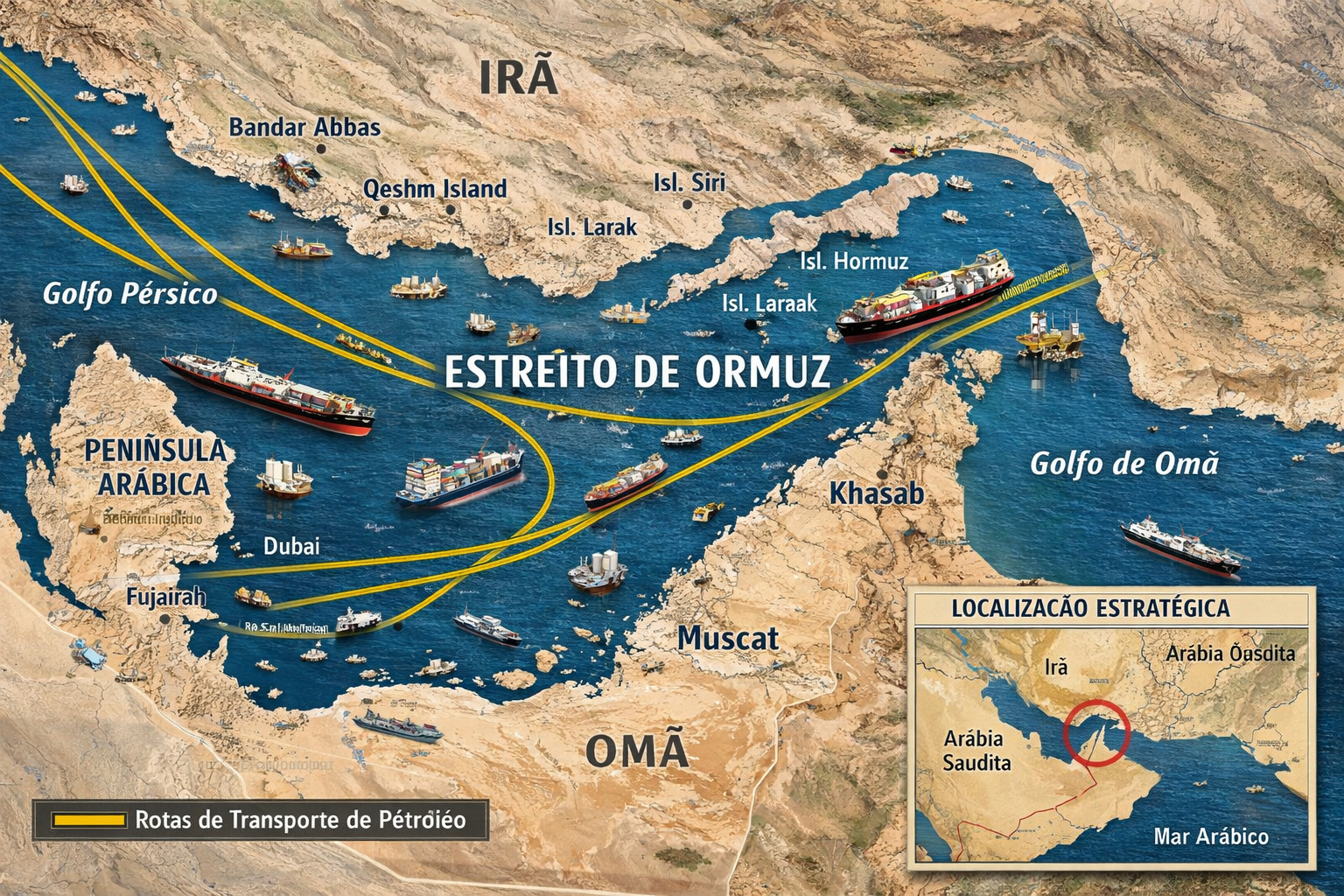
Global summit with over 40 countries pressures Iran for a blockade in the Strait of Hormuz and warns of direct impact on oil, food, and the global economy.
-
Russia has broken the U.S. maritime blockade to send oil to Cuba and is now loading a second ship while Trump says that “Cuba is next” in a possible military action against the island.

-
Spain challenges the USA and closes its airspace for operations against Iran, raising global tension and provoking the threat of a trade rupture.

-
While no other country manufactures tanks in Latin America, Argentina activates the TAM 2C-A2 and raises a curiosity about the technological lag in the region.


The impact directly affects a population of approximately 85 million people, who now face difficulties even in making basic communications with the outside world.
Historic Drop in Connectivity and Isolation of the Country
In addition to the near-total interruption of internet access, the blackout caused a temporary international isolation.
International phone calls were also suspended, although they were partially restored on Tuesday (13), according to the Associated Press.
“Although some phone calls are now being completed, there is no secure means of communication, and the general public remains isolated from the outside world,” stated NetBlocks.
Still, online browsing remains severely limited, which heightens the atmosphere of uncertainty within the country.
Starlink in Iran Also Faces Unprecedented Interference
One of the most noteworthy points in this internet blackout episode in Iran was the impact on Starlink in Iran, a satellite internet service that usually operates even in extreme censorship scenarios.
According to Amir Rashidi, director of the Miaan Group, the regime has begun using advanced techniques to directly interfere with the service’s signal.
To achieve this, the Iranian government resorted to satellite signal jamming, using jamming devices installed near users’ antennas.
According to Rashidi, even the use of VPNs has not been enough to circumvent the situation.
Proton VPN reported that sessions originating in Iran are declining because the regime has completely shut down the internet.
How Satellite Signal Jamming Works
Experts explain that blocking satellite internet is technically more complex than interrupting traditional networks.
Unlike local operators, satellite companies do not need to maintain physical infrastructure within the country that issues the blocking order.
The technology director of Sage Networks, Thiago Ayub, explains that the navigation sent to satellites returns to ground stations that may be located in other countries.
“This infrastructure cannot be far from the user.
However, since Iran is not a continental country like Brazil, satellite companies can provide internet access without ground stations in Iranian territory,” he states.
In light of this, the adopted alternative was satellite signal jamming
A technique that involves generating interference on the same frequencies used by satellites and users’ antennas to scramble the signal.
“This requires the deployment of many high-power antennas scattered throughout the territory,” Ayub explains. According to him, the success of the strategy indicates significant investment in research and development by the Iranian government.
History of Iranian Digital Censorship
This is the third major internet blackout in Iran recorded in recent years.
The first occurred in 2019, during protests against the rise in gasoline prices.
The second was in 2022, following the death of Mahsa Amini, detained by the morality police for allegedly not wearing the Islamic veil properly.
At that time, Starlink in Iran became one of the main alternatives for maintaining communication between protesters and the outside world.
Since then, the population has increasingly used the service, even without official authorization in the country, leading the Iranian government to consider Elon Musk’s company’s antennas illegal on its territory.
Use of Starlink Grows and Intensifies Repression
Estimates indicate that tens of thousands of Starlink antennas are currently in Iran.
A significant portion of them has been used to broadcast videos and photos of the protests in Iran, which has increased the regime’s pressure to expand Iranian digital censorship.
Since Thursday, there has been an average data packet loss of 30% transmitted by Starlink devices, according to Amir Rashidi.
In some regions, this loss reaches 80%, highlighting the effectiveness of the satellite signal jamming employed.
International Reaction to the Blackout
The International Telecommunication Union, linked to the United Nations, formally requested Iran to stop interfering with satellite internet signals.
So far, the Iranian government has not indicated that it intends to back down.
Meanwhile, the blackout reinforces a known pattern. In 2025, the regime accused WhatsApp of spying on Iranian users and collaborating with Israel.
Meta denied the accusations and stated that only the sender and recipient can access the messages, which are protected by encryption.
Impacts on the Population and Protests in Iran
With the internet blackout in Iran, access to information has become even more restricted, hindering the organization of protests in Iran and the international dissemination of the repression.
On the other hand, the measure also intensifies popular discontent by highlighting the state’s control over digital communication.
Thus, the current episode not only exposes the reach of Iranian digital censorship
but also marks a new phase of technological confrontation between the regime and the digital tools used by the population to break the isolation imposed by the State.










Seja o primeiro a reagir!