





 Portuguese
  English
  Spanish
  7 min of reading
  4 comments


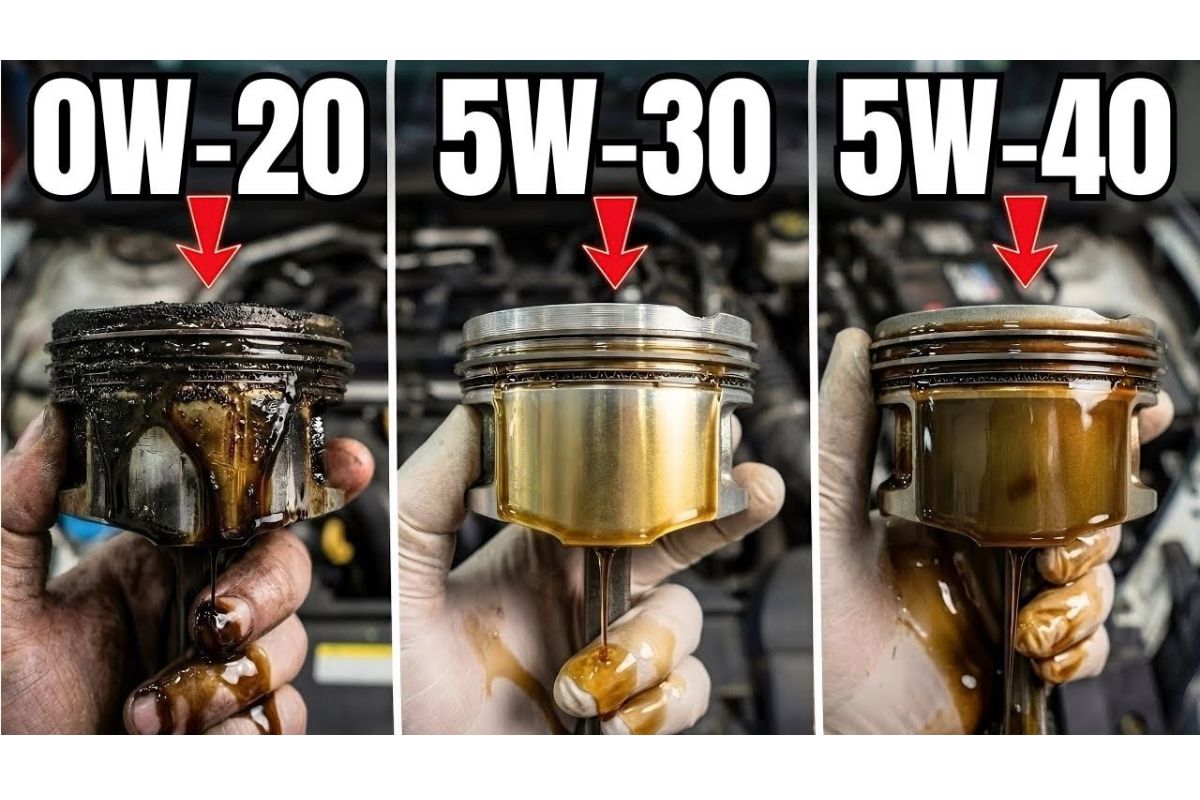


Choosing Which Oil Saves The Engine Among 0W20, 5W30, And 5W40 Is Not Detail: The Decision Changes Consumption, Wear, And The Engine’s Lifespan In Hundreds Of Thousands Of Kilometers.
In this test, the same car, the same engine, the same driver, and the same route were used to compare 0W20, 5W30, and 5W40. The only variable was the oil, and the results challenge the official recommendation of many manufacturers and show, in practice, which oil saves the engine and which one silently sacrifices durability without the owner noticing.
Over thousands of monitored kilometers with used oil analysis, temperature, wear metals, and internal inspection, it became clear that consumption and emissions do not tell the whole story. The engine does not read the manual or advertisements, it responds to the oil film, stability, and thermal control.
Why This Oil Test Matters More Than It Seems
Any discussion about oil in Brazil turns into a fight. Some defend that thinner oil is modern technology, while others swear that only thicker oil saves the engine. In the midst of this, the most repeated advice always appears: “just follow the manual.”
-
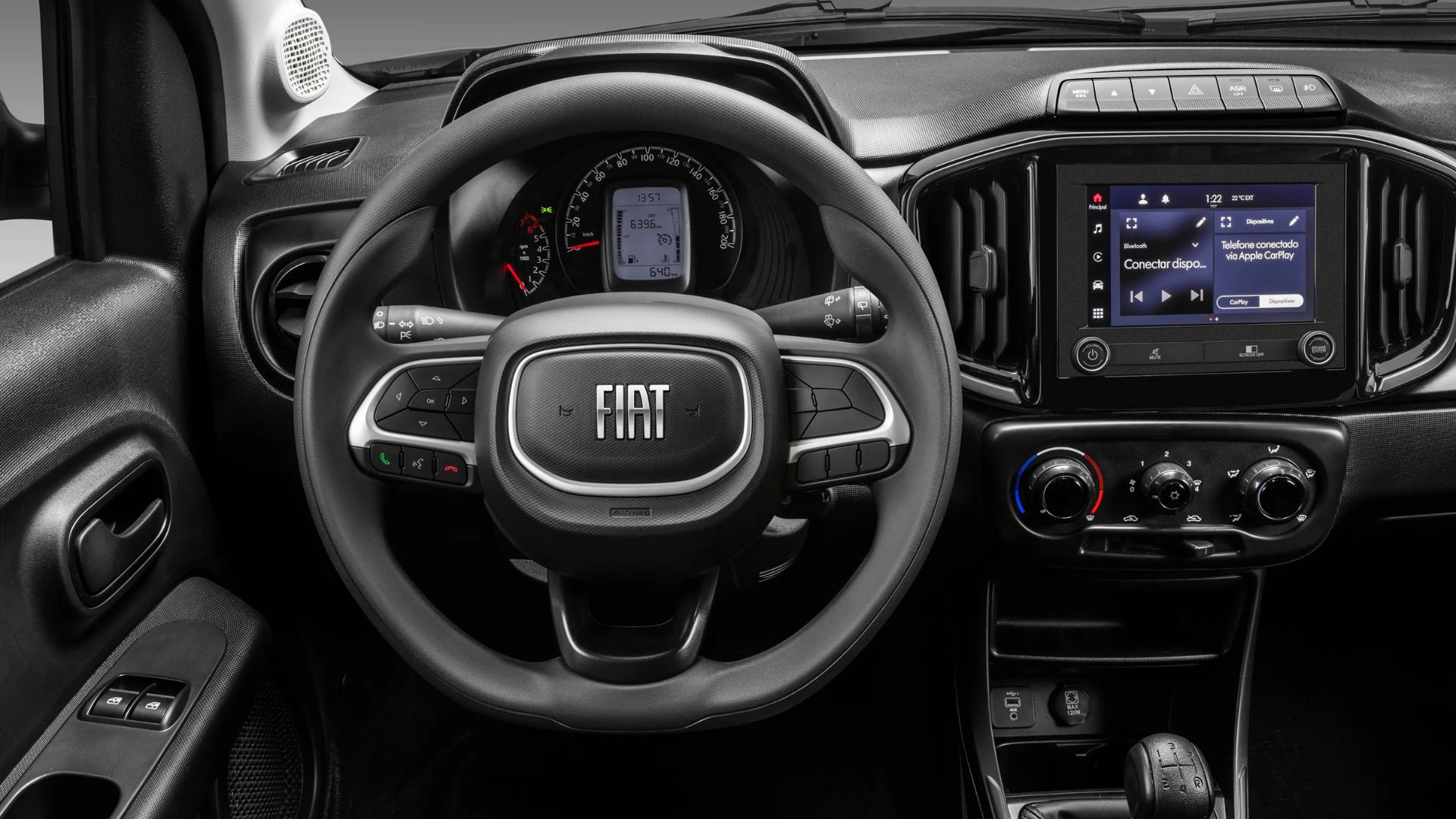
With a 1.0 engine producing 75 hp and costing less than R$ 70,000, Fiat’s car returns to the podium as the cheapest in the country; a temporary promotion for the 2026 Like version reduces the price of the Fiat Mobi.
-
With a mild hybrid system of 48 V, 176 hp and a price of R$ 175,990 in the Sahara version, the new Jeep Renegade changes mostly on the inside, improves slightly in fuel consumption, and remains almost the same car.

-
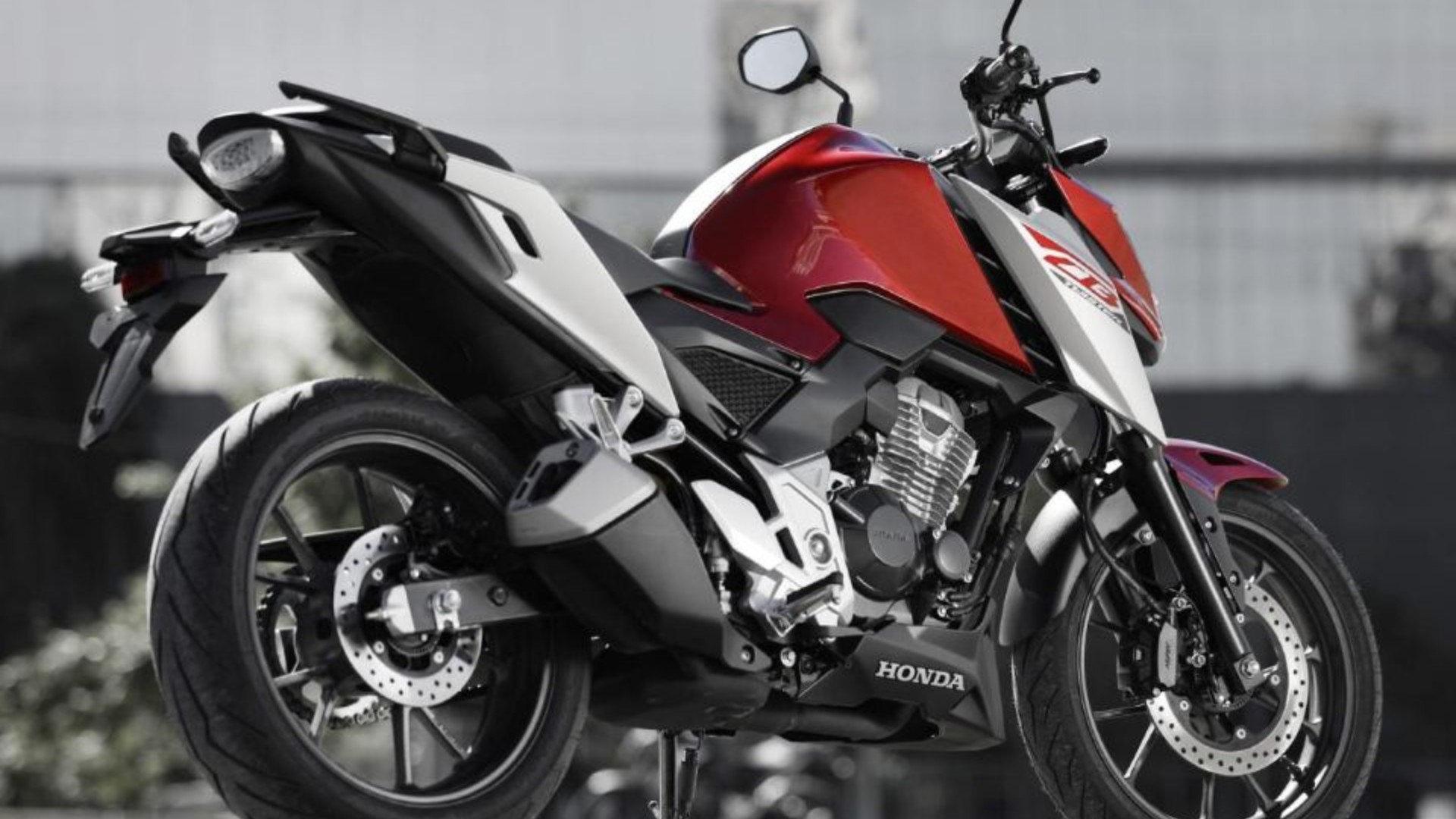
With a 293.5 cm³ engine and a range of up to 400 km with a 14.1-liter tank, the Honda CB 300F Twister 2026 has up to 24.7 hp, an initial price of R$ 25,150, and already exceeds R$ 29,000 in the Fipe Table.
-
With a 1.3 engine, nearly 700 km of range, and Turbo 200, the Fiat model surpasses Polo, Tera HB20, and Onix, becoming the best-selling car in March; see the numbers for the Fiat Strada and others.

The problem is that almost no one remembers what the manual is written for. It is designed to meet:
- consumption tests
- emission goals
- noise levels
- environmental policies
- warranty costs
It is not a document thought out for congested traffic, extreme heat, long roads, a well-used engine, and real Brazilian usage. Instead of discussing theory, this test put the engine to work under real conditions, letting the data show which oil saves the engine instead of just pleasing the laboratory.
The Engine of the test and the rule of “everything equal”
To keep the test fair, a modern engine was used, four-cylinder naturally aspirated, with direct injection and tight tolerances, exactly the profile of a large part of the cars sold today.
Everything was kept the same:
- same car and same engine
- mixed driving between heavy urban traffic and highway
- same driver and same route
- same filter changes
- same fuel
- same oil change interval
The only difference was the viscosity of the oil:
- first phase with synthetic 0W20
- second phase with synthetic 5W30
- third phase with synthetic 5W40
Each oil ran for about 12,000 km, always with used oil analysis, temperature monitoring, and internal inspection. No forum opinions, just measured results.
What Really Changes When Viscosity Changes


Before looking at the numbers, it is important to understand what each viscosity delivers:
- 0W20
Extremely thin oil at working temperature. Reduces friction and helps with consumption, on average something between 3% and 5%, which often represents 0.3 to 0.5 km/L more. In exchange, it creates a thinner oil film with less margin when the engine heats up or works under load. - 5W30
The classic middle ground. Maintains excellent fluidity on cold starts, but forms a more resistant film at high temperature. Historically, it has always been the balance point between consumption and durability. - 5W40
The thickest in operation. Has greater shear stability, better withstands heat, severe use, and longer intervals. On the other hand, it may penalize flow on cold starts and in very short urban trips.
Each choice is a compromise. The central question of the test was simple: which oil saves the engine in real Brazilian conditions, with heavy traffic, heat, and mixed usage, without depending on the manufacturer’s laboratory.
Phase 1: 0W20, The Favorite of Manufacturers

The 0W20 is now the favorite oil of many manufacturers and appears in numerous manuals. In the test, it clearly showed its strengths:
- very quick lubrication on startup
- lower internal friction
- best fuel consumption in the test, with about 0.4 km/L more
On paper, it seems perfect. But, inside the engine, the data told another story:
- oil temperature on average 4 to 7 ºC higher
- viscosity drop around 12% by the end of the interval
- clear increase of iron and aluminum in the analysis, direct signs of wear
- beginning of varnish and premature darkening in the valve train region
- visibly thinner residual film after turning off the engine
In practice, 0W20 works, but operates at the limit. It requires high-quality fuel, mild use, and very well-controlled oil changes. Any misuse, excessive heat, or extreme traffic comes with a price in lifespan, millimeter by millimeter of metal.
The Silent Problem of 0W20
The point that almost no one comments on is the safety margin. 0W20 is the oil with the least margin for:
- heat above the ideal
- congested traffic for hours
- long roads with high RPM
- well-used engine
In real situations, the oil thins out faster, loses resistance, and reduces the thickness of the protective film sooner than the owner imagines. It does not cause an immediate “blowout,” but silently shortens the engine’s life, wear after wear.
If the question is which oil saves the engine for those who drive a lot and want to keep it for years, the 0W20 has already shown in the test that it prioritizes consumption, not extreme durability.
Phase 2: 5W30, The Balance Point

When the engine switched to 5W30, keeping everything else identical, the differences appeared quickly:
- average oil temperature 3 to 5 ºC lower
- viscosity loss below 5% in the same interval
- 35% to 40% drop in wear metals compared to 0W20
- bearings and cam visibly cleaner
- less varnish formation and better oil film in critical parts
In terms of consumption, the difference was small:
- loss of about 0.2 to 0.3 km/L compared to 0W20
That is, cents per tank in exchange for much greater protection.
Mechanics who analyzed the results were direct: saving a few cents per tank with thinner oil may cost a premature engine down the road. In comparison, 5W30 began to stand out as the most solid candidate when the question is which oil saves the engine and not just which one leaves the dashboard with a slightly better consumption number.
Why So Many Mechanics Prefer 5W30 In Silence
When talking to professionals who have been disassembling engines for decades, the answer was repeated:
- “If I want the engine to last long, I don’t chase after thin oil, I chase after stability.”
And that is exactly what 5W30 delivered in the data:
- better thermal control
- greater shear resistance
- healthy wear balance over time
5W30 does not try to win consumption tests or hit laboratory emission targets. It protects metal, which is what keeps the engine alive at 300,000, 400,000, and 600,000 kilometers.
Phase 3: 5W40, The Heavyweight of Protection

When the test moved to 5W40, the oil that many consider maximum engine shielding came into play. In some points, the data was really impressive:
- oil temperature still a few degrees below 5W30
- viscosity loss practically nil, below 2%
- extremely low wear levels, mainly in iron and copper
Under heavy use, with:
- long road
- constant uphill
- high RPM
- heavy load
the 5W40 proved to be solid as a rock.
But protection is not just thickness; it is flow and context of use. And here important limitations appeared:
- oil circulation on cold starts slightly slower
- greater retention of fuel dilution on short trips
- in urban use with short distance travel, cold engine, and light accelerations, the extra viscosity only increased the system’s effort without delivering everything it could
Typical mechanic’s view: 5W40 is excellent when the engine works hard, but for those who only drive 10 or 15 minutes a day, it behaves like a specialist out of context.
Direct Comparison: Consumption, Wear, And Temperature
Putting the three oils side by side, after the same type of use and the same interval, the picture became clear:
- 0W20
- best consumption
- highest oil temperature
- highest viscosity degradation
- more wear metals found in the analysis
- 5W30
- more controlled temperature
- low viscosity loss
- least overall wear
- great balance between consumption and protection
- 5W40
- excellent performance in extreme heat and high loads
- very low wear
- excessive for light urban use and short trips
When the question is which oil saves the engine in the long term, and not just which wins in a single isolated criterion, the 5W30 proved to be the most complete in the ensemble.
So, Which Oil Saves The Engine In The Real World?
If the test were focused only on track and extreme use, 5W40 would have a great chance of taking the trophy.
If the focus were solely on emissions and consumption, 0W20 would win easily.
But for the driver who:
- encounters congested traffic
- faces extreme heat
- drives in mixed city and highway use
- plans to keep the same car for years
the oil that came closest to the answer for which oil saves the engine was 5W30.
It is neither the thinnest nor the thickest. It is the most balanced:
- robust film without excessive friction
- stable viscosity across a wide temperature range
- excellent wear control without killing the consumption
- cleaner internal components over time
How To Choose The Right Oil For Your Routine
No bias and no hype, the test helps outline a practical map:
- Use 0W20 if:
- you drive little
- make short trips
- live in a cooler region
- change oil very frequently
- prioritize consumption and emissions over maximum lifespan
- Use 5W30 if:
- you want maximum engine durability
- drive in urban traffic and highway
- live in a hot region
- plan to keep the car for many years
- Use 5W40 if:
- frequently tow heavy loads
- drive hard with high RPM
- drive in extreme heat
- have a turbo engine or consistently severe usage
There is no magic oil that serves all scenarios. There is oil compatible with the reality of your usage and what you want from the car in the coming years.
In the end, the engine does not care about marketing or the trend of thinner oils. It cares about oil film, temperature, and stability over time. In this test, 0W20 worked but wore more. 5W40 protected a lot but was not always necessary. 5W30 did everything right in silence. What oil is in your car today, and looking at your routine, do you really think it is the one that saves the engine the most or just what is written in the manual?








Video de IA sem qualquer credibilidade
Quando eu usava 5w30 Sintético Motor Diesel. Por volta dos 5 mil km uso severo nas partidas motor frio se escutava uma breve batida de tucho logo cessava. Usei Mobil, Castrol e Texaco…
Porém quando passei a usar 5w40 Sintético isso acabou….. Desde então troco Óleo com 7 mil Km e não se tem a breve batida de tucho na primeira Partida.
Óleo Motul…..
Meu jeep Compass usa 0w30 mas ando em percursos curtos. Acho que um 5w40 seria melhor….