





 Portuguese
  English
  Spanish
  4 min of reading
  5 comments


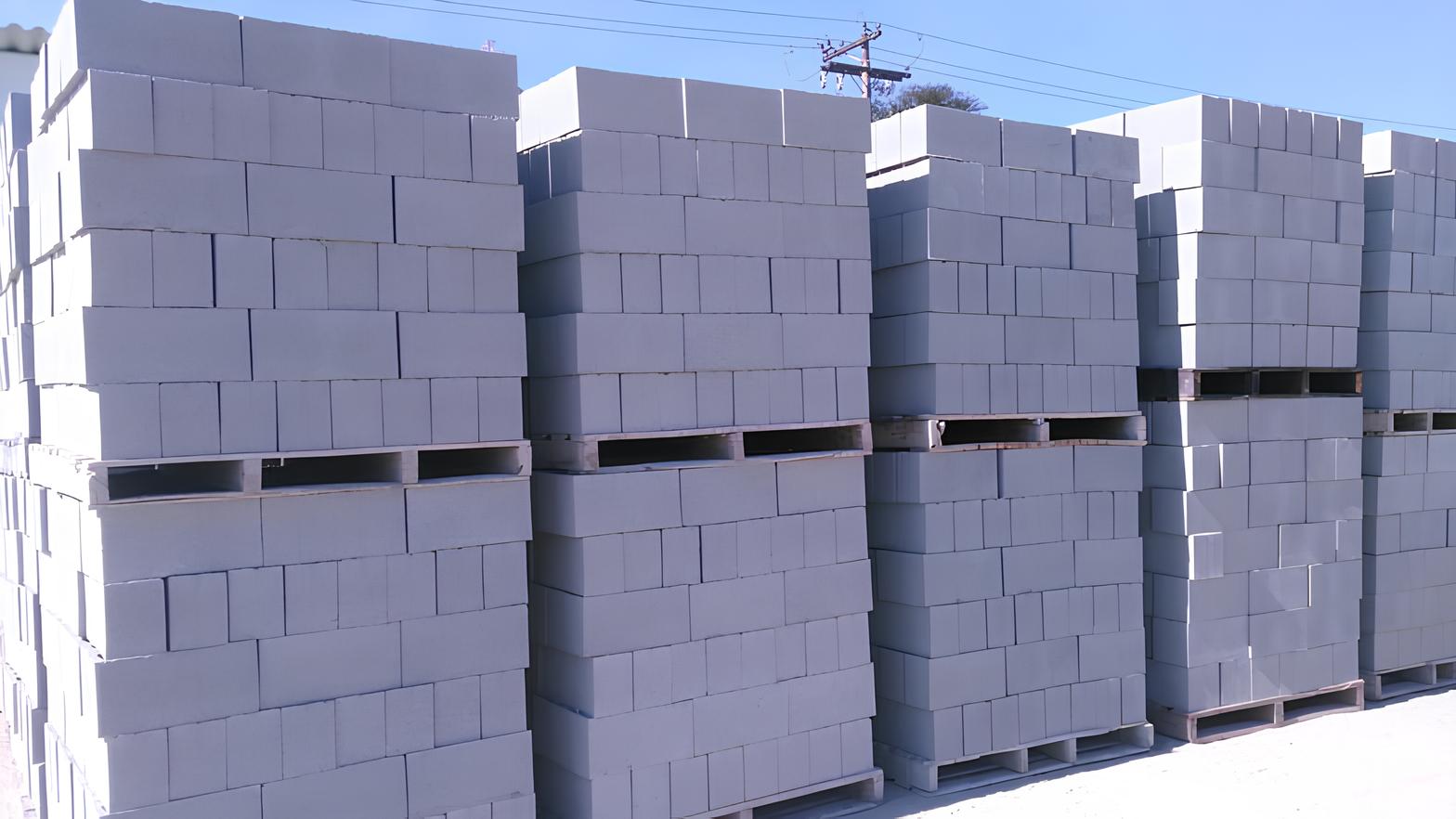


Autoclaved Aerated Concrete Conquers Brazilian Civil Construction with Lightness, Thermal Efficiency, and Up to 20% Cost Savings on Projects.
After dominating construction sites in Europe and Asia for decades, autoclaved aerated concrete — also known as AAC (Autoclaved Aerated Concrete) — is starting to gain prominence in the Brazilian civil construction market. The material, widely used in countries like Germany, Sweden, and Japan, combines lightness, thermal insulation, and speed of execution, allowing for a reduction of up to 20% in the total cost of a project and delivery times up to 30% shorter, according to data from manufacturers and civil engineers who have already adopted the technology in the country.
What Is Autoclaved Aerated Concrete and How Is It Produced?
Autoclaved aerated concrete is made from cement, lime, sand, water, and an aluminum expanding agent, which creates small air bubbles during mixing. After molding, the material is taken to an autoclave — a pressurized chamber with steam at around 180 °C and 12 bar of pressure — where a chemical reaction occurs that solidifies the block, ensuring lightness and high resistance at the same time.
The result is a block with a density up to 5 times lower than traditional concrete and excellent thermal and acoustic performance, making it ideal for residential and commercial buildings in warm climate regions. In addition, the industrial process generates less waste and practically eliminates the use of wood for molds, as the pieces come out shaped and ready for installation.
-
Congonhas receives the monorail promised for the 2014 World Cup after more than a decade of delays and becomes the first airport in Brazil with integrated subway.
-
Goodbye, concrete: a new trend in civil construction reduces the weight of the structure by up to 30%, accelerates projects by up to 40%, cuts costs on steel and labor, and improves thermal insulation with EPS.
-
Russian engineers create an innovative propeller blade for aircraft that could completely change the way airplanes and helicopters operate.

-
Couple finishes building PVC chalet on the beach on the last day, with air conditioning and curtains, but discovers the bathroom drain is inverted: water escapes from the drain, risking breaking the floor, and the rush continues before the trip.

Cost Savings and Sustainability Drive the Advancement of AAC
The low weight and standardized shape of the blocks allow for significant reductions in the use of mortar and steel, in addition to speeding up the installation process — factors that result in lower labor and supplementary material costs.
According to data from the Brazilian Portland Cement Association (ABCP), projects executed with autoclaved aerated concrete can achieve an average savings of between 15% and 20% compared to traditional masonry systems.


Another appealing point for construction companies is the sustainability. The manufacturing of AAC consumes less energy than conventional concrete and generates almost no solid waste. Additionally, the natural thermal insulation reduces the need for air conditioning in buildings, contributing to lower electricity consumption throughout the lifecycle of the construction.
Growth in Use in Brazil and New Investments in the Sector
In recent years, Brazil has witnessed the gradual expansion of this technology. Companies like HBR Blocks, Hebel, and YTONG have started producing and distributing autoclaved aerated concrete blocks on an industrial scale, with factories in the states of São Paulo, Goiás, and Santa Catarina.
These manufacturers highlight that AAC is becoming a competitive option for residential buildings, hotels, schools, and logistics warehouses, especially in regions where labor costs and construction time weigh more on the final budget.
The growth is also driven by the advancement of industrialized and prefabricated construction systems, a trend that has been gaining momentum with the increase in low-income housing projects and high-end developments.
According to engineers from UFMG and USP, the application of AAC can become strategic in the country due to the tropical climate, which requires cooler and more sustainable constructions. The material meets the thermal performance standards of ABNT and is recognized as a viable alternative within the criteria of the Brazilian Labeling Program for Energy Efficiency in Buildings (PBE Edifica).
Challenges and Perspectives for the Future of Lightweight Construction
Despite the advantages, the use of autoclaved aerated concrete still faces challenges in Brazil, mainly related to the lack of technical knowledge among professionals and the limited availability of factories outside the South-Southeast axis.
Another obstacle lies in logistics: since the blocks are lightweight and bulky, transportation costs can increase over long distances.
Still, the sector sees a potential for accelerated growth. The demand for more sustainable and efficient materials, combined with the advancement of industrialization in civil construction, places AAC in a privileged position to become a leader in the coming decades. Experts predict that by 2030, Brazil could triple its production capacity and incorporate the material into large infrastructure and housing projects.
A New Standard of Construction That Is Faster, Lighter, and More Sustainable
Autoclaved aerated concrete represents a structural shift in the way of building. Lightweight, precise, and with excellent insulation, it eliminates waste, reduces costs, and accelerates deadlines — decisive factors in an increasingly competitive and energy-efficient market.
If in Europe and Asia AAC is already synonymous with modern construction, Brazil is now beginning to live its own construction revolution, uniting technology, sustainability, and savings in a single product.
The trend is clear: lightweight autoclaved aerated concrete blocks are not the future; they are the present of smart construction.









Hoje existem apenas duas fábricas no Brasil, sendo a catarinense Celucon a mais moderna e tecnológica. O produto é uma ótima solução para a construção civil pois, além de tornar a obra mais sustentável e confortável, também a deixa mais econônica, se compararmos ao método tradicional de alvenarias.
Onde fica as fábricas de bloco moro em Presidente Prudente sp
Quando eu fazia o tecnico em edificações no ifsp eu pesquisei e fiz 20 blocos autoclavados com medidas de 1metro por 50 centímetros de altura por 15 de largura com peso de 25 kg cada um .apesar de apresentar meus resultados aos engenheiros e professores do curso Infelizmente não encontrei apoio na instituição
Você já buscou calcular: 30x17x5+8kg?