





 Portuguese
  English
  Spanish
  5 min of reading
  0 comments


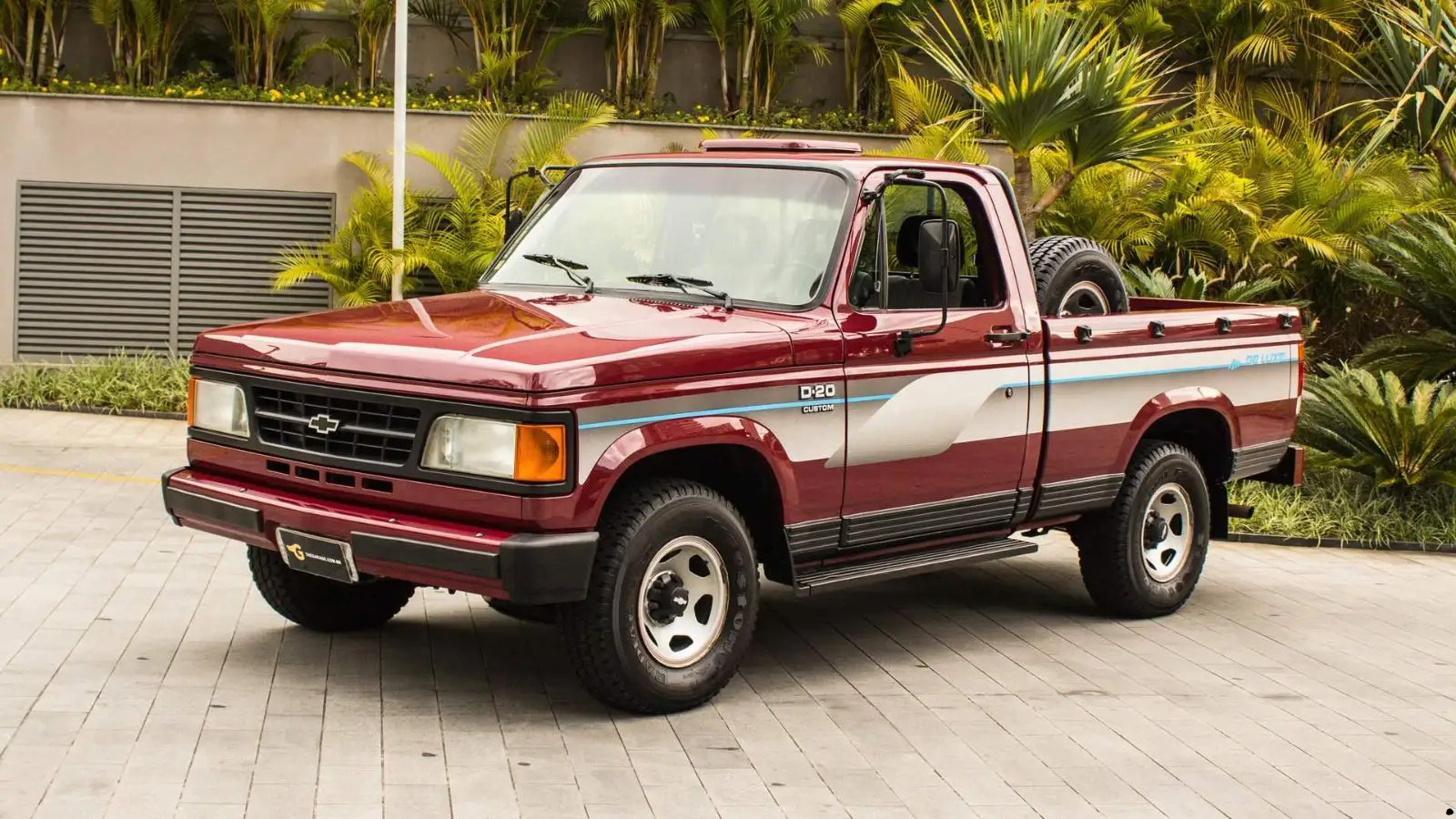
Chevrolet D20 Became a Legend for the Robustness of the 4.0 Turbo Diesel Engine, Extreme Durability and Success Among Restorers; Understand Why It Marked Generations.
The Chevrolet D20 is not just an old pickup. It is an entire chapter of national automotive history. Produced between 1985 and 1996, it was born in a still rural Brazil, where dirt roads were the majority, agricultural mechanization was starting to gain strength, and the demand for truly durable work vehicles was enormous. Amid this scenario, the D20 emerged as a machine made to last and the proof is that many specimens, almost 30 or 40 years later, are still crossing roads and small towns with the same turbo diesel 4.0 engine that made history.
Its legacy rests on three pillars: simple and indestructible mechanics, above-average load capacity, and ease of maintenance anywhere in the country. That’s why, even decades after production ended, the D20 continues to be one of the most respected pickups ever made in Brazil — and a coveted object for restorers, collectors, and workers who need a vehicle that simply “doesn’t shy away from hard work.”
The Birth of an Icon: Why the D20 Immediately Became Different from Other Pickups
In the 1980s, the Brazilian pickup market was dominated by simple models, usually powered by gasoline or naturally aspirated diesel, with little power and high maintenance demands. Chevrolet broke that mold by launching the D20 family, equipped with powerful engines, reinforced chassis, and extremely robust mechanical solutions.
-
The car stored for 38 years: when opening the barn door, what appears is breathtaking and looks like a scene from a movie!

-
Fiat works miracles in the Brazilian market, lowers the price of its 0 km hatch to R$ 69,990, reestablishes the model as the cheapest car in the country, and reignites the battle against Kwid and C3.
-
Chevette with cooking gas: How the gas cylinder ends up being used in cars clandestinely and why this makeshift solution can result in leaks, explosions, damaged engines, and seized vehicles.
-
Fiat launches the new 2027 Toro hybrid with 48V, 176 hp, an electric motor of 15.5 hp, a 0.85 kWh battery, up to 7% fuel savings, 8% fewer emissions, and possible exemption from IPVA.


The star of the show was the 4.0 Turbo Diesel Maxion engine, capable of delivering consistent power at low RPMs, exactly the type of performance that heavy-duty work required.
It wasn’t a modern or sophisticated engine, but it was tough, durable, and hard to destroy. It could withstand heat, dust, bad fuel, long journeys, and driving over terrains that quickly damaged other vehicles.


Alongside the engine, the 5-speed transmission and the rear suspension assembly with leaf springs helped transform the pickup into a reliable work tool, capable of carrying heavy loads safely.
The D20 was, from the outset, a pickup built for work — and that naturally earned it respect in rural areas, farms, construction sites, and dirt roads.
The 4.0 Turbo Diesel Maxion Engine: The Heart That Defined the Fame of the D20
The Maxion 4.0 engine, known for its durability, became a true institution among mechanics and owners. With a cast iron block, a simple mechanical injection system, and few parts subject to rapid wear, it could run hundreds of thousands of kilometers without needing deep interventions.
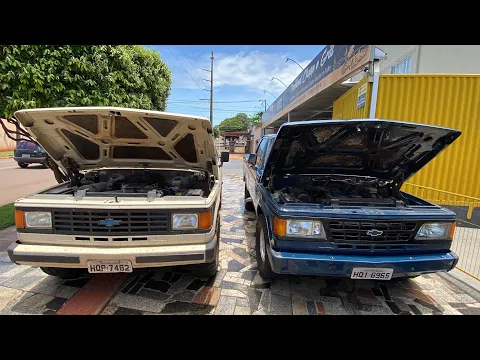
Its main virtue was the abundant torque at low RPMs. It pulled heavy loads, climbed hills, and tackled rough stretches effortlessly. The mechanical injection tolerated variations in fuel, impurities, and even maintenance failures and continued to work.
While it wasn’t a quiet or smooth engine, the 4.0 Turbo Diesel was reliable like few others. Many owners claim that the D20 was a pickup that “worked all year round” and only asked for basic care: oil, filters, and minimal attention to the cooling system.
This behavior created a reputation that crossed generations: the D20 was the pickup that did not abandon its owner.
Reinforced Project: The D20 Was Made to Last, Not to Shine
While other manufacturers invested in aesthetic details or more modern technologies, Chevrolet provided a highly functional project in the D20.
The reinforced chassis was designed to withstand weight, twisting, and constant impacts, which was essential for regions with poor roads.
The rear suspension with leaf springs was known for bearing tons of cargo even when the weight exceeded the recommended limits. The front suspension was also robust and effectively absorbed irregularities, ensuring stability even at higher speeds.

The cabin interior was simple but functional. Durable seats, hard-to-break panels, and clearly readable instruments reinforced the utilitarian character of the pickup. Nothing was excessive; everything was made to last.
This structural durability allowed many D20s to survive for decades — and they are still seen today in rural areas pulling trailers, transporting wood, or being used as the primary work vehicle.
The Longevity of the D20 in the Countryside and the City: A Symbol of Reliability
The D20’s ability to face challenges transformed it into an icon in the countryside. In farms, the pickup replaced smaller trucks, carried equipment, transported livestock, crossed flooded terrains, and made long trips without failing. In small towns, it was common to see specimens with hundreds of thousands of kilometers still in operation.
Its resistance to corrosion, with basic maintenance, also contributed to the longevity of the D20. In humid and coastal regions, many pickups continued to function even after decades.
This longevity fueled reports of units running 300,000, 400,000, and even over 500,000 km with the original engine. Although these numbers depend on proper maintenance, they reinforce the idea that the D20 was a pickup made to survive and thrive.
Why the D20 Became a Coveted Object Among Restorers and Collectors
Over time, the D20 ceased to be merely a work tool and began to attract classic automotive enthusiasts. The boxy design, visual impact, and mechanical strength sparked interest from collectors looking for vehicles with personality and history.
Restoring a D20 has become a hobby for many, especially because:
- parts are still widely available;
- the mechanics are simple and user-friendly;
- there are many preserved specimens;
- the visual style of the 1990s is back in fashion;
- the “roots” culture of pickups has gained a young audience.
Today, a well-restored D20 can fetch prices well above the usual prices for old pickups. At automotive events, it is treated with respect, like a national icon.
The Chevrolet D20 Made History Because It Combined Strength, Simplicity, and Mechanics That Did Not Fear Hard Work
The D20 did not earn its fame through marketing or glamour. It earned it through real performance, by surviving severe conditions, by serving farmers, workers, and families who needed a strong, reliable, and durable vehicle.
Whether as a work tool, a collectible classic, or a symbol of mechanical resilience, the D20 remains one of the most important pickups ever made in Brazil — and its legacy continues to live on every dirt road it still travels.








-

2 pessoas reagiram a isso.