





 Portuguese
  English
  Spanish
  5 min of reading
  0 comments


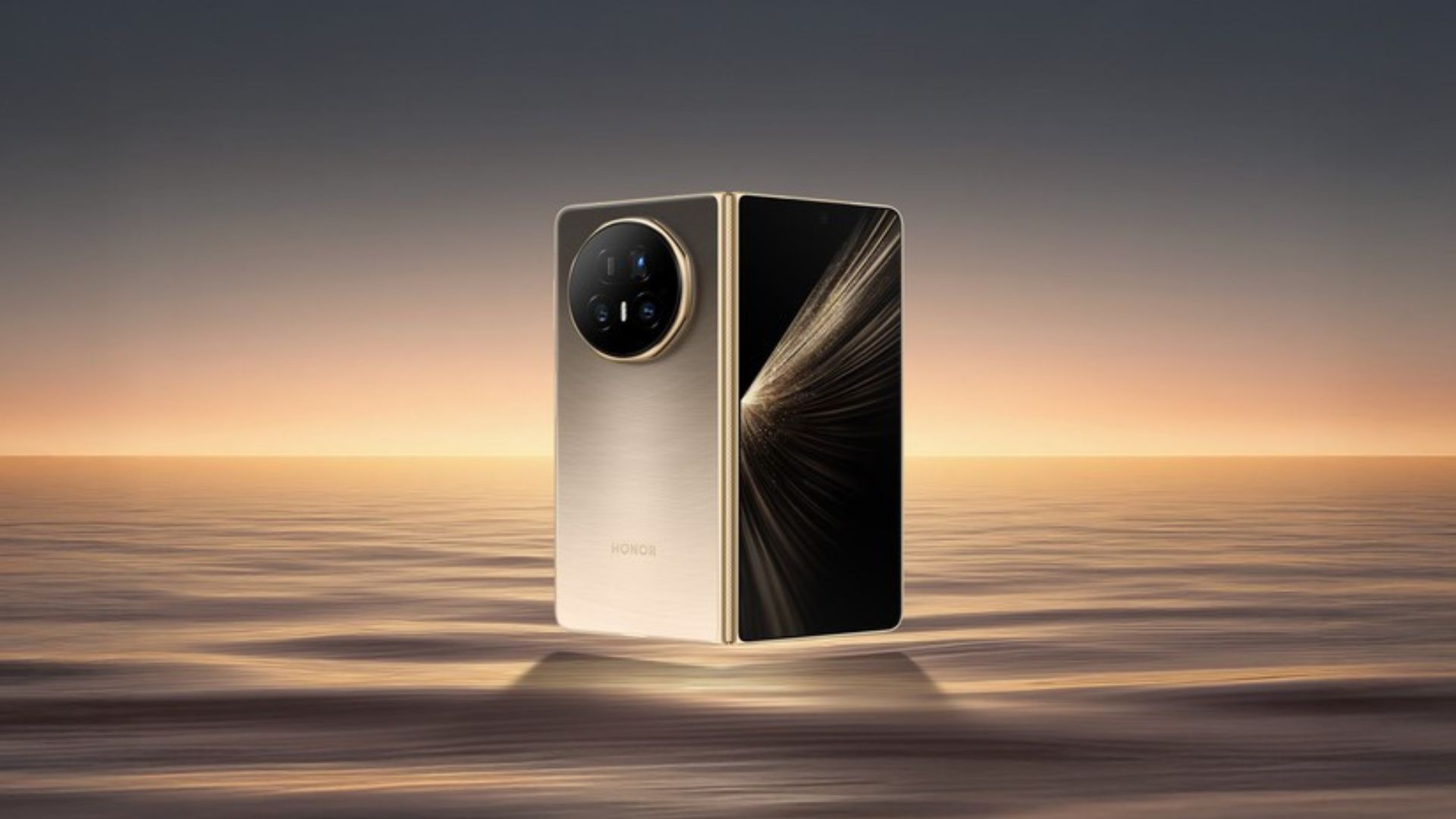
Giant Battery And Robotic Camera Enter Honor Radar For MWC 2026, With Certifications Indicating Autonomy Jump For Next Premium Foldable And A Concept That Mixes Robotics And AI To Move The Camera Set.
Honor is preparing the next generation of its premium foldable, the Magic V6, focusing on autonomy and a global presentation scheduled for the eve of the official start of Mobile World Congress (MWC) 2026.
Certification records and specialized reports indicate that the device is expected to adopt a battery above the segment standard, while the company also promises to reveal a separate concept, the Robot Phone, with a camera in a movable mechanism.
6,850 mAh Battery In Honor Magic V6 As A Differential
The latest indications mainly involve battery capacity.
-
Supercomputer calculates when humanity may disappear from Earth, predicts a scorching supercontinent, temperatures of up to 70 degrees, and a planet moving towards becoming uninhabitable.

-
INMET danger alert: heavy rains between the 3rd and 4th may drop up to 100 mm/day and winds of 60 to 100 km/h in several regions of Brazil require extra caution.

-
The parts crisis may bring back the drop notch and microSD in 2026; while Windows 11 promises to become lighter, leaks mention batteries of up to 10,000 mAh and 200 MP cameras.
-
In Kenya, engineer Nzambi Matee created “bricks 2.0” using packaging plastic: a mixture with sand, heated and pressed; they are 5 times more resistant, already have official licensing, and are being used in streets and construction projects.

According to publications citing certification listings in China, the most advanced version of the Magic V6 has been associated with a cell with a nominal capacity of 7,000 mAh and a typical capacity around 7,150 mAh.
In parallel, references to variants with a nominal capacity of 6,700 mAh and a typical capacity of around 6,850 mAh are also circulating, a number often used as “typical value” in specifications, as it represents the expected capacity in use.
So far, Honor has not published an official technical sheet for the Magic V6 with final battery numbers, keeping the data in the realm of what has been reported based on certification documents and behind-the-scenes coverage.

Nonetheless, if these capacities are confirmed at launch, the model would enter a level of autonomy that is quite uncommon among foldables, historically limited by internal space and structural demands of the folding mechanism.
Comparison With Honor Magic V5 And Rival Foldables
In direct comparison with the previous generation, the projected difference is significant.
Honor itself indicates for the Magic V5 a battery of 5,820 mAh as a typical value and 5,690 mAh as a nominal value on the device’s specification pages, at least in the global version.
Thus, even the “typical” estimate of 6,850 mAh for the V6 would represent an improvement of over 1,000 mAh compared to the number disclosed for the V5.
This gain, however, does not automatically determine “how many more hours” the user will have, as autonomy depends on screen brightness, processing, network, and software optimization.
What can be stated with certainty is that a larger battery increases the usage margin, especially in a format that typically requires two screens and high refresh rates.
In this scenario, the increase in capacity is, in itself, a competitive argument in a category where daily experience is still often defined by the need to recharge.
Wireless Charging And What Needs To Be Detailed
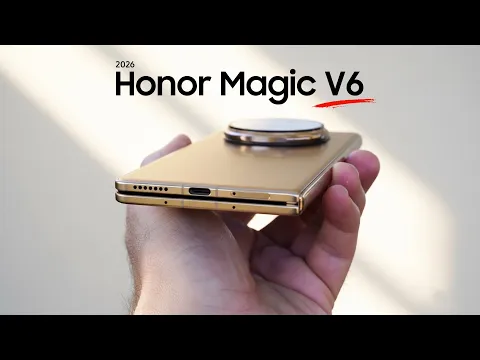

In addition to capacity, another piece of information consistently cited is the presence of wireless charging.
Support for wireless charging is discussed as expected in reports accompanying the certifications, but the consulted publications do not detail the wired charging power or the limits for wireless charging, which are sensitive points for the positioning of a top-end device.
Therefore, the picture that is being drawn so far is that of a foldable attempting to differentiate itself by autonomy, while leaving the details of charging speed for the official announcement.
In practice, it is common for brands to hold these numbers for the stage of the event, especially when they want to highlight concrete usage gains and not just technical sheet figures.
MWC 2026 In Barcelona And Honor’s Early Event
Honor’s global presentation is scheduled for March 1st, in Barcelona, at an event dubbed “AI Device Ecosystem Era.”
The date falls one day before the official opening of MWC Barcelona 2026, which is set to take place from March 2 to 5.
The strategy of announcing the day before typically concentrates the spotlight and opens space for the brand to dominate the news before the main flow of launches.
Expectations, according to the published coverage, are that the conference will be the stage for both the Magic V6 and the Robot Phone.
In the case of the foldable, Honor has not yet presented official material with images, final design, or complete camera set, and the reports focus on the battery as the axis of positioning.
Robot Phone: Robotic Camera, Mechanical Arm, And YOYO AI

Separately from the Magic V6, Honor is also promoting a device it calls the Robot Phone, presented as an initiative to integrate robotics and artificial intelligence into the smartphone hardware.
On its official page, the brand describes the concept as a device with “super brain of AI,” “super mobility of a robot,” and the ability to transform into a “personal camera,” reinforcing the idea of a camera module with mobility.
Reports on the product suggest that the proposal includes a rear set attached to a joint mechanism, interpreted as a gimbal that moves and repositions the camera.
A pop-up retractable camera is also mentioned, alongside an AI assistant called YOYO, cited as an element for coordinating movements and imaging resources.
These details have been reported as part of the proposal presented to the market, but Honor has not yet released a complete sheet with final specifications, pricing, or launch markets.
In communications and invitations circulated by international press, the Robot Phone is described as the company’s “most iconic” creation, in an effort to make the announcement a showcase of strategy, not just hardware.
The coverage that mentions the invitation claims that the brand intends to use the event to tie together the message of an AI “ecosystem” across devices of different categories.
Therefore, Honor signals two fronts on the same stage: a foldable attempting to lead the conversation about autonomy and a concept that bets on format and interaction, placing the camera as a movable and “active” element in the experience.
However, public confirmation of what will actually be sold and what will remain as technological demonstration is still pending, a point that is not expected to be clear until the company outlines its schedule, versions, and availability.
If the Magic V6’s battery really increases to around 6,850 mAh (or more) and the Robot Phone arrives with this camera mechanism in its final version, to what extent will the next wave of foldables and “concept smartphones” prioritize autonomy and experimental hardware over incremental design and software adjustments?







Seja o primeiro a reagir!