





 Portuguese
  English
  Spanish
  3 min of reading
  0 comments


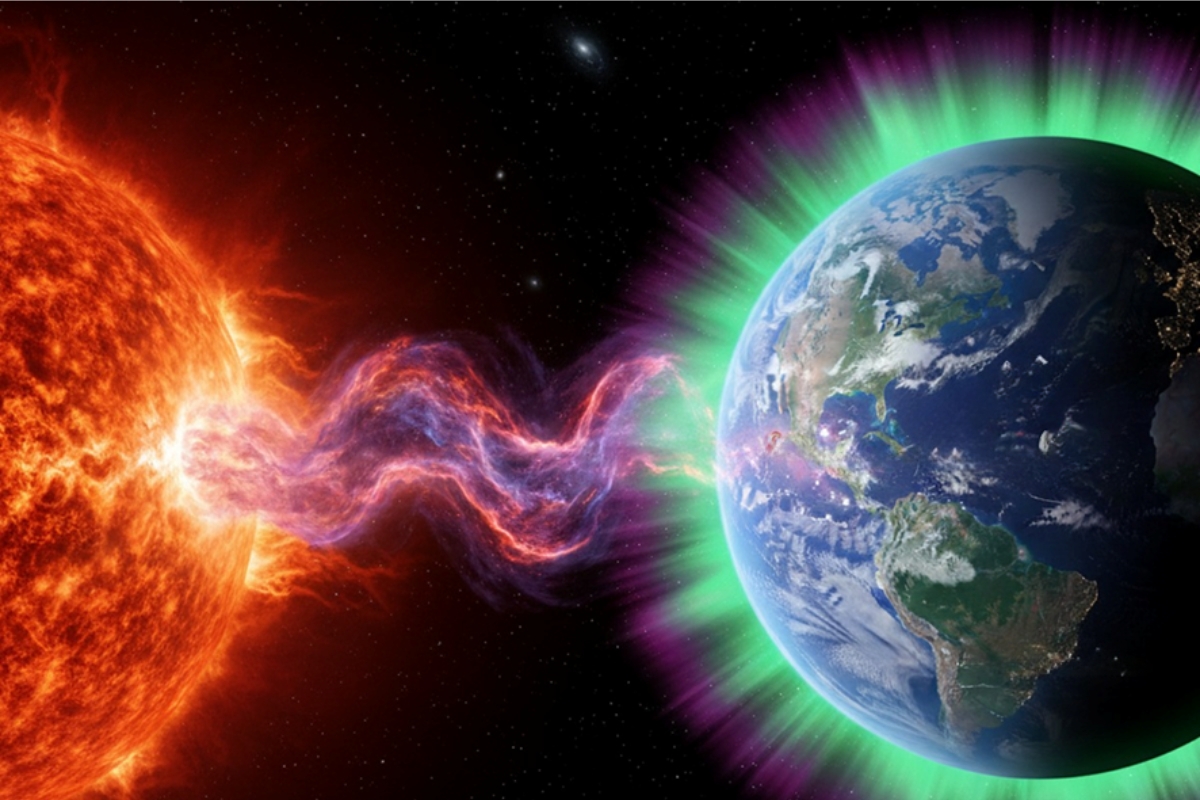
Detailed Analysis of the X8.1 Class Geomagnetic Storm That Hit Earth in February 2026. Learn How Solar Activity Impacts GPS and Power Grids.
In early February 2026, Earth entered a state of maximum alert after the Sun unleashed a series of high-intensity explosions, culminating in geomagnetic storms that put space agencies and critical infrastructures on global alert. The main event was a class X8.1 solar eruption, recorded by NASA’s Solar Dynamics Observatory (SDO). This explosion, one of the most powerful of the current Solar Cycle 25, originated from a complex and highly unstable sunspot region, labeled by astronomers as AR4366.
What Are Geomagnetic Storms
X-class eruptions represent the top of the solar intensity scale. To understand the magnitude, an X8.1 eruption releases energy equivalent to billions of hydrogen bombs detonating simultaneously. While electromagnetic radiation (X-rays and ultraviolet light) reaches our planet in just eight minutes, causing immediate blackouts in high-frequency radio communications, the real danger lies in the Coronal Mass Ejection (CME).
The CME is a giant bubble of plasma and magnetic fields traveling through space at millions of kilometers per hour. When this cloud of charged particles collides with Earth’s magnetosphere, it creates a compression and turbulence that we call a geomagnetic storm. In 2026, the magnetic orientation of this CME was perfectly aligned to “open” Earth’s defenses, allowing solar energy to penetrate deeply into our upper atmosphere.
-
INMET danger alert: heavy rains between the 3rd and 4th may drop up to 100 mm/day and winds of 60 to 100 km/h in several regions of Brazil require extra caution.
-
The parts crisis may bring back the drop notch and microSD in 2026; while Windows 11 promises to become lighter, leaks mention batteries of up to 10,000 mAh and 200 MP cameras.

-
In Kenya, engineer Nzambi Matee created “bricks 2.0” using packaging plastic: a mixture with sand, heated and pressed; they are 5 times more resistant, already have official licensing, and are being used in streets and construction projects.

-
More than 20,000 positions could be opened, and thousands of technicians are starting to be trained in Brazil, as the expansion of data centers creates an urgent race for professionals to keep the internet, cloud, and artificial intelligence running 24 hours a day.



Impacts on Technology and Daily Life
During the peak of the storm, between February 5 and 7, the effects were felt on a global scale:
- Navigation Systems: The GPS signal experienced severe instabilities. The turbulent ionosphere delayed satellite signals, creating positioning errors that affected everything from transportation apps to critical automatic landing systems at international airports.
- Radio Communications: R3 level radio blackouts were confirmed over the Pacific Ocean and parts of Latin America, disrupting maritime and aircraft communications that rely on shortwaves for transoceanic contact.
- Electric Infrastructure: Network operators at high latitudes monitored geomagnetically induced currents (GICs). These currents can “fry” large transformers if not managed, similar to what happened in the famous Quebec event in 1989.
The Visible Side: Auroras and Solar Maximum
Despite the risks, the storm gifted the world with a visual spectacle. The Kp index, which measures magnetic field disturbance, reached level 8 (G4 on a scale of 5), pushing auroras to much lower latitudes. Reports of green and reddish lights came from unusual locations such as northern France and southern United States.
This event confirms that we are at the peak of the Solar Maximum. The Sun operates on cycles of approximately 11 years, and 2026 is proving to be the most active year of this decade. Scientists from NOAA and ESA (European Space Agency) warn that although this storm was successfully managed thanks to early warning systems, the planet remains in a window of vulnerability for even larger events in the coming months.






-

-

2 pessoas reagiram a isso.