





 Portuguese
  English
  Spanish
  5 min of reading
  0 comments


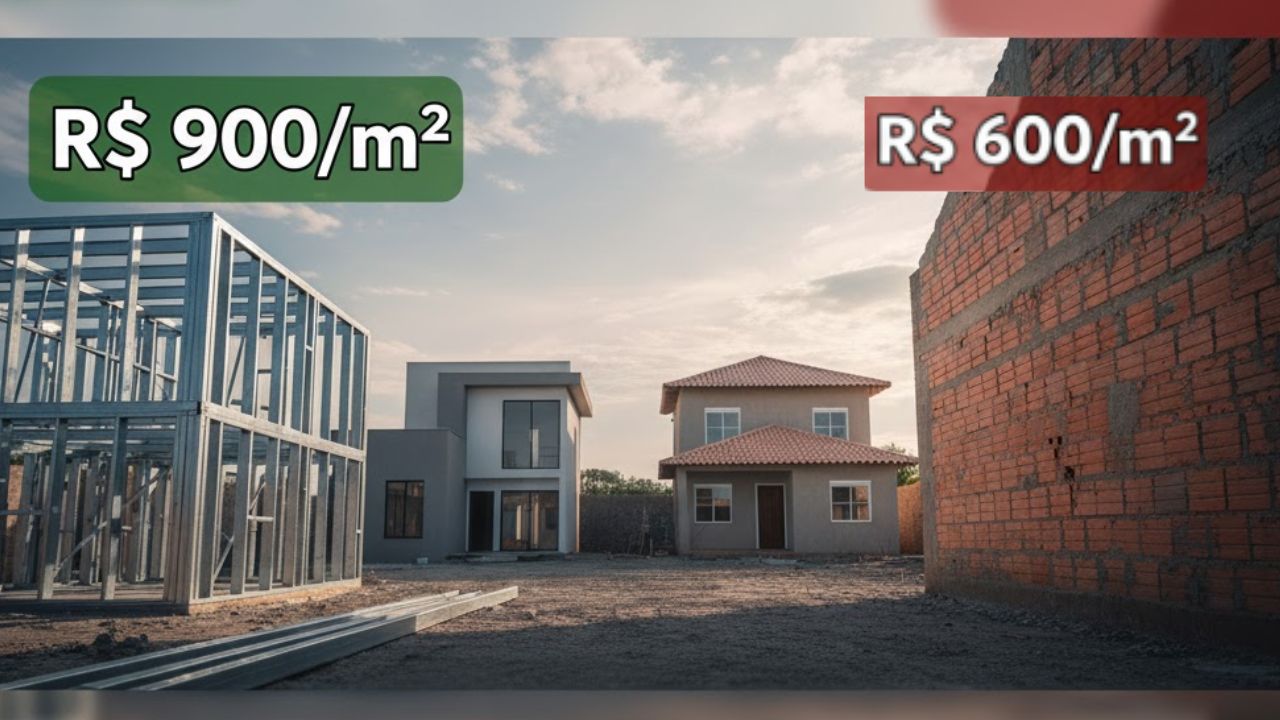
Analysis Compares the Construction Method of Light Steel and Traditional for Affordable Homes, Revealing Which Is Faster and Which Is Lighter on the Wallet in the Total Cost of the Project.
The choice of the construction method for an affordable home in Brazil is a dilemma that puts tradition and innovation face to face. On one side, masonry, widely known and mastered in the national market; on the other, Light Steel Frame (LSF), an industrialized system that promises agility and efficiency. For the builder or for someone financing their own home, the central question is: which system is actually faster and cheaper?
The answer is complex and depends on the metric used. Steel Frame is unequivocally faster, capable of reducing timelines from 10 to 12 months to just 3 or 4 months, according to data from 2025. However, masonry still presents a lower initial cost per square meter (R$/m²) for materials. The final verdict depends on what is prioritized: immediate disbursement or the total financial cost, which includes waste, time of charges, and agility in return on investment.
The Verdict on Speed: The “Dry” Advantage of LSF
Speed is the clearest and most indisputable victory of Light Steel Frame. The main difference is philosophical: masonry is a “wet” process, dependent on mortar, concrete, and their respective curing times. LSF, on the other hand, is a “dry” construction method and industrialized. With the exception of the foundation, the structure is assembled by screwing, making the schedule much more predictable and immune to weather delays, such as rain.
-
Congonhas receives the monorail promised for the 2014 World Cup after more than a decade of delays and becomes the first airport in Brazil with integrated subway.
-
Goodbye, concrete: a new trend in civil construction reduces the weight of the structure by up to 30%, accelerates projects by up to 40%, cuts costs on steel and labor, and improves thermal insulation with EPS.
-
Russian engineers create an innovative propeller blade for aircraft that could completely change the way airplanes and helicopters operate.

-
Couple finishes building PVC chalet on the beach on the last day, with air conditioning and curtains, but discovers the bathroom drain is inverted: water escapes from the drain, risking breaking the floor, and the rush continues before the trip.
The numbers comparing the schedules are direct: an analysis from 2025 details that while a conventional masonry affordable home takes from 10 to 12 months to be completed, LSF allows the same project to be executed in just 3 to 4 months. This represents a time reduction that can reach 70%. For those building at scale, such as in Social Housing (HIS) projects, this speed means a much quicker capital turnover, allowing for the construction and sale of more units in the same period.
The Initial Cost: Why Does Masonry Still Seem Cheaper?
When looking only at the initial material disbursement, traditional masonry still has an advantage. A case study focused on a 40.80 m² affordable home, with data from 2023, illustrates this difference well. The simulation calculated the cost per square meter of conventional masonry at R$ 1,912.23, compared to R$ 3,000.00/m² for Steel Frame. The structure itself – the galvanized steel profiles, plates, and screws of LSF – has an inherently higher material cost than the blocks, cement, and rebar of masonry.
However, the same 2023 analysis points to a crucial context: the value of masonry (R$ 1,912.23/m²) is often based on the Basic Unit Cost (CUB), which does not account for the “famous surprises of extra costs” common at the end of the project. In contrast, the price of LSF (R$ 3,000.00/m²), although higher, is considered a “fixed budget” and “meticulously calculated” by the industry, providing a financial predictability that handcrafted masonry cannot guarantee.
Hidden Costs: Where Steel Frame Returns the Money?


LSF offsets its higher structural cost in other crucial stages of the project, which are often ignored in the initial budget of masonry. The first major savings is in the foundation. Being a much lighter structural system, LSF requires simpler and cheaper foundations, such as a slab. Data from 2025 indicates that savings at this stage can reach 55% compared to the robust foundations required by masonry, freeing up significant cash flow right from the start.
The second point is waste, the biggest money drain in conventional construction. The construction method in masonry can lose 15% to 25% of the materials purchased, which turns into debris. In LSF, this waste rate is only 1% to 3%. This difference, according to the 2025 analysis, is not just the cost of discarded material, but also the disposal cost (rental of dumpsters and municipal fees), which is drastically reduced.
The Paradox of Labor: More Expensive Per Hour, Cheaper in Total
A common myth is that LSF is unfeasible due to labor costs. It is a fact that, requiring higher qualification, the cost per square meter of specialized LSF labor is 25% to 30% higher than that of masonry labor, according to data from 2025. This may frighten the builder, but this metric (R$/m²) is misleading.
The total labor cost is the amount paid per hour multiplied by the time of work. Since the LSF schedule is up to 70% shorter, the total disbursement on salaries and, especially, on payroll tax burdens is significantly lower in the end. The builder pays more per hour to a specialist but pays for many fewer hours in the aggregate of the project.
Viability for Affordable Housing and Financing through Caixa
Light Steel Frame is technically viable for the production of Social Housing (HIS) in Brazil and compatible with financing programs. However, the system faces regulatory barriers that masonry, being a traditional and public domain method, does not.
For an innovative construction method to be financed by Caixa Econômica Federal in programs like “Minha Casa, Minha Vida”, it needs to have strict certifications. Work focused on the feasibility of LSF for HIS in Brazil clarifies that the system must have a SiNAT (National System of Technical Assessment) and a DATec (Technical Assessment Document). These seals assure the financial agent that the system has proven performance and durability, mitigating risks and enabling financing.
Immediate Cost vs. Total Cost
The choice of the construction method ultimately depends on the builder’s goal. There is no single winner, but rather the right choice for different objectives.
For the low-income self-builder, focused on the lowest initial capital disbursement, Structural Masonry (a rationalized version of masonry) is still the most pragmatic option. However, for the developer or HIS builder, who analyzes the total financial cost, speed, and return on investment, Light Steel Frame proves to be a strategically superior choice, despite the higher initial R$/m².
Do you agree with this change? Do you think it impacts the market? Leave your opinion in the comments, we want to hear from those who live this in practice.








-

2 pessoas reagiram a isso.