





 Portuguese
  English
  Spanish
  3 min of reading
  0 comments


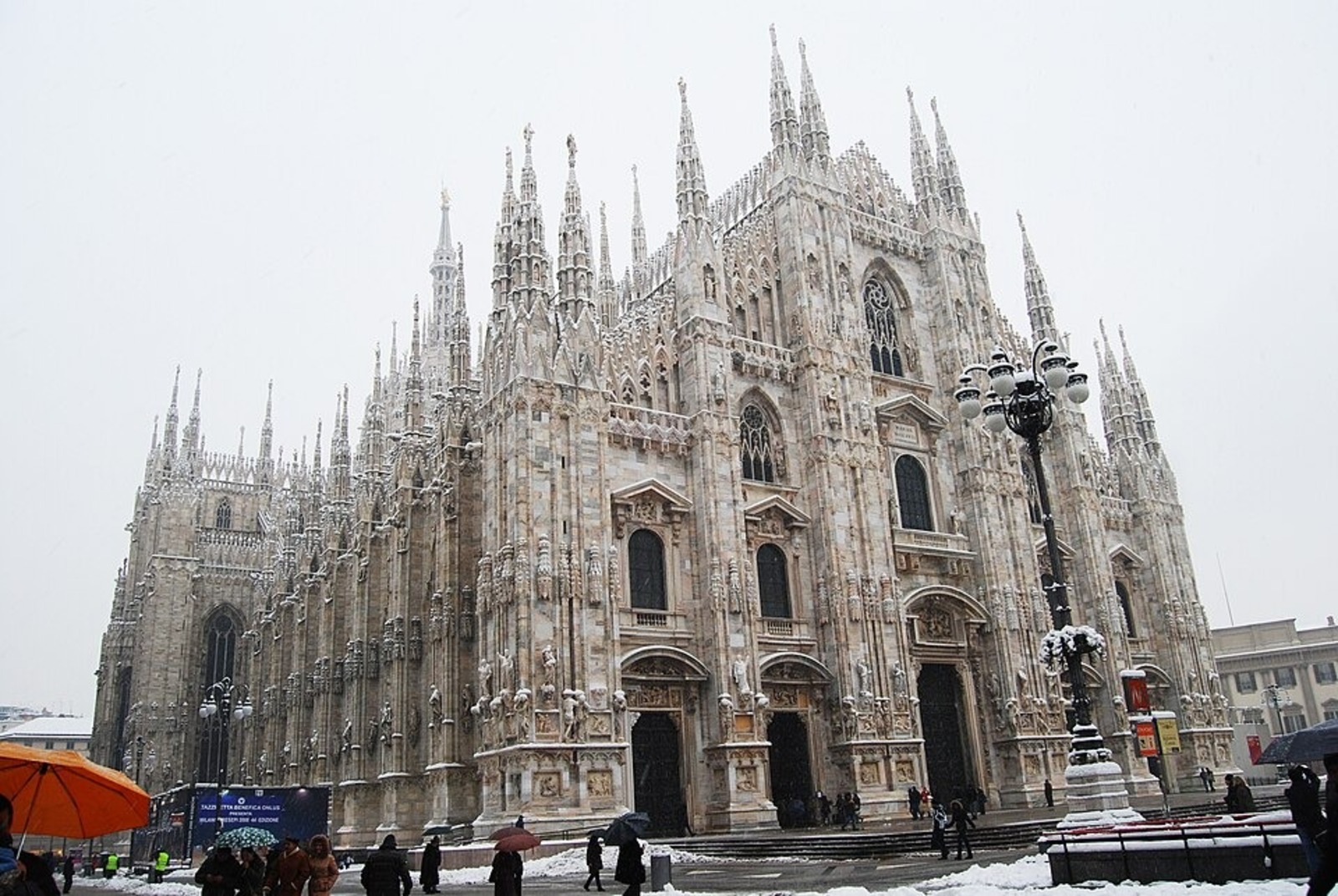
Started in 1386 and Completed Only in 1965, the Cathedral of Milan Represents Centuries of Work, Artistic Changes, and Historical Decisions That Transformed the Duomo into One of the Greatest Architectural Icons of Europe
The construction of the impressive Cathedral of Milan, the famous Duomo di Milano, began in 1386. Under the patronage of Gian Galeazzo Visconti, the project was born with an ambitious goal: to replace ancient basilicas and transform the city center into a symbol of faith and power. The chosen site housed the basilicas of Santa Maria Maggiore and Santa Tecla, which made way for the new structure.
Right at the beginning, in 1387, the Veneranda Fabbrica del Duomo was created, an institution responsible for managing the work, supervising the resources, and coordinating the transport of marble extracted from Candoglia.
This choice of material, more noble than the traditional Lombard brick, marked a turning point. The marble gave the cathedral the majestic appearance that defines it today.
-
Goodbye iron: new technology from Xiaomi promises to revolutionize the way we iron clothes with 500 kPa steam, continuous flow of 120 g/min, heating in 65 seconds, and six smart modes for different fabrics.

-
Rio Pardo, the most mysterious city in Rio Grande do Sul: untouched Pampas castle, the missing treasure of the Devil Boy, bride’s saint, invisible tunnels, and a 200-year curse today.
-
China retires the J-7 fighter after years of military protection and can now transform military items into drones, following more than 60 years of operation of the J-7, derived from the MiG-21, with thousands of units produced and strategic use in the PLAAF and PLANAF.

-
Volunteers are sought to live in the mountains for a month: a study pays people to stay at 2,500 meters, with 24-hour monitoring of sleep, metabolism, and blood pressure.

Advances and Challenges Between the 15th and 16th Centuries
In the 15th century, progress was visible, albeit slow. In 1418, Pope Martin V consecrated the main altar, a sign that part of the church could already be used. Even so, the work was far from finished.
In the following years, great names in architecture and art, such as Leonardo da Vinci, contributed ideas and designs.
The mixture of styles — from the original Gothic to Renaissance influences — ended up making the process more time-consuming. Each architect left their mark, and the result was a series of changes that delayed completion.
Napoleon and the Unfinished Facade
The facade, perhaps the most emblematic element of the Duomo, took centuries to be erected. Only at the end of the 16th century did significant work begin on this part.
During the Napoleonic period, construction gained new momentum. In 1807, when Napoleon Bonaparte was crowned King of Italy in Milan, he ordered that the facade be finally completed.
Between 1807 and 1813, a considerable portion of the towers and pinnacles was installed, giving the exterior the grandeur we know today.
Official Conclusion After Almost Six Centuries
Although the main body of the cathedral had been finished long ago, its official completion only occurred in 1965, almost 579 years after the start of construction.
In this final phase, decorative elements, bronze doors, stained glass, and the last interventions on the facade were completed.
Therefore, the Duomo of Milan was not only built — it was continually perfected, renovated, and adapted over the centuries.
Why Did It Take So Long?
The delay in construction has several explanations. First, the changes in style and the growing ambition altered the design multiple times.
In addition, intermittent funding and periods of political instability hampered the progress of the works.
Another essential factor was the monumental scale of the building: there are hundreds of statues, dozens of stained glass windows, and immense columns, which required continuous work for finishing and restoration.
An Eternal Symbol of Milan
More than a cathedral, the Duomo is a reflection of Milan’s very history. It brings together faith, art, and political power in a structure that has spanned generations.
The long duration of the construction became part of its identity: each century left visible marks on its marble.
Thus, the Duomo of Milan became not only a religious monument but also a living testament to human persistence in the face of the grandeur of a dream.
With information from Toptenz.









-

Uma pessoa reagiu a isso.