





 Portuguese
  English
  Spanish
  3 min of reading
  3 comments


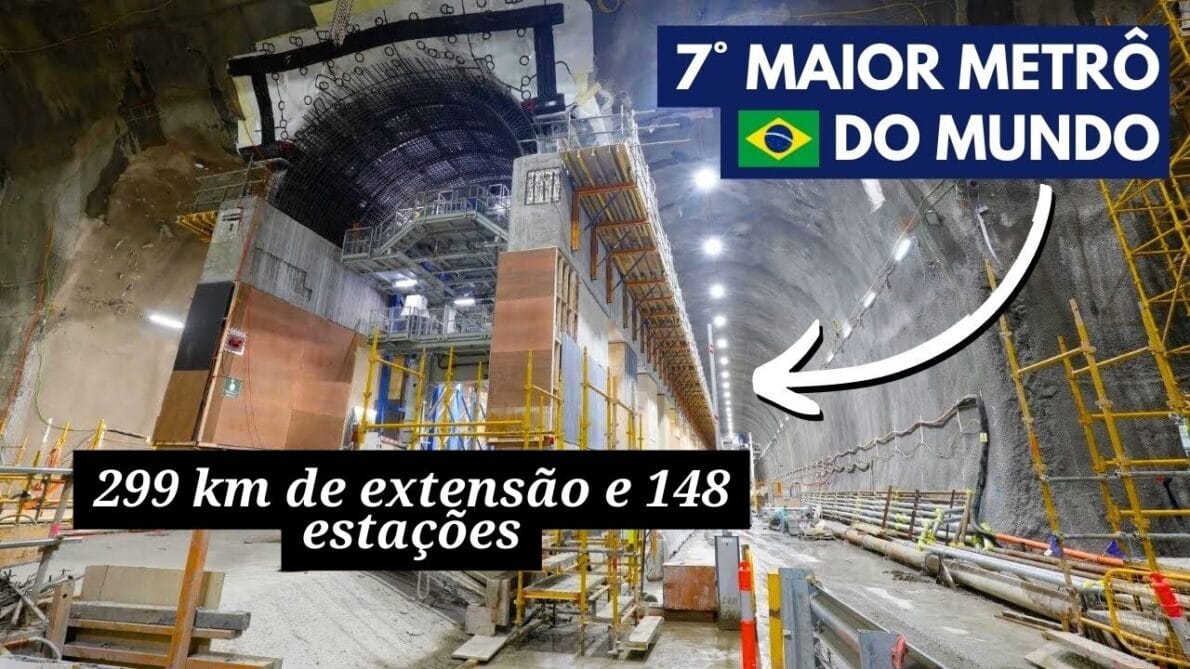

The Most Ambitious Project of the São Paulo Capital Aims to Transform the City into a Global Reference in Metro Transportation.
Amid complex urban mobility challenges, the largest metro expansion in Latin America in São Paulo moves forward with the promise of changing the public transport landscape. With a length of 299 km and 148 stations, the São Paulo metro is already the ninth largest in the world, and ongoing projects aim to add 120 km of new lines, elevating the city to the seventh position in the global ranking of metro networks.
The construction in São Paulo involves massive investments, exceeding R$ 100 billion to complete the expansions already underway and in planning. The focus is to connect densely populated areas and improve mobility in peripheral regions. Among the highlighted works are the expansion of Line 2-Green, the expansion of Line 15-Silver, and the controversial Line 17-Gold, whose delays and controversies mark the recent history of the metro.
Largest Metro Expansion in Latin America with Cutting-Edge Technologies
The largest metro expansion in Latin America will be driven by cutting-edge technologies, such as the use of tunnel boring machines, large excavators that operate in complex urban areas, allowing for faster and safer tunnel construction. An example is the tunneler Cora Coralina, which has already advanced over 1.5 km in the excavation of Line 2-Green, one of the most anticipated projects by the residents of São Paulo.
-
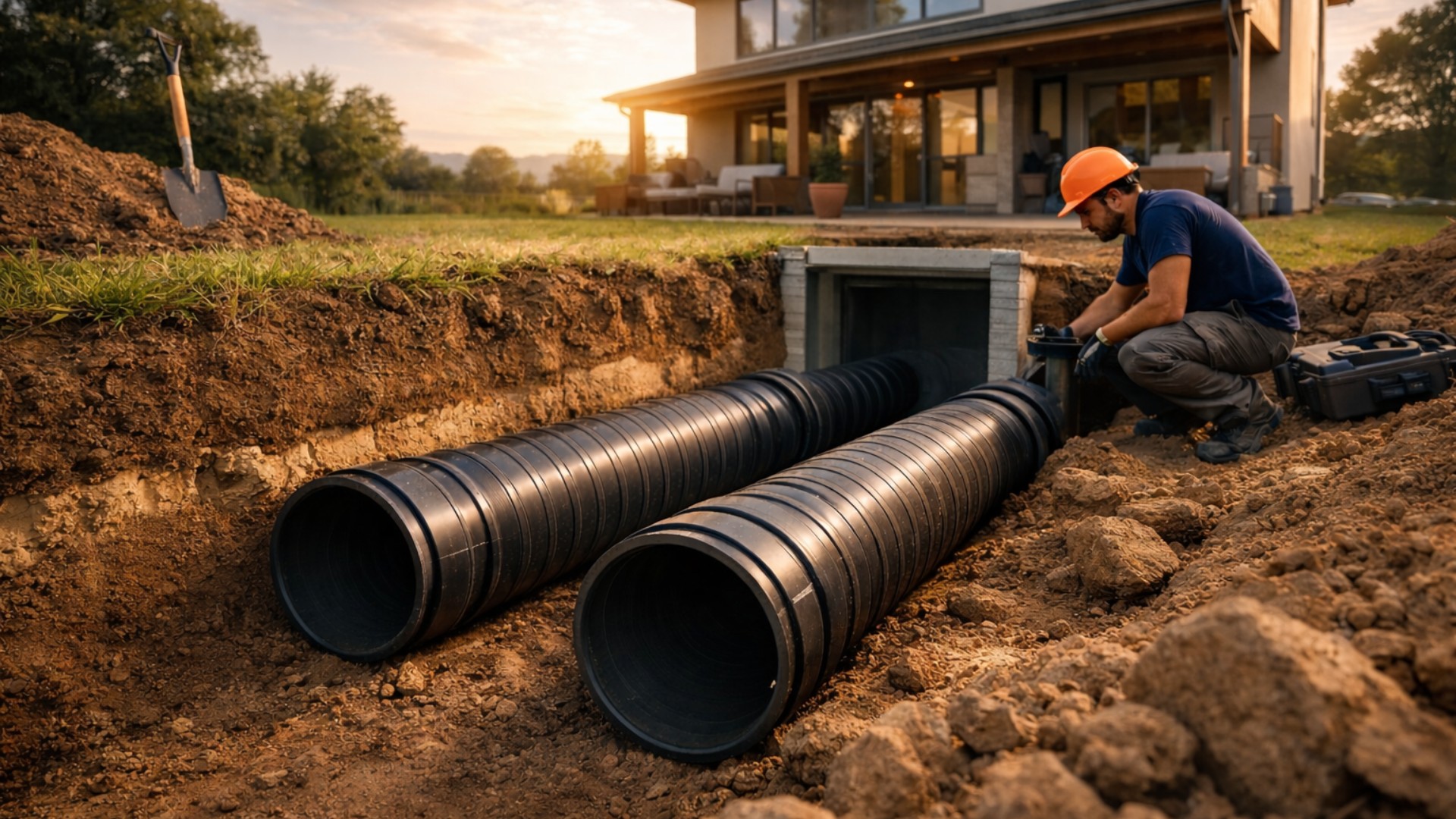
Architects are burying plastic pipes 2 meters deep and using ducts up to 30 meters long to cool homes without electricity, with low-consumption fans and natural heat exchange that drastically cuts the electricity bill.
-
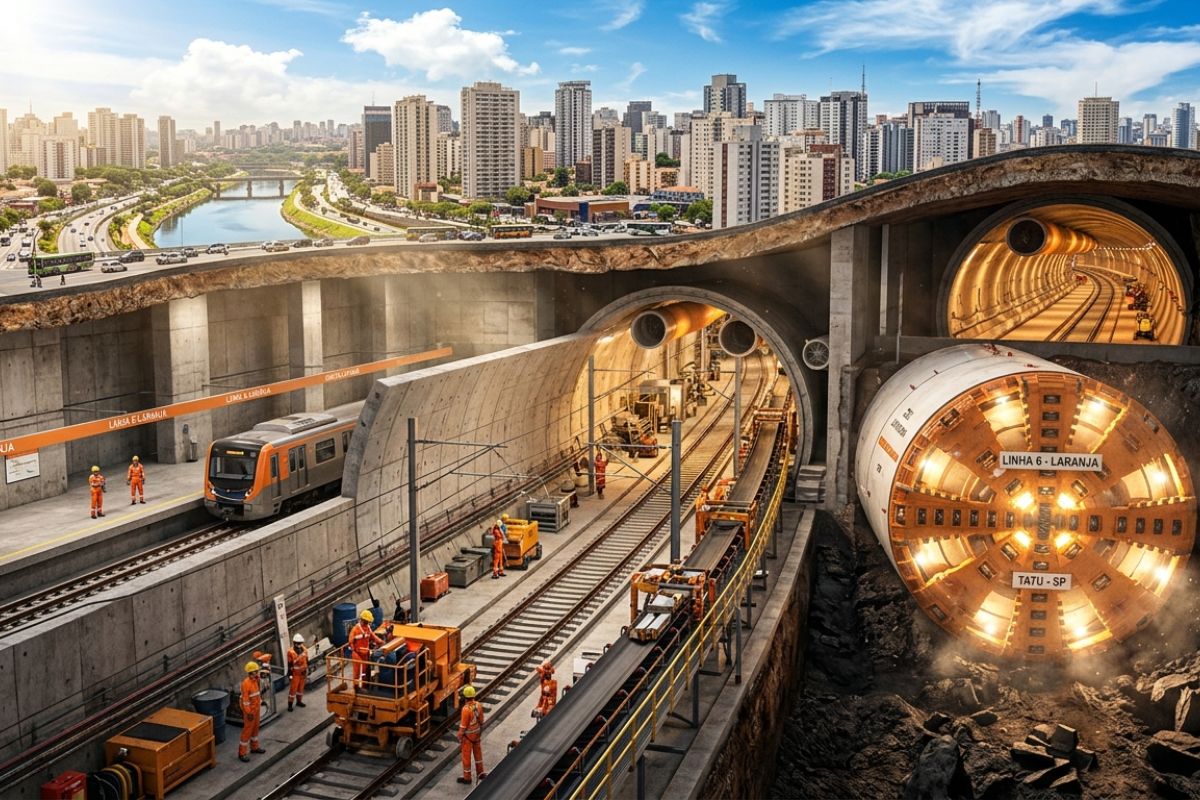
Under São Paulo, Line 6-Orange reaches 15.3 km and 15 stations, promising 23 minutes from Brasilândia to the Center and 633,000 passengers per day; with autonomous trains, it will open a partial section in October 2026.
-
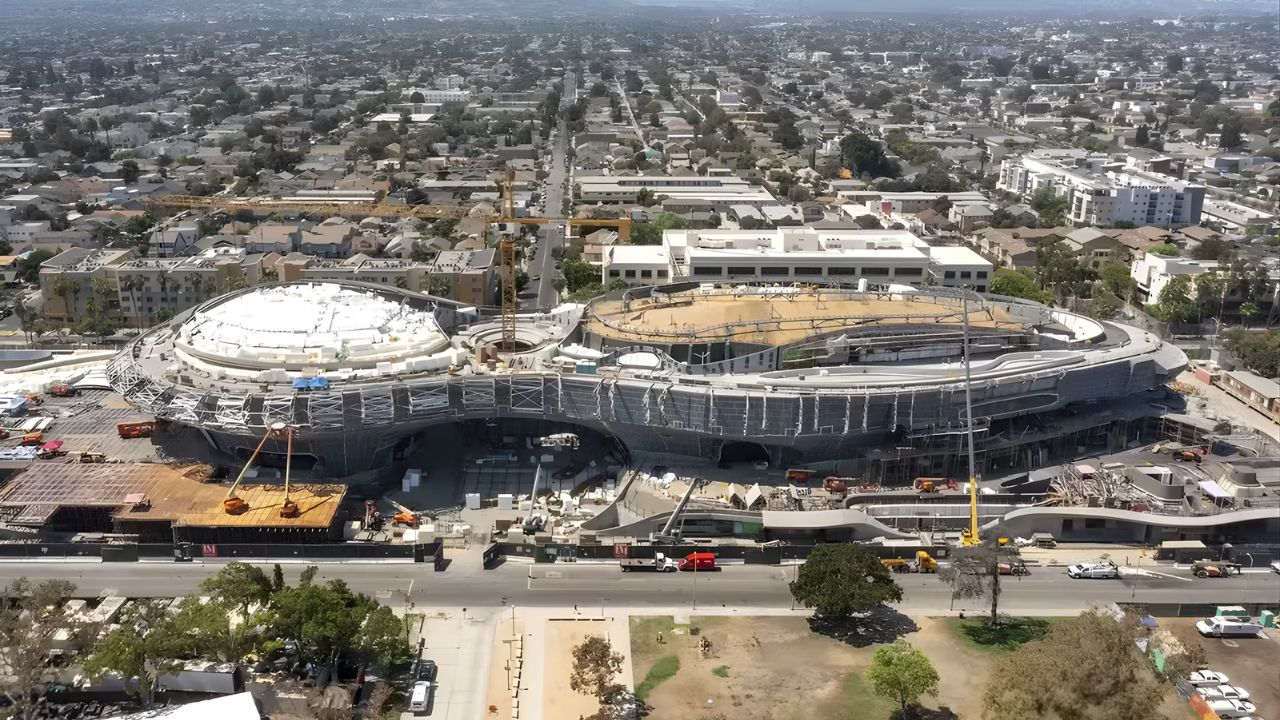
Created by George Lucas with over $1 billion, a futuristic museum in the shape of a spaceship with 1,500 curved panels is about to open in Los Angeles and will house one of the largest private collections of narrative art in the world.
-
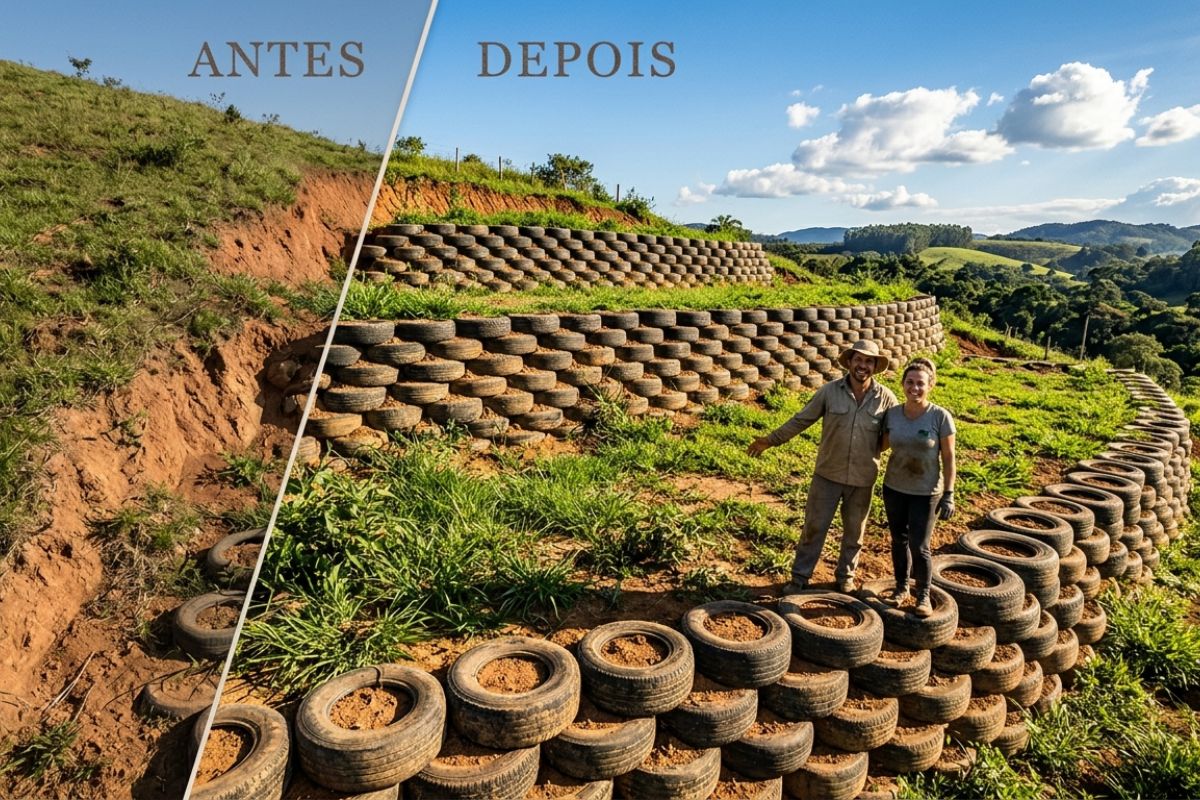
Couple shows how they built a retaining wall on their property using 400 old tires: sloped land turned into plateaus, tires are aligned, filled, and compacted with layers of soil, with grass helping in support and at almost zero cost.

The Importance of the New Lines
In addition to improvements in existing lines, new projects such as Line 6-Orange and Line 19-Sky Blue are crucial for transforming the city’s transport system. The construction in São Paulo of these lines involves innovative solutions, such as the use of glass doors on platforms and advanced security systems, as well as efficient integration with other modes of transportation.
Line 6-Orange, for example, which will connect important academic centers and neighborhoods in the northern zone with the city center, is already 55% complete. Upon completion, the line is expected to serve more than 600,000 passengers daily, alleviating congestion in high-traffic areas such as Avenida Paulista and the historic center.
Challenges and Overcoming
Despite the advances, the largest metro expansion in Latin America is not without difficulties. Problems such as frequent delays in the construction of Line 17-Gold, which was supposed to be delivered in 2014, and the accident involving the crater on Marginal Pinheiros in 2022 are examples of the challenges faced. The delay in completing some lines, often due to legal and financial issues, generates frustration among the population and requires greater efficiency in public management.
The construction in São Paulo also faces the challenge of balancing urban impact with the needs of the population. The removal of families, traffic reorganization, and the noise from construction in residential areas are aspects that create tension between residents and authorities.
Promising Future with This New Construction in São Paulo


Even in the face of adversities, the future looks promising. Once completed, the largest metro expansion in Latin America will put São Paulo on the global map as a reference in urban mobility. In addition to benefiting millions of passengers daily, the new lines will have a significant impact on the local economy, generating direct and indirect jobs and fostering urban development in previously isolated areas.
But the big question is: will São Paulo be able to meet the promised deadlines and deliver this ambitious project without new delays? What do you think about the challenges that still lie ahead?






Atualmente SP não tem esses 299km de metrô, e sim pouco mais de 100km.
Eu moro bem perto da futura estação Anália Franco, dez minutos de caminhada, e acompanho o andamento das obras, e estou bem satisfeito e ansioso pela inauguração. Outra grande vantagem que vemos na região, é tudo subterrâneo, sem aquelas colunas e estações colossais no meio das avenidas , trazendo uma poluição visual terrível. Que venha a linha verde pra Zona Leste, o pessoal do Tatuapé está ansioso.
Tudo que refere-se a mobilidade demanda tempo estudos e muito investimento. Mas o resultado é benéfico.