





 Portuguese
  English
  Spanish
  5 min of reading
  1 comment


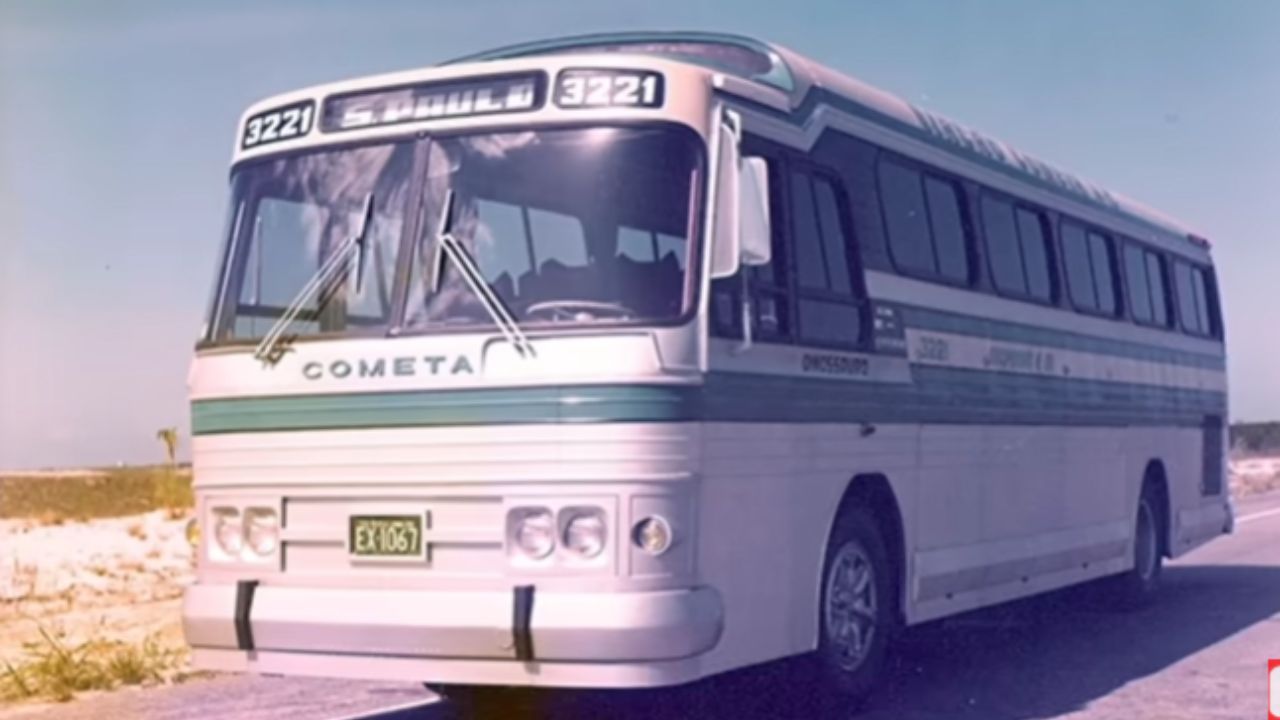

The Trajectory of Viação Cometa Is Intertwined With the Evolution of Road Transport in Brazil, but Its History Goes Beyond Routes: The Company Manufactured Its Own Vehicles, Creating Icons Like the Flecha Azul.
The history of the old Cometa bus is inseparable from the foundation of CMA (Auxiliary Manufacturing Company). This factory, born out of a market need, produced some of the most emblematic buses on Brazilian roads, such as the famous models “Dinossauro” and, later, the legendary series “Flecha Azul”.
As detailed by the Veículos e Histórias channel, the decision to build their own buses was what set Cometa apart. Their vehicles, with design inspired by the North American school and predominantly Scania engines, gained absolute fame for their speed, durability, and comfort. The lightness, achieved through the use of duralumin in the bodies, was the company’s great technical secret.
The Beginning With Tito Macioli and João Havelange
It all began in 1937, when Italian aviator Major Tito Macioli decided to fix residence in Brazil. According to the Veículos e Histórias channel, his entry into the transport sector was almost accidental. His brother-in-law, Arthur Brandi, had difficulty selling lots in Jabaquara, São Paulo, due to the distance from downtown. Macioli decided to create a bus line for the neighborhood (the Auto Viação Jabaquara) and obtained the concession.
-
Brazil’s nuclear submarine with a speed 5 times greater than normal advances after nearly 50 years and R$ 40 billion spent.
-
A Brazilian island charges R$ 0.50 to receive visitors and prohibits any new residents.
-
Why was the Great Wall of China built? The truth that many are unaware of!
-
At 73.8 meters tall, the world’s tallest teapot-shaped building has 15 floors, ensures stability, and impresses with an internal space of 28,000 cubic meters.


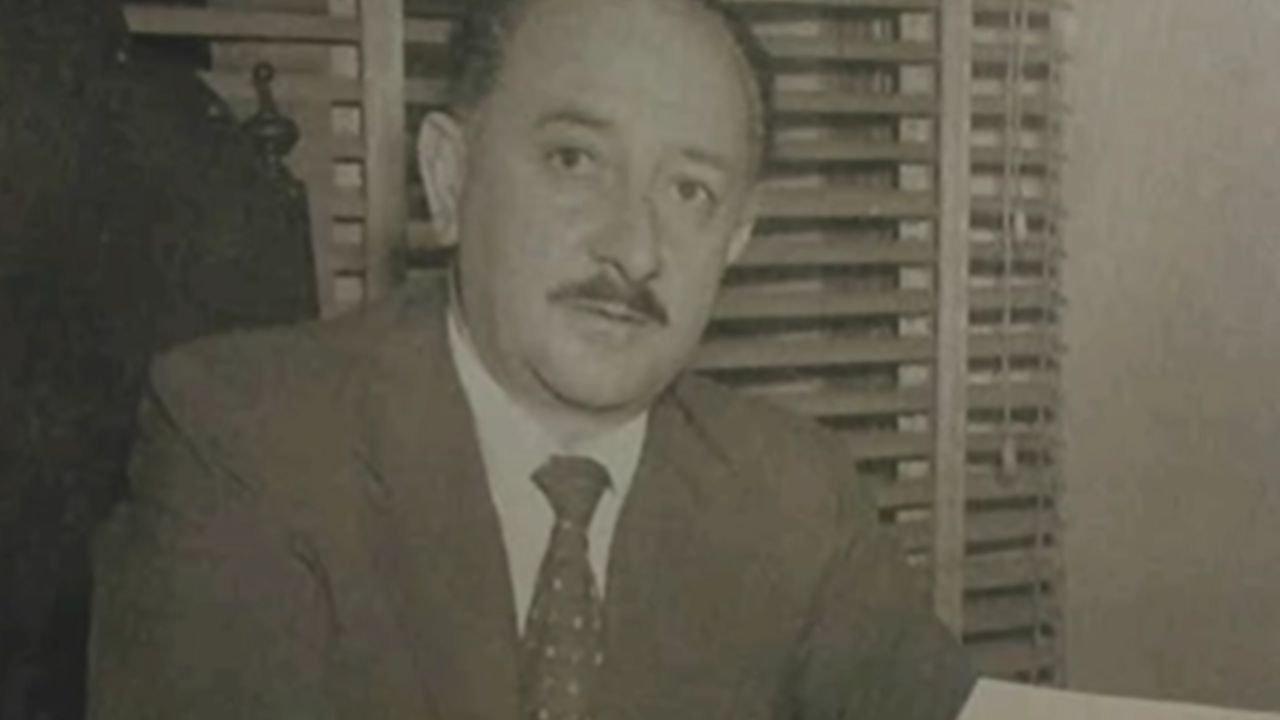
The transportation business proved to be much more profitable than selling land. One of the first partners of Jabaquara was none other than João Havelange, then an Olympic athlete, who would later preside over CBF and FIFA. Havelange’s presence was crucial during World War II, as Macioli, being Italian, faced distrust (Italy was part of the Axis powers).
In 1947, the municipality created CMTC (Municipal Company of Collective Transport), which took over Macioli’s prosperous company. Dissatisfied with the promised and not fully paid compensation, Tito Macioli decided to leave urban transport and move to intercity transport. In 1948, he purchased Auto Viação São Paulo Santos and, inspired by the design the vehicles had on the side, renamed it Viação Cometa.
The Era of Imports and the “Dinossauro”

Cometa expanded rapidly, creating the strategic Rio-São Paulo line in 1951, along the newly inaugurated Presidente Dutra Highway. In 1953, the company imported 30 GM PD-4104 buses, which here earned the nickname “Morubixaba”. The Veículos e Histórias channel points out that they were revolutionary for their time, with a rear Detroit Diesel engine, very fast and comfortable.
The problem arose when the Brazilian government began to restrict imports to foster the national industry. Since GM Brazil had no interest in manufacturing intercity buses, Cometa needed a plan. The solution came through a partnership with the Carioca manufacturer Ciferal, which produced bus bodies in duralumin, a material that made them up to 3 tons lighter than competitors.
In 1961, based on Scania B75 chassis, the first models of this partnership were born, nicknamed “Papa-Amarelo”. The evolution of this collaboration, now using the Scania BR-115 chassis, culminated in the iconic model of 1973: the “Dinossauro”. The combination of the lightness of duralumin and the power of the Scania engine gave Cometa buses an unbeatable reputation for speed and durability in the mountains.
CMA: Cometa Manufactures Its Own Old Bus
The successful partnership with Ciferal was abruptly interrupted. Due to the economic recession of the 1980s, Ciferal faced severe financial problems and had its bankruptcy declared in 1982. Without its main supplier and needing to renew its fleet, Viação Cometa made the most important decision in its history: to manufacture its own buses.
Thus, CMA (Auxiliary Manufacturing Company) was created. The factory was installed in one of the garages of the transport company in São Paulo and absorbed much of the skilled labor from the defunct Ciferal. The first model launched was directly inspired by the Dinossauro but with improvements. There was born the old Cometa bus most famous: the Flecha Azul.
The Flecha Azul used the Scania BR-116 chassis and, thanks to a new structural design, was 700 kg lighter than its predecessor. The Veículos e Histórias channel highlights that the obsession with lightness was a pillar of the company; CMA began to use Alcoa aluminum wheels, reducing the total weight, saving fuel and preserving the mechanical assembly.
The Evolution of Flecha Azul and the End of the Macioli Era
The Flecha Azul line was an absolute success and had several generations. In 1987, it began to use the K112C chassis with Intercooler. In 1990, it received the K113, with 363 horsepower (the same engine as the legendary Scania 113 truck). In 1993, the Flecha Azul 3 appeared, with the classic design of 12 identical size side windows, designed so that no passenger had their view of the landscape obstructed by the column.
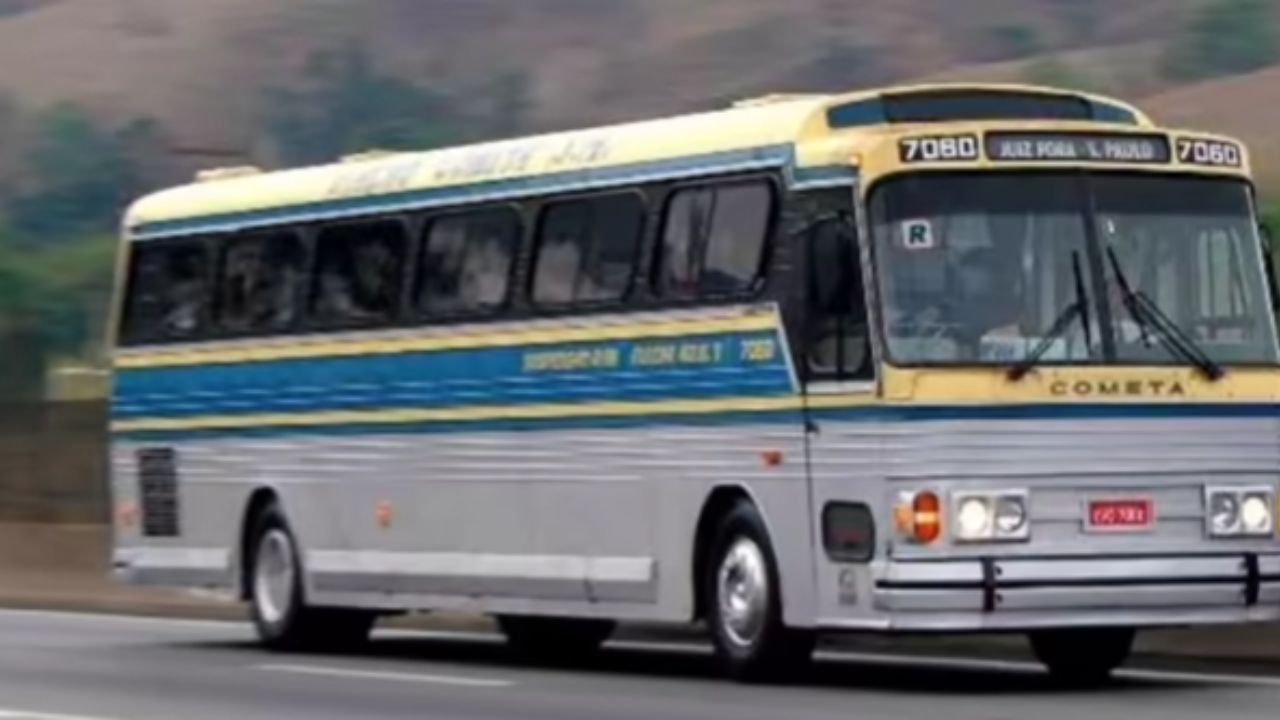
In 1996, Tito Macioli passed away, leaving the company’s control to his sons, Arthur and Felipe. By the late 1990s, when the market began to demand three-axle buses for greater capacity, CMA responded with the “Cometa” model, nicknamed “Estrelão”. It used the Scania K124 IB chassis with 420 hp and maintained the duralumin, but now with flat plates, abandoning the famous side strips.
The Sale to Grupo JCA and the End of CMA
The era of the Macioli family at the helm of the company ended in 2002. The brothers decided to sell Viação Cometa to Grupo JCA, from Rio de Janeiro, which already controlled companies such as Auto Viação 1001 and Catarinense.
The Veículos e Histórias channel highlights a crucial point in this negotiation: Grupo JCA purchased only Viação Cometa (the transport operation), but CMA (the factory) was not included in the deal. CMA completed the buses that were in production and began to operate only as a supplier of spare parts. In 2009, the Auxiliary Manufacturing Company definitively ceased its activities.
Under the new management, Viação Cometa retired the last Flecha Azuls in 2008 and began acquiring buses with market bodies (such as Marcopolo and Busscar) and chassis from brands other than Scania.
The history of the old Cometa bus is marked by the vision of its founder and the bold decision to manufacture the vehicle itself, controlling quality and performance. Many enthusiasts lament the end of CMA and the retirement of the Flecha Azuls.
Did you ever travel on one of these CMA classics? Do you think Cometa lost its identity after being sold and stopping the manufacture of its own buses? Share your opinion in the comments; we want to know your experience.




desde pequeno viajava pela Viação Cometa, de São Paulo x São José do Rio Preto, sempre fui apaixonado por ônibus, chegava até a desenhar e vivia observando os modelos e novidades lançados, mas quando lançaram o Dinossauro foi amor a primeira vista, vibrava só vê-lo, as vezes viaja lá no fundo só para escutar o som do motor, minha me perguntava quando eu crescer o que seria?, e eu respondia motorista da Cometa, coisa que nunca aconteceu, mas minha paixão até hoje, ainda permanece, sonho em ter um, mas enfim, a Cometa de hoje, não chega aos pés do que era no passado, identidade criada e perdida por conta de incompetência dos herdeiros, lamentável, tinha tudo para ser uma potência no mercado por serem diferenciados.