





 Portuguese
  English
  Spanish
  4 min of reading
  0 comments


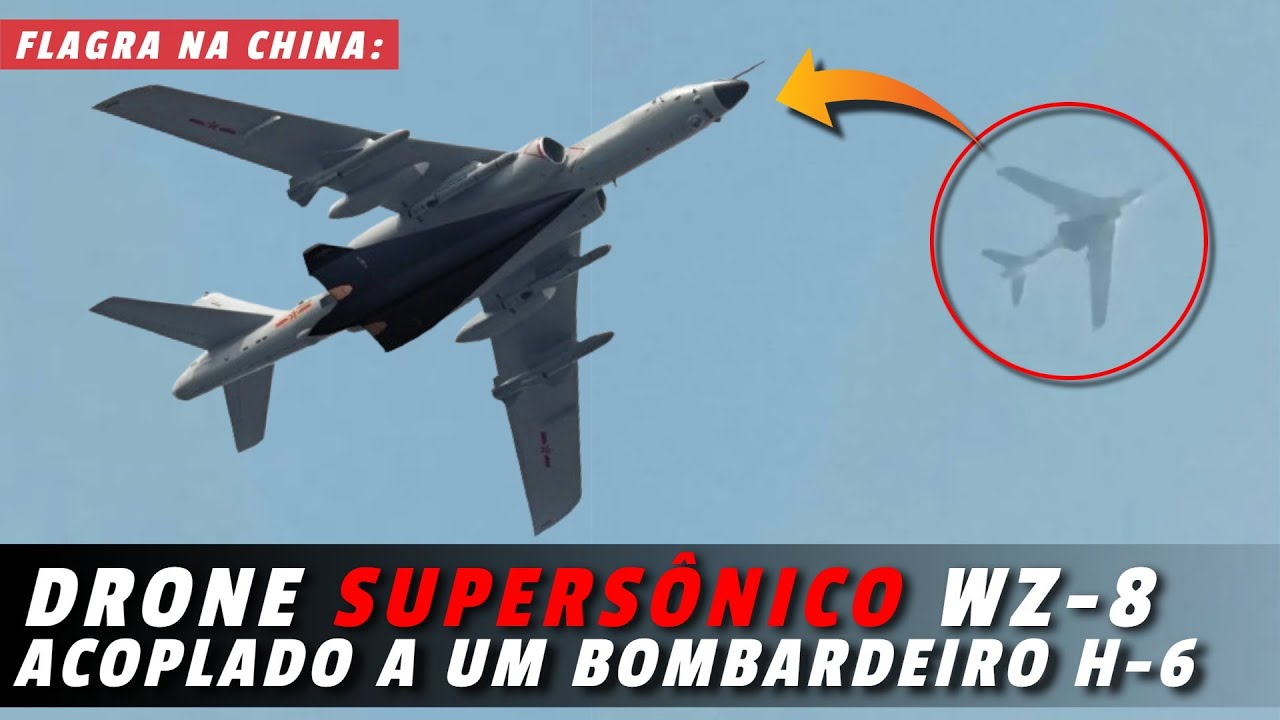
Launched By Bomber H-6M, Capable Of Flying Above 50,000 M And Reaching Estimated Speeds Between Mach 3 And Mach 6+, The WZ-8 Represents The Chinese Leap In Hypersonic UAVs For Deep Reconnaissance And Penetration.
China took an uncommon step by publicly presenting a hypersonic unmanned aerial vehicle designed to operate where conventional fighters and drones simply cannot reach. Known as AVIC WZ-8 and associated with broader studies such as the MD-22, the system draws attention not only for its speed but also for its operational concept: an air-launched UAV capable of crossing vast hostile areas in minutes and returning strategic data before modern defenses can react.
WZ-8: A Concept Born In The Air
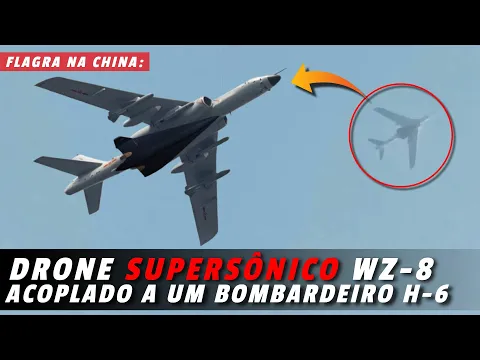
Unlike drones that take off from runways or ships, the WZ-8 was designed for air launch from the Xi’an H‑6M.
This method delivers two immediate advantages: it reduces the initial energy consumption of the vehicle and allows the selection of release points outside the direct reach of enemy defenses. After separation, the WZ-8 ignites its own engines and begins an aggressive climb towards the stratosphere.
-
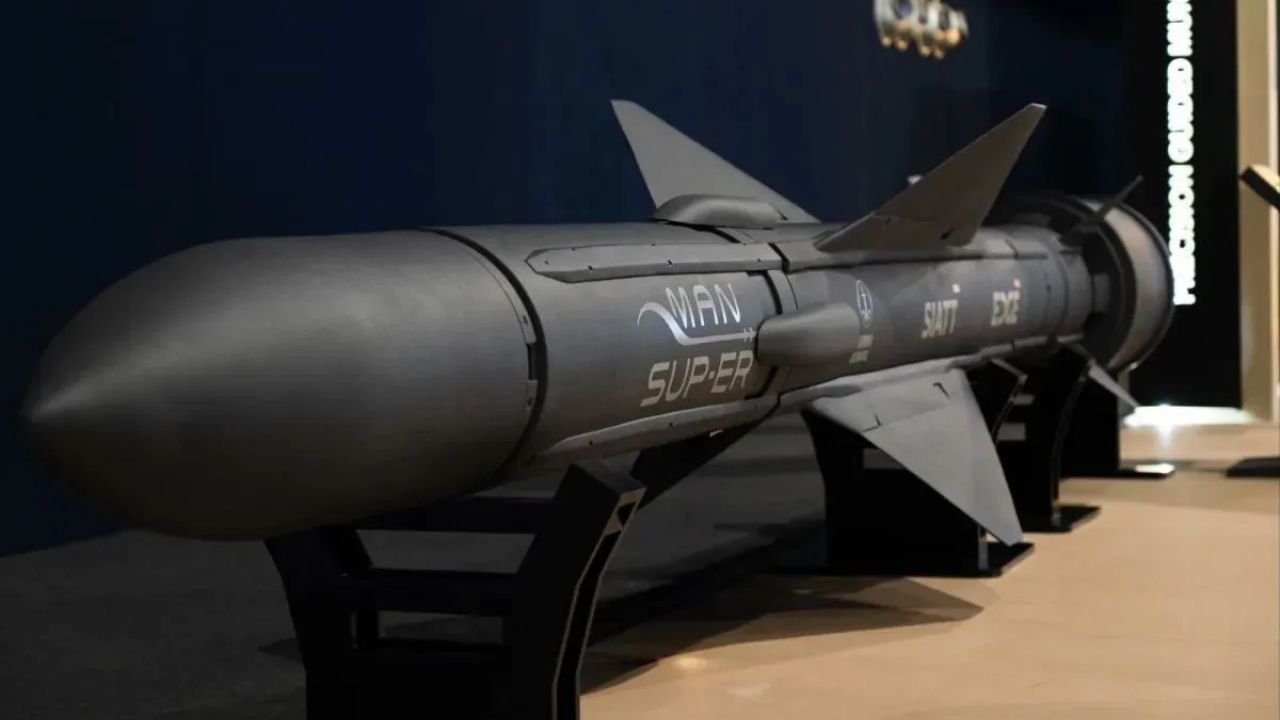
Brazil accelerates the evolution of the MANSUP missile, designing an air-surface version with a range exceeding 200 km, advanced guidance, and precision strike capability against land and naval targets, paving the way for a new generation of national armaments with global potential.
-
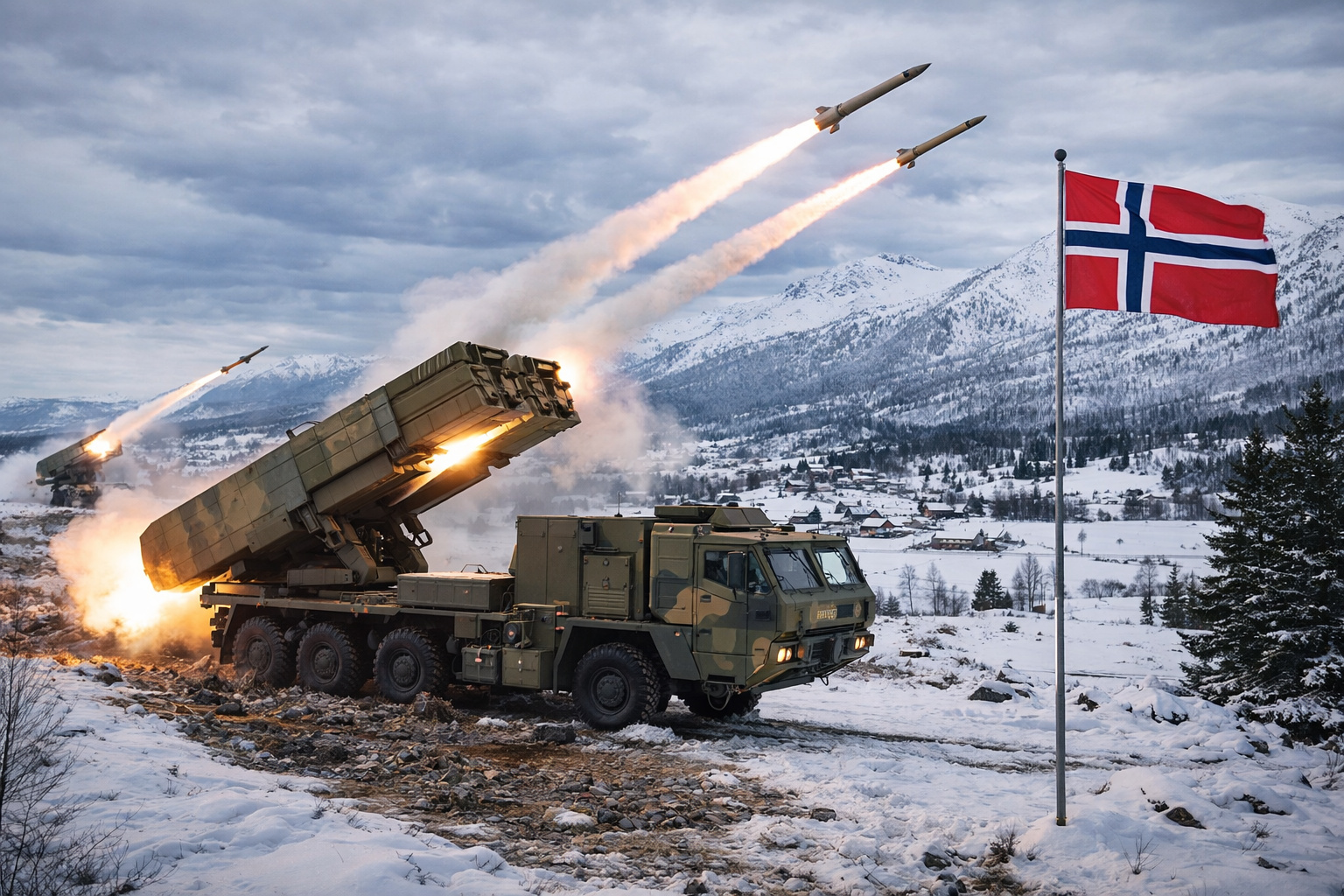
South Korea signs a $922 million deal with Norway, bringing Chunmoo launchers capable of firing guided missiles up to 290 km with an accuracy of 15 meters to Europe and turning the system into a key component of the new global race for precision artillery.
-
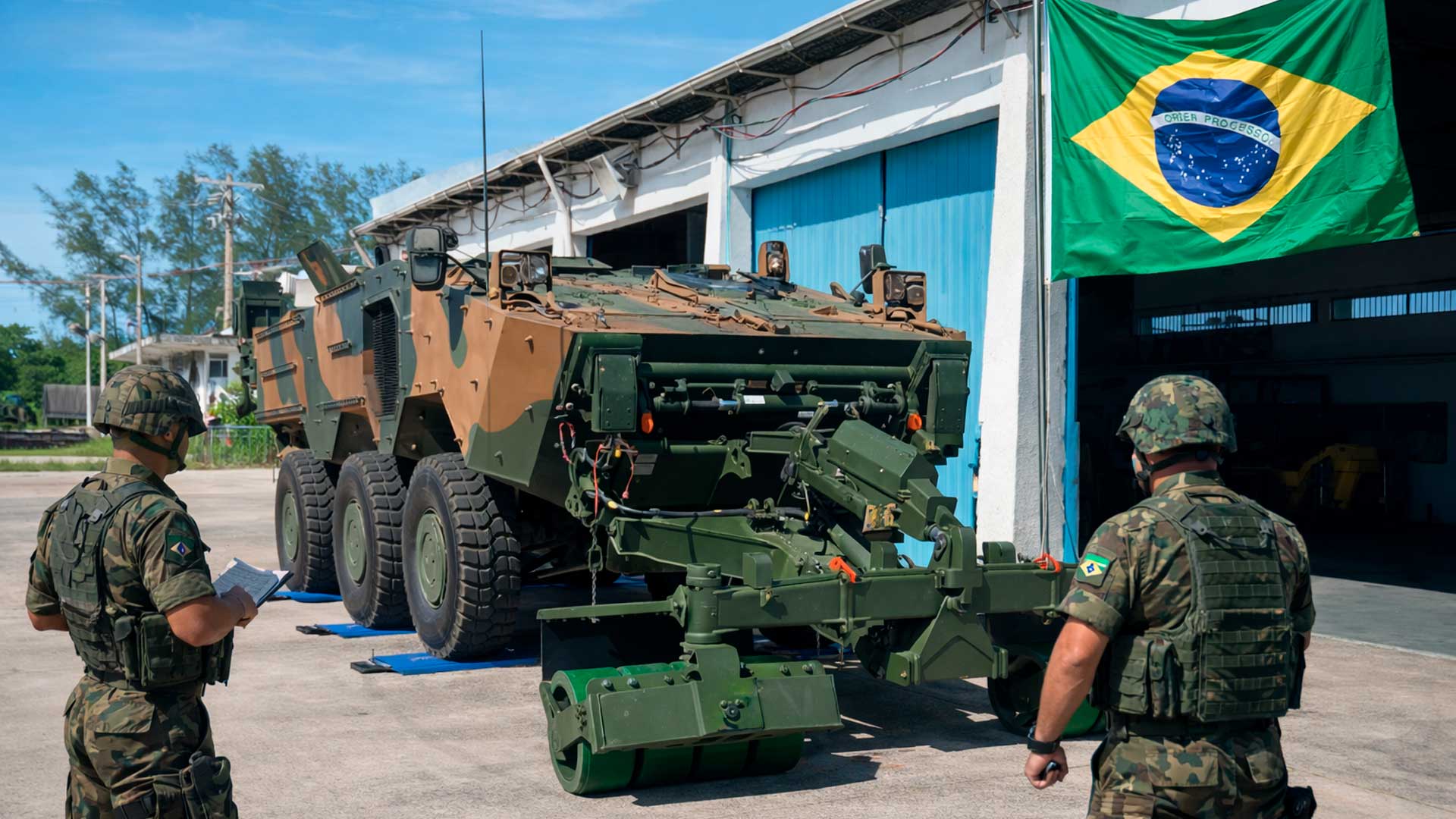
Brazil advances with decisive tests until June, the 6×6 Guarani armored vehicle with engineering equipment enters the most important phase and can enhance the operational capability of the Army.
-
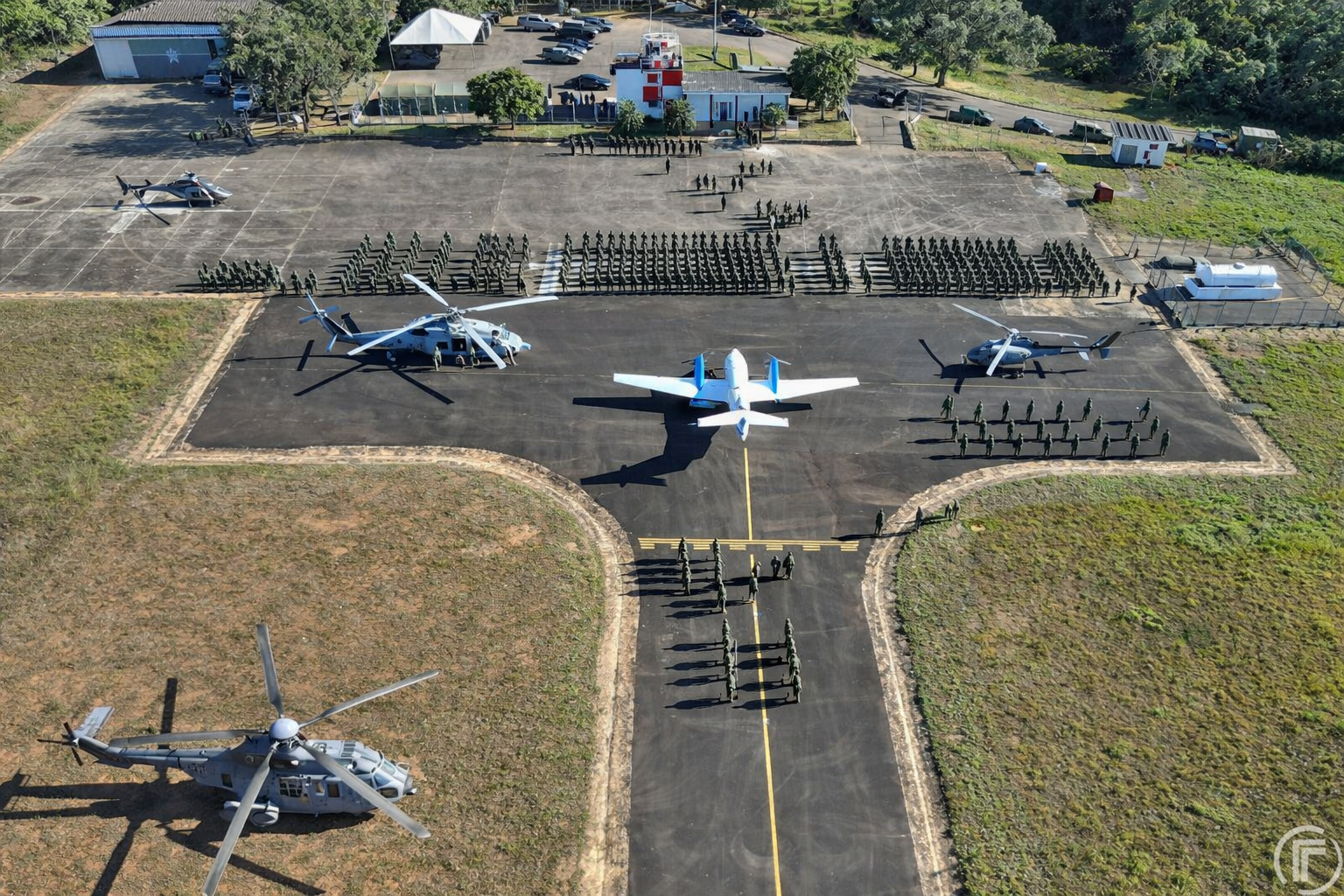
Furnas Airport is handed over to the Navy and becomes a strategic base with complete military operations, attack drones, and international mobilization at Furnas Lake.

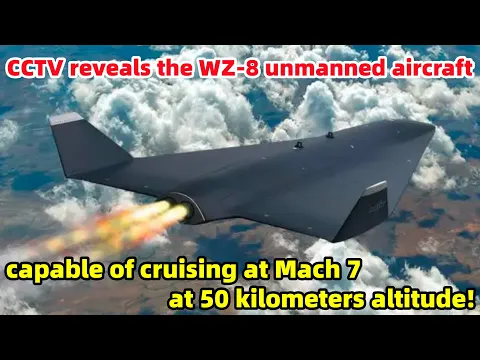

Open sources indicate that the WZ-8 operates at altitudes near 50,000 meters, well above the flight envelope of most fighters and many surface-to-air defense systems.
At this level, ground-based sensors have a harder time achieving continuous tracking, and conventional interceptors are severely limited. The choice of stratosphere is not aesthetic: it stretches the sensor horizon, reduces threats, and enhances the effective range of missions.
Hypersonic Speed And Minimum Reaction Time
The most disturbing element of the WZ-8 is its speed. Estimates vary between Mach 3 And Mach 6+, depending on the mission profile and the analyzed source.
Even at the lower limit, this is a level that significantly shortens the response time of air defenses and alert fighters. At hypersonic speeds, minutes make the difference between detecting and intercepting or just watching the target disappear from radar.
Although often associated with the idea of a “future bomber,” the confirmed role of the WZ-8 is strategic reconnaissance.
The vehicle is reported to carry electro-optical sensors and synthetic aperture radar capable of mapping bases, runways, ships, and defense systems with unprecedented speed. In a real scenario, it could clear the way for missiles and manned aircraft, identifying targets and assessing damage almost in real-time.
Deep Penetration Without Escort
The combination of air launch, high altitude, and high speed allows the WZ-8 to penetrate deep into defended areas without escort.
Unlike stealth drones that rely on discretion, the WZ-8 bets on kinematics: being too fast to be effectively engaged. This philosophy recalls what the SR-71 represented in the past — not invisible, but practically unreachable at the right time.
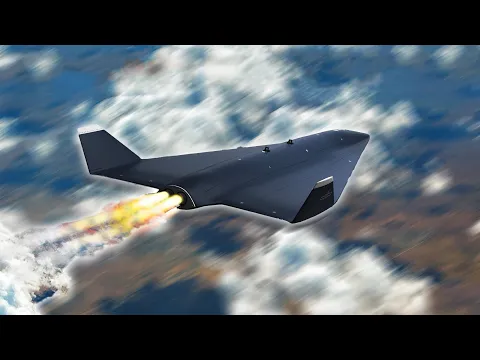
Analysts see the WZ-8 as part of a hypersonic ecosystem. By operating ahead of the forces, it can provide accurate data for hypersonic missiles, adjust trajectories, and reduce targeting uncertainties.
This integration transforms the drone into a force multiplier, connecting sensors and attack vectors in a much shorter cycle.
MD-22 And The Horizon Beyond The WZ-8
The name MD-22 emerges associated as a technological demonstrator of a family of Chinese hypersonic vehicles. While details remain scarce, the mention of the MD-22 suggests ambitions that go beyond reconnaissance, including much greater ranges and possible diversified payloads.
In this context, the WZ-8 can be seen as an operational bridge between experimental demonstrators and real employment systems.
What Is Still Uncertain
Despite the impact, there are limitations and uncertainties. There are no public confirmations regarding onboard armament, exact autonomy or full mission profiles.
The speed range itself remains estimated, varying by source. This indicates a system in evolution, whose full operational maturity is still being developed.
A New Calculation For Defenses
Even with gaps, the strategic effect is clear: the WZ-8 forces adversaries to rethink defenses. Radars need to cover higher altitudes, sensors must react faster, and interceptors must deal with targets that cross critical areas in minimal windows. Practically, the WZ-8 increases the cost of defense even before firing a single shot.
The WZ-8 is not just a fast drone; it symbolizes the Chinese bet on speed, altitude, and integration as keys to future air combat.
By combining air launch, stratosphere, and hypersonic speed, the system points to a scenario where seeing first and reacting faster decides the conflict and where unmanned platforms take on roles previously reserved for strategic aircraft.









-

-

-

-

-

30 pessoas reagiram a isso.