





 Portuguese
  English
  Spanish
  6 min of reading
  0 comments


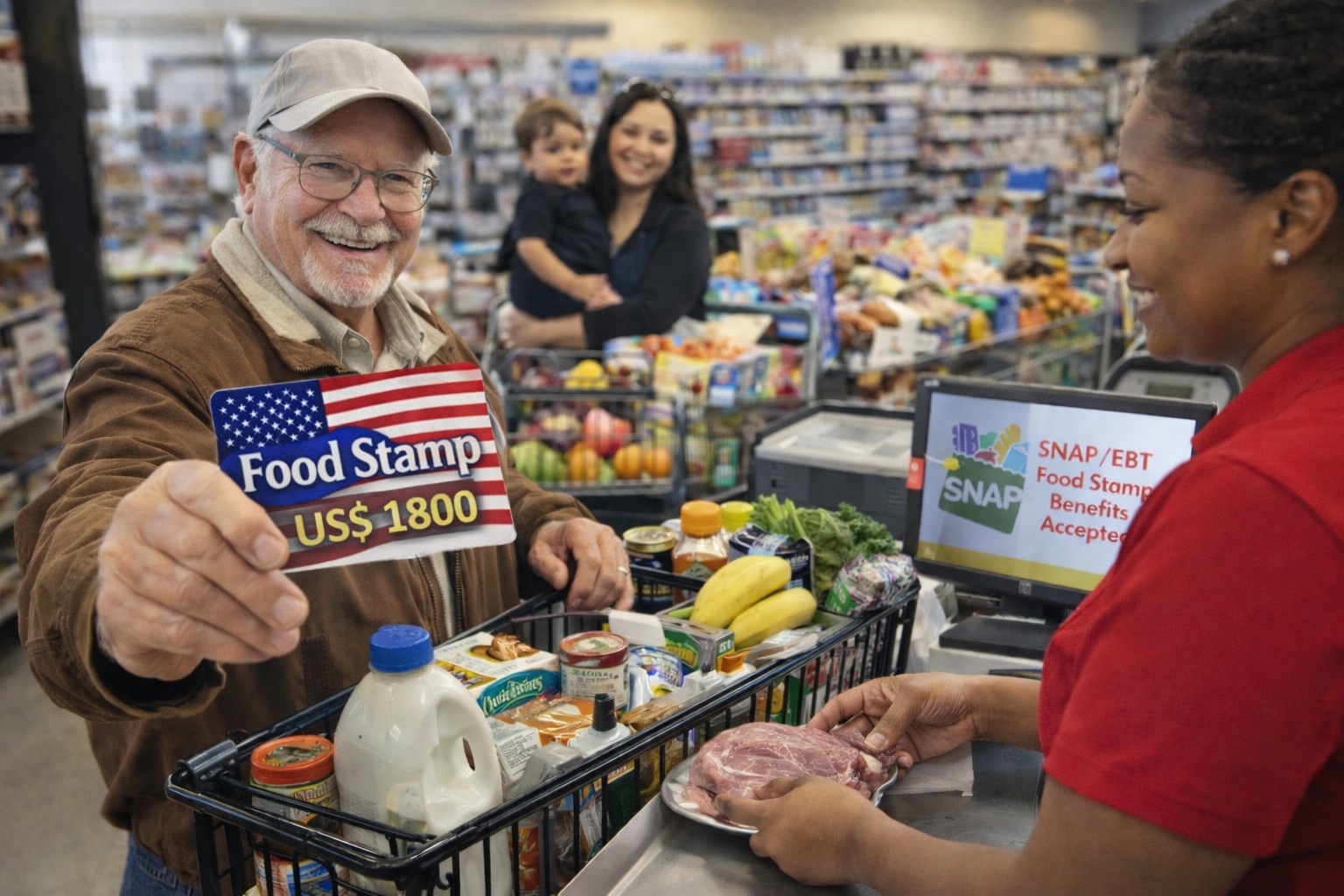
Bolsa Família in the United States Is Broader Than in Brazil: Social Programs Drive the Economy and Include Food, Rent, Health, Internet, and Even Annual Tax Credit.
The Bolsa Família often appears at the center of criticism in Brazil, often treated as synonymous with supporting those who do not want to work. However, the discussion changes when low-income programs from the United States come into play.
Even as a reference for capitalism, the country maintains a robust safety net aimed at sustaining consumption, preserving productivity, and preventing poverty from becoming a larger crisis.
The logic is pragmatic: channeling money and basic services to allow vulnerable individuals to work, study, consume, and produce.
-
He sold his share for R$ 4 thousand, saw the company become a giant worth R$ 19 trillion, and missed the opportunity of a lifetime.

-
Elon Musk’s Starship megafrocket puts $8 billion at risk, raises alarms in the market, and could affect technology, mining, and space internet startups in the coming years.

-
Airfare prices may rise with increasing fuel costs, and the government is considering urgent measures to avoid a direct impact on the wallets of Brazilians.
-
Chocolate prices soar nearly 15% and become a luxury item for Easter 2026, with increases surpassing inflation and changes in Brazilian consumption habits.




What Happened and Why It Attracted Attention
The comparison is striking because Brazil pays, on average, between R$ 600 and R$ 700 per family under the Bolsa Família, while in the United States, there are benefits with higher amounts and various support fronts.
The most cited example is SNAP, also known as Food Stamp, with an average of US$ 1000 (R$ 5,543.90) for a couple with two children, using the exchange rate of 1 USD = 5.5439 BRL.
In larger families, the amount can reach US$ 1800 (R$ 9,979.02) just in food assistance, which represents a level higher than what is paid by the Bolsa Família.
Why These Programs Exist and How They Became Economic Policy
The historical basis cited for strengthening these programs stems from the 1929 and 1930 crises, when it became clear that mass poverty does not only destroy the lives of those who suffer; it hampers the entire country.
When consumption falls, businesses break down, productivity plummets, violence increases, diseases rise, and economic growth loses momentum. In this scenario, reviving the economy without supporting those who have entered the vulnerability threshold becomes unfeasible.
This perspective also puts meritocracy into context: not everyone starts from the same point, and there are those who are born privileged. The programs serve as an attempt to provide minimum conditions so that opportunities become less unequal.
The Return Calculation: US$ 1.70 for Every Dollar Invested
The technical defense of the model revolves around the direct effect on consumption. A study by the USDA, the United States Department of Agriculture, concluded that each dollar allocated to social programs returns US$ 1.70 to the economy.
The reasoning is simple: subsidies translate into supermarket purchases, bill payments, and rapid circulation of income, which sustain commerce, services, and jobs.
This logic treats social spending as a tool for stabilization and growth, not as an economic brake.
Food Assistance with SNAP and the Weight of Dollar Values
The SNAP, known as Food Stamp, is described as money exclusively allocated for feeding low-income individuals.
The reported average is US$ 1000 (R$ 5,543.90) for a couple with two children.
For larger families, there is a reference of US$ 1800 (R$ 9,979.02) and also a mention that it can reach US$ 10000 (R$ 55,439.00) in cases of larger families, reinforcing the idea that the amounts can be significantly higher than those practiced in Brazil.
Housing, Health, and School: Rent Up to 90%, Medicaid for 85 Million, and Public Education from Kindergarten to High School
In addition to food, there is assistance for rental support covering between 70% and 90% of the rent. The individual chooses where to live within simpler options, and the government pays the owner directly.
The payment does not cover 100% because the rule maintains the requirement that the beneficiary cover a portion, preserving the incentive to work.
In health, low-income individuals have access to Medicaid, described as similar to SUS, serving 85 million Americans, about 1/3 of the population. Coverage includes consultations, surgeries, hospitalizations, and medications, including items considered complex.
For children, there is CHIP, expanding free health assistance to low-income families.
In education, public school is free from kindergarten to high school. Before that, childcare does not appear as a broad public offering, but there is reimbursement for daycare expenses to prevent the lack of childcare from hindering mothers from working and reducing labor supply in the economy.
College Funding, Armed Forces, 20-Year Loans, and Forgiveness of US$ 160 Billion by 2021
Higher education is paid for in the United States, including in public colleges, although cheaper than private ones. Still, there are incentives for more people to study, aiming to increase productivity.
One pathway is the benefit linked to the Armed Forces, which can fully cover the chosen college, even in institutions like Harvard, without any cited limits.
If an individual does not want to study, they can designate a substitute, such as a spouse or child, to utilize the credit.
Another alternative is subsidized student loans with low-interest rates and repayment over 20 years with grace periods.
As debts can become very high, there is information that the government has already forgiven over US$ 160 billion (R$ 887.024 billion) in student loans by 2021.
Almost Free Internet and Annual Tax Credit That Can Reach R$ 55,439.00
The Lifeline program emerges as a mechanism to reduce the cost of phone, mobile, and internet for those who cannot afford it, with the goal of keeping citizens and students connected and informed.
There is also a tax credit called the Earned Income Tax Credit, described as an annual payment to low-income workers, functioning as a refund and a means to level income and broaden participation in consumption.
The cited amount can reach US$ 10000 (R$ 55,439.00) deposited into accounts throughout the year, reinforcing the proposal to push income to the base and keep the economy moving.
Contrast Between Brazil and the United States Shows That Social Programs Can Drive Economic Growth and Prevent Crises
The contrast between Brazil and the United States reinforces that social programs can be designed with a focus on economic growth and crisis prevention, not just as income transfers.
In Brazil, the discussion often becomes tainted by political disputes and distrust in public administration, with perceptions of corruption affecting the acceptance of any social policy.
The practical consequence is that the topic is no longer treated as economic engineering, but becomes a political banner, reducing the space for technical adjustments and for assessing social and economic impact.
The Bolsa Família pays, on average, between R$ 600 and R$ 700, while the United States maintains a network with SNAP, rental assistance, Medicaid, daycare support, mechanisms for higher education, and annual tax credit, with amounts like US$ 1000 (R$ 5,543.90) and US$ 1800 (R$ 9,979.02) in food benefits.
The main message is direct: social assistance can be treated as economic policy, with returns on investment and a focus on sustaining consumption and productivity. The ultimate impact depends on management, direction, and confidence that resources reach those who truly need them.
The topic generates strong opinions and different views, and precisely for this reason, the debate is essential. Should social programs be seen as a cost or as an investment in the economy and society? The comparison between Brazil and the United States raises questions about management, impact, and practical results. Leave your opinion in the comments, share your vision, and participate in the discussion respectfully.







-

-

-

-

-

18 pessoas reagiram a isso.