





 Portuguese
  English
  Spanish
 4 min of reading
  0 comments


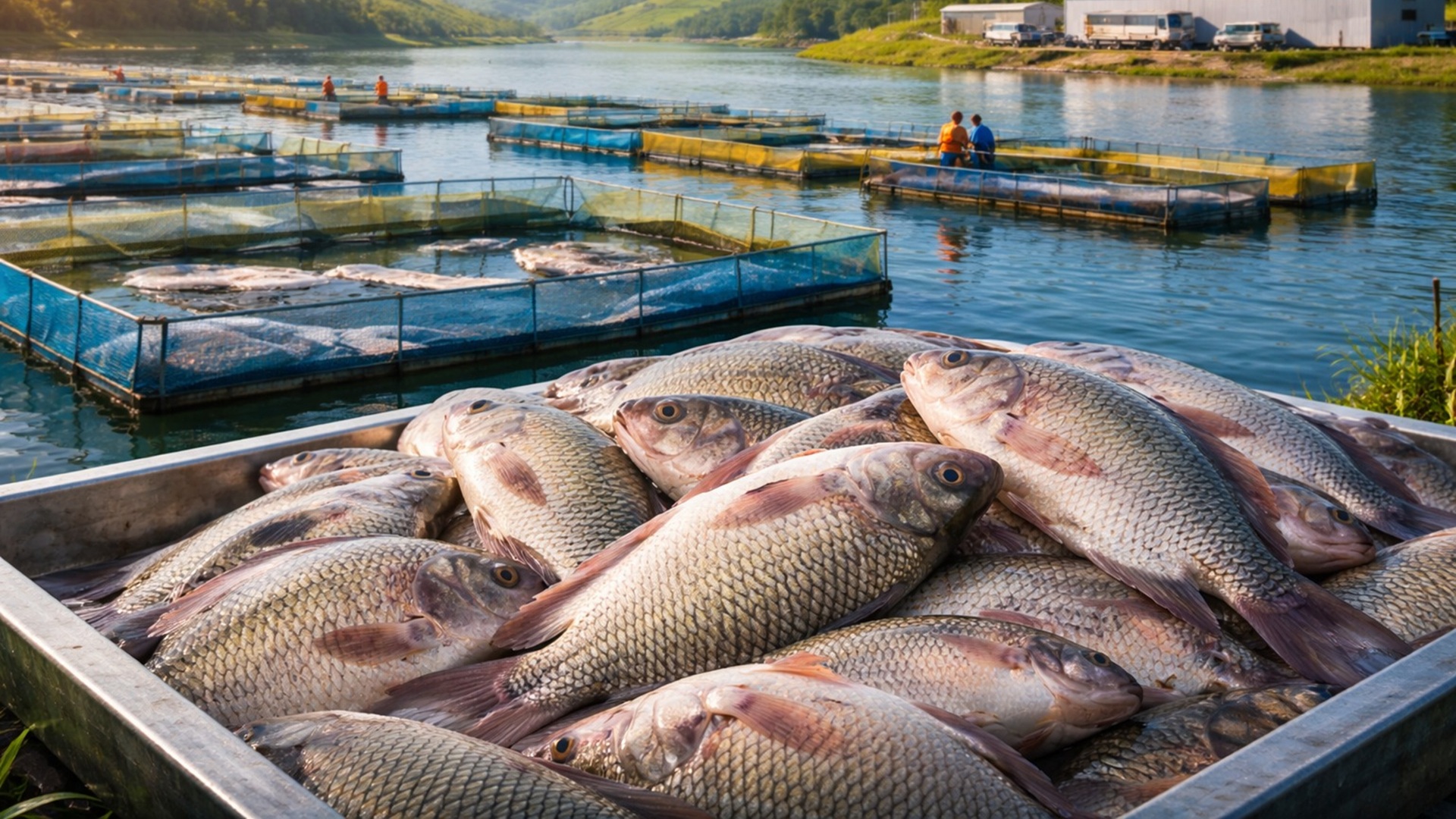
With 4% Growth in Volume Produced in 2025, São Paulo Reaches 54.17 Thousand Tons of Tilapia, Moves R$ 494.11 Million, Expands Use of Net Cages, Strengthens Specialized Slaughterhouses and Consolidates the Species as an Economic Axis of State Aquaculture
The São Paulo aquaculture has consolidated tilapia as one of the main vectors of the state agribusiness in 2025, with a 4% growth in volume produced compared to 2024, totaling 54.17 thousand tons and revenue of R$ 494.11 million, according to preliminary data from the Agricultural Economics Institute.
The performance keeps São Paulo as the second largest producer of tilapia in Brazil, behind only Paraná, reinforcing the economic relevance of the activity and its strategic role in fish supply and the diversification of state agricultural production.
Productive Growth and Consolidated Industrial Structure in the State
The data from the Value of Aquaculture Production for the 2025 cycle indicate that tilapia remains the most dynamic species in São Paulo aquaculture. The volume produced reached 54.17 thousand tons, a result associated with technological expansion and greater efficiency of farming systems.
-
“No one will make us change the Pix,” says Lula after the US report.

-
Lula responds directly to Trump and says that Pix is from Brazil and will not change under pressure from anyone, after a report from the United States pointed out the Brazilian payment system as an American trade barrier.

-
Amazon has just announced a new fee on all deliveries, and your online purchases will become more expensive starting April 17, including for those buying from the United States here in Brazil.

-
He sold his share for R$ 4 thousand, saw the company become a giant worth R$ 19 trillion, and missed the opportunity of a lifetime.

The industrial structure of the state is considered robust. Currently, 21 slaughterhouses concentrate 86% of the state tilapia slaughter. Despite this, part of the São Paulo production is still directed to processing units located in neighboring states, such as Mato Grosso do Sul and Minas Gerais.
According to a scientific article published on the website of the Agricultural Economics Institute, the prospects for the second half are considered favorable. The report highlights that suitable climatic conditions of temperature and brightness may boost production, with potential to reverse the decline observed in the total production value in the preliminary calculation.
Advances in Net Cages and Regional Distribution of Production
The net cage farming technology has been decisive for the increase in tilapia production and productivity in the state. This system is mainly concentrated in the large hydroelectric reservoirs of western São Paulo and already accounts for over 75% of the total volume produced.
In 2024, a survey conducted by the Technical Assistance Coordination and the Agricultural Economics Institute recorded more than 12 thousand net cage units in operation in São Paulo. The number reflects the intensification of activity and the adoption of more efficient production models.
Excavated ponds, in turn, remain relevant in regions such as the São Paulo plateau and Mantiqueira. In these areas, production is divided between the commercial market and the fishing and pay segment, an activity focused on leisure that contributes to the local economy and the diversification of rural income.
Scientific Research and Inclusion of Tilapia in VPA in 2025
According to the researcher from the Agricultural Economics Institute, Eder Pinnati, scientific research plays a central role in the evolution of the tilapia production chain in São Paulo. He notes that studies address challenges related to water quality, productivity, and chain management.
Pinnati highlights that the IEA has begun systematic monitoring and dissemination of data and information from the tilapia production chain, contributing to greater transparency and technical grounding of sector decisions, even in the face of operational and environmental challenges.
Due to the economic relevance and intensification of the activity, tilapia was included in 2025 in the Agricultural Production Value. The VPA generates a ranking of economic importance for agricultural products in the state.
Established since 1948, the VPA is one of the main economic indicators of São Paulo agriculture and serves as a basis for sector analyses, planning, and formulation of public policies aimed at the development of the sector.
Investments, Slaughterhouses, and Potential Expansion of Supply
The aquaculture sector continues to attract new investments in São Paulo, reflected in the continuous increase in the number of farms registered by the Agricultural Defense Coordination. The expansion indicates greater professionalization and intensification of the activity.
According to Celso Vegro, director of the Division of Statistics, Economics, and Public Policies in Agriculture at the Agricultural Economics Institute, there remains significant growth potential, as a large part of São Paulo’s tilapia supply continues to come from other states.
Vegro highlights that the establishment of large specialized slaughterhouses for slaughtering and processing, including filleting and utilizing the skin for other uses, has decisively contributed to the growth of state production.
Among the mentioned applications is the use of tilapia skin for treating first-degree burns, increasing the industrial utilization of the fish and adding value to the production chain.
Consumption, Consumer Preference, and Market Challenges
Tilapia is cited as the preferred fish species among Paulistas, followed by salmon, hake, and tuna. This information comes from research conducted by the Oceanography Institute of the University of São Paulo in partnership with the State Fisheries Institute of São Paulo.
Despite the preference, the high cost of protein is cited as one of the main factors limiting consumption. The study indicates that consumption of fish, shellfish, and mollusks in the state is below the recommended levels by the World Health Organization.
On average, Paulistas consume these foods one to three times a month, while the WHO recommends a minimum consumption of twice a week. Celso Vegro observes that there is potential for demand growth.
According to the researcher, in recent years, there has been a greater presence of tilapia in the dietary habits of Brazilians, especially in the central-southern part of the country. He explains that the São Paulo productive structure has reacted positively, following the economic logic in which increased demand stimulates supply.









-

Uma pessoa reagiu a isso.