





 Portuguese
  English
  Spanish
  6 min of reading
  0 comments


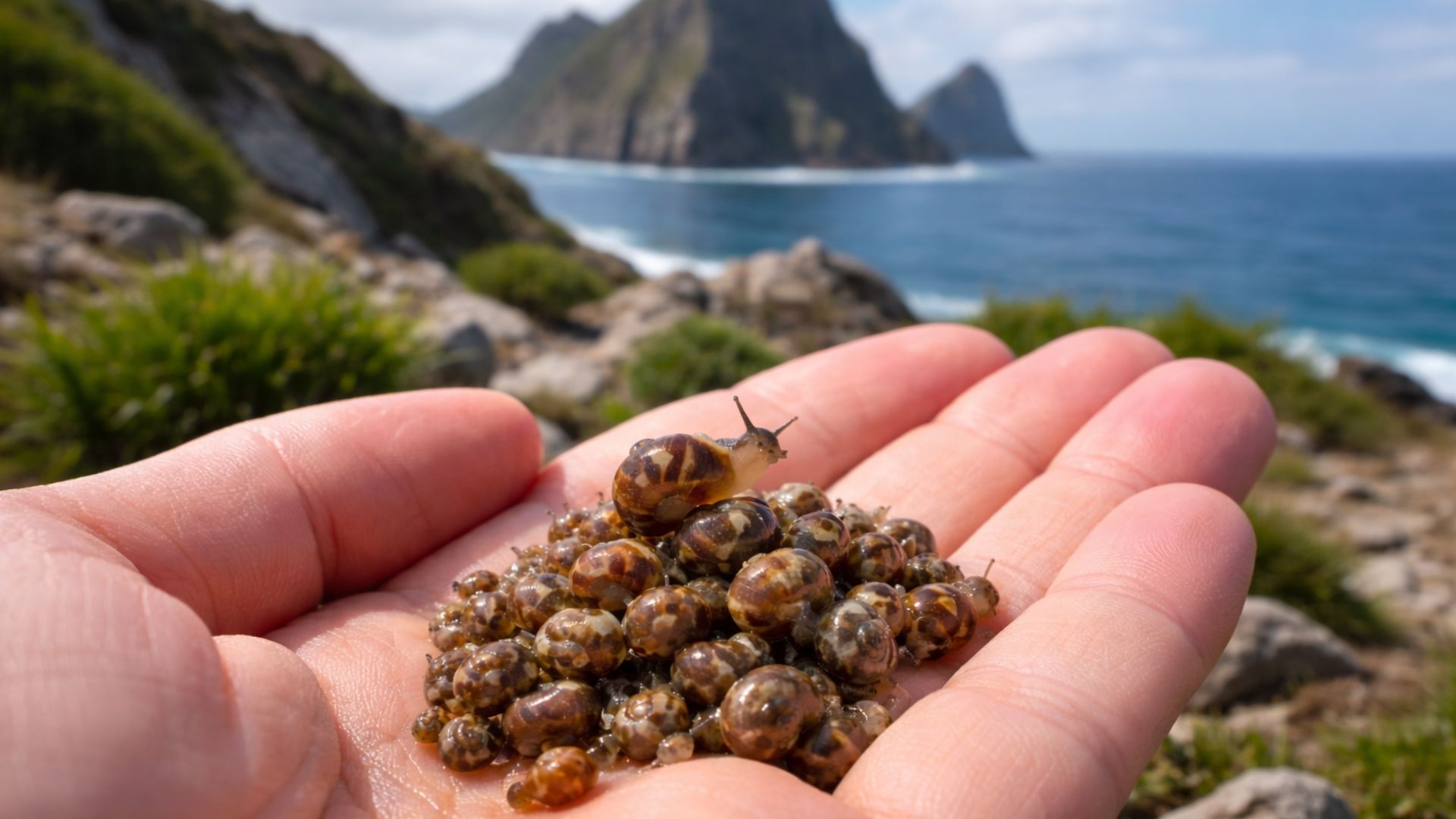
Rare Rediscovery In Atlantic Island Reignites Conservation Plan With Captive Breeding, Monitored Release, and Protection Against Invasive Species, Bringing Together Science and Environmental Management to Return Endemic Snails Considered Missing for More Than a Century.
More than 1,300 land snails the size of a pea, considered extinct for over a century, have returned to occupy a piece of wild territory in the Atlantic after a rescue program that combined field rediscovery, captive breeding, and the selection of a refuge where the main threats have already been removed.
The animals have been released on Bugio Island, in the Portuguese archipelago of Madeira, an uninhabited area treated as a refuge for endemic species.
The operation marked a new stage for two types of “Desertas Island snails” that, for decades, had not been recorded, which supported the perception that they had gone extinct in the natural environment.
-
China retires the J-7 fighter after years of military protection and can now transform military items into drones, following more than 60 years of operation of the J-7, derived from the MiG-21, with thousands of units produced and strategic use in the PLAAF and PLANAF.

-
Volunteers are sought to live in the mountains for a month: a study pays people to stay at 2,500 meters, with 24-hour monitoring of sleep, metabolism, and blood pressure.

-
Goodbye to kitchen cabinets: innovation retires the traditional furniture of Brazilian kitchens by introducing modern pantries with modules of up to 2.40 m, 40% more organization, ergonomic access, adjustable shelves, and smart lighting in 2026.

-
After the union of Brazil and China, BRICS plays a leading role in the merger between two powers: Egypt and India move forward with agreements exceeding US$ 4 billion, expanding industrial capacity in strategic sectors and accelerating the establishment of factories and global production chains.


Reintroduction in Bugio and the Return of Endemic Species
The project relied on a chain of decisions that typically determines the success or failure of reintroductions on islands: locating the last survivors, removing part of them without collapsing the remaining population, rapidly learning about the biological needs of poorly studied species, and only then returning individuals to the habitat with monitoring and risk management.
In this case, the institutional foundation involved the Institute of Forests and Nature Conservation (IFCN), an agency linked to the Regional Government of Madeira, and a network of European zoos that took on the role of multiplying a species that had never been bred under human care.
Rediscovery on Desertas Islands and Minimal Remaining Population

The species—or, more precisely, the two species involved in the program—were rediscovered in conservation expeditions conducted by the IFCN in rocky and exposed areas of Deserta Grande, one of the islands in the Desertas group.
According to the public account of the case, the re-discovered populations were minimal, with fewer than 200 individuals per species, a number that helps to frame why the reappearance was treated as a critical event, and not merely as a curious record.
Captive Breeding and the Network of European Zoos
With the realization that survivors were concentrated in micro-areas and, therefore, vulnerable to any disturbance, some of the animals were sent to an ex-situ breeding program.
Sixty snails were sent to Chester Zoo in the United Kingdom, while others were distributed to institutions in France, forming a network capable of maintaining and expanding the population without relying on a single location.
The strategy is common in conservation projects for species with very restricted distributions: creating “safety populations” that reduce the risk of total loss if the original environment suffers new impacts.
The managers report that the captive stage required starting from scratch.
As the snails had never been kept and bred under human care, zoo teams needed to build micro-habitats, adjust humidity, substrate, and food, and closely observe the life cycle until they could achieve successive generations.
The reproduction of multiple generations, highlighted by specialists involved in the project, was presented as the turning point that allowed reaching sufficiently high numbers to sustain a reintroduction.
Area Free of Invaders and Why This Decides Success on Islands
The chosen destination for the release was not Deserta Grande, where the survivors had been found, but Bugio, a neighboring island within the same insular context and with a history of stricter access restrictions.
According to the public reports of the program, Bugio has remained off-limits to visitors since 1990 to protect a fragile ecosystem and has undergone actions to remove threats associated with biodiversity loss on islands.
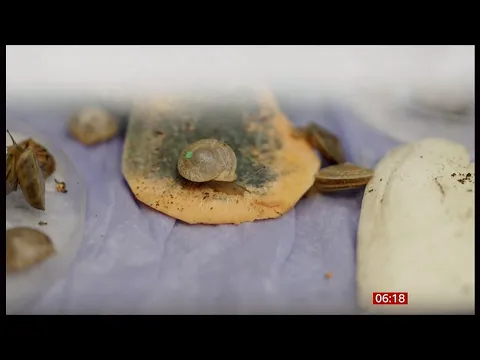

The eradication of invaders such as rats, mice, and goats was cited as a decisive condition to provide an environment where tiny snails would not be quickly wiped out.
The choice of location brings a simple and verifiable logic: when a species’ historical problem involves introduced predators or herbivores, any return to the environment depends, first and foremost, on eliminating these agents.
On oceanic islands, endemic species often evolve in systems without terrestrial mammals and without certain types of predatory pressure, which makes them particularly vulnerable when invaders establish themselves.
For small and low-mobility organisms, such as land snails, the presence of rodents can mean direct predation as well as alterations in the microenvironment, impacting vegetation and hiding places.
Post-Release Monitoring and Individual Marking of the Snails
The release, in turn, does not close the operation; it opens a new stage.
The snails released in Bugio were individually marked so that teams could monitor dispersion, survival, and adaptation to the new environment.
Monitoring is a central technical component in reintroductions: without it, it is impossible to verify if individuals are finding resources, growing, reproducing, and establishing a population capable of sustaining itself without constant reinforcement.
Invertebrate Conservation and the Ecological Role of Snails
The story also draws attention for shifting the traditional focus of conservation, usually centered on large vertebrates, to nearly invisible invertebrates.
Ecologically, however, land snails play roles that go beyond being just “rare species”: they help in nutrient cycling, participate in the decomposition of organic matter, and integrate food chains in island environments.
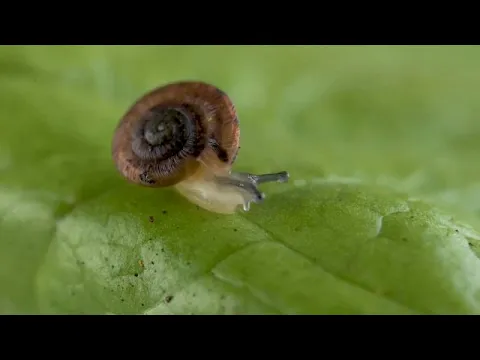
Thus, the recovery of invertebrates can indicate that a larger set of ecosystem conditions is stabilizing, especially when occurring alongside the removal of invaders.
Permanent Biosecurity to Prevent the Return of Invaders
The operation on the Desertas and Bugio is described as a surgical-scale biodiversity rescue, focusing on details that, outside the scientific field, rarely make the news.
To give the animals a real chance, it was necessary to combine the precision of expeditions in steep terrain, the care of breeding in controlled facilities, and the environmental management of an island that needed to be free from major threats.
The narrative is supported by traceable facts: a prolonged disappearance, very small remaining populations, successful reproduction in captivity, and the release of more than 1,300 individuals in a refuge with a history of invader control.
Even after reintroduction, the survival of such rare species depends on constant maintenance of protective measures.
On islands, the re-entry of invaders can occur through accidents, vessels, and cargo, making biosecurity a permanent part of conservation.
Therefore, projects of this type often require vigilance, prevention and rapid response protocols, as well as ongoing monitoring to detect population declines before they become irreversible.
The hope now is that Bugio functions as a recovery environment where the snails can once again occupy the soil and rocky crevices without the pressure that nearly erased them from the map, while local institutions and teams monitor the performance of these individuals in the real world.
An animal that seemed to have merely become a historical record now tangibly exists when it becomes possible to find, measure, and track its individuals in the field, and when the habitat ceases to be an ecological “minefield.”
If nearly invisible snails can mobilize such an international effort, what other “disappeared” species might be waiting for the same combination of habitat protection and applied science to reappear?






-

-

-

-

9 pessoas reagiram a isso.