





 Portuguese
  English
  Spanish
  5 min of reading
  0 comments


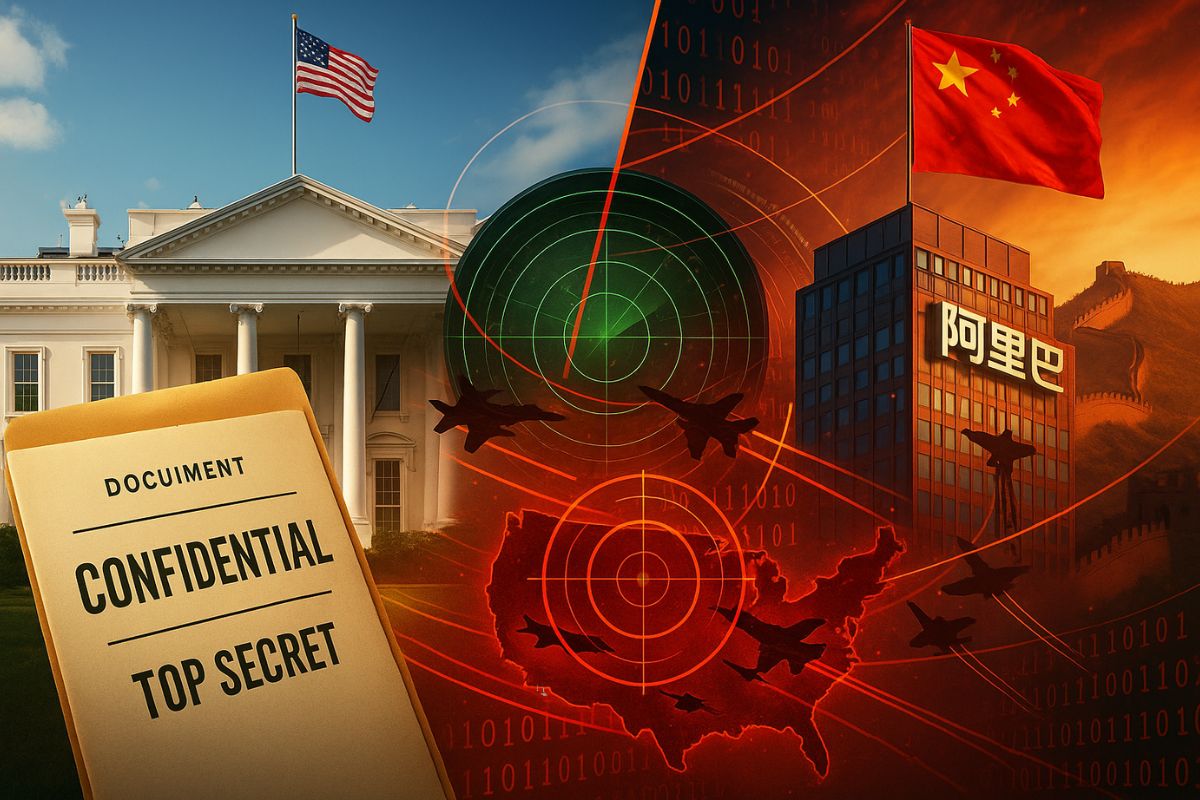
Declassified Memorandum Describes White House Document Accusing Alibaba of Supporting Chinese Military Operations with Customer Data and Software Flaws, While Tech Giant Responds and Calls Allegations Absurd and a Manipulation of Public Opinion.
The declassified White House document, obtained by the Financial Times, compiles intelligence assessments suggesting that Alibaba would provide technical support to the People’s Liberation Army in cyber operations against targets in the United States. The suspicions fit within a broader framework of concern regarding Chinese cloud services, artificial intelligence, and Beijing’s access to sensitive data in American infrastructure.
The Chinese tech giant, listed in New York, vehemently denies these claims. In a statement, the company classified the content of the declassified White House document as “complete absurdity” and stated that the disclosure has political motives, aiming to influence public opinion and defame the company. The FT itself notes that it could not independently verify the allegations made by the U.S. government.
What the Declassified White House Document Says
According to the cited memorandum, the declassified White House document indicates that Alibaba provides the Chinese military with resources that Washington considers a threat to U.S. national security.
-
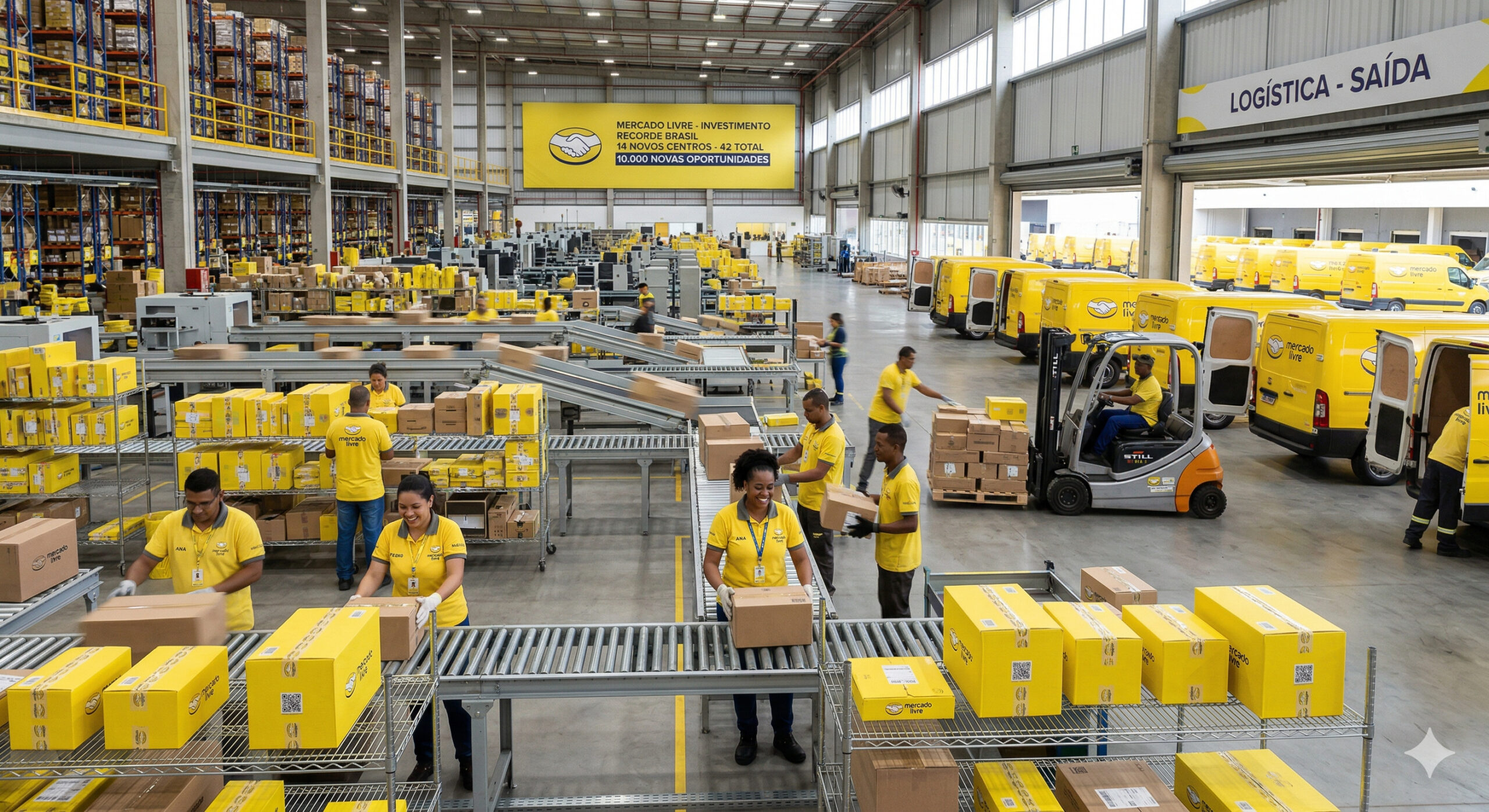
Mercado Livre “opens the vault” and announces a record investment of R$ 57 billion in Brazil in 2026, a value 50% higher than the previous year, with an expansion plan that includes 14 new logistics centers, totaling 42 units in the country and hiring an additional 10,000 employees.
-
How investment in technology can revolutionize the national economy and enhance industrial gains, according to a study that highlights the direct impact on productivity, innovation, and wealth retention within Brazil.

-
The largest food company on the planet, JBS, has just opened a 4,000 square meter laboratory in Florianópolis to develop customized proteins that modulate muscle mass gain, immune response, and metabolic performance.

-
After nearly 30 bids and competition among industry giants, a Spanish company purchases one of the largest airports in Brazil for almost R$ 3 billion and takes over the management of Galeão in a concession that will last until 2039.


Among the elements described are:
access to customer data, such as IP addresses, Wi-Fi network information, and payment records
services related to artificial intelligence applications
knowledge transfer about “zero-day exploits,” software vulnerabilities previously unknown to developers
The intelligence assessment indicates that these vulnerabilities could be exploited before suppliers fix the code, increasing the potential for offensive use in cyber campaigns.
Washington’s view is that the combination of customer data, cloud, and software flaws creates a significant support base for digital military operations.
The declassified White House document does not detail what the specific targets of actions attributed to the Chinese military would be on American soil.
In parallel, the office of the Director of National Intelligence had already stated, in a threat assessment, that China is capable of compromising critical U.S. infrastructure, including telecommunications.
One of the examples cited in previous public reports was the Salt Typhoon campaign, described as an unprecedented invasion of operator networks.
Alibaba Responds and Calls it “Complete Absurdity”
Alibaba’s response to the accusations contained in the declassified White House document was immediate and confrontational.
The company stated that the allegations, supposedly based on leaked American intelligence, are “a complete absurdity” and represent a clear attempt to manipulate international public opinion.
The group emphasizes that it does not comment on security documents from foreign governments and views the episode as part of an increasingly hostile political environment towards Chinese tech companies.
In Alibaba’s view, the reference to Chinese military operations and the use of customer data is more related to competition between powers than to verifiable evidence.
Chinese Cloud, AI, and the Fear About Sensitive Data in the U.S.
The information from the declassified White House document echoes a set of concerns already expressed by U.S. authorities regarding the combination of cloud, artificial intelligence, and access to strategic data.
In a recent assessment, the U.S. government indicated that Chinese cyber campaigns demonstrate “growing breadth and depth” of Beijing’s capabilities in this field.
An American official, commenting on the topic generally, stated that the government works “day and night” to mitigate risks of invasions that utilize suppliers deemed unreliable.
In practice, the debate centers on how much risk regulators and legislators are willing to accept by allowing foreign companies to operate digital infrastructure that handles data of citizens, businesses, and public agencies.
Political Pressure to Restrict Chinese Companies in U.S. Markets
The declassified White House document also fits within a context of legislative pressure in Washington. Congressman John Moolenaar, who leads a China-dedicated committee in the House of Representatives, has already advocated for tougher measures against Chinese groups.
In May, American lawmakers, including Moolenaar, requested that the Securities and Exchange Commission evaluate delisting 25 Chinese companies from U.S. stock exchanges, including Alibaba.
The justification was concern over supposed links to the Chinese military and Beijing’s “military-civil fusion” program, which critics say encourages technology sharing between private companies and the armed forces.
In this environment, the content of the declassified White House document is likely to fuel proposals for new restrictions on access to capital, data, and public contracts.
Military Cyber Operations and Dependence on Private Companies
The discussion surrounding the declassified White House document also reveals a global trend: armed forces in various countries increasingly rely on private companies for technology services, research, and development.
Where much of the capacity was previously maintained internally, today military structures turn to cloud providers, software groups, and major platforms.
Analysts cited in the debate point to two simultaneous movements:
on one hand, the Chinese military would be responsible for broad and daily invasions of critical American infrastructure, focusing on airports, ports, and logistics hubs, aiming to prepare for a potential “destruction of systems war”
on the other, the Pentagon has contracted, for example, cloud computing services from companies such as Google, Amazon, Microsoft, and Oracle, revealing that the model of cooperation with the private sector is widespread
The boundary between commercial technology and military capability is becoming more diffuse, which increases the sensitivity surrounding any accusation like the one recorded in the declassified White House document.
Beijing Accuses Distortion of Facts and Advocates for Data Protection Laws
The Chinese embassy in Washington reacted to news related to the declassified White House document, accusing the U.S. of promoting “complete distortion of facts.”
In the official position, Beijing claims it has been enhancing data protection and privacy laws and regulations, including in the field of artificial intelligence.
According to the embassy, the Chinese government places “great importance” on the security of personal data and denies having required or ever requiring companies or individuals to collect or provide information located in other countries in violation of local laws.
The message aims to diplomatically distance the idea that groups like Alibaba would act as an automatic extension of the Chinese military apparatus outside national borders.
What is at Stake with the Declassified White House Document
The episode shows how a single declassified White House document, once made public, can reshape debates on national security, technology regulation, and trust in foreign cloud and data providers.
For proponents of a tougher stance, the memorandum reinforces the need to limit Chinese companies’ access to American markets, infrastructure, and innovations.
For critics, however, the risk is turning the technology sector into a permanent field of geopolitical dispute, impacting global digital service chains, investments, and research collaboration.
At the heart of the controversy is the question of how to balance data protection, economic competition, and technological integration in a context of growing rivalry between the United States and China.
In light of these accusations and responses from both sides, in your opinion, should governments prioritize blocking foreign companies in the name of data security or seek oversight mechanisms and transparency before restricting access to their markets?









Seja o primeiro a reagir!