





 Portuguese
  English
  Spanish
  4 min of reading
  0 comments


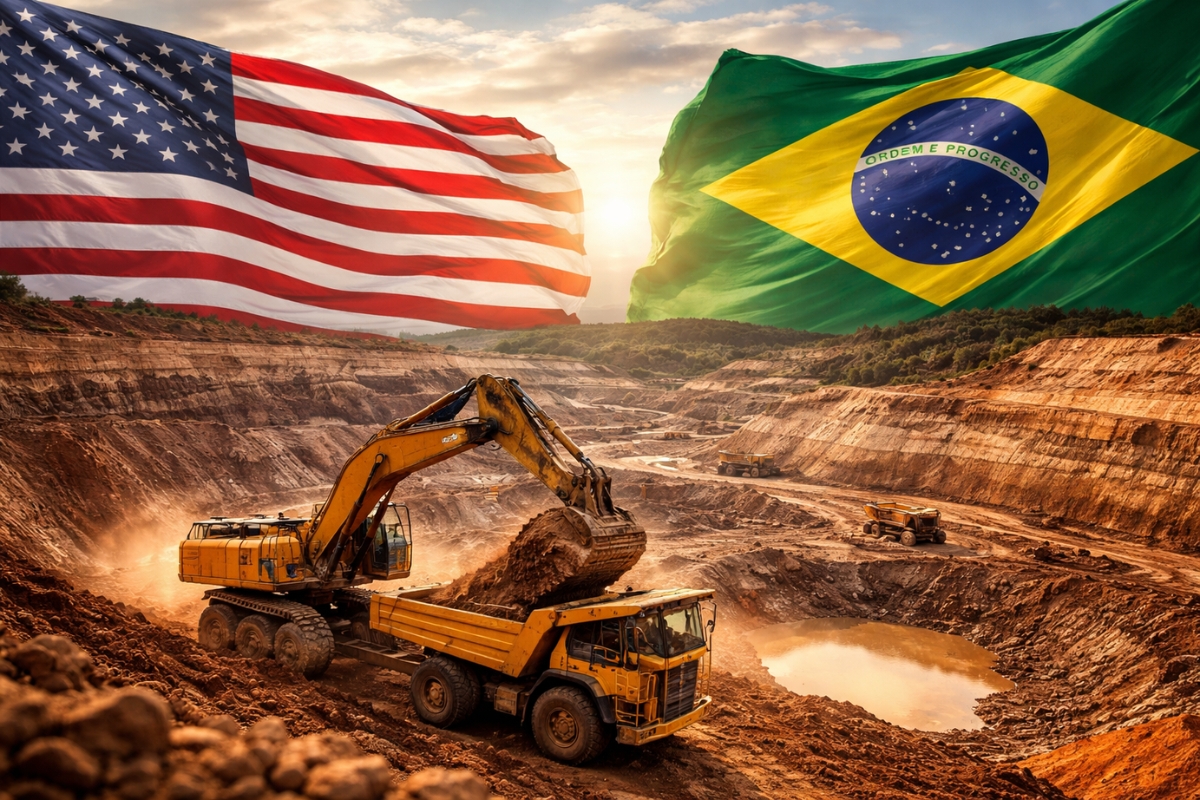
US Government Closed US$ 565 Million Deal with Serra Verde in Goiás to Refinance Debts and Expand Production, Opening Space for Minority Participation and Strategic Pressure
A US$ 565 million agreement has placed a Brazilian rare earth mining company at the center of the strategic supply dispute. Serra Verde secured financing from the United States government and opened the door for Washington to enter as a minority partner.
The move targets a sensitive area for the industry and defense. Rare earths are used in high-tech components, and supply has become a piece of influence in the global landscape.
The operation also has a direct impact on Goiás, where the company wants to accelerate expansion and gain financial momentum to increase production in the coming years.
-
“No one will make us change the Pix,” says Lula after the US report.

-
Lula responds directly to Trump and says that Pix is from Brazil and will not change under pressure from anyone, after a report from the United States pointed out the Brazilian payment system as an American trade barrier.

-
Amazon has just announced a new fee on all deliveries, and your online purchases will become more expensive starting April 17, including for those buying from the United States here in Brazil.

-
He sold his share for R$ 4 thousand, saw the company become a giant worth R$ 19 trillion, and missed the opportunity of a lifetime.


Agreement Provides Funding and Also Minority Participation
The treaty provides US$ 565 million and guarantees the U.S. government the right to acquire a minority stake in Serra Verde. In practice, it is not just credit. It is a strategic presence in a supply chain that influences industrial and military decisions.
The miner reported that the funds will be used to refinance credit lines under more favorable conditions and to expand productive capacity in Brazil. The focus is to unlock investment and accelerate scale.
Expansion in Goiás Reinforces Supply Route Outside China

The operation is taking place in Minaçu, in the State of Goiás, where the company began commercial production in early 2024. Even with the start of activities, Serra Verde has not yet reached the planned maximum volume.
The goal is to reach about 6,500 tons of rare earth oxides per year by 2027. This timeline gives the project strategic weight as it expands a Western supply route in a topic dominated by Asian influence.
Heavy Rare Earths Become a Piece of Strategic Pressure
The mine is rich in heavy rare earths, a type less common in many deposits outside the Asian axis. The material is relevant because it enters sensitive production chains and can become a tool of pressure when there is a supply restriction.
The product has a high concentration of dysprosium and terbium, along with other elements used in high-tech components. Its reach spans sectors such as automotive, medical, renewable energy, electronics, robotics, defense, and aerospace, enhancing the strategic value of the supply.
Package Announced on 02/04 Expands the Dispute Over Critical Minerals
The agreement connects to a package announced on 02/04 by U.S. Vice President J.D. Vance, proposing to create a preferential trade bloc for critical minerals and establish minimum prices. The intention is to reduce China’s control over essential materials for advanced manufacturing.
This type of initiative alters the influence chessboard. When there is a price rule and a preferential bloc, the chain ceases to be merely a market and becomes a strategy.
China Restricted Supply and Washington Accelerated Reaction
The search for critical minerals intensified after China shook global markets last year by withholding rare earths used by U.S. automakers and other industrial manufacturers. The reaction expanded the race for new sources and partners with supply potential.
In this context, Brazil has come onto the radar for its potential in critical minerals like rare earths, copper, nickel, and niobium. The movement increases external attention on projects still in the consolidation phase.
Vault Project and Meetings in Washington Expand the Bloc
On Monday (02/02), Trump launched a strategic package called Vault Project, with US$ 10 billion in initial financing from the U.S. Export-Import Bank and US$ 2 billion in private financing.
According to Reuters, an international news agency with global business coverage, Secretary of State Marco Rubio stated that 55 countries participated in negotiations in Washington, including South Korea, India, Thailand, Japan, Germany, Australia, and the Democratic Republic of Congo.
Strategic Closure Repositions Brazil on the Board
The financing and the possibility of minority participation place Serra Verde on a route of strategic interest. The money accelerates production, but the greater effect is the U.S. presence in an asset linked to technology and defense.
With goals set for 2027 and a broader American package in progress, the dispute for critical minerals gains new momentum and repositions Latin America, changing the strategic outlook.








Seja o primeiro a reagir!