





 Portuguese
  English
  Spanish
  2 min of reading
  0 comments


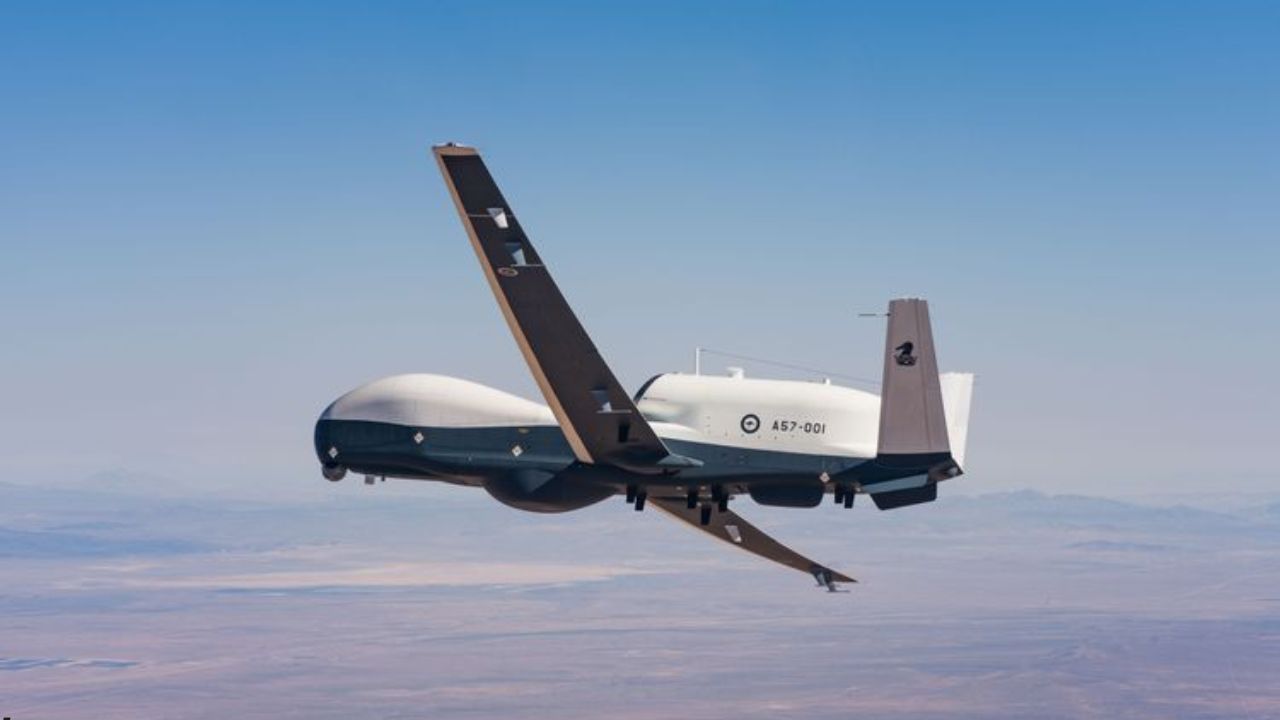
New $267 Million Contract Expands Maritime Surveillance Drone Fleet, Enhancing Monitoring and Security Capabilities of the US
The United States Navy has entered into a $267 million contract with Northrop Grumman for the acquisition of two new MQ-4C Triton drones, bolstering its fleet of high-altitude maritime surveillance unmanned aerial vehicles. The model, already widely used by the US, represents a technological advancement in monitoring strategic shipping routes and protecting coastal borders.
Features and Capabilities of the MQ-4C Triton
The MQ-4C Triton is a high-altitude, long-endurance (HALE) drone designed for intelligence, surveillance, and reconnaissance (ISR) missions. With the capability to operate at an altitude of 55,000 feet (16,800 meters) and reach speeds of up to 575 km/h, it plays a crucial role in monitoring maritime traffic and identifying potential threats in international waters.
Developed by Northrop Grumman, the Triton is equipped with a range of advanced sensors, including synthetic aperture radar (SAR), electro-optical/infrared sensors, and automatic identification systems (AIS). This allows it to provide 360-degree maritime surveillance coverage, ensuring real-time monitoring of vast ocean areas.
-
Archaeologists use satellite technology and find a mysterious structure of 500 m² buried up to 6 meters beneath an ancient city in Egypt.

-
Supercomputer calculates when humanity may disappear from Earth, predicts a scorching supercontinent, temperatures of up to 70 degrees, and a planet moving towards becoming uninhabitable.

-
INMET danger alert: heavy rains between the 3rd and 4th may drop up to 100 mm/day and winds of 60 to 100 km/h in several regions of Brazil require extra caution.

-
The parts crisis may bring back the drop notch and microSD in 2026; while Windows 11 promises to become lighter, leaks mention batteries of up to 10,000 mAh and 200 MP cameras.


One of the key features of the Triton is its ability to descend rapidly to lower altitudes, enabling detailed identification of vessels and maritime targets. Its reinforced structure allows operations even in adverse weather conditions, ensuring uninterrupted and effective missions.
Integration with the P-8 Poseidon and Joint Operations
The MQ-4C Triton was developed to operate alongside the crewed P-8 Poseidon aircraft, which conduct patrol and anti-submarine warfare missions. While the Triton carries out continuous and long-range surveillance, the P-8 can directly intervene, creating an integrated strategy for quick responses to maritime threats.
According to Admiral Michael Studeman, head of US Naval Intelligence, “the Triton significantly enhances the naval fleet’s monitoring capability, allowing persistent surveillance and reducing the need for crewed aircraft on prolonged missions.”
Fleet Expansion and Global Impact
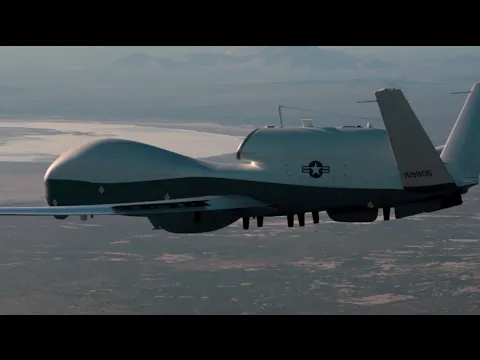

With this new contract, the US Navy seeks to expand the presence of the Triton in multiple strategic regions. Currently, the fleet of these drones is already operating from bases in the Pacific and Atlantic, monitoring areas of geopolitical interest, such as the South China Sea, the Persian Gulf, and the Indian Ocean.
In addition to the United States, the Royal Australian Air Force (RAAF) has also invested in the MQ-4C Triton, with three units already tested and ready for delivery. According to the Australian Department of Defense, this acquisition will strengthen coastal defense and monitoring of the country’s exclusive economic zone.







-

Uma pessoa reagiu a isso.