





 Portuguese
  English
  Spanish
  3 min of reading
  1 comment


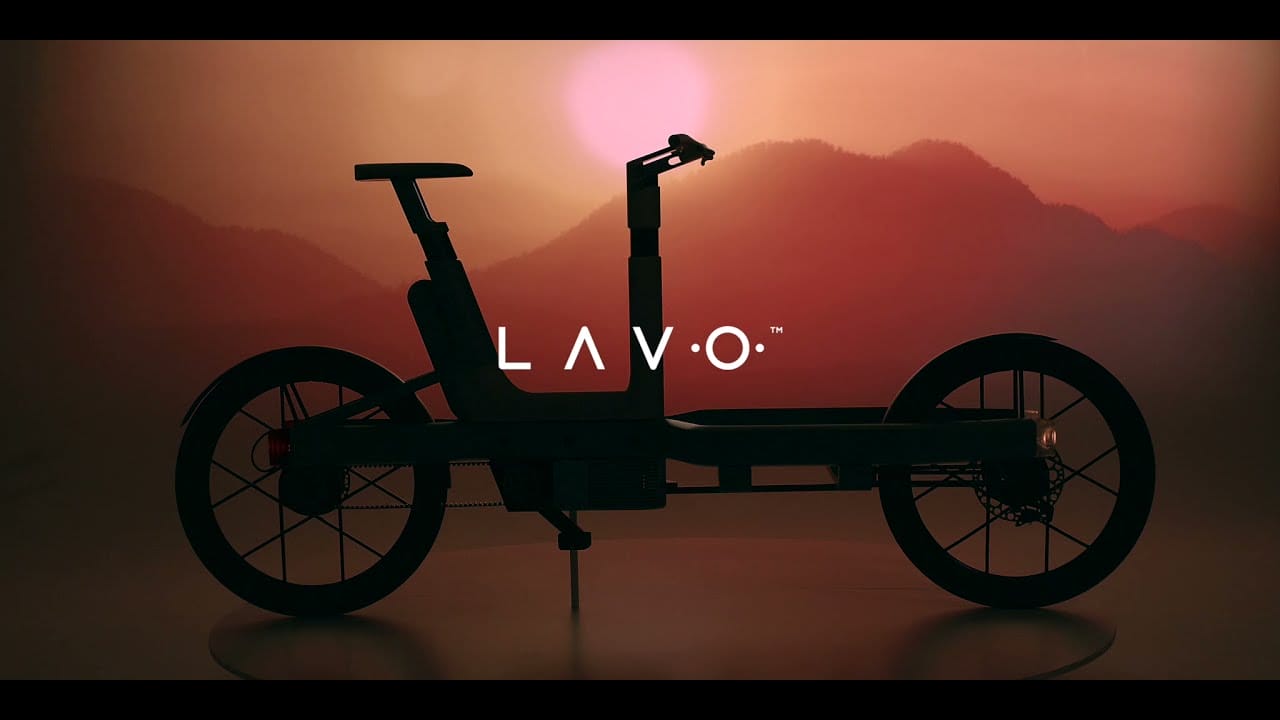

Dutch Company Develops Electric Bike That Promises to Revolutionize the Market. The E-Bike Has the Capacity to Travel 300 Km Using Only 2 L of Water.
The electric bike market continues to grow, with unique vehicles emerging every day. This time, the market is looking at the LAVO, a hydrogen-powered electric bike developed by a renowned design and engineering studio in the Netherlands. The e-bike can travel 300 km with just 2 liters of water.
Meet the Hydrogen-Powered Electric Bike

The Dutch design office Studio Mom developed the LAVO e-bike, a compact modular concept for hydrogen-powered transportation. Commissioned by Providence Asset Group and in partnership with the University of New South Wales Sydney, Hyperkid, and Elian Steering, the bike’s design incorporates hydrogen storage technology developed in Australia, the LAVO System.
Studio Mom has been working on electric bikes and other sustainable transportation for various brands, including Cortina and Gazelle. The company has now developed the LAVO e-bike for Providence Asset Group, an investment company managing and financing various assets in clean energy generation, storage, and technology.
-
Six diseases that seem common but can prevent the renewal of the driver’s license for the elderly throughout Brazil and surprise experienced drivers — could any of them affect you without showing clear signs?

-
With 122 hp, fuel consumption of up to 17.7 km/l, and a trunk capacity of 440 liters, this hybrid SUV impresses even though it costs up to R$ 47,000 more than the Yaris — meet the Toyota Corolla Cross.
-
600 km with three Chinese plug-in SUVs, same mode and air conditioning on: Jaecoo 7, BYD Song Plus, and Haval H6 hit the road, and the pump reveals who was truly the most economical.
-
With a price almost R$ 100 thousand lower, the Haval H9 surpasses the SW4 for the first time in March, but Toyota still leads in the accumulated total for 2026; the Chinese SUV bets on technology and premium finishing to compete at the top.

According to Studio Mom, hydrogen technology promises emission-free energy and allows for transporting three times more energy per unit of weight compared to a state-of-the-art battery. Greater autonomy, speed, or load is thus easily achievable. Small-scale transport combined with hydrogen is finally solving the short-range issue. As a result, electric cargo bikes can increasingly serve as an alternative to cars for transporting goods over longer distances.
Electric Bike Has the First and Only Energy Storage System
The LAVO bike was developed as a toolbox for emission-free mobility. It is adaptable to different applications for use in small businesses, from urban bikes to cargo bikes.
The exclusive Elian front steering hub ensures excellent performance, rigidity, and steering comfort. It is worth noting that the electric bike features the first and only ready-to-use hydrogen energy storage system in the world, developed for daily use in businesses and homes, called the LAVO System.
Developed by leading scientists from the University of New South Wales, Lavo’s technology aims to provide a more comprehensive, versatile, and sustainable solution than other energy storage solutions currently available on the market.
Other Initiatives of Water-Powered Vehicles
In addition to this e-bike that travels 300 km with just two liters of water, NanoFlowcell has achieved a new milestone with its technology, completing 350,000 km with the Quantino 48 Volt car, which is powered by salt water.
Thus, inventor Nunzio La Vecchia now hopes that his technology, which essentially consists of using a type of salt water to store electrical energy, will begin to be noticed by the automotive industry as a more viable, cost-effective, and efficient alternative than others, such as lithium-ion batteries or hydrogen fuel cells, which also produce no emissions or noise.
The saltwater-powered car serves as a technological demonstration of how the technology can be adapted to a vehicle aimed at urban areas and low cost, which has been chosen for various testing batteries. Since 2019, the prototype of the saltwater-powered car developed in Switzerland has already surpassed 250,000 km on open roads, of which about 100,000 were conducted for laboratory tests.







Soluções ecológicas existem, o problema é que elas ficam só na amostra e depois não se fala mais!