





 Portuguese
  English
  Spanish
  4 min of reading
  0 comments


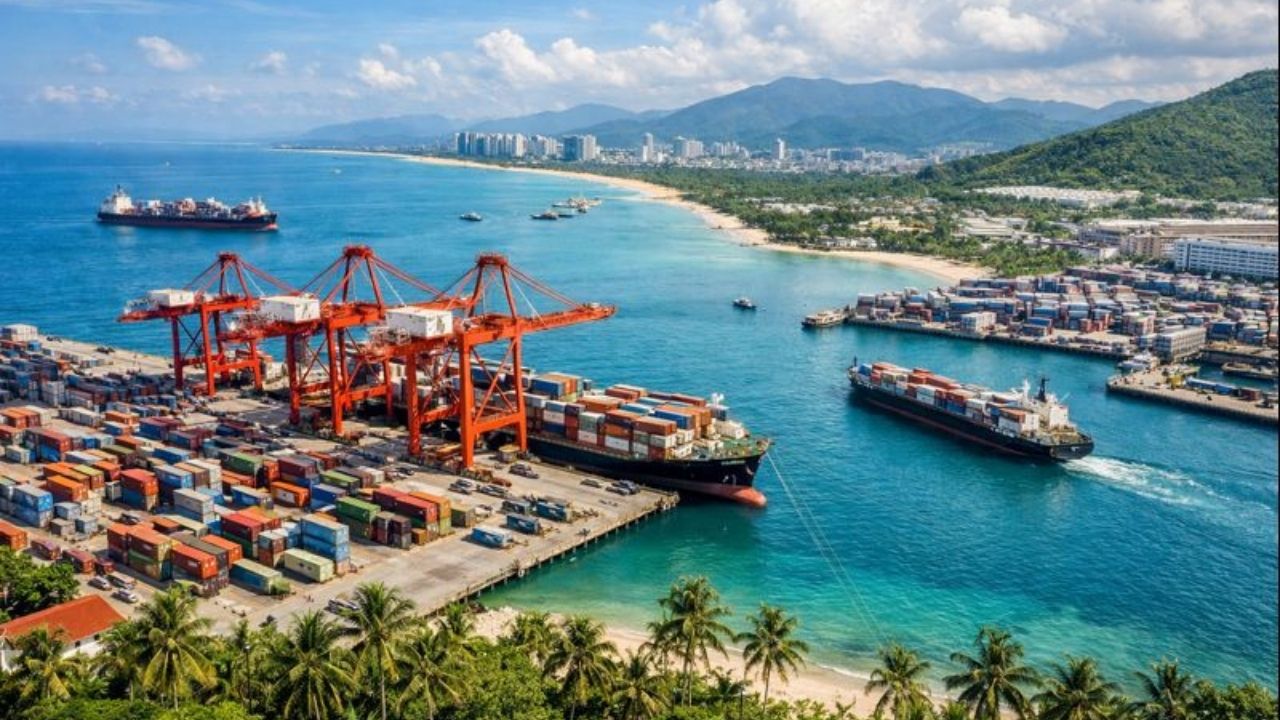
China Eliminates Tariffs on Tropical Island of Hainan and Promotes the World’s Largest Free Trade Port Under Xi Jinping’s Leadership.
In a scenario of increasing tariffs in international trade, China has been presenting the island of Hainan as the largest free trade port in the world, betting on the end of import taxes to bolster its image of economic openness.
The initiative was propelled by the government of Xi Jinping, which seeks to present a global market alternative to expanding protectionism.
The strategy occurs in Hainan, a tropical island in the south of the country, where Beijing has eliminated tariffs on most imports, reduced corporate taxes, and announced special rules to attract foreign companies.
-
Middle East War Hits Fertilizers and Transportation and May Strain Brazilian Wallets
-
Russia Considers Suspending Gas to Europe After Surge in Energy Prices
-
How A War Thousands of Miles From Brazil Started Disrupting Global Shipping Routes, Raising Container Costs, and Putting Up to 40% of Brazilian Beef Exports at Risk
-
Iran-U.S. War Drives Up Oil Prices and Pressures Global Financial Markets
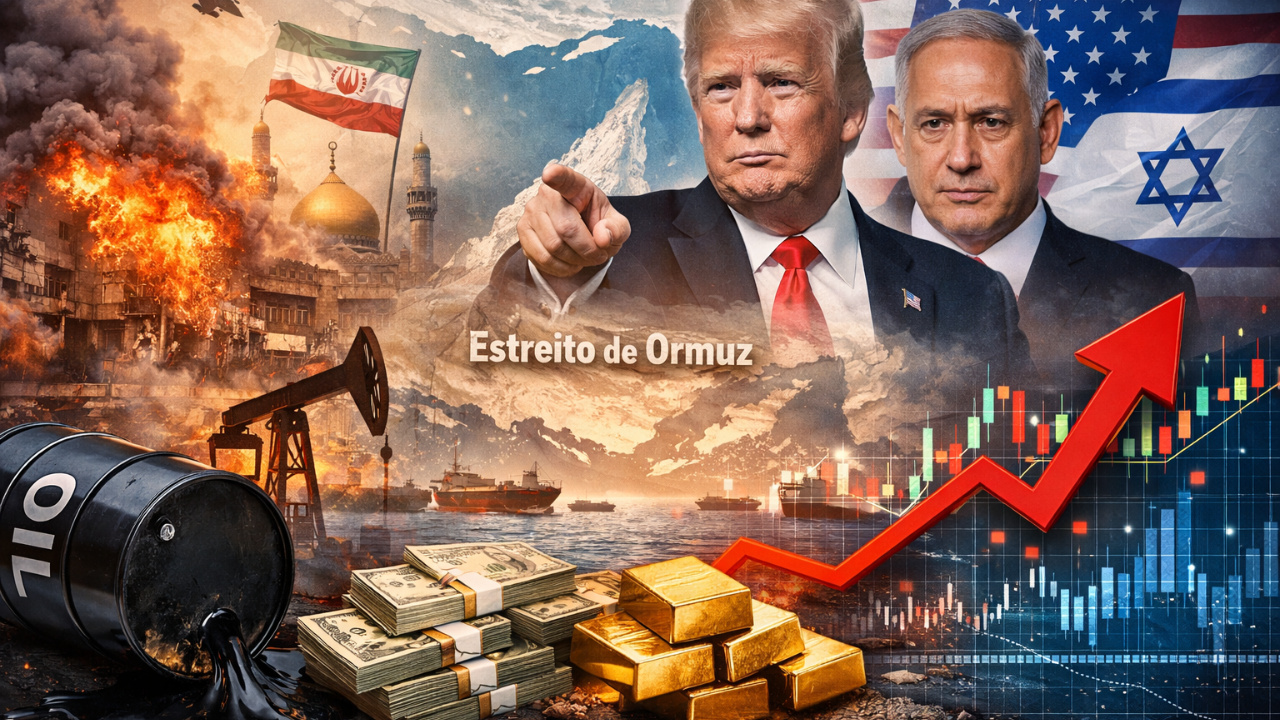
The central message is clear: while several economies are hardening trade barriers, China tries to signal that it is following a distinct path, at least within the geographical confines of Hainan.
Island of Hainan Becomes a Symbol of China’s Openness
Located on the southern coast of China, the island of Hainan is a province with about 10 million inhabitants, accounting for less than 1% of the Chinese population.
Even so, the government presents it as a strategic laboratory for more flexible economic policies.
According to Beijing, Hainan has become the largest “free trade port” on the planet after eliminating tariffs on most imported products last month.
Additionally, there has been a reduction in taxes for companies and individuals, reinforcing the narrative that China is open to “two-way” trade with the world.
Xi Jinping classified Hainan as “a significant gateway leading to China’s opening in the new era,” in a statement widely broadcast by state media.
Experiment Reminds of Post-Mao Reforms, but Context Is Different
The model applied to the island of Hainan harkens back to the spirit of economic reforms initiated after the death of Mao Zedong in 1976.
During that period, the Communist Party abandoned rigid dogmas and began testing market policies in specific regions, later expanding successful experiments.
However, the current scenario is quite different. Today, China is the world’s largest manufacturing power and the second-largest global economy.
At the same time, Xi Jinping has reinforced the narrative of self-sufficiency, arguing that the country should not depend on foreign inputs or technologies.
This contradiction raises questions about the extent to which Hainan’s opening represents a structural change in Chinese economic policy.
Skepticism About Expanding the Model to the Rest of China
Experts point out that the reach of the experiment is limited. Richard McGregor, senior fellow at the Lowy Institute, stated: “There are no signs that Hainan is a precursor to a broader and more systematic opening of the national economy.”
He added that, amid record trade surpluses, Hainan’s new role “has a strong smell of political and public relations bait-and-switch.”
The assessment reflects the understanding that China maintains high tariffs and policies heavily focused on exports in the rest of the country.
Strict Rules Prevent Leakage of Tariff-Free Products
Despite the propaganda of openness, the zero-tariff regime in Hainan is highly controlled.
Foreign products can enter the island freely but cannot move to other regions of China without meeting strict requirements.
To circulate in the mainland market without tariffs, products need to be processed in Hainan in a way that increases their value by at least 30%. Otherwise, traditional tariffs apply normally.
At the New Port of Haikou, the provincial capital, what was once a domestic transport hub has begun functioning as an international border.
Trucks are inspected to prevent the smuggling of tax-free goods to the rest of the country.
Companies See Opportunities, but with Caution
Even with restrictions, some foreign companies see opportunities. Ethiopian trader Nesredin Hussein rented a warehouse near Haikou to store imported coffee tax-free.
He intends to roast the beans on the island and then sell them in other regions of China without paying additional taxes.
“For me, this is a very good opportunity,” said Hussein, highlighting that, outside of Hainan, he would have to bear tariffs of up to 30%. “Here the rate is zero,” he stated.
On the other hand, Thai businessman Kamthon Wangudom expressed skepticism. According to him, China remains “too big and too complicated,” and the new tariff regime may not be enough to change that scenario.
Strategic Importance Overrides Economic Ambitions
Hainan also has strong military relevance. The island hosts a large naval base near the tourist city of Sanya, linked to China’s claims in the South China Sea.
During a visit in November, Xi Jinping reinforced that national security interests must prevail over economic objectives.
This factor limits the degree of liberalization possible on the tropical island, according to analysts.
A Controlled Test for the Future of China
Despite the doubts, some experts see value in the project. According to Lauren Johnston of New South Economics, the free port of Hainan allows for testing innovative policies in areas such as finance, education, and taxation, “while protecting the status quo on the mainland.”
Thus, the island of Hainan consolidates itself as a carefully controlled experiment. More than a signal of full openness, it serves as a political showcase for China in a world marked by trade disputes and the rise of tariffs.







-

Uma pessoa reagiu a isso.