





 Portuguese
  English
  Spanish
  3 min of reading
  0 comments


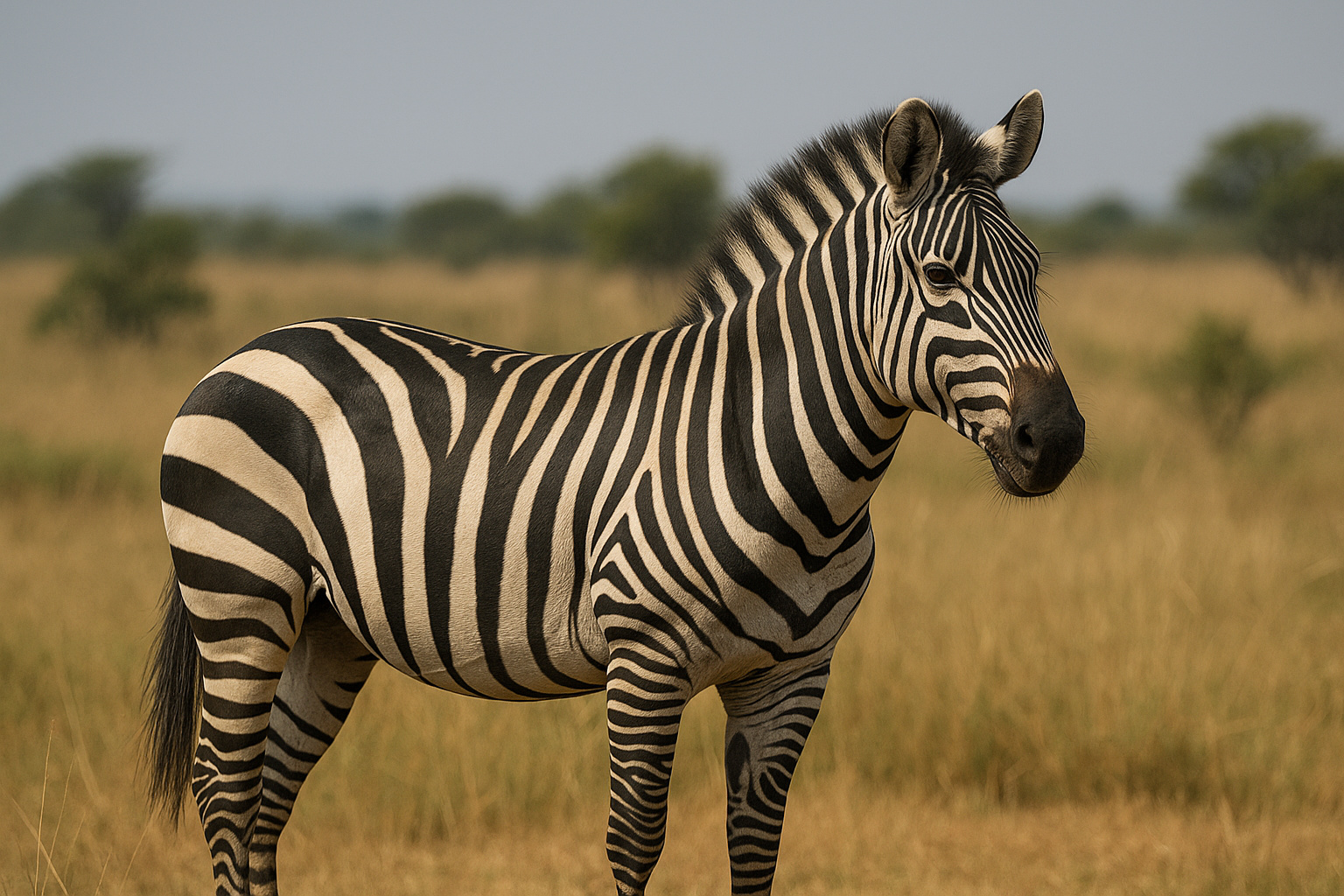
zebras remain outside domestication processes due to their highly defensive behavior, strong flight instinct, and lack of stable social bonds, according to genetic and behavioral studies published between 2021 and 2025. The domestication of equines has always been linked to the social behavior of species and the possibility of prolonged coexistence with humans. Horses and donkeys became essential for transportation, traction, and riding over millennia. Zebras, although belonging to the same genus, have never gone through the same evolutionary or behavioral process, which has determined completely distinct trajectories.
Origin of The Domestication of Horses and Donkeys According to Scientific Research
The consolidation of the relationship between humans and horses was defined by genetic studies published by Nature in 2021, which indicated domestication between 3,500 and 2,300 BC in the region of the Pontic-Caspian steppes. Subsequently, a complementary study published in Nature in 2024 demonstrated that the expansion of domesticated horses across Eurasia occurred around 2,200 BC, when they began to drive mobility, commerce, and military campaigns.
In the case of donkeys, studies published in 2022 in the journals Current Biology and Science indicated that domestication occurred about 5,000 years ago in northeastern Africa. These studies revealed a unique origin, with subsequent dispersion throughout the African continent, the Middle East, and Asia, before returning to North Africa.
-
Brazil’s nuclear submarine with a speed 5 times greater than normal advances after nearly 50 years and R$ 40 billion spent.

-
A Brazilian island charges R$ 0.50 to receive visitors and prohibits any new residents.

-
Why was the Great Wall of China built? The truth that many are unaware of!

-
At 73.8 meters tall, the world’s tallest teapot-shaped building has 15 floors, ensures stability, and impresses with an internal space of 28,000 cubic meters.


According to the article PNAS 2025, horses and donkeys became domesticable due to cooperative behavior, living in groups with a defined hierarchy, and forming long-lasting social bonds, which were decisive characteristics for the selection of docile lineages over generations.
Research on The Social Behavior of Equines
The book Equine Social Behaviour: Love, War and Tolerance (2023) describes that horses prefer stable social structures and react cooperatively to living with other individuals. Meanwhile, the study Characterization of Social Behavior in Domestic Donkeys (2024) shows that domestic donkeys exhibit peaceful approaches, affiliative interactions, and social tolerance, which facilitated human management over millennia.
These behaviors favored continuous domestication processes, with the evolution of lineages increasingly adapted to human work. However, nothing similar occurred with zebras.
Why Zebras Were Not Domesticated According to Behavioral Analyses
The article Why Were Zebras Not Domesticated? (2024) details that zebras have extremely reactive behavior. They exhibit high sensitivity to human contact, a strong flight instinct, and sudden defensive reactions that make any attempt to establish controlled coexistence unfeasible.
The review A Narrative Review on the Stereo Behaviours of Zebras (2022) adds that these animals demonstrate constant nervousness, aggression in confinement, and intense stress patterns, making management risky and inconsistent.
These factors prevented humans from gradually selecting docile individuals, an essential step for all known domesticated species.
Physical Differences That Hinder The Use of Zebras as Mounts
A study published in Research Starters in 2022 compared the physical structure of horses and zebras and showed that zebras are smaller, have upright manes, long ears, and a more compact body. Although they can carry weight, these characteristics reinforce the difficulty of controlled riding.
Historical records show isolated attempts, such as the initiative of the naturalist Walter Rothschild in the late 19th century, who trained zebras to pull carriages in London. However, the animals remained unpredictable, which hindered real advances in the domestication process.
Evolutionary Factors That Explain The Difference Between The Species
Evolutionary studies indicate that zebras developed in areas with a strong presence of predators, which favored speed, extreme vigilance, and defensive behavior. These traits, essential for survival in nature, are incompatible with the prolonged coexistence necessary for domestication.
Scientific Understanding of The Impossibility of Domesticating Zebras
Genetic, archaeological, and behavioral research published between 2021 and 2025 points out that the absence of stable social bonds, combined with intense reactivity, explains why zebras have never played roles similar to those of horses and donkeys in human activities.









-

-

-

-

6 pessoas reagiram a isso.