





 Portuguese
  English
  Spanish
  5 min of reading
  0 comments


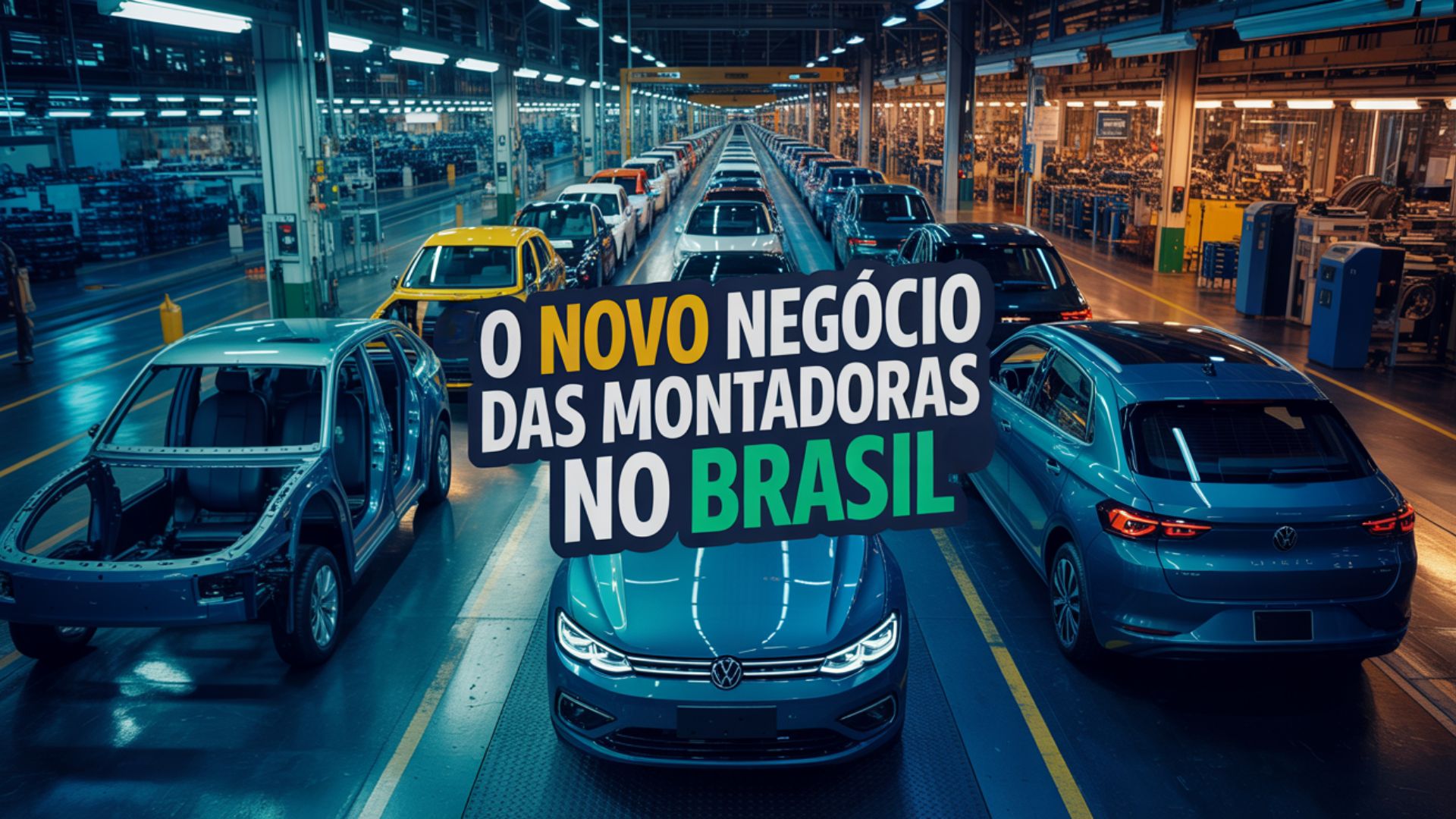
Car Manufacturers Begin Race for Vehicle Recycling in Brazil Amid New Tax Incentive Rules, Opening Demolition Centers and Eyeing Billions in a Still Little Explored Market in the Country.
The advancement of the Mover Program and the so-called Green IPI has placed vehicle recyclability at the center of the strategy of car manufacturers in Brazil.
The new rules foresee tax discounts linked to environmental criteria, including the proportion of recyclable materials and the reuse of components.
In light of this change, groups such as Stellantis, Toyota, and Volvo are accelerating plans to structure circular economy operations in the country, eyeing a still nascent market with the potential to generate billion of reais.
-
India announces a plan of $3.06 billion to bring aviation to forgotten regions: 100 new airports, $1.07 billion in subsidies, and regional routes guaranteed for 10 years, from 2026 to 2036, away from the centers.
-
Brazil blocked a proposal from the United States at the WTO that would make the exemption from tariffs on digital products like streaming and ebooks permanent, favoring American tech giants at the expense of developing countries.

-
IPTU exemption for seniors in 2026: see how to secure the benefit.

-
The institute that trained the greatest aerospace engineers in Brazil has just opened its first campus outside São Paulo after 75 years: ITA Ceará will have R$ 445 million, new courses in energy and systems, and classes are expected to start in 2027.
According to Stellantis, the sector is profitable in other markets and is expected to be here as well.
In the decree regulating the Mover, the government anticipates a reduction of up to two percentage points in the IPI for vehicles that meet recyclability levels, in addition to other bonus brackets for efficiency and technology.
Tax Incentive Changes the Game in the Automotive Sector
The Green IPI redefined the rates and created bonuses for more efficient, safer cars with a higher recyclability index.
In the case of compact cars with high energy-environmental efficiency, manufactured in the country and with elevated recyclable content, the rate can reach zero, in the Sustainable Car modality.
For others, a base rate is applied, adjusted by bonuses and penalties according to variables such as efficiency, propulsion, and recyclability.
Among the examples released, the government detailed that recyclability can guarantee up to 2 percentage points of discount on the IPI, a component that adds to other criteria such as efficiency and safety technology.
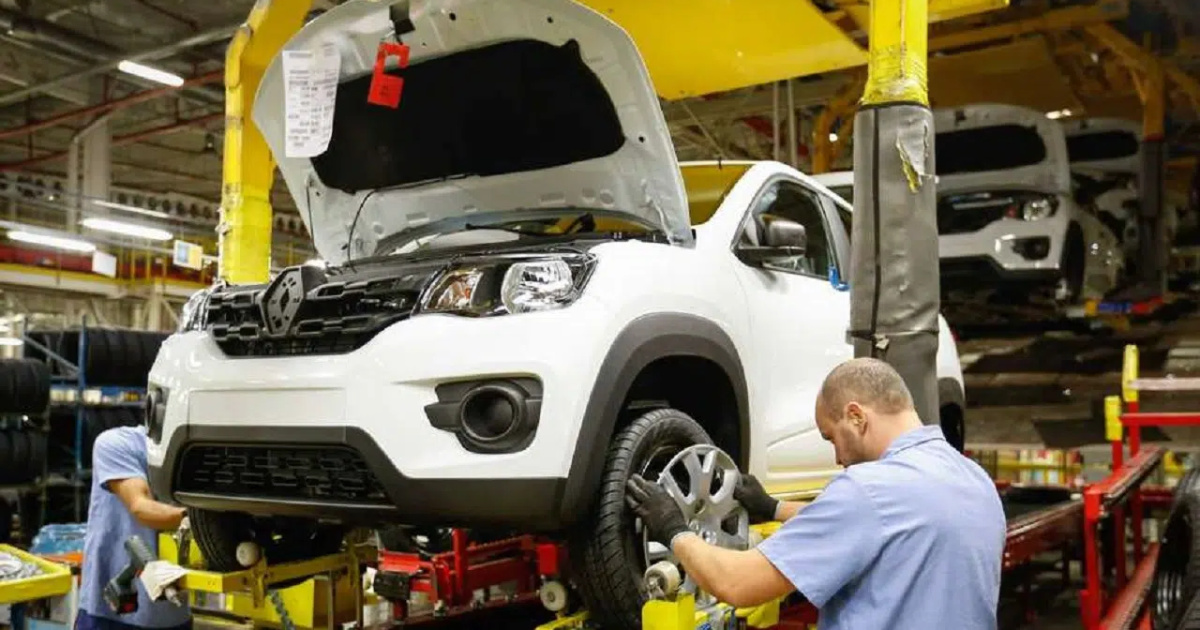
Stellantis Opens Pioneering Demolition Center
In August, Stellantis opened Circular AutoParts in Osasco (SP), a space dedicated to demolition, reuse, and recycling of vehicles.
This is the first center of its kind operated by a manufacturer in South America, capable of dismantling up to 8,000 vehicles per year and an investment of R$ 13 million in the structure.
The presence of the company’s president in the region, Emanuele Cappellano, and the global senior vice president of Circular Economy, Laurence Hansen, reinforced the strategic weight of the project.
“We are talking about potential not in millions, but in billions of reais,” said Hansen in a conversation with journalists during her visit to the country.
In this context, Hansen stated that South America remains behind in automotive circular economy and that Stellantis aims to lead the process locally.
According to the executive, the sector is already profitable in markets such as Europe and the United States, which is why the company decided to expedite movements in Brazil.
The sector’s estimate is that only 1.5% of vehicles at the end of their life in the country are currently directed to formal reuse/recycling, highlighting the space for growth in the segment.
Toyota and Volvo Adopt Recycling Strategy
Toyota is also considering establishing a recycling center in Brazil, aligning with global trends and the guidelines of Mover.
The president for the region, Rafael Chang, has been advocating for an expansion of the electrified portfolio and the adoption of measures that reduce costs and emissions while preparing new phases of industrial investment in the country.
In parallel, Volvo Car Brazil expresses interest in participating in the recycling cycle, attentive to the tax trigger.
For president Marcelo Godoy, the reduction of the IPI can reach 2 percentage points when the vehicle meets recyclability levels, in addition to other efficiency conditions.
International Landscape Pressures for Goals
In mature markets, automotive recycling is treated as a consolidated public policy.
In the European Union, there are targets of at least 85% reuse and recycling and 95% recovery by weight per vehicle.
The parameters are being updated in a new regulation to increase recycled content and strengthen manufacturer responsibility over the lifecycle.
The proposed design also reinforces disposal at authorized facilities, traceability, and prohibitions on sending end-of-life cars to markets where they cannot circulate.
In Japan, the system is mature and anchored in specific legislation, with high rates of reuse and recycling.
Financing is supported by fees embedded in the purchase of the vehicle to cover the end-of-life treatment.
Although the criteria and methodologies differ from those in Europe, this serves as a reference for dismantling infrastructure and material recovery, as well as policies for airbags, fluids, and crushing waste.
How Car Manufacturers Apply the “4Rs”
In Stellantis’s plan, the sustainability strategy supports the “four Rs”: repair, recycle, reuse, and remanufacture.
While Europe and the United States are at a more advanced stage, Brazil is starting to receive priority investments in recycling and remanufacturing.
In practice, this involves recovering components for resale with Detran traceability, reintroducing raw materials into the chain, and remanufacturing higher value-added parts.
The process reduces costs, emissions, and dependence on virgin inputs.
For the consumer, the supply of certified parts tends to lower post-sale costs and increase origin security.
Challenges of Recycling in Brazil
Despite the recent impetus, the Brazilian ecosystem still faces bottlenecks.
The network of private demolitions operates with varying levels of formalization.
There are also logistical challenges for collecting, transporting, and treating end-of-life vehicles in a country of continental dimensions.
Lack of data standardization on volumes, destinations, and material recovery hinders measuring national indicators and designing more precise policies to attract investment and scale recycling.
Public and private sectors are working on regulations and electronic systems to track components and certify operations, but implementation is still uneven among states.
Next Steps for the Sector
The combination of tax incentives, new demolition plants, and international regulatory pressure creates a clear economic signal for the industry.
Stellantis already takes the lead with the center in Osasco and maintains circular economy as a business front.
Toyota is considering steps towards its own dismantling, while Volvo is monitoring the design of the Green IPI to calibrate launches and recyclability targets.
The common understanding is that recycling is no longer just an environmental commitment and becomes part of the profitability equation.
Not surprisingly, when asked about the “why now?”, the Stellantis executive was straightforward: “Because it has enormous potential. The company does not invest in projects without prospects for profitability.”
With the tax mechanism in motion and the first industrial assets online, the question now is speed of scale: will Brazil be able to move from 1.5% of formal reuse to a level compatible with its market size and the global circularity requirements in the coming years?









-

-

-

-

11 pessoas reagiram a isso.