





 Portuguese
  English
  Spanish
  4 min of reading
  0 comments


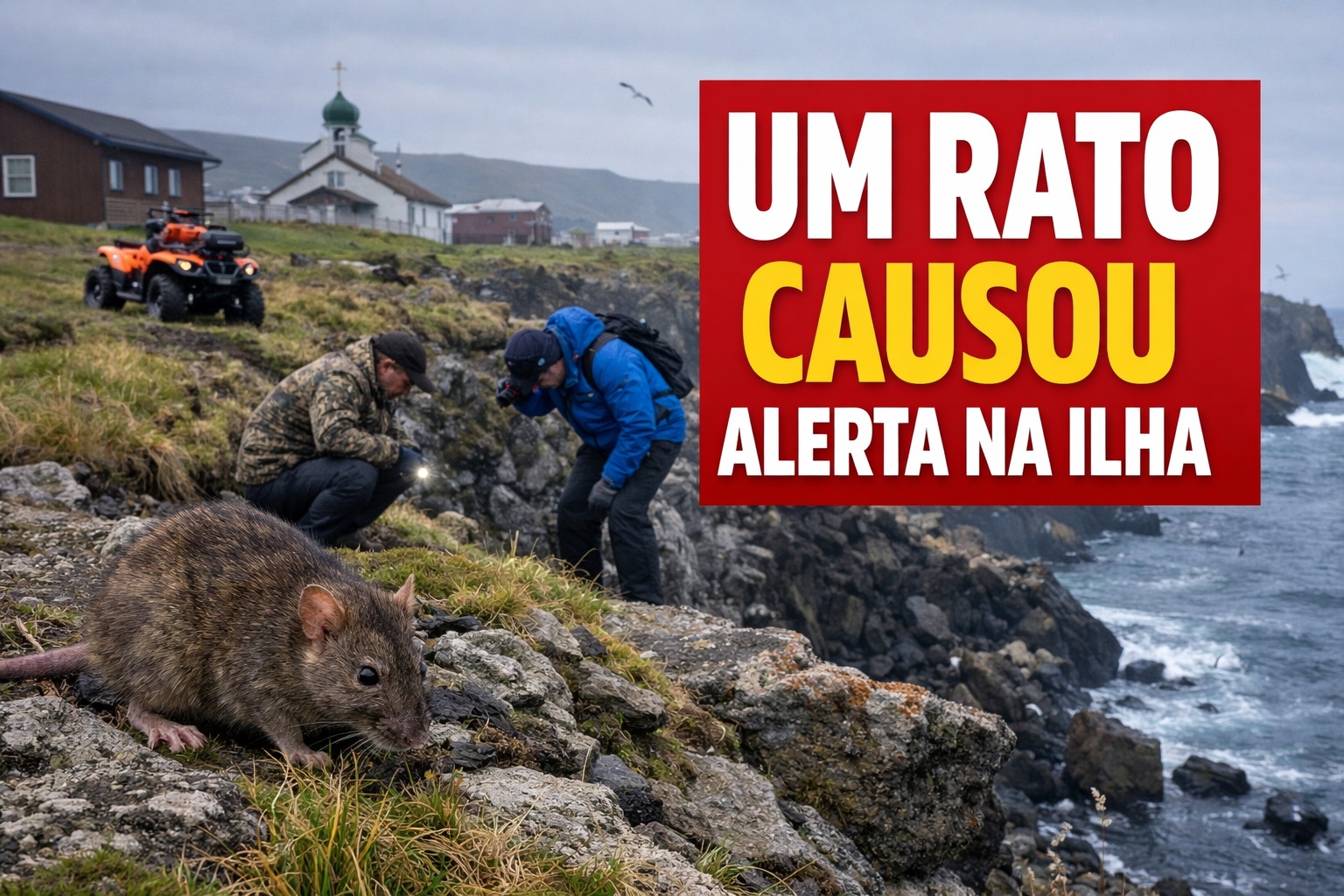
Report Of Possible Rodent On Alaska Island Mobilizes Residents, Scientists, And Federal Agencies Due To The Risk Of Ecological Imbalance In One Of The Most Sensitive Natural Sanctuaries In The Northern Hemisphere
In the middle of the Bering Strait, 400 km from Alaska, the small island of St. Paul has mobilized residents, scientists, and federal agencies following reports of the possible presence of a rat, a threat capable of altering one of the most sensitive and biodiverse ecosystems in the northern hemisphere.
In the center of the Bering Strait, between Russia and the United States, St. Paul is home to a school, bar, post office, church, about 400 people, and possibly a rat that has not yet been found.
The island, with only 110 square kilometers, is home to the largest Aleut community in the United States and is recognized for its biological and historical uniqueness.
-
China retires the J-7 fighter after years of military protection and can now transform military items into drones, following more than 60 years of operation of the J-7, derived from the MiG-21, with thousands of units produced and strategic use in the PLAAF and PLANAF.
-
Volunteers are sought to live in the mountains for a month: a study pays people to stay at 2,500 meters, with 24-hour monitoring of sleep, metabolism, and blood pressure.
-
Goodbye to kitchen cabinets: innovation retires the traditional furniture of Brazilian kitchens by introducing modern pantries with modules of up to 2.40 m, 40% more organization, ergonomic access, adjustable shelves, and smart lighting in 2026.

-
After the union of Brazil and China, BRICS plays a leading role in the merger between two powers: Egypt and India move forward with agreements exceeding US$ 4 billion, expanding industrial capacity in strategic sectors and accelerating the establishment of factories and global production chains.


It was one of the last refuges of woolly mammoths and has become a world reference as a privileged destination for observing seabirds and migratory birds.
Since 1982, St. Paul has been part of the Alaska Maritime National Wildlife Refuge, an area created to protect highly sensitive species and habitats.
A Continental-Scale Natural Sanctuary
It is estimated that the island serves as a breeding ground for half a million Arctic fur seals, in addition to hosting millions of birds every year.
In total, 329 bird species have been recorded visiting St. Paul, attracted by the unique feeding and nesting conditions.
In addition to birds, the environment is home to common seals, sea lions, blue foxes, reindeer, and a wide variety of endemic plants.
This delicate ecological balance explains why any alteration, even minimal, can trigger disproportionate and irreversible impacts on the local ecosystem.
The Unexpected Alert On The Island In The Middle Of The Ocean
In June of last year, a resident contacted the Aleutian Conservation Office after claiming to have seen a rat roaming the island.
The report triggered emergency protocols, as the last similar sighting required nearly a year of searches before the animal was captured.
“I immediately started asking questions and crawling under the porch,” said Lauren Divine to The New York Times.
The director explained that the team began searching for droppings, bite marks, and any signs consistent with the presence of the rodent.
Rapid Mobilization And Stringent Protocols
Traps, field cameras were set up, and inspections commenced at points considered likely hiding places for the suspected animal.
At the same time, several federal agencies activated the specific protocol for cases of invasive species introduction on isolated islands.
The rapid response aimed to avoid a repeat of previous episodes, when delays allowed a rat to remain hidden for months.
The local community, accustomed to dealing with environmental risks, anxiously follows each step of the operation.
Why A Rat Changes Everything
According to biologist Álvaro Bayón, consulted by Muy Interesante magazine, rats are historical agents of ecological degradation on islands.
They displace small mammals, birds, and reptiles, reduce reproduction, and have already caused extinctions of vertebrates, insects, and plants.
Bayón emphasizes that they are omnivorous, intelligent, and highly social, capable of cooperating and solving complex problems quickly.
This combination makes their presence especially dangerous in isolated island ecosystems, where native species evolved without similar predators.
Global Evidence And Recent Lessons
A study from Lancaster University analyzed islands in the British Indian Ocean Territory of Chagos.
Researchers estimated that seabird density can be up to 720 times higher on rat-free islands.
On St. Paul, often referred to as the Galápagos of the North, scientists fear comparable consequences if the invasion is confirmed.
This comparison reinforces the consensus that prevention costs less than recovery after the establishment of a pest.
A Vigilance That Never Ends
For years, the community has maintained permanent traps to protect the airport and port area from rodents.
Even so, between 2018-2019, a rat managed to infiltrate and remain hidden for months, despite ongoing efforts.
Rodent eradication processes have already occurred on other islands, including the Aleutians, but require years of work and millions of dollars.
The damages caused during this interval can be irreversible, affecting bird populations and other sensitive inhabitants.
Ecological Value Hard To Replace
In an interview with Time magazine, Donald Lyons from the National Audubon Society summarized the island’s importance.
According to him, St. Paul represents an abundance of wildlife known only from historical accounts, rarely observed today.
This natural heritage explains why the mere suspicion of a rat mobilizes so many resources and scientific attention.
The search continues, silent and meticulous, as the island awaits confirmation that its balance remains intact.
With information from Xataka.






-

-

-

-

9 pessoas reagiram a isso.