





 Portuguese
  English
  Spanish
  5 min of reading
  0 comments


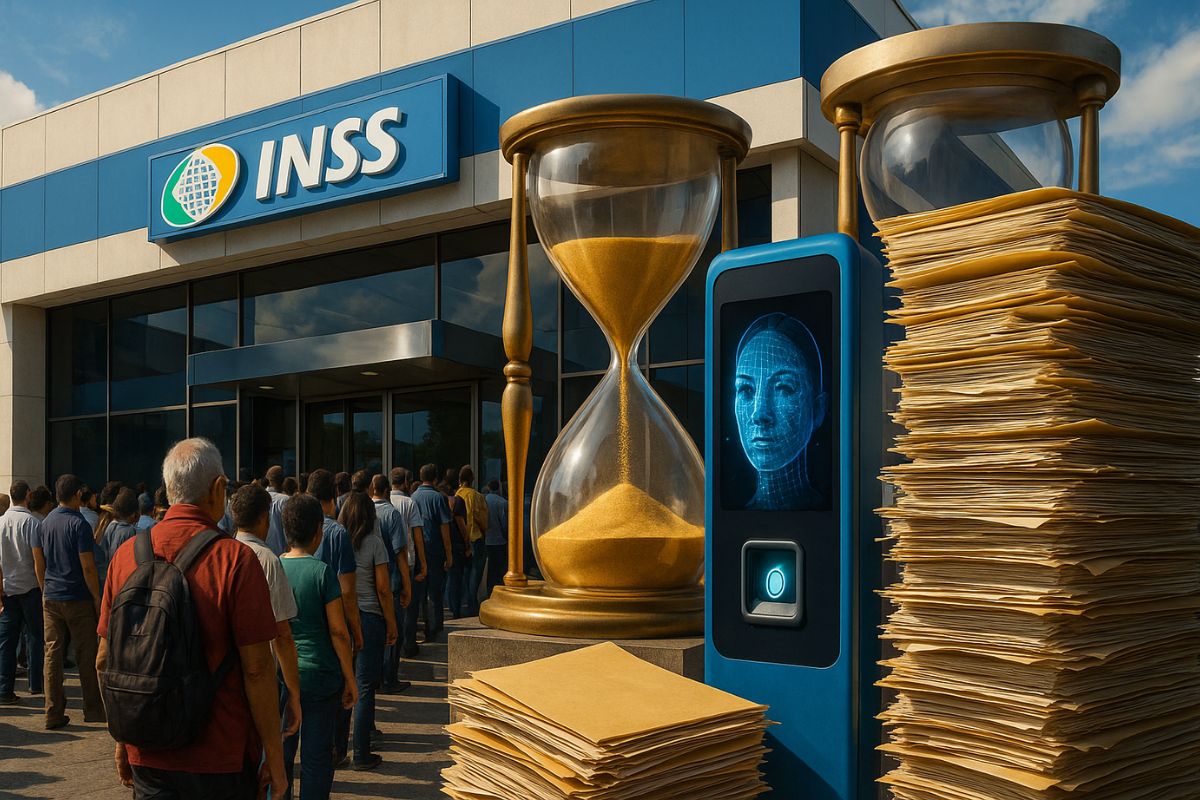
With 2.862 Million Pending Requests, the INSS Faces the Highest Volume of Cases in History, Delaying Retirements and BPC, and Unveiling a Bottleneck in Medical Examinations Just When It Bets on Biometrics to Try to Reduce Wait Times.
The virtual queue of the INSS is already equivalent to an invisible crowd spread across the country. There are nearly 3 million requests for retirements, pensions, and disability benefits awaiting analysis, in a scenario where the number of new requests has increased by 23% from January 2025 until now, and the monthly average has already reached 1.3 million applications. In practice, millions of people are stuck in limbo, without answers or predictability.
Meanwhile, stories like that of administrative assistant Danice Matheus de Oliveira reveal the human side of the numbers. With vision problems, she applied for disability retirement in 2020 and continues to see the status “under review” drag on for nearly five years. Her case encapsulates the drama of those who depend on the INSS for income and discover that the waiting time can surpass even the time needed to reach another type of retirement.
INSS Queue Hits Record and Grows Faster Than Response Capacity
The agency itself admits that the INSS queue has reached the highest level ever recorded. There are 2.862 million requests under review, a number driven by a 23% increase in new requests since the beginning of 2025, with a monthly average of 1.3 million requests.
-
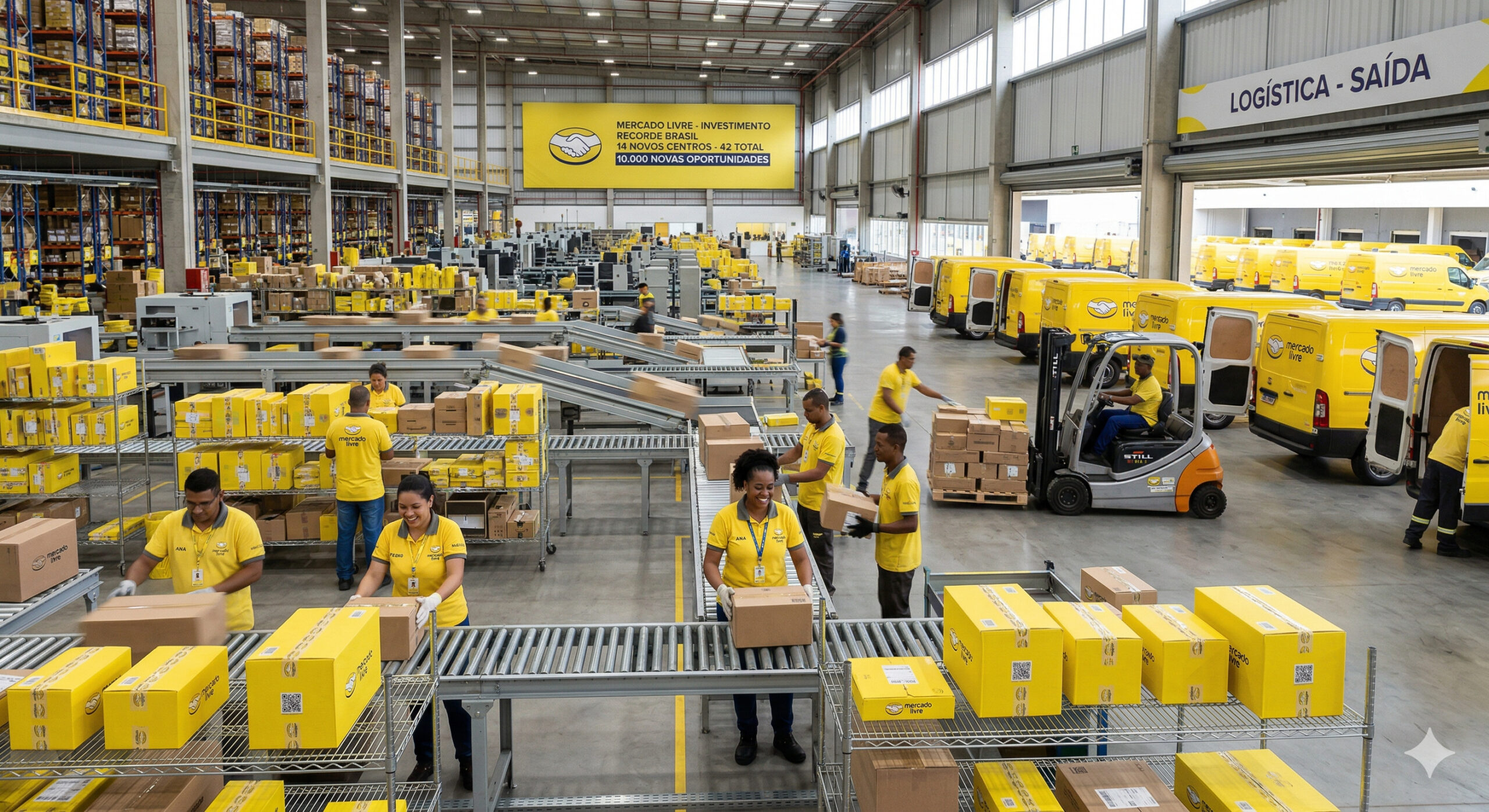
Mercado Livre “opens the vault” and announces a record investment of R$ 57 billion in Brazil in 2026, a value 50% higher than the previous year, with an expansion plan that includes 14 new logistics centers, totaling 42 units in the country and hiring an additional 10,000 employees.
-
How investment in technology can revolutionize the national economy and enhance industrial gains, according to a study that highlights the direct impact on productivity, innovation, and wealth retention within Brazil.

-
The largest food company on the planet, JBS, has just opened a 4,000 square meter laboratory in Florianópolis to develop customized proteins that modulate muscle mass gain, immune response, and metabolic performance.

-
After nearly 30 bids and competition among industry giants, a Spanish company purchases one of the largest airports in Brazil for almost R$ 3 billion and takes over the management of Galeão in a concession that will last until 2039.


Half of this cake consists of temporary disability benefits, precisely those where delays can leave workers without income during times of illness or leave.
The more the queue grows, the more the INSS scrambles to catch up, but it is unable to clear the backlog of old cases.
BPC Stalls, Queue Exceeds 897,000 People, and Average Wait Reaches 193 Days
Another critical point in the INSS queue is the BPC, the Continuous Cash Benefit. Today, 897,000 people are awaiting BPC analysis, with an average wait of 193 days. And the problem is not just the volume. Cases have been stalled since June due to a court decision that established new rules for calculating the benefit’s income.
In this modality, the INSS needs to verify age and income or illness and income. The requirement to adapt these rules in the system pushed the queue even further ahead.
While the system is not adjusted, families in vulnerable situations are left waiting for a benefit that is often their only source of income.
INSS Admits Crisis and Points to Medical Examinations as the Main Bottleneck
The INSS itself acknowledges the crisis. According to the agency, about two-thirds of the queue depends on external factors beyond simple document analysis, such as federal medical examinations and system updates due to biometrics and new income calculation rules.
In practice, the vast majority of cases are awaiting medical examinations, a stage that has become the main bottleneck. The INSS’s bet is that, with a new contest and the hiring of 500 medical examiners, some of this pressure will be relieved. But until this is consolidated, time continues to run against the insured.
Northeast Concentrates the Most Pressure and INSS Reassigns Workers
The problems with the INSS are not distributed evenly across the country. The agency itself admits that the greatest difficulty today is in the Northeast region, where the queue is heaviest and the service structure does not keep pace with demand.
As an emergency response, the INSS has decided that workers from other regions will assist in analyzing virtual cases, in an attempt to redistribute the workload.
It is a short-term strategy that attempts to compensate for the regional imbalance without truly addressing the root cause of the queue.
Mandatory Biometrics: Promised Solution or New Bottleneck?
While the queue explodes, the INSS is also undergoing a phase of technological changes. The agency is updating the system to include biometrics and new income calculation rules, especially for the BPC.
The promise is that, between the end of November and December, the adapted system will be ready for use.
As of Friday, the 21st, biometrics will become mandatory for new retirement requests at the INSS. For other social benefits, such as temporary incapacity, death pension, unemployment insurance, salary bonus, Bolsa Família, and maternity pay, the government has postponed the requirement for biometrics registration until May 2026.
The question is whether this biometrics will indeed help reduce fraud and speed up analyses or if it could create yet another filter in a system that is already overloaded.
In a scenario of nearly 3 million blocked requests, any additional step needs to be very well calibrated so as not to further increase wait times.
INSS, New Rule, and Delayed System: The Domino Effect on BPC
In the case of the BPC, the INSS is experiencing a typical domino effect. The court decision that altered the income calculation method forced the institute to recalibrate the system before resuming analysis.
Since the BPC requires detailed verification of age and income or illness and income, any change in the rule stalls the entire production line.
As this adjustment is not ready, those at the end see only the “under review” message drag on for months, without seeing what lies behind the delay.
Behind the graphs and official statements, what is at stake is simple: people who depend on the INSS to live. The record queue means delayed retirements, stalled BPC, unanswered temporary disability benefits, and families without guaranteed income.
Amid promises of a new system, the arrival of 500 doctors, mandatory biometrics, and the reassignment of workers, the real time for the insured continues to tick. For those in the INSS queue, each month of waiting is an additional month of uncertainty in practical life.
After seeing this scenario, tell me in the comments: have you or someone in your family ever had issues with INSS delays, and how long did the process remain stalled until receiving a response?










-

-

-

-

5 pessoas reagiram a isso.