





 Portuguese
  English
  Spanish
  3 min of reading
  0 comments


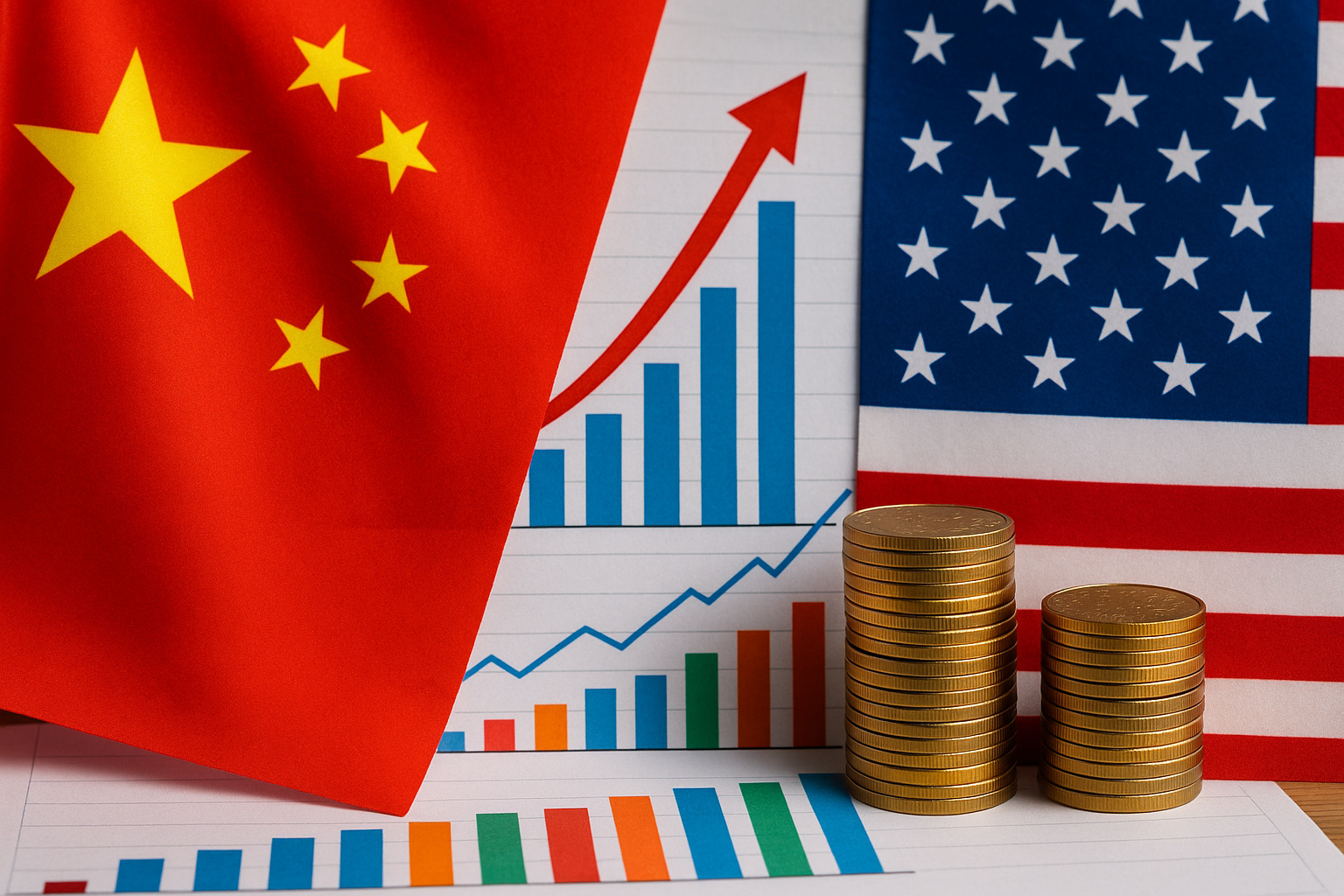
Global Perception Shifts And Indicates Chinese Ascent In The International Economic Scenario
In July 2025, the Pew Research Center published a survey revealing a significant change in global perception of economic powers.
For the first time since the start of the historical series, the majority of respondents in 25 countries regard China as the world’s leading economic power.
The average favorable responses towards China reached 41%, while the United States stood at 39%, indicating a shift in global trends.
-
Global summit with over 40 countries pressures Iran for a blockade in the Strait of Hormuz and warns of direct impact on oil, food, and the global economy.

-
Russia has broken the U.S. maritime blockade to send oil to Cuba and is now loading a second ship while Trump says that “Cuba is next” in a possible military action against the island.

-
Spain challenges the USA and closes its airspace for operations against Iran, raising global tension and provoking the threat of a trade rupture.

-
While no other country manufactures tanks in Latin America, Argentina activates the TAM 2C-A2 and raises a curiosity about the technological lag in the region.


This difference, although small, marks a symbolic turning point. In 2023, the leadership belonged to the Americans, with 41% compared to China’s 33%.
The trend of Chinese growth has proven to be continuous, gaining prominence in several strategic regions. The change reflects ongoing economic and diplomatic transformations.
Growth of China’s Image In Brazil
In Brazil, the results also showed important changes in the landscape. In 2025, 40% of Brazilians still identify the United States as the predominant economic power.
China follows closely behind, with 36%, in a noticeable rapprochement. Since 2023, China’s image has grown six points, while the U.S. has dropped two.
Despite this, 51% of Brazilians still advocate for closer trade relations with the United States, while 36% prefer to strengthen ties with China.
Investments from the Asian country have gained more support. 58% of Brazilians view Chinese investments favorably, compared to 54% in favor of American ones.
The positive perception of Chinese investments reflects a gradual shift in Brazil’s positioning towards global powers.


Public Opinion On China And The U.S.
Even though China has made progress, its global image remains predominantly negative. Overall, 54% of respondents hold an unfavorable opinion of the Asian country.
This index, however, has retreated from the 61% recorded in 2023. Favorable opinions rose from 31% to 36% in the same period.
In Brazil, the outlook is more positive. 51% of Brazilians have a favorable image of China, while only 40% have a negative assessment of the country.
Despite China’s advancement, the United States is still seen by 29% of Brazilians as the greatest global threat, followed by China (15%) and Russia (12%).
This data reinforces the persistence of American influence in the Brazilian imagination, even amid China’s economic rise.
Strategies And Impacts On The International Scenario
Several factors help explain China’s advancement in the global arena. Continuous economic growth is accompanied by high levels of foreign investment.
The pursuit of global prominence also consolidates China’s image. Additionally, international distrust towards Donald Trump influences the results.
In various countries, the lower the confidence in Trump, the greater the preference for trade alliances with China, according to the Pew Research Center.
The perception of countries’ debt to China also appears as a point of concern. In Brazil, 60% consider this dependency a serious problem.
Even so, countries like Germany, Indonesia, and Mexico already consider China the dominant power, reversing historical positions that favored the U.S.
Economic Data And Comparison With The U.S.
Despite the change in public perception, economic figures still place the U.S. ahead in various international indicators.
According to the IMF, in 2024, the nominal Gross Domestic Product of the United States reached US$ 28.78 trillion. Meanwhile, China reached US$ 18.53 trillion.
The American advantage also holds in GDP per capita, which in 2023 was estimated at US$ 81,000, well above the Chinese index.
The Chinese government, however, has been heavily investing in innovation, technology, and industrial independence, with robust national strategies.
Plans such as “Made in China 2025” and “dual circulation” boost the domestic market and exports, promoting continuous advancements.
These efforts reinforce the image of a rising China, even though the absolute economic indicators still point to American leadership.










-

-

-

-

-

-

10 pessoas reagiram a isso.