






 Portuguese
  Spanish


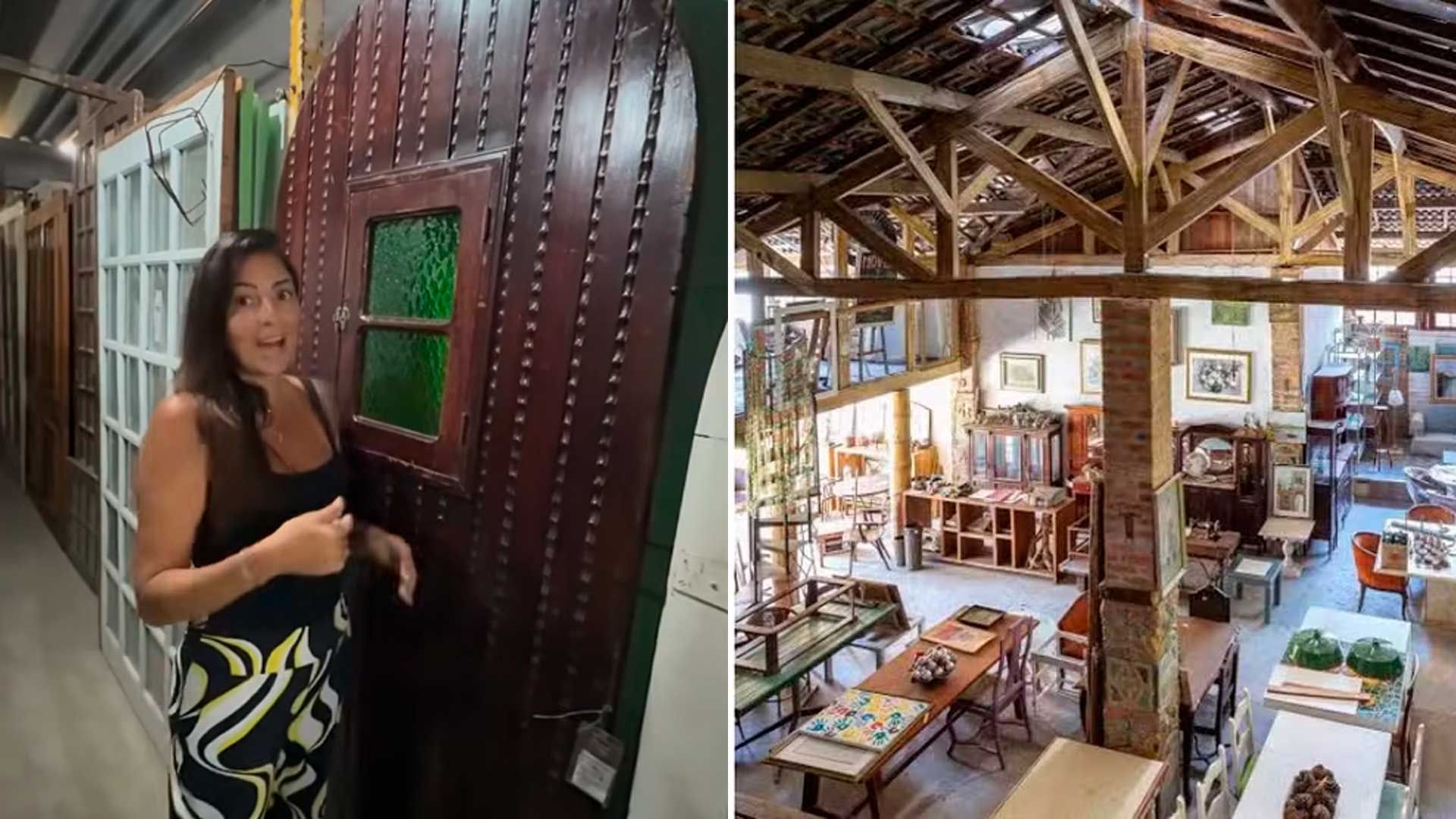

Adele Fazioli convinced her parents to put a family business of over 40 years online, created content about antique furniture and demolition materials, and expanded sales throughout Brazil without abandoning the 5,000 m² physical operation in Bertioga
A family business dedicated to the sourcing, restoration, and sale of antique furniture found a way to expand the market through the internet without opening new stores. The change began in 2020, when advertising professional Adele Fazioli, aged 50, joined as a partner in the business created by her parents.
Until 2019, Arco da Velha Ateliê had an average annual revenue of R$ 900,000. After creating a digital strategy, the business began to grow between 12% and 15% annually and closed 2025 with a revenue of R$ 1.6 million, an accumulated increase of approximately 78%.
According to a report published by the magazine Pequenas Empresas & Grandes Negócios in July 2026, 90% of sales currently go through digital channels. The company maintains its own marketplace, presence on five social networks, and advertisements on other e-commerce platforms.
-
Seven ancient scripts remain untranslated and conceal messages from vanished civilizations that neither linguists, archaeologists, nor artificial intelligence have been able to fully comprehend.

-
No electric bike, Tesla launches pedal-less bicycle for R$ 1,200, uses magnesium frame, seat with five adjustments, and targets children aged 2 to 5 with a product powered solely by legs.

-
Archaeologists expected to find a modern boat but discovered a 15th-century medieval shipwreck in Lake Constance, Germany, and the discovery may reveal new details about navigation in the Middle Ages.
-
Realtor opens basement door and is left speechless upon discovering that a $360,000 house hid a 1970s “time capsule” covered in red carpet from floor to walls; video goes viral with 6.7 million views, attracts curious onlookers, and the property is sold in just one week.


The growth occurred without replacing the carpentry, warehouses, or manual labor. The internet started to function as a showcase for doors, windows, gates, restored furniture, and demolition wood pieces that previously depended mainly on the in-person visits of architects, decorators, and local residents.
The change began with photos of pieces that were already inside the house


Adele is the daughter of architect and urban planner Aldo Fazioli and teacher and landscaper Aidê Fazioli. She grew up following construction works, landscaping projects, and trips made by her parents to find furniture, frames, and materials taken from old buildings.
The advertising professional joined the partnership during the Covid-19 pandemic. At the beginning of 2020, with restrictions on in-person commerce, she opened a brand profile on Instagram and started publishing decoration references using objects from her own home and her parents’ residence.
The proposal faced initial resistance. Aldo and Aidê had built the business through in-person service, referrals from architects, and customer visits to the warehouses. Investing time in videos, photographs, and online sales still seemed distant from the routine of a company founded before the popularization of e-commerce.
The public’s response helped to end the discussion. The profile accumulated more than 76 thousand followers, while the catalog ceased to depend on regional reach. With the creation of the marketplace, a restored door found on the São Paulo coast began to be presented to customers from different states.
The digital business depends on a physical structure the size of a small village

Despite the growth of online sales, the operation remains concentrated in Jardim São Lourenço, in Bertioga, on the coast of São Paulo. The space occupies about 5,000 square meters and houses a demolition materials warehouse, three warehouses of antique and restored furniture, two window frame stores, and a carpentry shop.
The complex was built with references to a small Italian village. In addition to receiving buyers, the location can be rented for fairs, exhibitions, photo shoots, commercials, soap operas, and other audiovisual productions.
However, rental still represents approximately 5% of revenue. The main source of income remains the sale of pieces, especially restored items, chosen by about 60% of customers.
The catalog shows why the value of purchases varies so much. In July 2026, the official site featured items ranging from sideboards under R$ 500 to antique gates listed for more than R$ 20,000, as well as doors, windows, grilles, and furniture that may require carpentry adaptation before installation.
Father, mother, and daughter assumed different roles within the same company

The division of labor follows the experience of each family member. Aldo supervises the technical part and guides the carpenters, evaluating measurements, structure, resistance, and the necessary conditions to install each piece in a new project.
Aidê participates in the sourcing and selection of objects. Her experience with landscaping helps identify which materials can be used in gardens, outdoor areas, and decoration projects.
Adele is responsible for communication, digital sales, and how the pieces are presented. Instead of publishing just a photo accompanied by the price, the team began to show details of the wood, marks of time, dimensions, possible uses, and stages of restoration.
Short videos, photo sequences, and content that tells the origin of the objects register the highest conversions. In this model, scratches, old hardware, worn paint, and signs of use are no longer automatically treated as defects and become part of the product’s commercial history.
Revenue increased, but transporting doors and furniture remains the main obstacle
The digital expansion brought a problem that does not exist with the same intensity in the sale of clothes, books, or small objects. A large part of the catalog consists of heavy, fragile, bulky pieces that are outside the standardized measurements used by carriers.
An old door may require reinforced packaging, protection of hardware, an appropriate vehicle, and verification of access to the buyer’s property. An error in measurements or damage during transport can eliminate the margin obtained in the sale.
Therefore, growth does not depend solely on reach on social networks. The company needed to organize inventory, customer service, logistics, content production, and communication between the digital sector and the carpentry.
The R$ 1.6 million disclosed represents revenue, not profit. The report does not provide information on expenses with employees, restoration, rent or maintenance of warehouses, packaging, marketplace commissions, taxes, and transportation, which prevents estimating the operation’s profitability.
Reusing old materials has begun to meet a demand that goes beyond decoration
O Arco da Velha operates in a segment linked to the circular economy, where furniture, wood, doors, and frames remain in use for longer. Instead of going directly to disposal after a renovation or demolition, these materials are evaluated, treated, and adapted for new projects.
The topic gains importance given the volume of debris produced by the real estate sector. A study released by Embrapa in October 2025 estimated that Brazil generates almost 50 million tons of construction waste per year, but recycles only 21% of that total.
The restoration of a door or a piece of furniture does not alone solve the national waste problem. However, it addresses a specific part of disposal, consisting of objects that still retain functional, historical, or aesthetic value and could be destroyed along with other materials from a construction site.
This approach also placed the company for the second consecutive year at CASACOR São Paulo. In the 2026 edition, held between June 2 and August 9, the atelier provided restored furniture and elements made with reclaimed wood for the exhibition’s environments.
Next stage foresees laser equipment, videos, and expansion without new stores
The projection presented by the company is to grow between 17% and 20% in 2026. If the estimate is reached, the annual revenue will be between approximately R$ 1.87 million and R$ 1.92 million.
To achieve this result, the plan includes expanding the YouTube channel, improving logistics, and equipping the carpentry with faster tools. Among the possibilities being studied are laser cutting and measuring technologies, which can reduce the time spent on adaptations and finishes.
Adele also received requests to open physical units in Rio de Janeiro and Florianópolis. However, the family decided to prioritize organizing the team and existing structure before taking on fixed costs in other cities.
The decision shows that digitalization has not eliminated the physical limits of the business. Each sale still depends on real stock, specialized work, transportation, and installation. The difference is that Bertioga’s showcase now reaches buyers who would probably never pass by the warehouses on the São Paulo coast.
Would you buy a door, an antique piece of furniture, or a demolition piece online, even with the challenges of transportation and installation? Leave your comment and tell us if you prefer restored materials or new products. Your opinion helps to understand how far this market can grow in Brazil.


