Portuguese
  Spanish


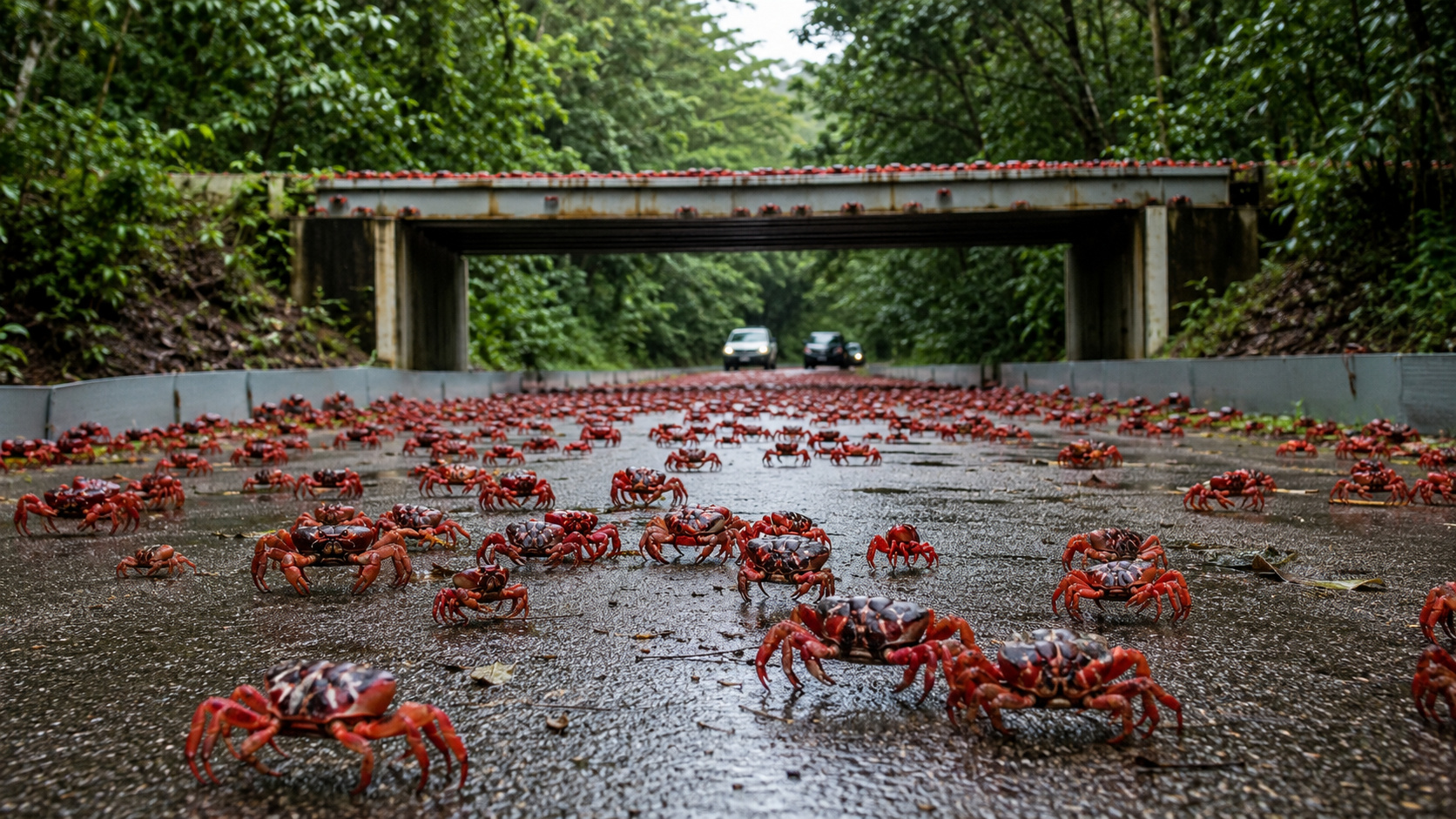

After the first rains, the migration of red crabs changes the traffic on Christmas Island, occupies roads, and mobilizes a structure with bridges, underpasses, and barriers that protect the animals during the journey between the forest and the ocean.
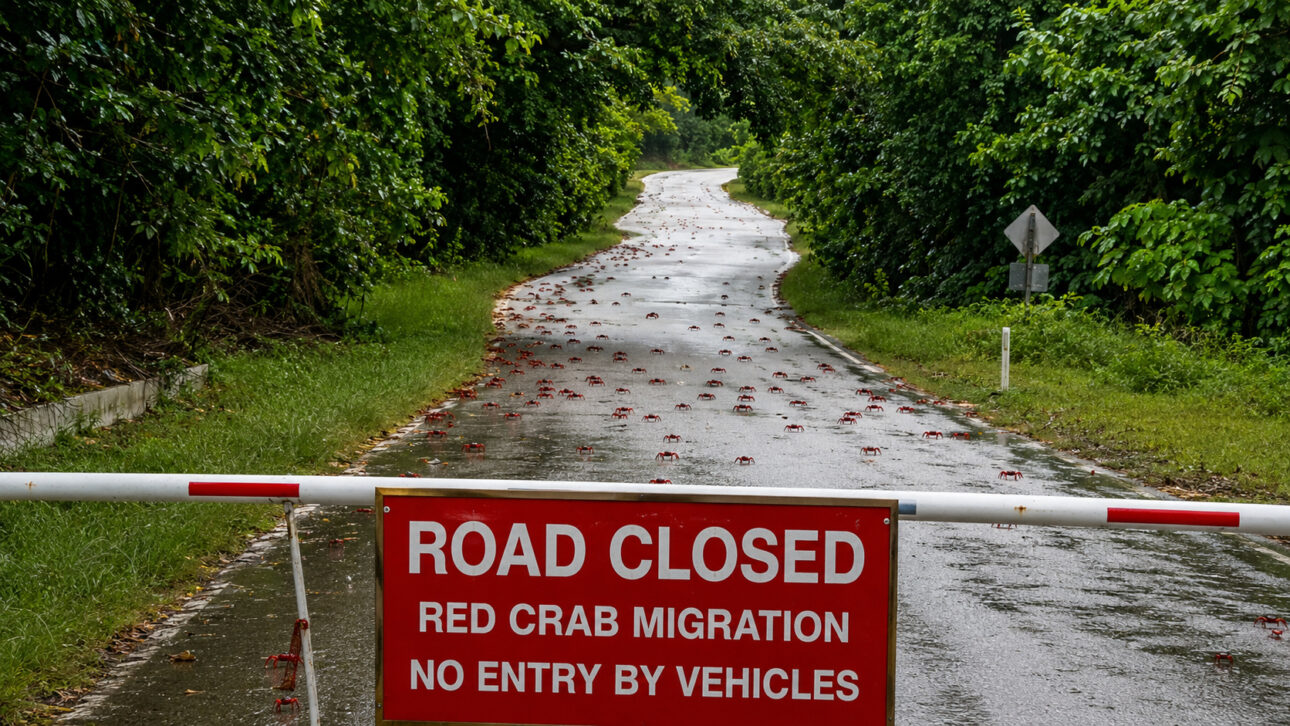
An Australian island closes roads, diverts vehicles, and installs kilometers of barriers when more than 100 million red crabs begin to leave the forest towards the sea. The roads are taken over by the animals, while bridges and underpasses receive a continuous flow of crabs.
The information was released by Parks Australia, the Australian government agency responsible for national parks, on January 5, 2024. The statement recorded that the migration was underway at that time and presented the measures used to protect the animals.
The operation alters the routine of Christmas Island. Traffic is diverted, sections of roads are closed, and residents help the park teams keep the path to the coast clear.
-
Detectorists find three Bronze Age torcs near Carlisle, 3,000 years old and valued at £500,000 each, in an area where an energy project may build a substation and a 28 km overhead line.

-
He throws ice cubes into the dough to bake the pizza and the result turns into parmesan cream: at 73 years old, pizzaiolo Sudário Silva makes a pizza in São Roque that he claims is unique in all of Brazil.

-
Instead of demolishing slums and building housing projects, Thailand transferred the money directly to resident cooperatives, which renegotiated the land and rebuilt their own neighborhoods in the same place; there are already more than 90,000 families in about 1,500 communities.
-
The public school that educates from teenagers to the elderly in the same class: in Araraquara, EJA graduated 36 students at once, including Dona Lourdes, aged 83, who now wants to enter college.


Rain, tide, and phases of the Moon determine the start of the migration
The migration of red crabs begins after the first heavy rain of the wet season. The humidity allows the animals to leave their shelters in the forest and walk to the coast with a lower risk of losing water during the journey.


The rain, however, does not alone determine the start of the journey. Weather conditions, tides, and phases of the Moon need to form the necessary combination for millions of crabs to advance towards the ocean.
For this reason, the date of the migration can vary. Teams monitor the movement of the animals and reorganize the roads when large concentrations begin to occupy the routes.
Christmas Island is 1500 kilometers from the Australian mainland
Christmas Island is located in the Indian Ocean, about 1500 kilometers from the Australian mainland. Even distant from the main part of the country, it belongs to Australia and hosts a significant population of red crabs.
These animals primarily live in the forest and play an important role in the environment. They consume fallen leaves and help return nutrients to the soil, contributing to the functioning of the vegetation.
The species is considered essential for the island’s balance. When the number of crabs decreases, the forest also loses part of the natural process that cleans the soil and recycles nutrients.
Crabs need to reach the sea to complete reproduction
The red crabs leave the forest because they need to reach the coast to mate and release their eggs in the water. The ocean is part of the species’ reproductive cycle, even though adult animals spend most of their lives on land.
After mating, the females remain near the coast until the right time to release the eggs. The tide and the phase of the Moon influence this stage.
After reproduction, the adults begin the journey back to the forest. This means that roads may have animals moving in different directions during the various phases of migration.
The infrastructure needs to remain active during this movement. The barriers continue to guide the crabs to points where they can cross the roads without direct contact with vehicles.
Kilometers of barriers lead the animals to bridges and tunnels
The teams install kilometers of temporary barriers on the sides of the roads. These structures prevent the crabs from entering the roads directly and guide the animals to protected crossings.
In some places, the crabs cross bridges built over the roads. In others, they use underpasses, which are small paths opened under the road.
The system takes advantage of the natural movement of the animals themselves. Instead of collecting each crab, the barriers form corridors that lead millions of them to safe points.
During periods of higher movement, the bridges are covered with red crabs. The separation between animals and vehicles reduces run-overs and allows part of the traffic to continue functioning.
Road closures protect animals and drivers
The natural routes between the forest and the ocean cross areas occupied by roads. When millions of crabs reach the asphalt, maintaining normal traffic increases the risk of run-overs and accidents.
The administration diverts vehicles and closes the most affected sections. The changes follow the progress of the migration, as the concentration of animals can vary between different points on the island.
Residents and other local participants help with the work. They respect the blockades, reduce circulation in occupied areas, and collaborate to allow the crabs to continue advancing.
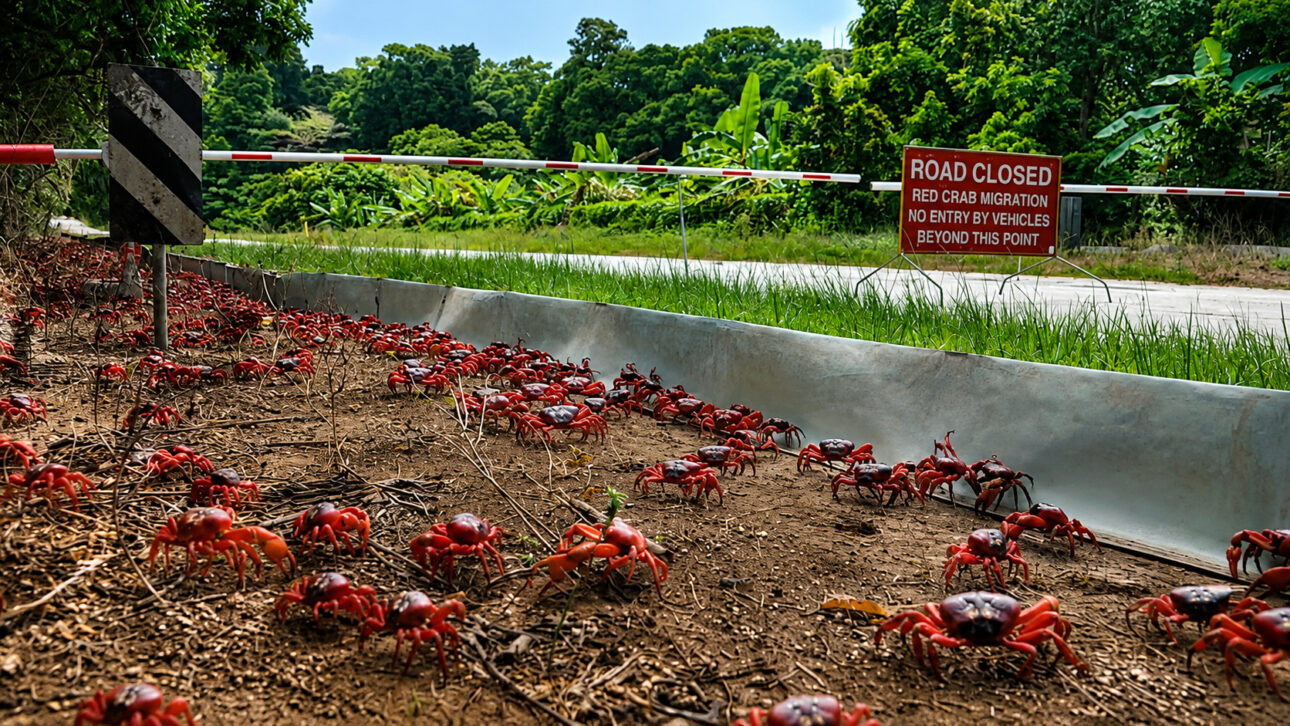
Parks Australia, the Australian government agency responsible for national parks, detailed the installation of road barriers, crab bridges, and traffic control measures. The entity also recorded community participation in the operation.
Invasive ants threatened the red crabs
The invasive yellow ants became a threat to the Christmas Island crabs. In large concentrations, they release formic acid, a substance that can kill terrestrial animals.
The problem did not only affect the crabs. As they play an important role in the forest, the reduction of the population harmed the entire natural environment of the island.
The control involved reducing the ants’ main food source and distributing baits in large colonies. The decrease in these concentrations allowed more crabs to survive and participate in the migrations.
The estimated population increased from 50 million to over 100 million in five years. The data was published on January 5, 2024 and represents the estimate presented in that communication, as the number of wild animals can change over time.
Wildlife infrastructure can inspire solutions on Brazilian roads
The Christmas Island operation shows that bridges and tunnels don’t need to serve only cars and people. When well-positioned, these structures also allow animals to cross roads without competing for space with vehicles.
In Brazil, wildlife crossings can be adapted to the animals found in each region. The first step is to identify the natural routes and the points where there is a higher risk of run-overs.
Guiding barriers, bridges, and underpasses need to work together with signage, monitoring, and traffic control. Infrastructure alone does not solve the problem when vehicles continue to circulate carelessly.
Christmas Island combines crossing structures, temporary road changes, resident participation, and control of an invasive species. This union protects migration and also helps to conserve the forest.
More than 100 million crabs can cross the island because human traffic is reorganized during the most delicate period of reproduction. The structure reduces the conflict between the roads and a natural movement that existed before the roads were built.
Bridges, underpasses, and kilometers of barriers show that engineering can adapt a road to the path of animals. The result benefits the fauna, drivers, and the environmental balance of the island.
If millions of animals depend on routes cut by roads, how far should traffic be adapted to protect the fauna? Leave your opinion in the comments.