





 English
  Francês
  Alemão
  Italiano
  Japonês
  Norueguês
  Portuguese
  Spanish
  4 min of reading


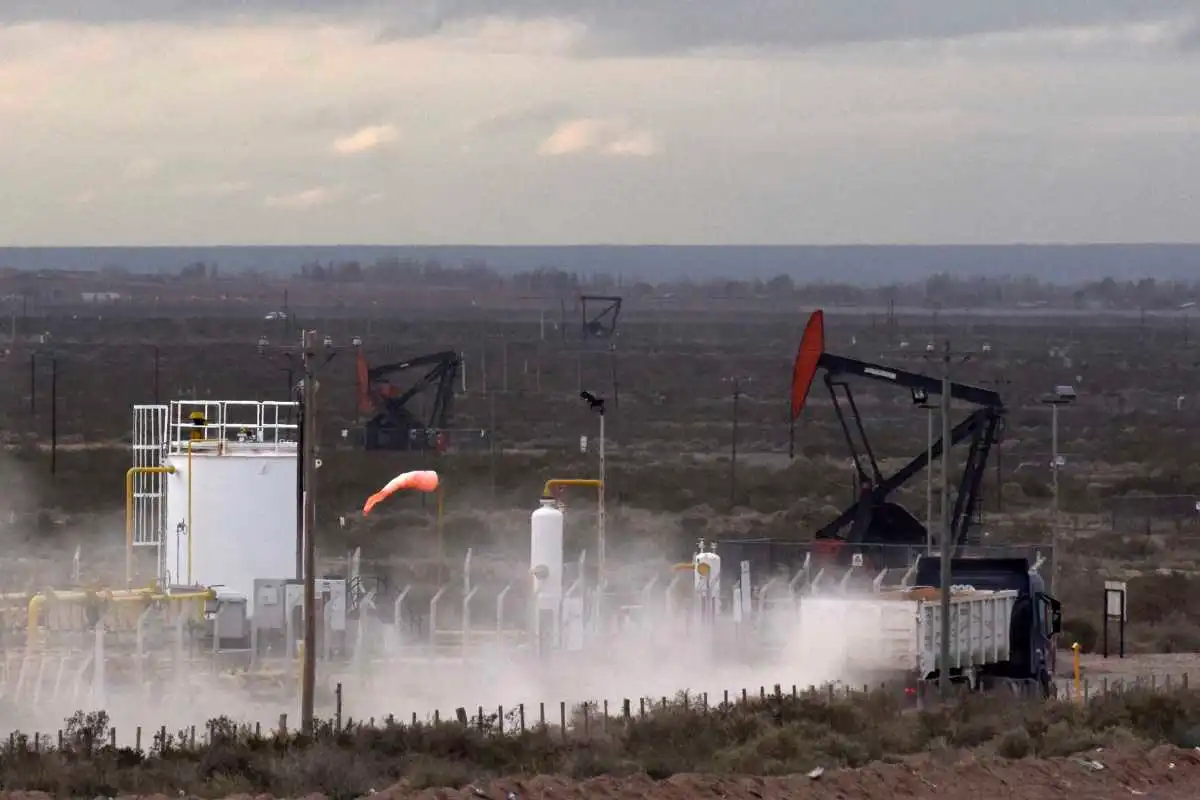
Vaca Muerta, A Mega Gas Field Discovered In Argentina, Has Raised The Possibility Of BNDES Financing For The New Stretch Of The Néstor Kirchner Gas Pipeline Aimed At Supplying The Brazilian Market.
However, many doubts linger about costs, implementation time, and even availability of production for Brazil. Located in the Neuquén Province, Vaca Muerta is a large area of unconventional oil (shale gas) with several producing fields and contracts with different operators. The plan may be theoretically feasible, but the final green light depends on understanding the risks involved and other factors to make it beneficial for the Brazilian economy.
Argentine Gas Pipeline: How The Vaca Muerta Scheme Will Work


The Vaca Muerta field set a new record for hydrocarbon production in June 2022, reaching 706,000 barrels of oil equivalent per day (boed).
YPF leads the exploration of the field, but large foreign oil companies, such as Shell (SHEL), Total (TTE), and ExxonMobil (XOM), are also present. If estimates are confirmed, the field will peak at 1.2 million boed by 2033.
-
If the USA were to go to war with Brazil, Washington’s greatest fear would not be the attack itself, but facing a vast territory, prolonged resistance, and a costly, chaotic, and unpredictable occupation.

-
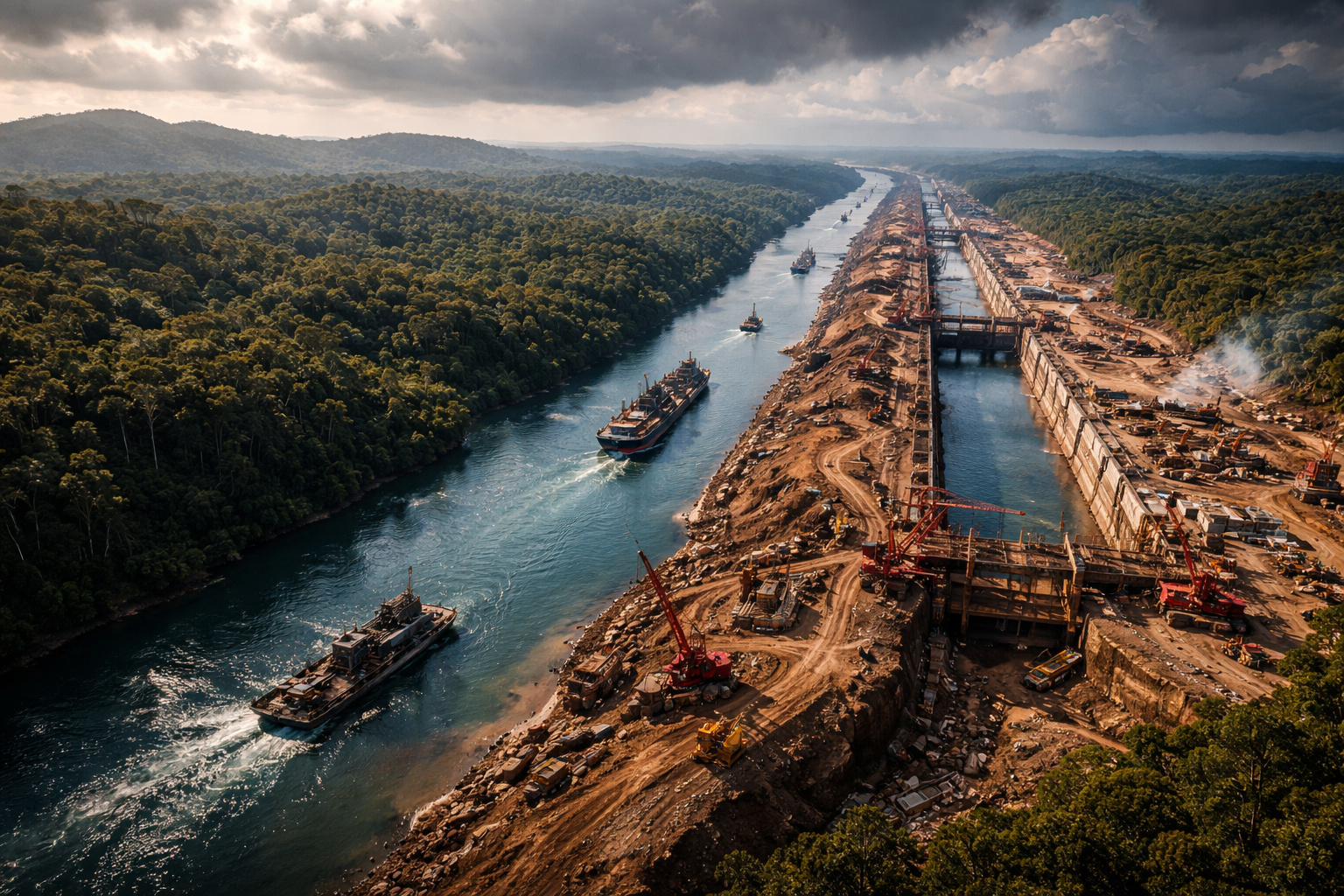
In 2013, Nicaragua sold the concession for a canal to rival Panama to a Chinese billionaire who lost 85% of his fortune, disappeared, and was declared bankrupt. Now the project resurfaces with a new route, a new Chinese partner, and a cost of $64.5 billion.
-
The USA announces a mysterious billion-dollar vault project to store critical minerals, but what intrigues experts is not just the plan itself, but why Latin America, including Brazil, has entered the center of this global dispute against China.

-
Trump Announces Bombing of U.S. Military Targets on Iranian Island Responsible for About 90% of Iran’s Oil Exports, Warns of Further Attacks if Navigation in Strategic Strait of Hormuz Is Threatened


The significant increase in oil and gas production in the Latin America region requires greater transportation capacity for the associated fuels. Research Director Marcelo de Assis emphasized that, if this does not happen, the volumes produced in Vaca Muerta may face limitations. Therefore, according to the specialist, the construction of a new gas pipeline to support this growth is crucial.
Néstor Kirchner Pipeline
The long-held dream of the gas sector and involved governments is integration in the area between Brazil, Bolivia, and Argentina. The first stretch of the Néstor Kirchner gas pipeline, which will connect Neuquén to Buenos Aires, is expected to be completed between 2023 and 2024. A second stretch would carry the input from the Argentine capital to the Province of Santa Fé, where there is a pipeline connection to Uruguaiana, in Rio Grande do Sul.
The founding partner of the Brazilian Infrastructure Center (CBIE), Adriano Pires, stated that to make the gas distribution project from Vaca Muerta to Brazil economically viable, there needs to be a connection between Uruguaiana and Porto Alegre, where there are so-called anchor consumers that request gas year-round.
Additionally, Porto Alegre could host a petrochemical hub in Triunfo and also a new thermal plant. The new infrastructure could also connect to the already existing Brazil-Bolivia gas pipeline, allowing for gas delivery to Santa Catarina and Paraná. However, Pires highlighted that Argentina and Bolivia are not reliable partners to make this project a reality.
The CEO of Gas Energy, Rivaldo Moreira Neto, warned that changes in the gas supply contracts for Brazil, with unforeseen price increases, threats of supply cuts, and the end of production incentives, have significantly limited available supply. Thus, he emphasized that the project to connect Uruguaiana to Porto Alegre would be about 600 kilometers long and cost billions of reais.
According to the CEO of Gas Energy, the Argentine government’s plans to expand Vaca Muerta’s drainage infrastructure have been hindered by the currency crisis in the neighboring country. Therefore, without legal security and regulatory stability, integration never happened. “The idea is good because we need gas, but if this entire infrastructure is not built, it won’t help,” said Moreira.
Thus, due to the lack of necessary regulatory stability and legal security between the two countries involved in the project – Brazil and Argentina – the future of this important initiative remains uncertain.
Gas Shock
The whole world faces an urgent need to diversify its energy sources. The Vaca Muerta mega gas field in Argentina presents an opportunity for Brazil to reduce its dependence on imported inputs from Bolivia. However, high costs and the lack of production availability in the country during certain times of the year are challenges that need to be overcome.
Moreover, regulatory risk and the legal environment between the two countries involved are also important factors that cast doubt on the realization of this project. A promising alternative is liquefied natural gas (LNG), which can be transported by ships to meet Brazilian demand.
However, for this option to be viable, liquefaction (at the origin) and regasification (at the destination) plants are necessary. Brazil already has terminals of this type spread across several states, and there are studies about new installations in other locations. But Walter de Vitto, an analyst at Tendências Consultoria, warned that this does not mean that LNG can completely replace the dependence on Bolivia. “We still have significant consumption from domestic production,” he said.
Lastly, Paulo Moreira added that even with the advantages of LNG, international prices may compromise Brazilian competitiveness. “If we want to buy LNG, we will have to compete with Europe,” he explained. Still, it is expected that this resource can play an important role in the Brazilian market in the near future.








Seja o primeiro a reagir!