





 Portuguese
  English
  Spanish
  4 min of reading
  0 comments


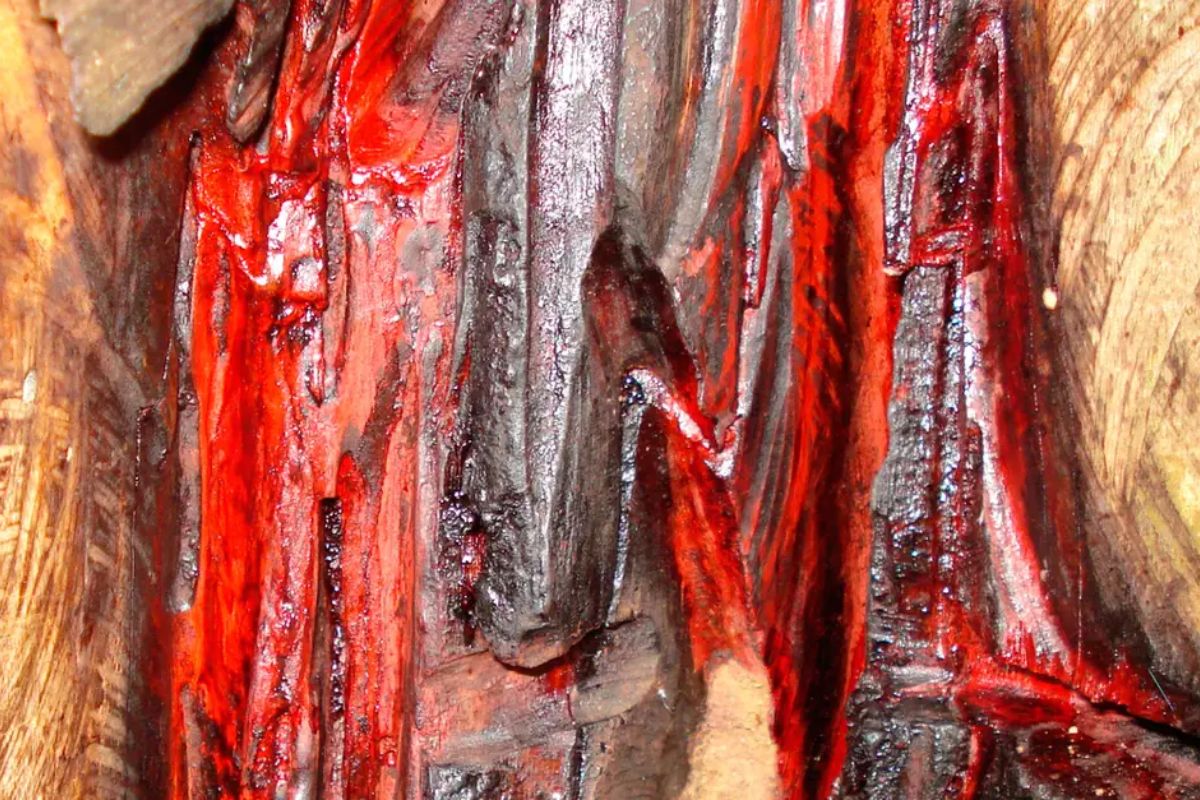
Know The History Of Paubrasilia echinata, The First Wealth Of The Country, Whose Exploration For More Than 300 Years Devastated The Atlantic Forest And Changed Forever The Lives Of Indigenous Peoples.
According to historical and botanical records, the first great wealth explored by Europeans in South America was a tree from which a valuable dye was extracted. This red tree, called Brazilwood, not only named the new nation but also drove the first economic cycle of the country, triggering a predatory exploitation that nearly led it to extinction.
The saga of Brazilwood is the very history of the birth of Brazil. It reflects the immense natural wealth found, the greed it awakened in Europe, the deep impact on indigenous peoples, and the environmental devastation that marked the early centuries of the relationship between man and the newly discovered land.
Ibirapitanga, The Red Tree Before The Arrival Of The Portuguese
Before being named Brazilwood, Paubrasilia echinata was already known and used by the Tupi peoples inhabiting the coast. They called it Ibirapitanga, which in their language means “red pole or tree”, a direct reference to the intense color of its heartwood.
-
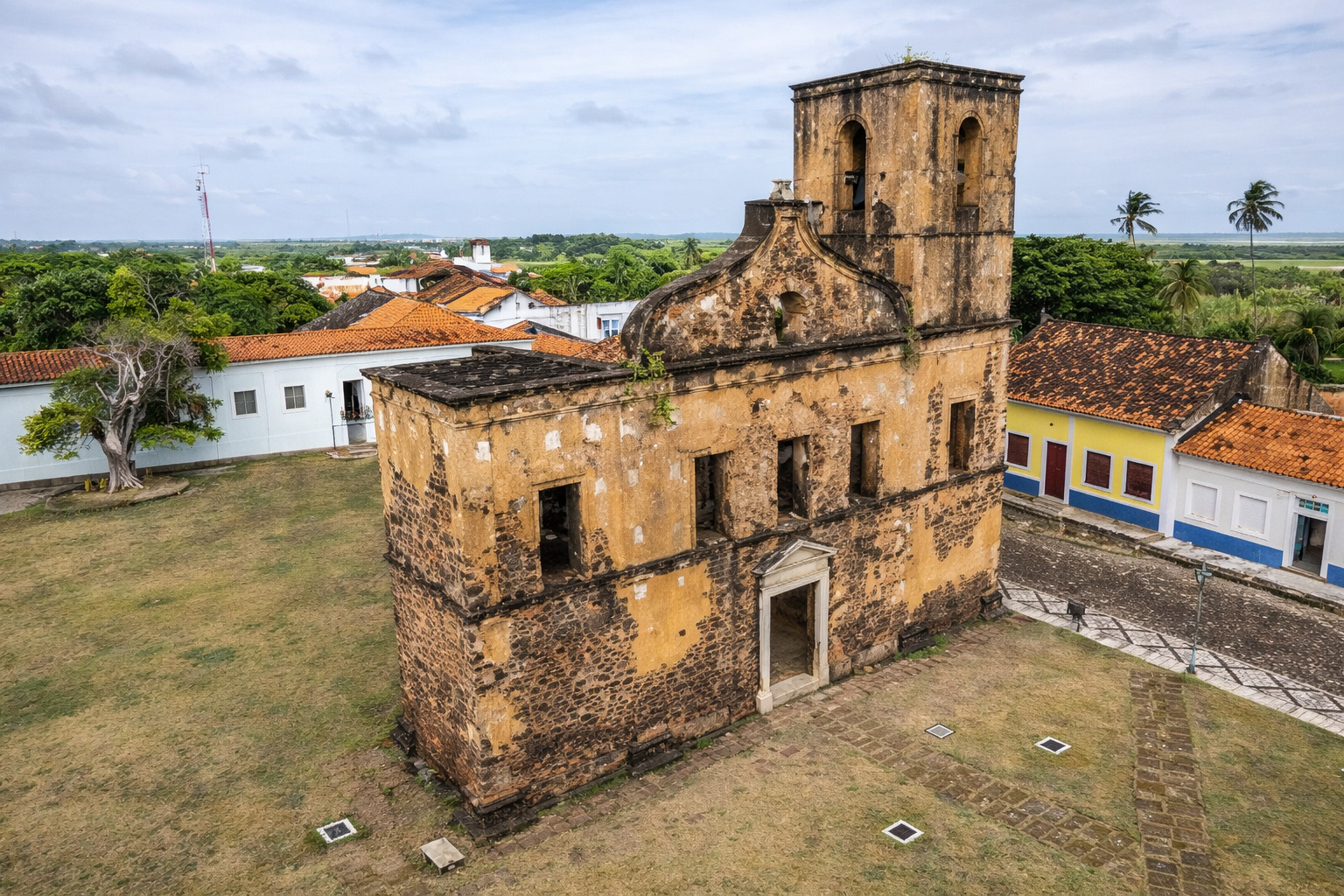
The Brazilian colonial city that stopped in time and shares territory with a rocket launch base.
-
79-year-old woman challenges limits, visits 193 countries in the world after 56 years of planning and reveals the behind-the-scenes of a global journey that few have managed to accomplish.

-
These are the drivers who may stop paying tolls on highways in a project that promises to reduce costs for those who live from transportation in Brazil.

-
(Video): Italian pilot lands plane on moving train at 120 km/h and achieves unprecedented feat in aviation, even with a narrow runway and without direct visual contact.


Endemic to the Atlantic Forest, this imposing tree could reach up to 30 meters in height and live for more than 300 years. Its grayish bark, covered in thorns, concealed the reddish wood that, when exposed to air, revealed the pigment that would become so valuable. Its original distribution extended for nearly 3,000 kilometers along the Brazilian coast, from Rio Grande do Norte to Rio de Janeiro.
The First Economy Of The Colony

The exploitation of Brazilwood was the dominant economic activity in the early decades of Portuguese presence. The Portuguese crown quickly established a royal monopoly, known as “estanco,” over the extraction of the wood. The first exploitation contract was granted around 1501 to the merchant Fernão de Loronha.
The logistics were based on feitorias, fortified trading posts along the coast where logs were stored. Starting in 1513, the system changed to a licensing model, where any Portuguese trader could exploit the wood, as long as they paid a 20% tax (“the fifth”) to the Crown. This change, while profitable for Portugal, accelerated devastation, as it multiplied the number of exploiters competing for the red tree. By around 1530, Brazilwood represented about 90% of everything exported from the colony.
Environmental And Social Devastation
The relentless quest for the red tree left deep scars. The initial relationship with the indigenous peoples was based on barter: the natives would cut and transport the logs in exchange for manufactured goods, such as metal axes, knives, and mirrors. However, with the increase in demand, barter quickly gave way to forced labor and slavery.
The most catastrophic impact, however, was biological. Contact with Europeans introduced diseases such as smallpox and measles, to which the indigenous peoples had no immunity, causing a demographic collapse. At the same time, predatory exploitation for more than three centuries led to the near extinction of Brazilwood and was the starting point for the destruction of the Atlantic Forest, which today has only about 12% of its original cover.
Near Extinction And The Current Conservation Status
By the 19th century, finding a wild Brazilwood was already a rarity. Only on December 7, 1978, through Law No. 6,607, the red tree was officially declared the National Tree of Brazil. In 1992, IBAMA included it on the official list of species of Brazilian flora threatened with extinction, where it remains today.
Currently, the main threat is the illegal extraction of its wood, which is highly sought after in the international market for the production of high-quality bows for string instruments, such as violins and cellos. Conservation efforts, such as the creation of the Parque Nacional do Pau-Brasil in Porto Seguro (BA) in 1999, and reforestation projects aim to ensure the survival of the species.
Why Was Brazilwood So Valuable?
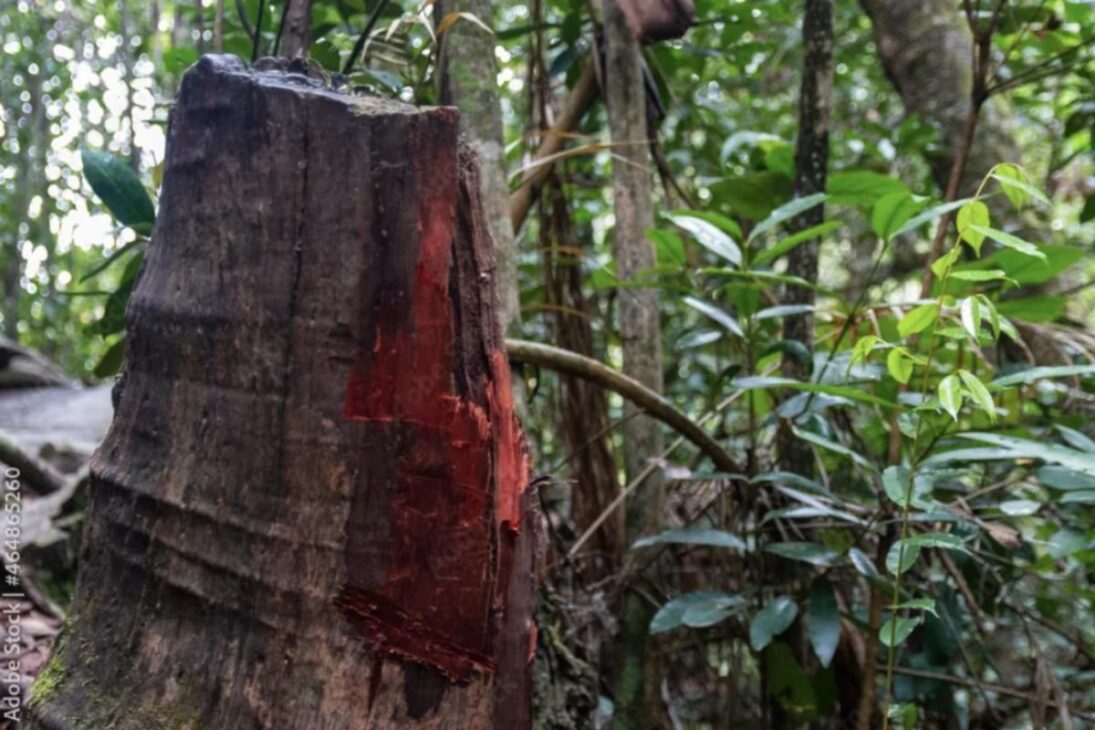
The value of the red tree lay in its dye. The wood contains a compound called brasilin, which, when oxidized in contact with air and water, transforms into brasilein, a vibrant red pigment. In Renaissance Europe, this dye was a luxury item, used to dye the expensive fabrics of the nobility and clergy, such as silk and velvet.
The red color was a symbol of power and wealth, making the raw material extremely valuable. The name “Brazil,” in fact, derives from the word “brasa,” a reference to the intense color of the wood. Thus, the country’s identity was, from the very beginning, defined by its first and most coveted export product.






Seja o primeiro a reagir!