





 Portuguese
  English
  Spanish
 5 min of reading
  0 comments


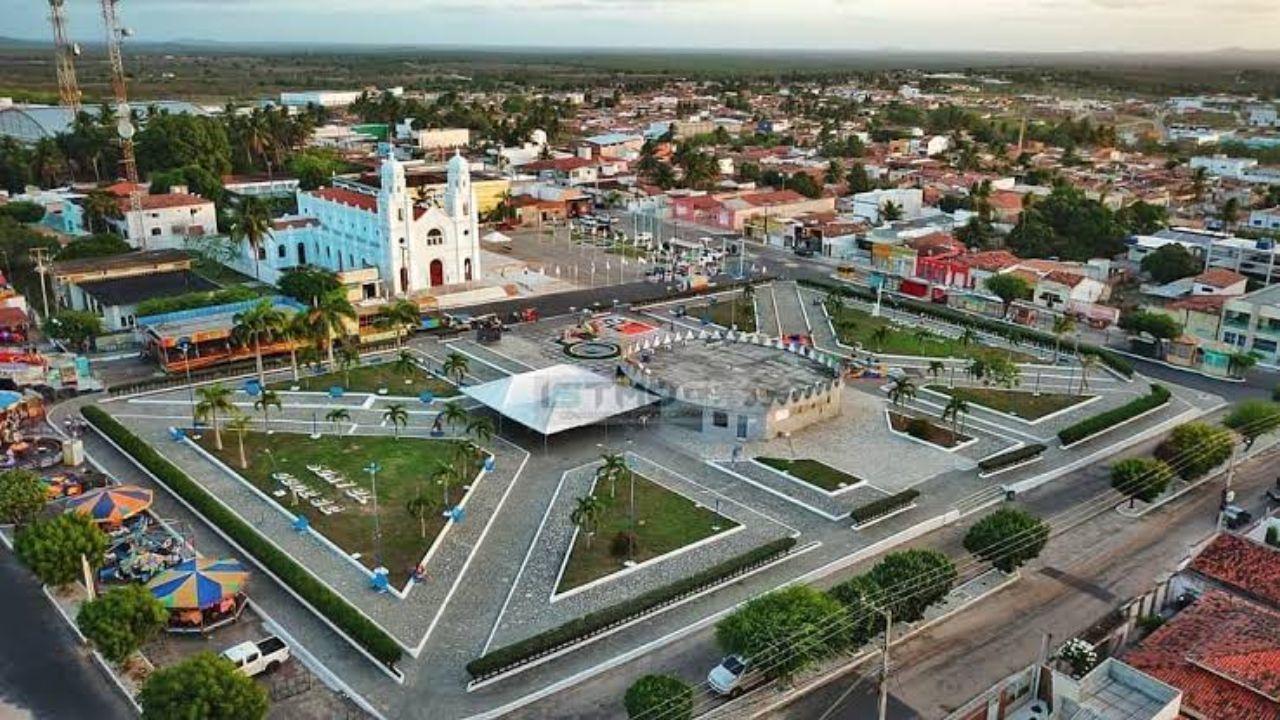
Know The History Of The Brazilian City In Rio Grande Do Norte That Lives With The Instability Of The Samambaia Fault, Learning To Adapt To A Reality Of Constant Tremors.
João Câmara, in Rio Grande do Norte, is a Brazilian city with a unique geological characteristic. It is located on the active Samambaia Fault. This condition makes it the epicenter of significant intraplate seismic activity in the country. The nickname “The City That Dances With Earthquakes” reflects the deep relationship of the community with these phenomena. This article explores João Câmara’s coexistence with seismic instability, its causes and consequences.
A Unique Stage Of Brazilian Seismic Activity
The Brazilian city of João Câmara has a singular geological distinction in Brazil. It is the epicenter of significant intraplate seismic activities. Its geoscientific fame comes from its direct location over the Samambaia Fault System (SFS). This active geological structure is known for its recurring instability.
The geographical proximity to the SFS is the fundamental reason for the city’s seismic experiences. Brazil is generally considered aaseismic region. This is due to its location in the interior of the South American tectonic plate. This plate is far from the active edges, where most earthquakes occur. However, areas like the Brazilian city of João Câmara show that significant seismic hazards can exist within tectonic plates. The seismic activity in João Câmara highlights the complexity of tectonic processes. It also emphasizes the need to understand risks even in regions deemed stable.
-
Brazil’s nuclear submarine with a speed 5 times greater than normal advances after nearly 50 years and R$ 40 billion spent.
-
A Brazilian island charges R$ 0.50 to receive visitors and prohibits any new residents.
-
Why was the Great Wall of China built? The truth that many are unaware of!
-
At 73.8 meters tall, the world’s tallest teapot-shaped building has 15 floors, ensures stability, and impresses with an internal space of 28,000 cubic meters.

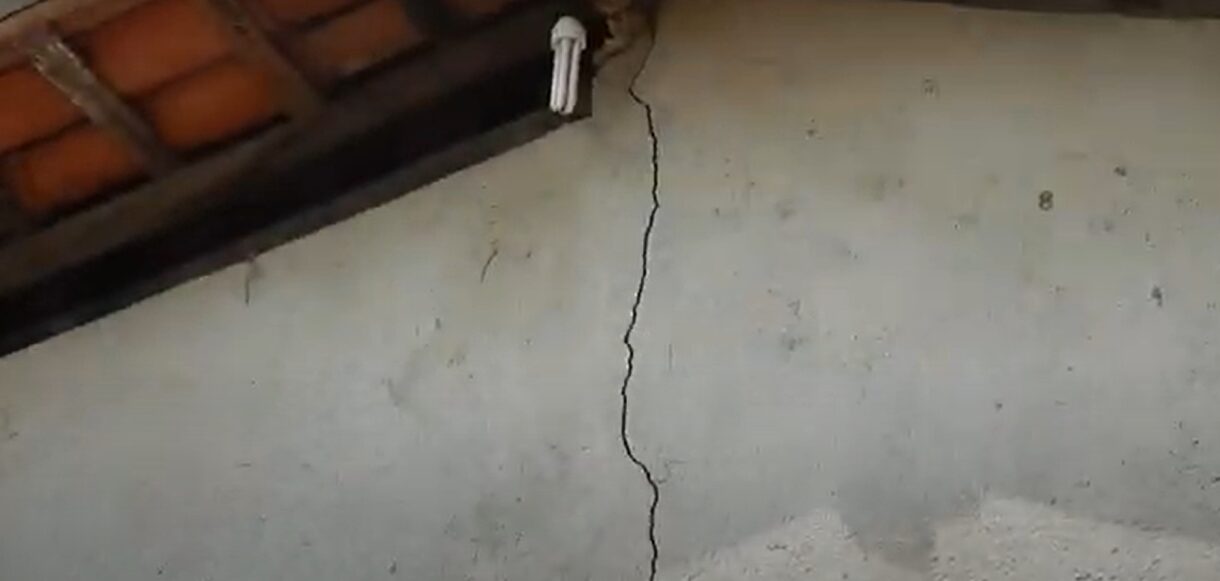
The expression “The City That Dances With Earthquakes” goes beyond a geographical description. It summarizes the intrinsic and ancient relationship of the community with seismic activity. The phrase suggests an adaptation that overcomes constant fear. It evokes a coexistence and a learned resilience. The existence of this popular expression indicates that the seismic phenomenon is rooted in the local culture. Earthquakes are not just isolated events. They are a continuous presence that has shaped the perception of the city and its inhabitants. This phenomenon has become part of the local identity, indicating cultural adaptation and collective memory.
The Restless Giant Beneath The Brazilian City
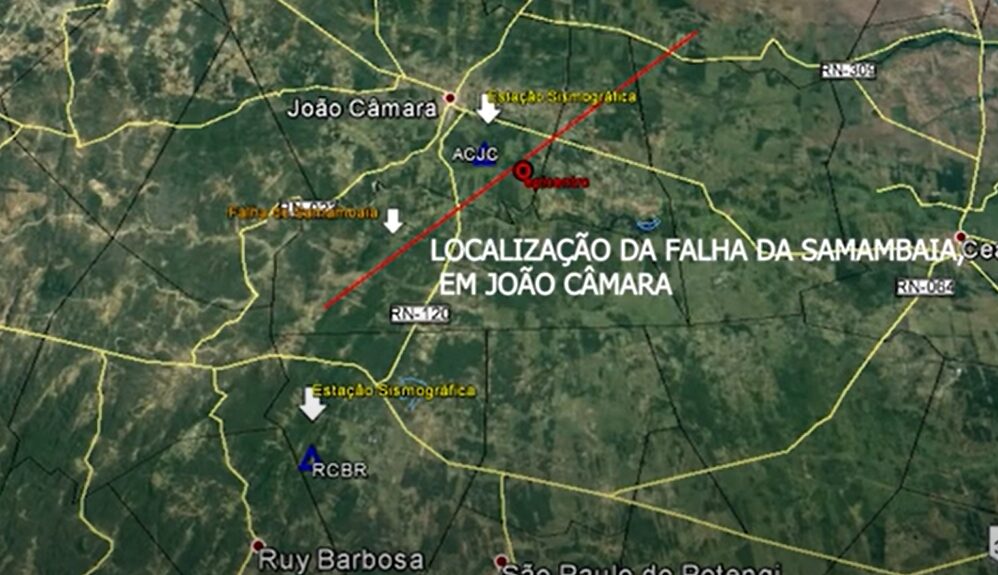
The Northeast region of Brazil is in the Borborema Province. It is a Precambrian shield with a complex geological history. It has extensive ancient shear zones. These zones are discontinuities in the crust. They can be reactivated under new stresses.
Intraplate seismicity, like that of the Brazilian city of João Câmara, occurs within tectonic plates. It is attributed to the reactivation of pre-existing zones of weakness. In the Northeast, the regional stress field is compressive, oriented E-W to ESE-WNW. This stress regime reactivates faults like Samambaia.
The Samambaia Fault System (SFS) directly causes the seismicity in João Câmara. It is a system of normal faults, oriented E-W to ENE-WSW. Its dip is steep to the south. The SFS is about 30-40 km long and 5-10 km wide. Its origin is in the reactivation of a Precambrian shear zone, which occurred in the Cenozoic. The hypocenters of the earthquakes are shallow, between 1 to 10 km deep. Therefore, even moderate earthquakes cause high intensities at the surface. The focal mechanisms indicate normal faulting. The SFS is the most active fault system in Brazil. The seismic crisis of 1986-1990, with earthquakes of magnitude around 5.0, demonstrated its damaging potential. One characteristic is the occurrence of seismic swarms, sequences of tremors that can last weeks or months. This generates anxiety in the population.
The Unforgettable Seismic Crisis Of 1986-1990
The seismic history of João Câmara had a turning point with the seismic crisis from 1986 to 1990. This period saw unprecedented seismic activity in Brazil in terms of the number of events and intensity.
Before 1986, records of earthquakes in João Câmara were sporadic. The earthquake in Poço Branco in 1973, with a magnitude of 4.8, was a precursor. It indicated tectonic activity in the Borborema Province.
The seismic swarm began in August 1986. Activity intensified in November 1986. Two events stood out: on November 30, 1986 (magnitude 5.1 mb) and March 20, 1987 (magnitude 5.0 mb). These caused panic and significant damage, with a maximum intensity of VII-VIII on the Modified Mercalli Scale. During the crisis, over 50,000 tremors were recorded. The activity migrated along segments of the SFS. Over 4,000 buildings, primarily made of adobe and simple masonry, were damaged or destroyed. The psychological impact was immense. Parts of the city were evacuated, and the “Vila Samambaia” was created. The crisis boosted seismic studies in Brazil.
After 1990, activity in the SFS decreased but did not cease. João Câmara continued to experience lower-level seismicity. Smaller swarms and isolated events occurred in years like 1993, 2002, 2010, 2011, 2018, and 2022. The João Câmara Seismographic Network (RSJC), established after the crisis, allows for continuous monitoring. The detailed record of building damage during the 1986 crisis provides valuable data for construction standards.
Adaptation And Resilience In João Câmara


Before the seismic crisis of 1986, João Câmara had socioeconomic characteristics typical of the interior of the Northeast. The economy was based on subsistence agriculture, livestock, and sisal. The houses, especially those of low income, were made of adobe or simple masonry, vulnerable to earthquakes.
The crisis of 1986-1990 had immediate impacts. More than 4,000 houses were damaged or destroyed. Public buildings suffered damage. The humanitarian response was significant. Families became homeless. The “Vila Samambaia” became a symbol of the crisis. The Civil Defense provided emergency assistance. The psychological trauma was intense. Fear and uncertainty dominated daily life.
The crisis spurred learning and adaptation. Construction practices changed. There was a gradual abandonment of adobe in favor of more resistant methods. Reinforced concrete structures and wooden houses became more common. Public awareness increased. The UFRN and Civil Defense educated the population about risks and preparedness. The community developed psychological resilience. Acute fear gave way to a pragmatic coexistence with risk. Long-term psychological adaptation involves desensitization to minor tremors. However, latent anxiety can be heightened by stronger events.




Seja o primeiro a reagir!