





 Portuguese
  English
  Spanish
  3 min of reading
  0 comments


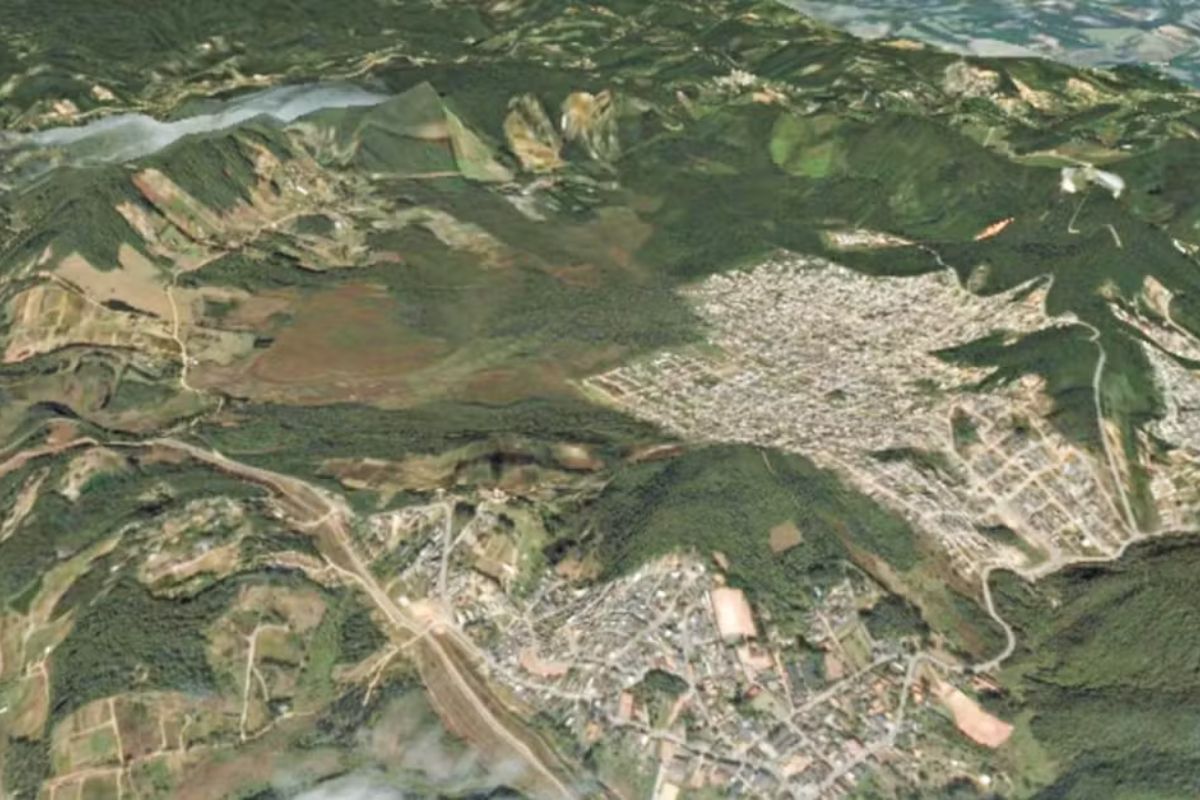
Learn The History Of The 3.6 Km Colonia Crater In The Southernmost Part Of The Paulista Capital Which Is A Scientific Treasure And Home To 40 Thousand People
In the southernmost part of the largest metropolis in South America, hidden by the urban landscape, there exists a nearly perfectly circular scar left by the impact of a celestial body millions of years ago. The Colonia Crater, located in the Parelheiros district, is one of Brazil’s most fascinating geological monuments. And, contrary to what many believe, it is not located in Piauí, but rather within the city of São Paulo.
What makes this place unique is its dual reality. On one hand, it is a treasure for science, preserving in its subsoil a detailed archive of the planet’s climate history. On the other, it is home to a vibrant community, the neighborhood of Vargem Grande, where about 40,000 people live. The history of the Colonia Crater is the story of how human life adapted and thrived upon the mark of a cosmic event.
The Discovery Of The Star Wound On The Map Of São Paulo
For a long time, the existence of the crater went unnoticed. Its circular shape was only identified in the early 1960s, through the analysis of aerial photographs. The discovery was officialized in 1961 by a group of professors from the University of São Paulo (USP), who published the first study on the depression.
-
These are the drivers who may stop paying tolls on highways in a project that promises to reduce costs for those who live from transportation in Brazil.

-
(Video): Italian pilot lands plane on moving train at 120 km/h and achieves unprecedented feat in aviation, even with a narrow runway and without direct visual contact.

-
It seems to have come out of a science fiction movie: A Brazilian city where it rains almost every day, recording over 4,000 mm per year, driven by climatic factors — a direct result of its strategic location in the Amazon.

-
The water crisis that could change everything this year has already begun; it’s not just about the climate, it affects technology, raises product prices, and can halt entire companies without warning.


However, the confirmation that it was caused by a meteor impact took decades. The definitive proof came with microscopic analysis of the rocks at the site. Scientists from USP found features of shock metamorphism, known as “shocked quartz”. These microfractures in the crystals can only be formed by the extreme pressure and temperature of a hypervelocity impact, eliminating any other possibilities, such as volcanism.
The Size And Age Of The Event
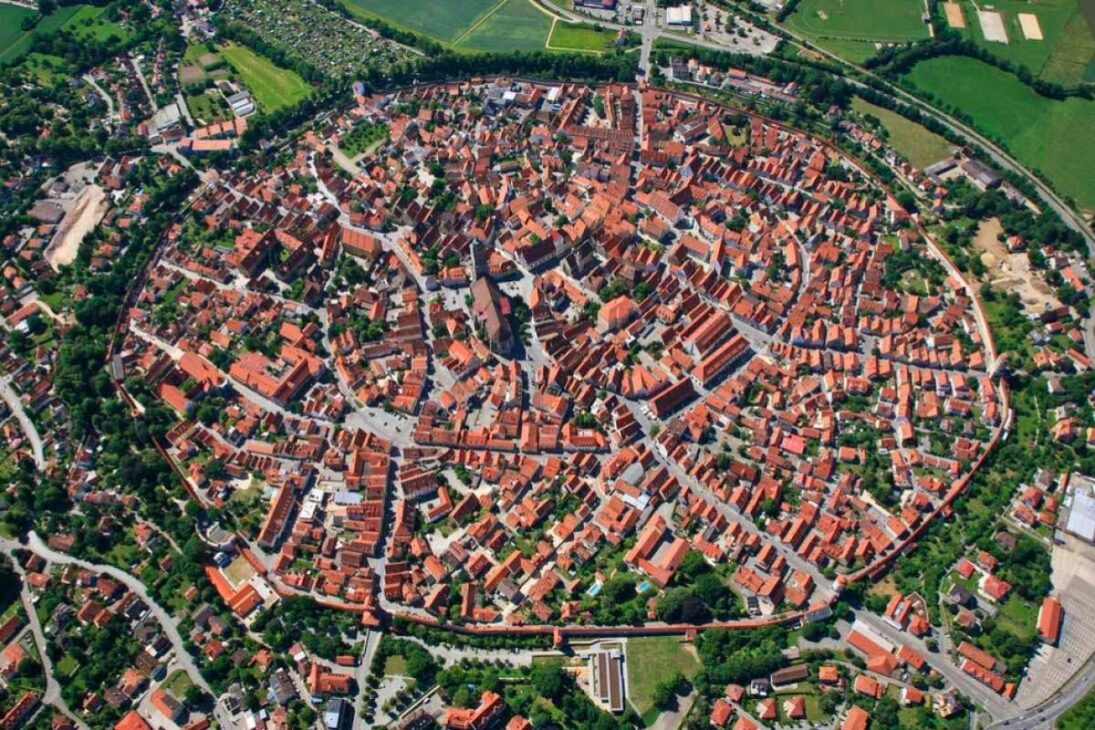
The event that formed the Colonia Crater was cataclysmic. It is estimated that a celestial body about 200 meters in diameter struck the Earth, releasing an energy equivalent to dozens of atomic bombs. The dating of the impact points to a period between 5 and 36 million years ago.
The collision excavated a hole with a 3.6-kilometer diameter and, at the same time, raised its edges, creating a ring of hills that now rises up to 125 meters above the central plain. This elevated edge still defines the landscape of the region and delineates the area of the crater.
How A City Grew Inside The Colonia Crater?
The urban occupation of the crater is a recent phenomenon. The neighborhood of Vargem Grande began to form systematically in the late 1980s, from irregular lot divisions and settlements that spread across the area. Driven by the expansion of the metropolis, a low-income population, pushed out of the more expensive center, found in the region an alternative for housing.
Today, it is estimated that about 40,000 people live within and on the edges of the crater. For decades, this community has faced a lack of basic infrastructure, such as asphalt and sanitation. However, recent urbanization projects by the City of São Paulo have transformed the local reality, attempting to reconcile human occupation with environmental preservation.
The Scientific Treasure Guarded Beneath The Neighborhood
Besides its impressive origin, the greatest scientific value of the Colonia Crater lies within. After the impact, the depression became a closed lake that, over millions of years, accumulated a sediment column up to 400 meters deep.
This column acts as a time capsule. Layer by layer, it preserved pollen, spores, and other remnants that allow scientists to rebuild the history of climate and vegetation, especially from the Atlantic Forest, over hundreds of thousands of years. Due to its priceless value, the crater was legally protected as geological heritage through listing by CONDEPHAAT in 2003 and the creation of the Colonia Crater Municipal Natural Park in 2007.





Seja o primeiro a reagir!