





 Portuguese
  English
  Spanish
  3 min of reading
  0 comments


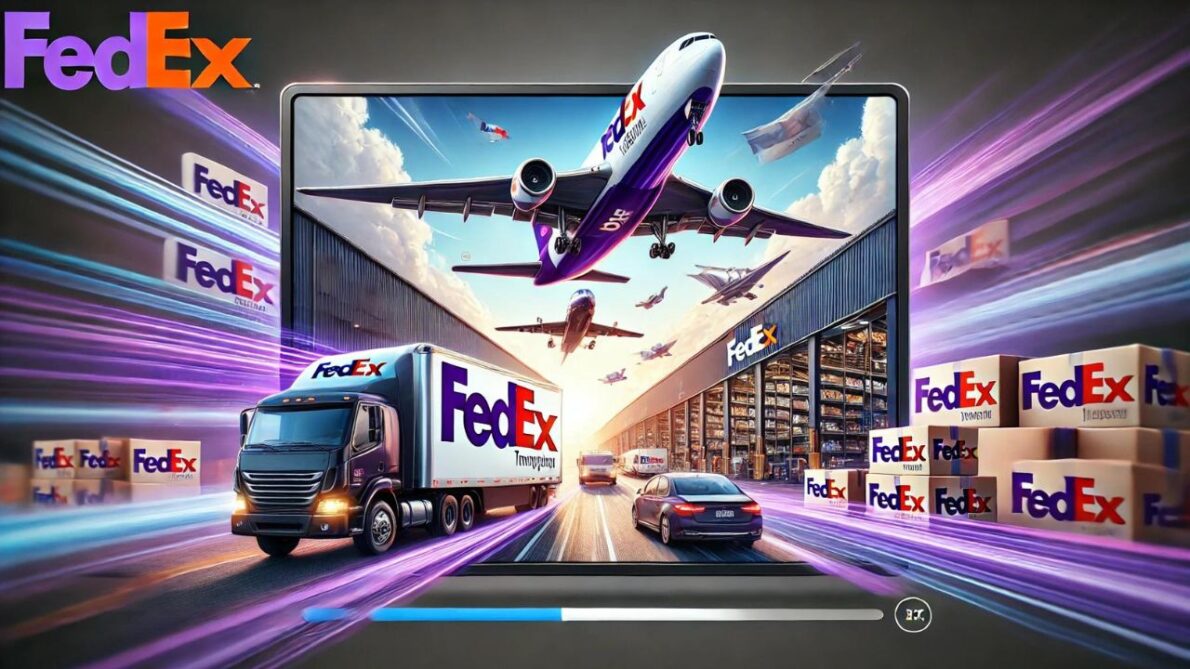
The History Of FedEx, A Global Transport Giant, Began In 1971 As A Small Company In The U.S. And Has Transformed Into A Global Leader, Operating In More Than 200 Countries, With Technological Innovations, Strategic Acquisitions, And A Continuous Commitment To Efficiency And Sustainability.
The history of FedEx is a true lesson in entrepreneurship and innovation. Starting as a small company in the interior of the United States, it transformed into a global transport giant, operating in more than 200 countries. Let’s explore this impressive journey?
FedEx, originally called Federal Express, was founded on June 24, 1971, by Frederick Smith, a former Marine. It all started with the acquisition of a modest aircraft maintenance company in Little Rock, Arkansas. Smith had the idea of creating an overnight delivery service for small packages while studying at Yale University, realizing that air transport could expedite package shipping.
The Great Leap Of FedEx


With an initial investment of 80 million dollars, FedEx began operations on April 17, 1973, with 14 Falcon 20 aircraft taking off from Memphis, Tennessee, to deliver 186 small packages to 25 U.S. cities. The name Federal Express was chosen for its patriotic appeal and national reach.
-
São Paulo surprises the world with a colossal railway network project that promises over 1,000 km of tracks, R$ 194 billion in investments, and 40 projects connecting the capital to the interior with fast and sustainable trains.
-
The world’s largest escalator, measuring 905 meters in China, reduces urban travel time from 1 hour to about 20 minutes and transforms mobility in mountainous regions with an engineering solution adapted to the terrain.

-
A R$ 300 million logistics giant is taking shape in Serra with over 100,000 m² and raises a question: how can this transform e-commerce and distribution in the state?
-
Could Uber Rides Lose Minimum Fare? Understand What’s Happening!


Expansion And Innovations
In the following years, FedEx grew exponentially. In 1978, the company went public on the stock exchange and launched the first automated customer service center. With the deregulation of the freight transport sector in the United States in 1977, FedEx was able to expand rapidly, acquiring larger aircraft such as the Boeing 727 and McDonnell Douglas DC-10.
In 1981, FedEx launched its international operations, starting with Canada and expanding to Latin America and the Caribbean. In 1983, it reached the milestone of 1 billion dollars in sales, and in 1984, it entered Europe, starting with the United Kingdom, Ireland, and Germany, and expanding to other countries in the following years. In 1988, FedEx began operations in Japan, marking its expansion into Asia, and in 1989, it acquired Tiger International, becoming the largest cargo airline in the world.
Global Presence And Operations In Brazil
FedEx arrived in Brazil in 1989 and consolidated its presence with the acquisition of Rapidão Cometa in 2012, becoming the largest private company in air and road transport infrastructure in the country. Currently, FedEx covers 5,300 locations in Brazil, with a built area of 340,000 square meters, 285 operation points, more than 2,800 vehicles, two aircraft, 80 authorized centers, and 9,000 employees.
Technological Innovations
Always at the forefront of technology, FedEx introduced electric vehicles as part of the Earth Smart platform, reaffirming its environmental commitment. In 2019, it began testing the FedEx Bot, an automated robot for short-distance deliveries, battery-powered and capable of navigating uneven surfaces, curbs, and even steps.
Mergers And Acquisitions
In 2016, FedEx strengthened its presence in Europe by acquiring the Dutch competitor TNT Express for 4.8 billion dollars. This merger united the largest express air transport network in the world with a robust road network in Europe, creating new global opportunities.
Financial Results And Leadership
In 2023, FedEx achieved a net revenue of 90 billion dollars and a net profit of 3.9 billion dollars, reflecting its global presence and efficient logistics. In March 2022, Frederick Smith announced his retirement as CEO, passing the baton to Raj Subramaniam, while continuing as executive chairman.
The history of FedEx is an incredible example of how vision, innovation, and dedication can transform an idea into a global transport giant. From a small aircraft maintenance company to a global powerhouse, FedEx continues to revolutionize the logistics industry and set new standards of excellence. So, what did you think of this epic journey? Leave your comment and share your thoughts with us!








Seja o primeiro a reagir!