





 Portuguese
  English
  Spanish
  6 min of reading
  0 comments


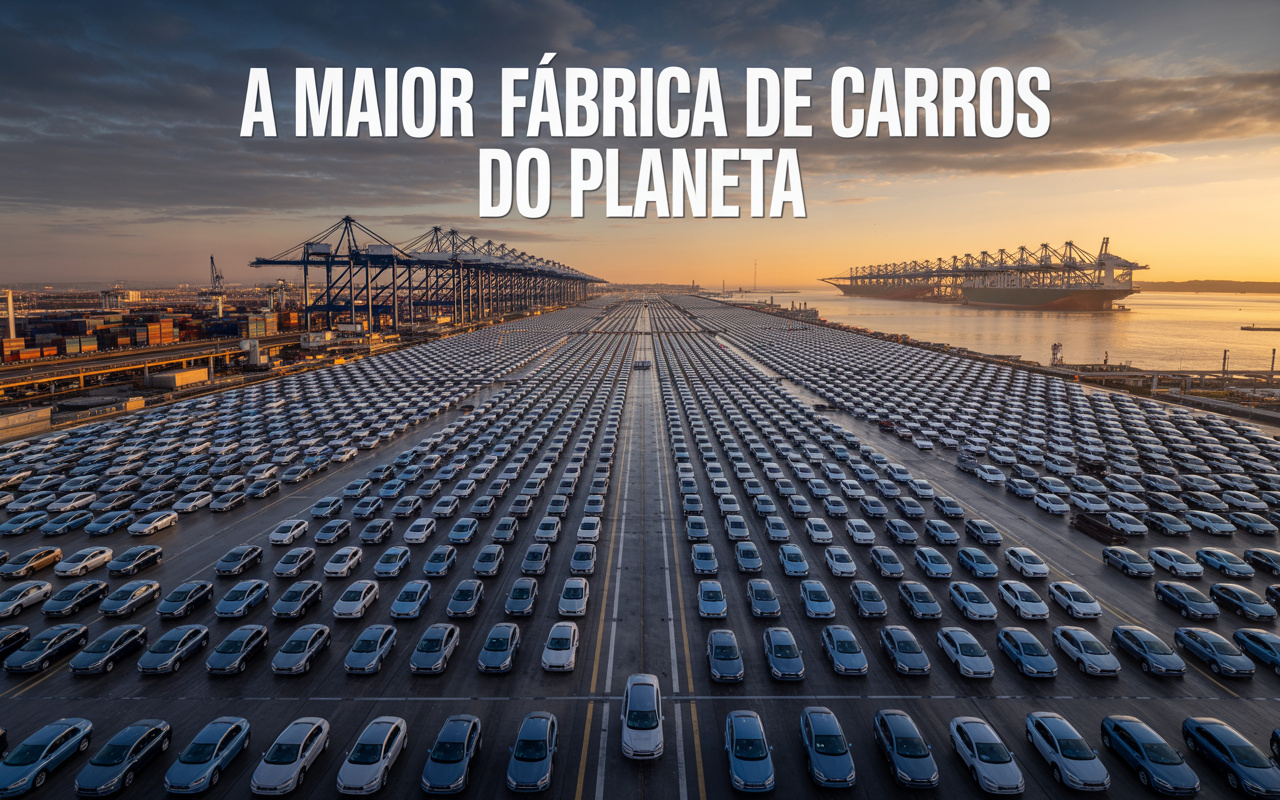
The World’s Largest Automotive Factory, The Hyundai Ulsan Complex Surpasses Tesla’s Gigafactories in Scale, Production, and Technological Integration.
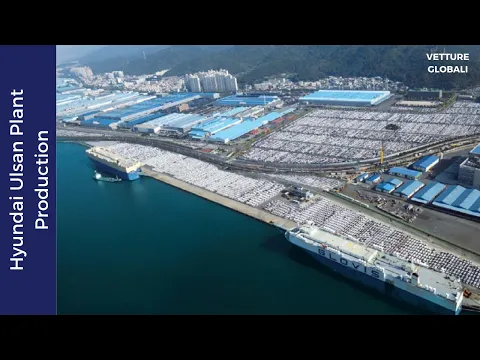
While Tesla’s Gigafactories monopolize the headlines of the electric future, there is an industrial giant that has been breaking records for decades — quietly. Located on the southeast coast of South Korea, the Hyundai Ulsan Plant Complex is the largest integrated automotive factory on the planet. It spans 5 million square meters, employs 34,000 workers, and consists of five interconnected plants that produce over 1.5 million vehicles per year, in a structure so large that it even houses its own port, hospital, and fire department.
What few know is that this colossus is not just a factory: it is a true automotive city, operating 24 hours a day, seven days a week, and continues to surpass the futuristic superstructures of Tesla in terms of scale and integration.
The Birth of Hyundai’s Industrial Empire
The story of the Hyundai Ulsan Plant begins in 1968, at the height of South Korea’s industrialization. The country, still recovering from the war’s effects, was betting on the creation of conglomerates called chaebols — family-owned megacorporations with a presence in various sectors.
-
The car stored for 38 years: when opening the barn door, what appears is breathtaking and looks like a scene from a movie!

-
Fiat works miracles in the Brazilian market, lowers the price of its 0 km hatch to R$ 69,990, reestablishes the model as the cheapest car in the country, and reignites the battle against Kwid and C3.
-
Chevette with cooking gas: How the gas cylinder ends up being used in cars clandestinely and why this makeshift solution can result in leaks, explosions, damaged engines, and seized vehicles.

-
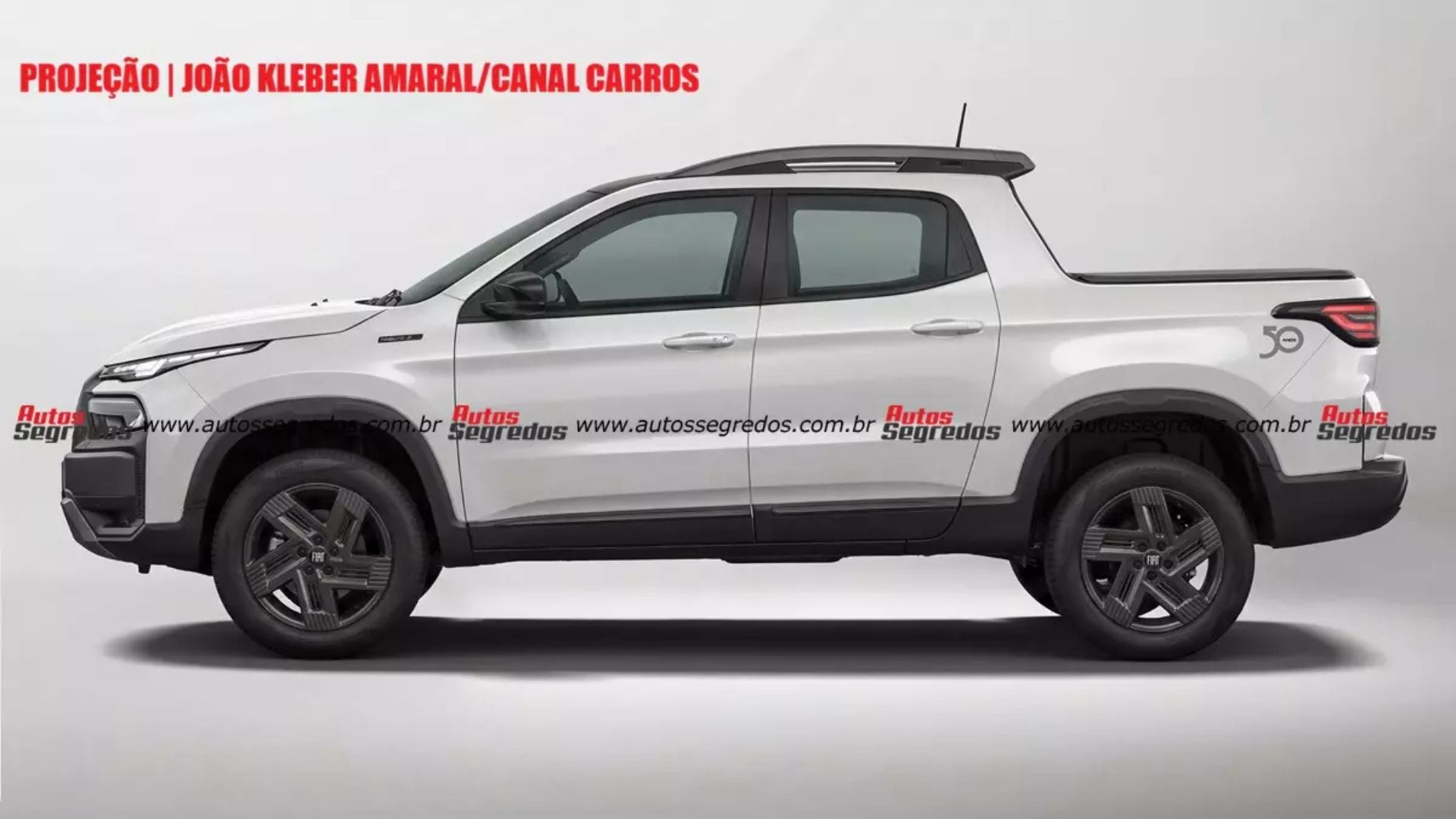
Fiat launches the new 2027 Toro hybrid with 48V, 176 hp, an electric motor of 15.5 hp, a 0.85 kWh battery, up to 7% fuel savings, 8% fewer emissions, and possible exemption from IPVA.

It was in this context that Chung Ju-Yung, the founder of Hyundai, envisioned a factory that would gather all stages of automotive production in one place.

The first production line began with the Hyundai Cortina, produced under license from Ford. But quickly the business model evolved: the company decided to master every part of the production chain.
The complex was continuously expanded in the following decades, until it transformed into what is now recognized as the largest automotive plant in the world according to Manufacturing Digital and the Korea Automobile Manufacturers Association.
During the Cold War, Ulsan represented the South Korean dream of technological independence — and became the engine of national reconstruction. Today, the city not only houses Hyundai Motor Company but also divisions of Hyundai Heavy Industries, Kia, and dozens of automotive suppliers.
A City That Manufactures Cars
The Ulsan industrial complex is so large that it resembles a miniature metropolis. Within its 5 million m², internal buses transport employees, a logistics train moves parts, and there are even daycares and schools for the workers’ children.
The complex’s private port can simultaneously accommodate three cargo ships, dispatching up to 6,000 vehicles per day to over 190 countries.
Hyundai designed the site to operate as a closed system, ensuring speed and logistical efficiency — each car takes an average of 19 hours from the start of production to shipping for export.
Additionally, Ulsan has a corporate medical center, a fire department, restaurants, gyms, and dormitories. The complex has become so symbolic that, for many Koreans, working there is the industrial equivalent of being employed at a prestigious state-owned enterprise.
Why Tesla Has Not Yet Surpassed Ulsan
While Elon Musk has turned Tesla into a synonym for disruption, the Gigafactories remain specialized in specific niches, primarily batteries and final assembly.
The Gigafactory in Nevada, for instance, has 1.9 million m², but its production is mostly focused on lithium-ion battery manufacturing. Giga Texas, in Austin, exceeds 2 million m², but its estimated maximum capacity is 500,000 vehicles per year.
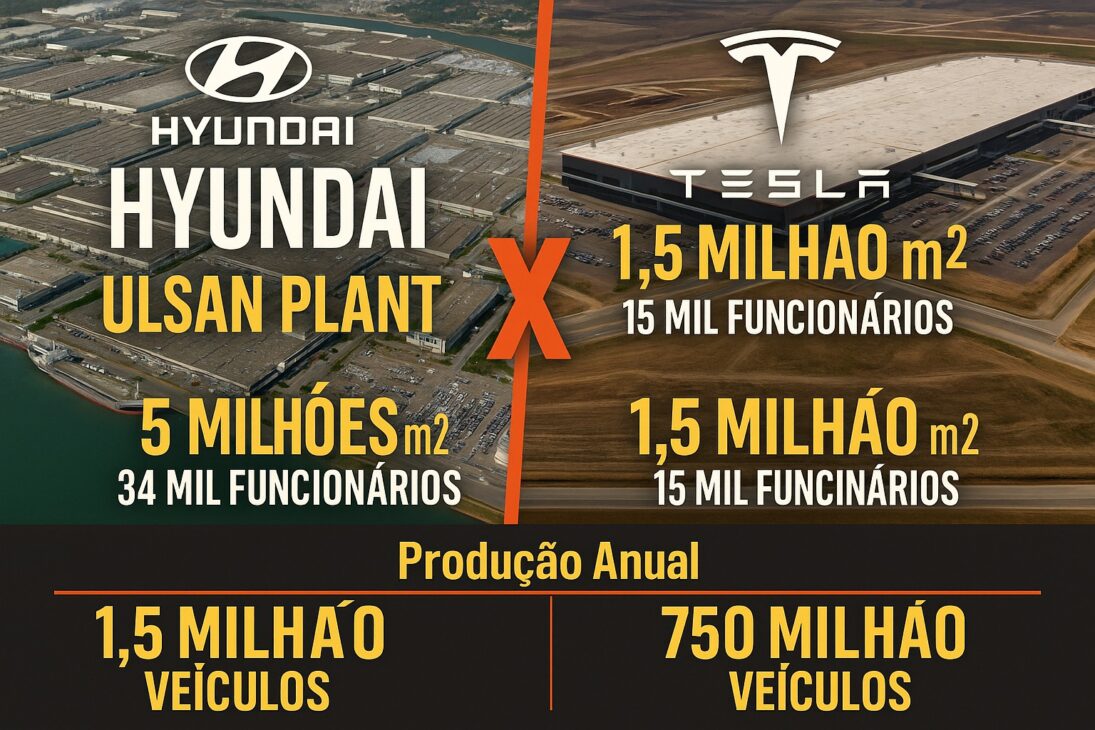
Meanwhile, the Gigafactory in Shanghai, with 1.2 million m², produces around 750,000 vehicles annually, less than half of Hyundai’s output.
The main difference is that Ulsan is a factory of total integration where every engine, every transmission, and every detail is made there. The complex combines foundry, painting, assembly, and testing in one place, something rare in today’s automotive world.
While Tesla invests in extreme automations, Hyundai dominates logistics and scale, which keeps it as the largest car manufacturer by integrated volume.
Comparison Between Automotive Giants
| Complex | Company | Location | Total Area | Annual Production | Employees | Type of Production |
|---|---|---|---|---|---|---|
| Ulsan Plant | Hyundai Motor | South Korea | 5,000,000 m² | 1.5 million vehicles | 34,000 | Complete vehicles (both combustion and electric) |
| Giga Shanghai | Tesla | China | 1,200,000 m² | 750,000 vehicles | 15,000 | EVs (Model 3 and Y) |
| Giga Texas | Tesla | USA | 2,000,000 m² | 500,000 vehicles (estimated) | 20,000 | EVs and Cybertruck |
| Giga Nevada | Tesla | USA | 1,900,000 m² | — (batteries) | 7,000 | Batteries and components |
Ulsan and the Impact on South Korea’s Economy
The Hyundai complex is not only the heart of the automaker, but also a national economic pillar. Ulsan accounts for about 6% of all South Korean exports, a figure that demonstrates the automotive sector’s importance in the country’s trade balance.
Additionally, the factory drives a network of over 1,000 auto parts suppliers, generating employment and technology throughout South Korea.
Thanks to this model, Hyundai has been able to transform into a global conglomerate, with factories in 10 countries and a presence in over 190.
Innovation and Sustainability: Ulsan’s New Era
Even as an industrial colossus, the complex is undergoing a green transformation. Since 2022, Hyundai has been implementing a plan for carbon neutrality by 2045, with the installation of solar panels, own effluent treatment, and reusing 95% of industrial water.
The company is also converting part of the production to Ioniq electric vehicles and developing, in partnership with the South Korean government, green hydrogen infrastructures.
According to the Korean Energy Research Institute, Hyundai has already invested US$ 18 billion to transform the complex into a global hub for clean mobility by 2030 — a strategic move to compete directly with Tesla, BYD, and Volkswagen in the race for electrification.
Global Influence and The Future of Automotive Production
Ulsan is both a monument of the industrial age and a laboratory of the technological era. With the advancement of artificial intelligence and automation, Hyundai aims to integrate smart factories capable of reducing production time by up to 20% and energy consumption by 10%.
The complex is also testing autonomous robots and physical assistance exoskeletons, developed by Hyundai Robotics, to reduce worker fatigue — an indication that the future of manufacturing will be hybrid between humans and machines.
Hyundai vs. Tesla: Tradition vs. Disruption
On one hand, Tesla continues to be the symbol of electric innovation. On the other hand, Hyundai maintains the supremacy of industrial scale.
Both reflect two distinct models of progress: the technological disruption of Silicon Valley and the productive consistency of Asian engineering.
But what Ulsan proves is that, even in an era dominated by startups and artificial intelligence, the strength of traditional industry still sets the pace of the global economy. Steel, concrete, and human labor remain the foundation of a world that dreams of being digital.
The Hyundai Ulsan Plant is the beating heart of the global automotive industry. With 5 million m² of space, 34,000 employees, and 1.5 million vehicles produced annually, it continues to be a symbol of humanity’s ability to build on a colossal scale.
Even in an era dominated by electric vehicles and total automation, the colossus of Ulsan shows that the future still relies on the solid foundations built in the past. A true Titan of Steel and Engineering, which keeps South Korea among the global leaders in innovation and automotive production.






-

-

-

-

-

-

257 pessoas reagiram a isso.