





 Português
  Inglês
  Espanhol
  6 min de leitura
  0 comentários


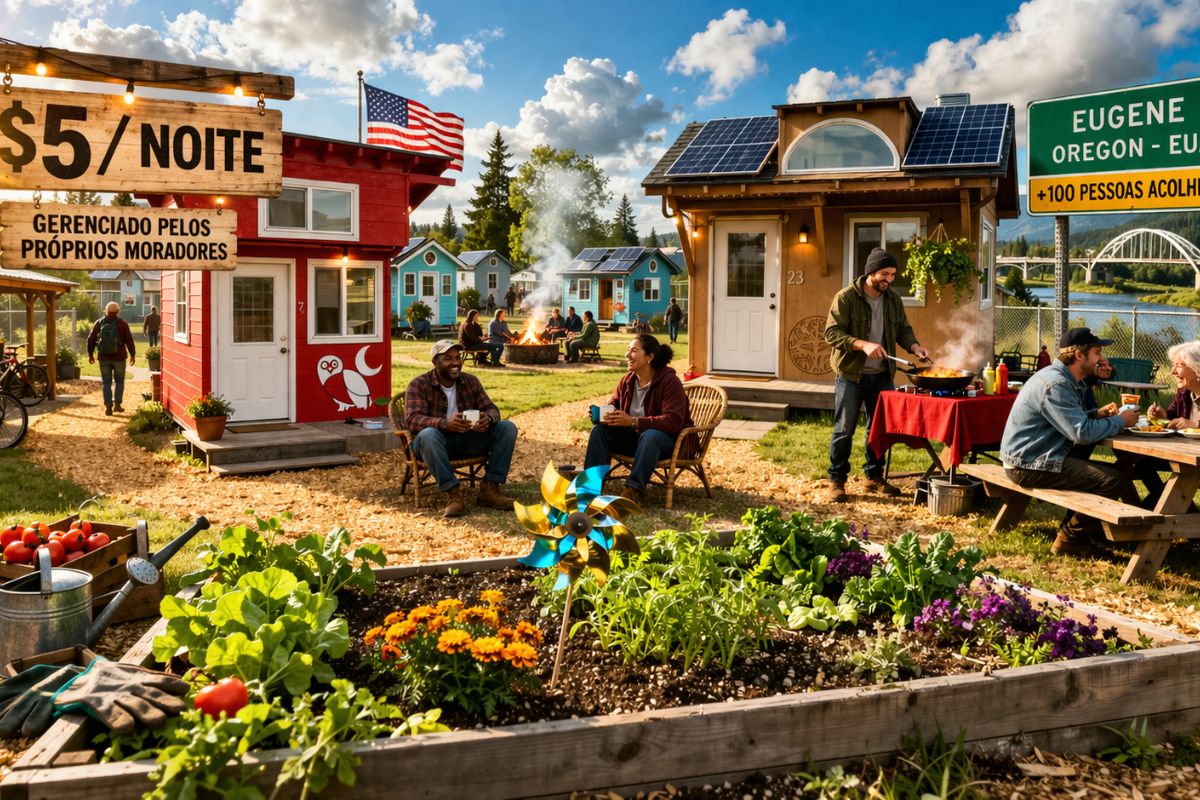
In a microhousing community, Opportunity Village has become a reference for transitional housing in Eugene today. For $5 per person, formerly homeless residents gain privacy, common spaces, and a voice in decisions. Started in 2013 as a pilot, it has already welcomed over 100 people and inspired Emerald Village.
The term “microhouses” often conjures images of minimalism by choice, but in Eugene, it is associated with another reality: that of those who needed to leave the streets and find a lockable, stable, and safe place to rebuild their routine. At Opportunity Village, the stay costs $5 per person per night, within a transitional housing proposal managed by the residents themselves.
The project was born as a pilot in 2013, on municipal land, and has since welcomed over 100 people. Instead of relying solely on external teams, the village bets on self-management, collective rules, and a sense of belonging as a central part of its operation, which helps explain why the model has attracted attention both inside and outside Oregon.
A village of microhouses that starts with a symbolic value

Opportunity Village is presented as an intermediate alternative for those who were homeless: it is not a “final solution” to the entire housing crisis, but it offers a step of stability when permanent options do not yet exist or are out of reach. The cost is straightforward: $5 per person per night, with an arrangement where the residents themselves also contribute part of this amount.
-
With an unusual prize, Japan transforms office chairs into a resistance race on the streets, ISU-1 Grand Prix grows, fills stages, and pays 90 kilograms of rice.

-
House in England with a 7.6-meter shark embedded in the roof attracts attention worldwide and becomes a curious attraction in Oxford.

-
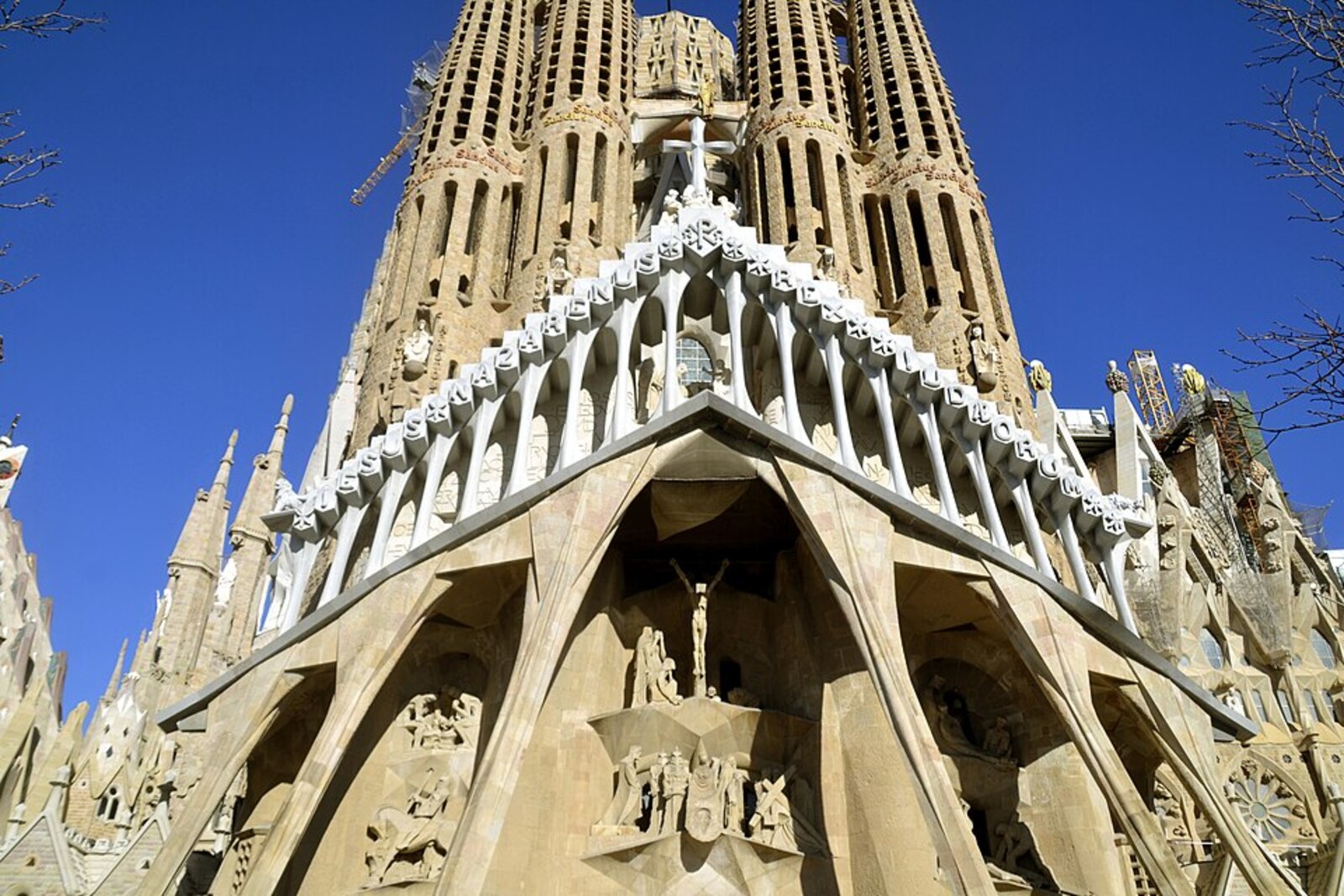
Masterpiece in Spain, under construction since 1882, receives 4.8 million visits in a year and impresses with its gigantism and architecture.
-
Attracting around 250,000 people a year, a lighthouse 200 meters from the sea, on a 60-meter high cliff, on the North Sea coast in Denmark, becomes one of the most impressive examples of how nature can threaten historical buildings.


When detailing the finances, the project leadership describes an operation with a minimal team and occasional support, precisely because the community self-governs. The low price does not come from “less dignity,” but from a design with contained operational costs, and with residents taking on tasks that, in other models, would require more staff.
How self-management becomes a rule and also “security”

Self-management is not a slogan: it appears in meetings to discuss policies and procedures, in participation in councils and committees, and in daily responsibility for collective life. There are committees that evaluate admissions, handle conflicts, and help decide what is best for the village with guidance and support, but with real autonomy for the residents.
A key point is the reception with 24/7 presence, staffed by the residents themselves. This changes the dynamics of space surveillance, border control, and rapid response to problems. According to the project report, after the pilot period, the police reportedly stated that there was no impact in terms of crime—a point used to address initial resistance from neighbors and authorities who feared an increase in violence in the area. When the rules are built by those who live there, the logic of care tends to be more constant than sporadic.
Minimal privacy, common structure, and the logic of “middle ground”

Part of the proposal is to combine a small private space with shared infrastructure. The microhouses and cabins are described as simple units including Conestoga-style models and wooden structure bungalows, in sizes such as 8×8 and 8×10 feet. It is not luxury: it is the minimum to have a door, a clear boundary, and a place to store belongings during the day.
Around this, common spaces come into play: bathroom with shower, laundry, community kitchen for preparing meals, and a collective area that functions as a living room, with a computer, heating (like a pellet stove), and an office at the front. The central idea is to offer something that the street destroys over time: a piece of silence and predictability. For those living “in survival mode,” having a small corner of their own can be the difference between just surviving and starting to plan the next step.
Pride, identity, and rebuilding within a few square meters

A recurring effect in residents’ accounts is the change in how a person sees themselves and how they are seen. By personalizing the microhouse, painting walls, creating insulating curtains, installing shelves, and organizing belongings, the gesture goes beyond decoration: it becomes a symbol of control over one’s own life. It is not just “a roof”: it is the chance to be someone with choices, even if limited.
This sense of belonging appears in phrases that contrast “they” (as homeless people are often treated) with a “we” that has an address, rules, and responsibilities. For residents, walking through the village and feeling like part of the place can reinforce care for the space and commitment to coexistence—something that also helps reduce external stereotypes about the inability to organize or live communally.
From the municipal pilot to Emerald Village: when the transition reveals another problem
Opportunity Village was born with a focus on transition: to get people off the streets and provide enough stability to regain work, income, and planning. However, over time, an obstacle arises that does not depend on individual effort: after stabilizing their lives, many cannot find where to live in the traditional market. Deposits, “first, last” requirements, and high rents appear as frequent barriers for those with low income.
It is at this point that the project describes the evolution to Emerald Village, designed as a permanent and accessible community. The proposal shifts to a new level: tiny houses built on foundations, with their own bathrooms and kitchens, aligned with residential code definitions, in addition to a larger common building for meetings and facilities like laundry. The transition, in practice, exposes the lack of affordable housing as a continuation of the same problem, just with a different face.
The larger crisis behind microhouses: street, health, policies, and “housing first”
The internal debate of the project broadens the focus: there is not just “the street crisis,” but a larger crisis of lack of affordable housing. Eugene is cited as a city with a high per capita homeless population, and this connects to structural factors from how housing is built and financed to municipal rules that make it difficult to find safe places to sleep without being disturbed.
An important distinction also arises regarding profiles of need: a significant portion would need, above all, basic shelter and stability; another part deals with significant mental health and substance dependence issues, and in this scenario, the “housing first” model is advocated as a practical logic: not requiring that a person resolve everything before having a place to live.
The idea is completed with approaches like harm reduction, in an attempt to decrease substance use and improve health while the person is already sheltered. The microhouse, here, functions less as an end and more as a condition for any new beginning.
Opportunity Village places microhouses at the center of a debate that goes beyond the size of the construction: what truly changes the trajectory of someone who has spent too long living in public space? The village suggests an answer based on minimal privacy, common structure, and self-management, with a low cost per night and a history of welcoming over 100 people since 2013.
At the same time, the very path to Emerald Village indicates a limit: when permanent housing remains inaccessible, the transition becomes a bottleneck, and the solution needs to move alongside policies and real affordable housing supply.
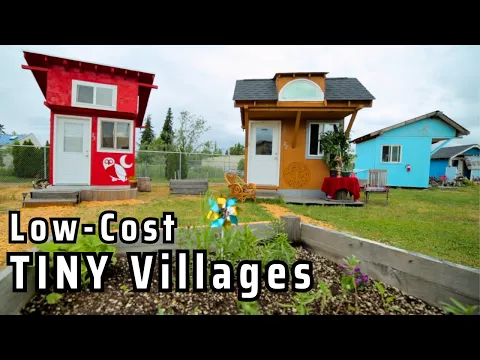

With information from the channel Tiny House Expedition.
And you: would this type of microhousing village work in Brazilian cities or would it run into issues of safety, legislation, and neighborhood resistance? If you could choose one point to discuss, which would weigh more: the price, self-management, or the impact on the street? Share your thoughts (and, if you want, mention which city you have in mind).










Seja o primeiro a reagir!