





 Português
  Inglês
  Espanhol
  5 min de leitura
  0 comentários


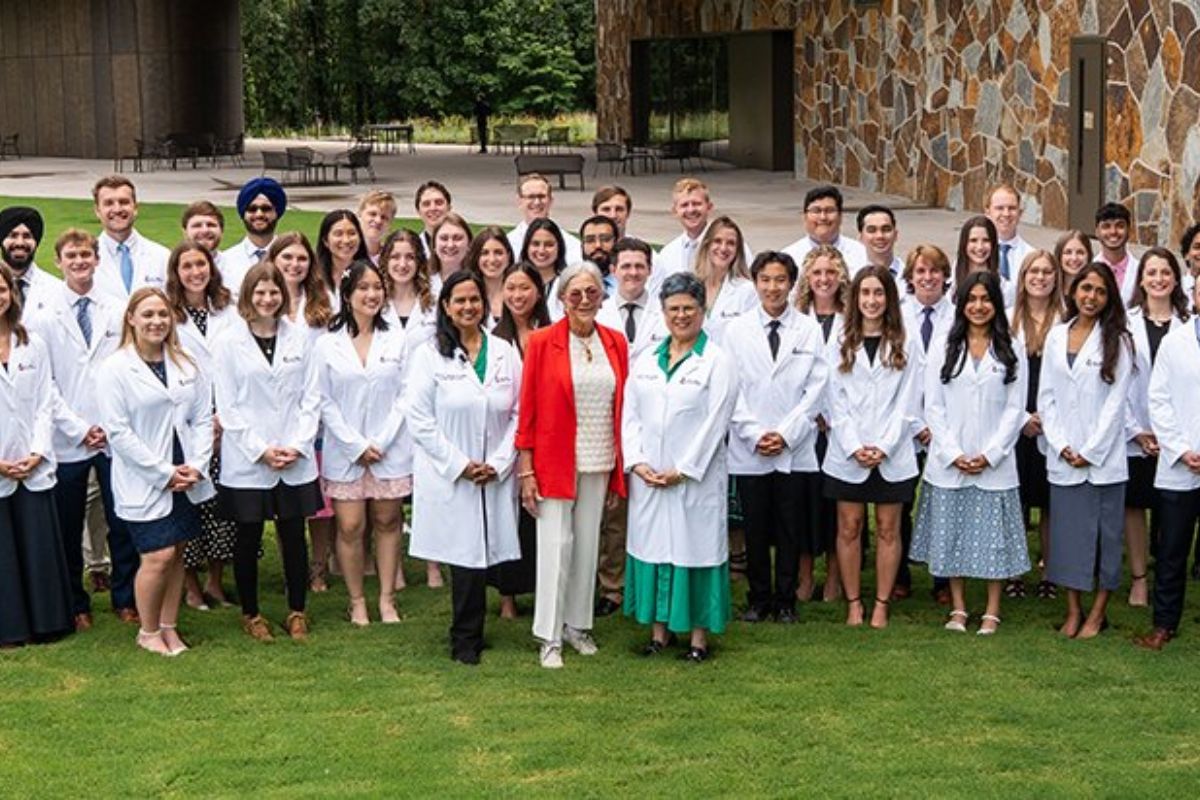
The Richest Woman In The World Opened A Medical School In July 2025 In Bentonville, Arkansas, To Admit 48 Students Without Tuition Fees In The First Five Classes, While Alice Walton Bets On Innovative Medical Education In The United States That Combines Clinical Practice, Humanities, Nutrition, And Well-Being
The richest woman in the world decided to use part of her fortune to open a free medical school in the United States, establishing an institution in Arkansas that already started with 48 students and a different approach from traditional medical training. Alice Walton, heir to the Walmart family, inaugurated the Alice L. Walton School of Medicine in Bentonville in July 2025, promising to bring together science, humanities, and well-being.
The weight of this decision lies not only in the invested amount but in the project’s design. Alice Walton is trying to change a structure that has historically been expensive and highly technical, proposing a model in which the future doctor is also trained to observe nutrition, social context, mental health, and human connection as central parts of care.
How Alice Walton Structured The New Medical School
Alice Walton opened the school in Bentonville, in the state of Arkansas, with an inaugural class of 48 students.
-
More tolls! The Anchieta-Imigrantes system will start implementing charges in both directions with free flow on July 1st, a fee of R$ 19.35 per segment, the end of toll plazas, and a project for a new 21.5 km lane.

-
A Brazilian city has a water park in the middle of the forest with tickets priced at R$ 29, over 300,000 m², 40 attractions, heated pools, and a record of 700,000 visitors in one year.

-
With an unusual prize, Japan transforms office chairs into a resistance race on the streets, ISU-1 Grand Prix grows, fills stages, and pays 90 kilograms of rice.

-
House in England with a 7.6-meter shark embedded in the roof attracts attention worldwide and becomes a curious attraction in Oxford.


The institution originated with the proposal to reformulate medical education in the United States, integrating health sciences, humanities, and well-being into a cohesive training approach.
The central point is not just to teach medicine, but to reorganize the way professionals begin to view patients.
This movement helps explain why the richest woman in the world placed her name directly on the project.
Alice Walton does not appear merely as a distant funder but as a figure who gives identity to the school and the pedagogical model.
Instead of repeating a structure focused solely on technique and academic performance, the medical school was presented as a broader training space connected to the concrete needs of the population.
What Differentiates The Education Proposed In The United States
The curriculum outlined for the school includes subjects such as nutrition and food cultivation practices.
This reveals an attempt to encourage students to think about health beyond the office, also observing habits, diet, environment, and mental and social well-being.
This is an important change because it broadens the concept of care, shifting the exclusive focus from diagnosis to a more comprehensive understanding of the patient’s life.
In the United States, where medical education is often associated with high costs and intense academic pressure, this type of proposal draws attention precisely for trying to combine technical knowledge with empathy.
Alice Walton believes that the doctor of the future should not only master clinical protocols but also understand daily factors that directly affect health.
Therefore, the medical school was designed to integrate areas that often appear separated in traditional training.
Why The Tuition-Free First Five Classes Change Access
The richest woman in the world also decided to cover the tuition fees for the first five classes, which directly alters the entry point for these students.
Instead of starting their education already pressured by a heavy financial burden, the 48 students of the first class embark on an academic journey where the economic barrier loses strength right from the beginning.
This detail can change entire trajectories, especially in a sector known for the high cost of qualification.
Tuition-free education further reinforces the practical dimension of Alice Walton’s project.
This is not just about opening a new school in Arkansas, but about making access to the medical school more viable for groups that, in many cases, would face difficulties sustaining this type of education.
By reducing this financial burden, the initiative also seeks to influence the future paths of these professionals, who are encouraged to work in regions with significant health challenges.
How The Campus In Arkansas Reinforces The School’s Proposal
The campus was designed to connect science, art, and well-being.
The structure includes therapeutic gardens, parks, and the presence of the Crystal Bridges Museum, creating an environment intended to stimulate a different relationship between study, community, and health.
Instead of isolating learning in classrooms and laboratories, Alice Walton designed a space where the surroundings also participate in the formative process.
The physical environment, in this case, is part of the method.
This choice becomes even more significant given the location where the school was established.
In Arkansas, the proposal is to keep students and teachers closer to the community’s needs, with special attention to underserved areas of the state.
The richest woman in the world thus uses the very structure of the institution to bring medical training closer to real problems, moving away from an overly abstract model or one that is disconnected from the population that most needs care.
The Impact That Alice Walton Tries To Leave On Medical Education
Alice Walton brings together two elements that rarely appear with such intensity in the same project: almost unlimited capital and the declared intention of changing the logic of medical education.
Her estimated wealth of US$ 112 billion, equivalent to R$ 610 billion, helps explain the initiative’s reach.
But the most relevant point is another: the money was not applied solely to construct buildings, but to test a different way of preparing healthcare professionals in the United States.
It is still early to measure the long-term impact of the school, but the model already stands out for combining access, an expanded curriculum, and community ties.
The medical school created by Alice Walton is based on the idea that training good doctors requires more than technical excellence.
It also requires social awareness, listening skills, and understanding that health involves body, routine, environment, and well-being.
That is why the richest woman in the world is trying to turn her fortune into concrete influence on the next generation of professionals.
In the end, Alice Walton’s initiative highlights an uncomfortable yet relevant point: when a billionaire feels the need to intervene to create a free medical school, it also highlights the extent of barriers that already existed on that path.
The school is born as an opportunity, but also as a diagnosis of an expensive and unequal system.
Do you think this model created by the richest woman in the world can truly influence medical training in the United States, or does this kind of change still depend on a larger transformation throughout the system?







Seja o primeiro a reagir!