





 Portuguese
  English
  Spanish
 5 min of reading
  0 comments


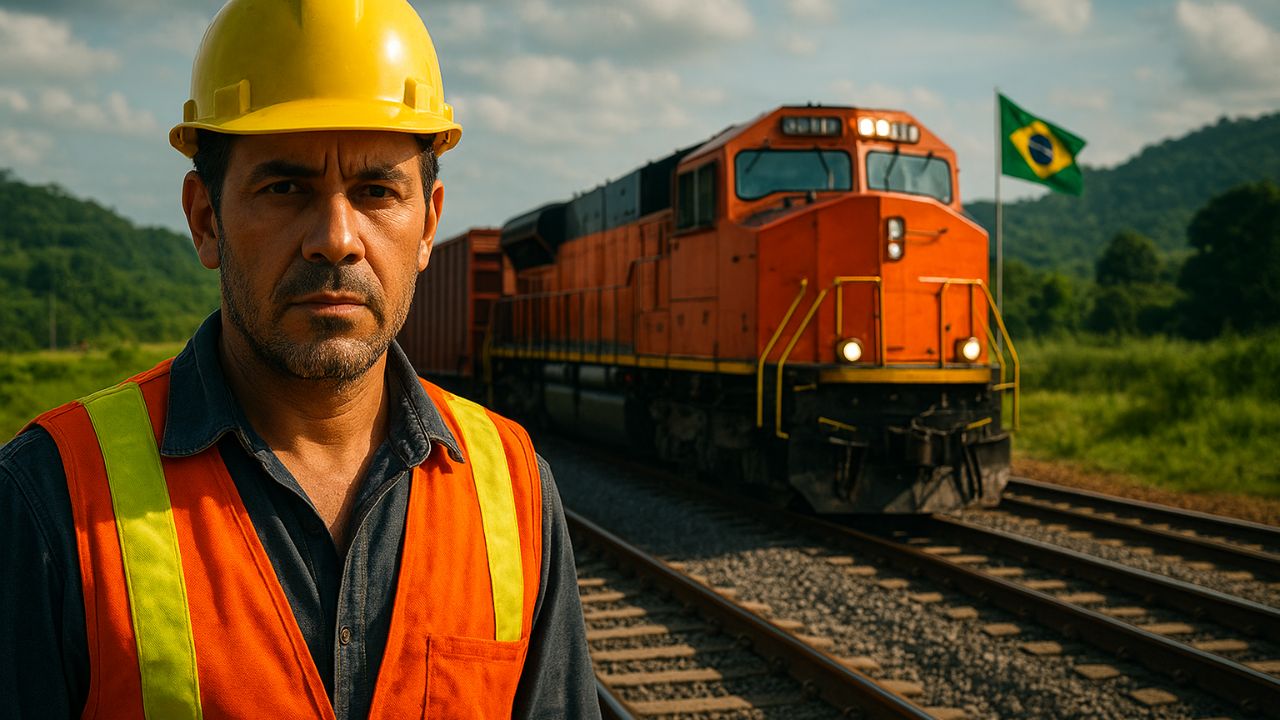
1,567 Km Project Will Connect the Agribusiness of Mato Grosso do Sul to the Port of Paranaguá, Promising to Reduce Costs and Revolutionize Harvest Flow.
Brazil is about to witness the beginning of the largest railway expansion in Brazil in decades, a project that promises to redefine the logistics of the national agribusiness. As detailed by the Urbana channel, Nova Ferroeste represents a monumental scale transformation: a railway corridor that will jump from its current 248 km to an impressive 1,567 km, connecting the productive heart of Mato Grosso do Sul directly to the Port of Paranaguá in Paraná.
The impact goes far beyond the length of the tracks. The projected cargo capacity is expected to rise to around 40 million tons per year, a volume more than 33 times greater than what the railway transported in 2024. This structural change aims to tackle one of the main bottlenecks in the country: the high dependence on road transport for commodity flow, offering a cheaper, faster, and more sustainable alternative.
A Leap in Scale: Where Will Nova Ferroeste Pass?
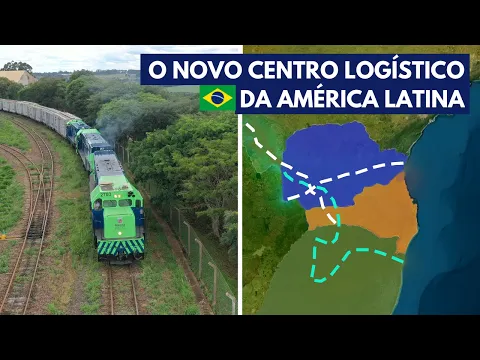

The Nova Ferroeste project is, in essence, the creation of a new steel logistics corridor. The main line will start in Maracaju (MS), a hub for soybean, corn, and cotton production, advancing through Dourados until it crosses the Paraná River at the height of Guaíra. From there, the line will enter western Paraná through Toledo, connecting to the already existing stretch in Cascavel. This central axis is the backbone that will link one of the most productive areas of the country to the largest grain port in Latin America.
-
Congonhas receives the monorail promised for the 2014 World Cup after more than a decade of delays and becomes the first airport in Brazil with integrated subway.
-
Goodbye, concrete: a new trend in civil construction reduces the weight of the structure by up to 30%, accelerates projects by up to 40%, cuts costs on steel and labor, and improves thermal insulation with EPS.
-
Russian engineers create an innovative propeller blade for aircraft that could completely change the way airplanes and helicopters operate.

-
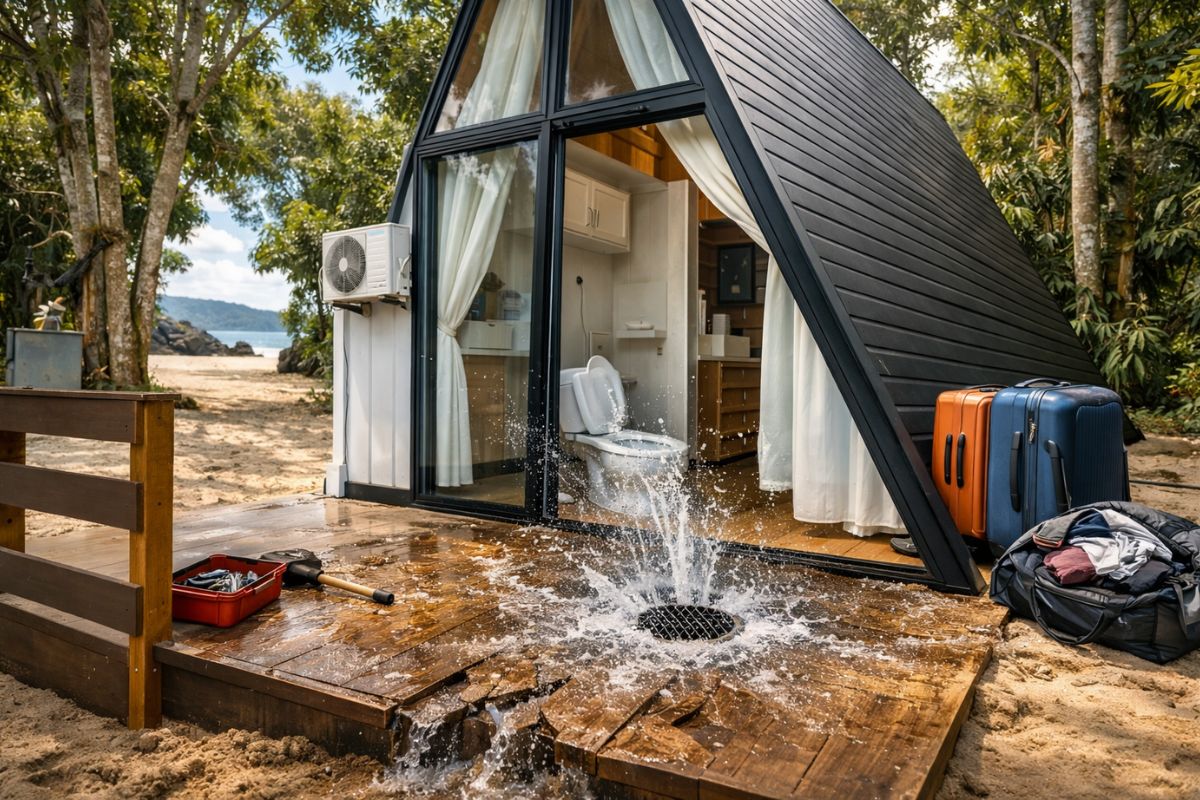
Couple finishes building PVC chalet on the beach on the last day, with air conditioning and curtains, but discovers the bathroom drain is inverted: water escapes from the drain, risking breaking the floor, and the rush continues before the trip.

From Cascavel, the network branches out to serve other important regions. A branch of 260 km will head south towards Chapecó (SC), focused on the flow of meat and feed from western Santa Catarina. Another branch, just over 120 km, will extend west to Foz do Iguaçu. In total, the entire arc of Nova Ferroeste will touch about 66 municipalities, integrating the production of Mato Grosso do Sul, western Paraná, and Santa Catarina into a single logistics system, directly connected to the port terminals.
Why This Project Could Change the Game for National Logistics?
Currently, where there are no tracks, agricultural production mostly runs on trucks. This model implies transloading at intermediate yards and long waits at port windows, which increases freight costs and extends cycle times. With Nova Ferroeste closing these gaps, the journey from field to port will become continuous on tracks, generating efficiency gains that, according to the Urbana channel, are transformational.
In practical terms, the transportation window, which currently takes two to three days, is expected to drop to just one day in commercial operation. The impact on cost is even more significant: switching from road to rail over long distances tends to reduce freight by a range of 15% to 25%. For corridors over 1,000 km, savings can vary from R$ 30 to R$ 60 per ton. This represents a direct competitiveness gain for Brazilian producers in the international market.
The Long Historic Journey: From Promise to Reality
The idea of connecting western Paraná to the coast by rail is not new, dating back to public works reports from the 19th century. However, the project only gained traction in 1988, with the creation of Ferroeste to operate the stretch between Guarapuava and Cascavel. The intention was to provide railway capacity to the growing agricultural frontier of the region, but the path was arduous. After a subconcession auctioned in 1996 did not deliver the expected results, the state of Paraná regained operational control in 2006.
From then on, the company focused on optimizing the existing operation. Investments in terminals, modernization of locomotives and freight cars, and management focused on the efficiency of cargo flows proved the viability of the corridor. In 2020, the railway reached the mark of 1.38 million tons transported, with soybeans leading the volumes and refrigerated containers of animal protein gaining ground on the return trip. This operational maturation, as highlighted by the Urbana channel, was what paved the way for the ambitious expansion now on the table.
Challenges on the Horizon: What Is Needed for the Trains to Whistle?
Despite institutional progress, with the privatization law approved and the auction modeling underway, Nova Ferroeste still needs to overcome three major barriers to become a reality. The first is the preliminary environmental license, which will define all the conditions for the project, especially in the sensitive area of the Serra do Mar. The second is the auction notice, which must establish a clear contract with goals, construction phases, and a well-defined risk matrix to attract investors.
Finally, the third pillar is the financing linked to a detailed executive project. The corridor will only take off with finalized engineering and a robust financial package that combines private capital and long-term debt. Additionally, there are practical challenges, such as expropriations along the route and operational alignment with the neighboring railway network and port infrastructure, such as the Moegão Leste in Paranaguá, which needs to be ready to absorb the new cargo volume.
Nova Ferroeste is more than an infrastructure project; it is a strategic initiative that can unlock the logistical potential of one of the most dynamic regions of global agribusiness. If it overcomes the complex environmental, regulatory, and financial challenges, the largest railway expansion in Brazil has the power to reduce costs, shorten distances, and strengthen the country’s competitiveness on the global stage, forever transforming the flow of harvests.
Do you agree with this change? Do you think this impacts the market? Leave your opinion in the comments; we want to hear from those who experience this in practice.








-

2 pessoas reagiram a isso.