





 Portuguese
  English
  Spanish
  3 min of reading
  0 comments


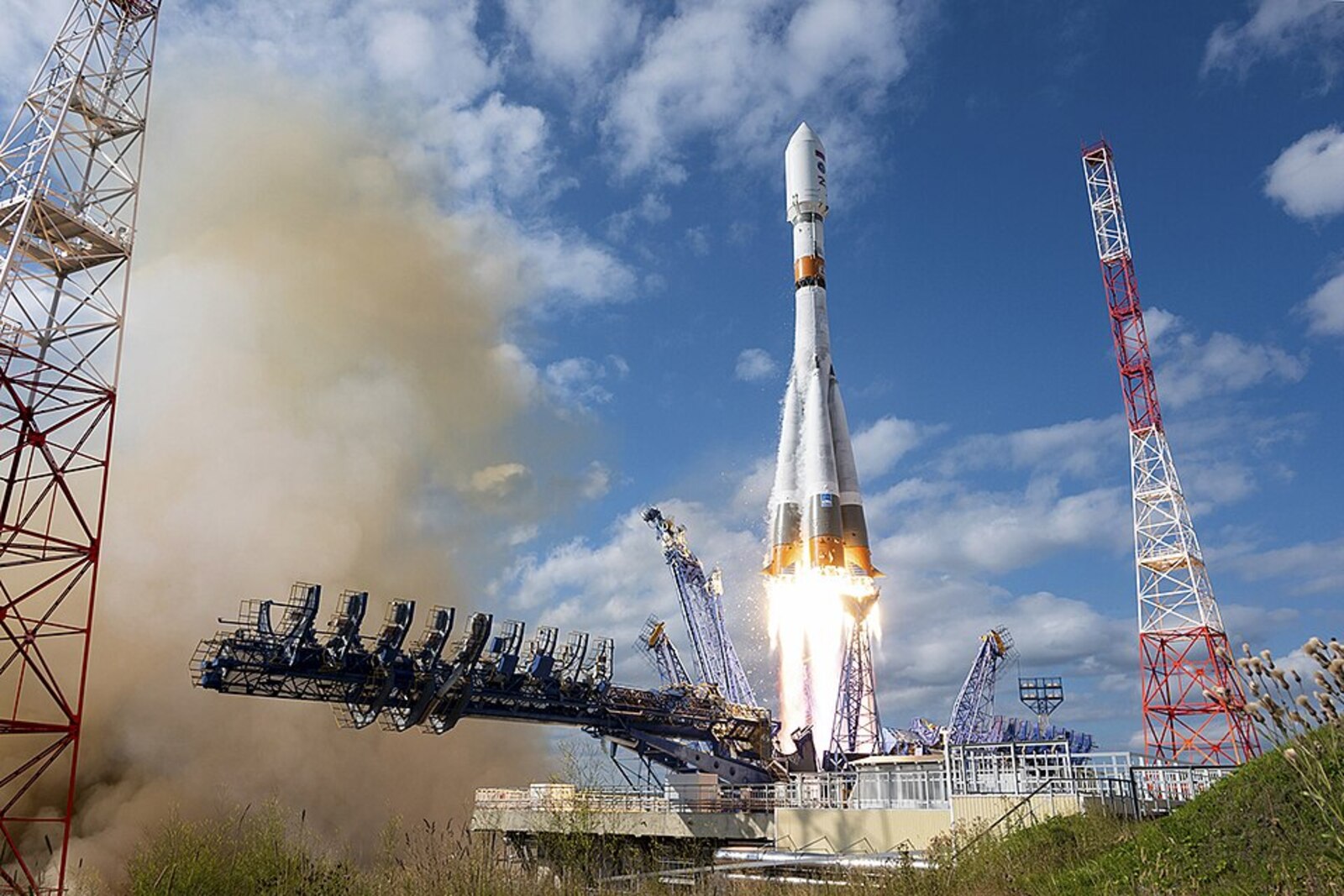
Bion-M Mission No. 2 Takes 75 Mice and Thousands of Living Organisms to Space to Study Microgravity and Cosmic Radiation for 30 Days
The Baikonur Cosmodrome in Kazakhstan was the site of a new scientific milestone. From there, the Soyuz-2.1b rocket launched the mission Bion-M No. 2 into space. The Roscosmos project aims to investigate the effects of microgravity and cosmic radiation on living organisms.
There are no astronauts on board, but a diverse set of living beings, including flies and mice.
A Diverse Crew in Orbit
Similar to a small version of Noah’s Ark, the spacecraft carries 75 mice, over 1,000 fruit flies, microorganisms, cell cultures, and plant seeds.
-
They were brilliant! Scientists discover that our ancestors in China were already making super advanced tools 160,000 years ago, changing everything we knew.

-
Scientists unveil 3 million years of climate secrets hidden in the ice of Antarctica.

-
Ancient farmers created “aggressive plants” that changed nature forever.

-
Astronomers find a “backward” solar system that ignores all the rules of space and leaves scientists scratching their heads!


For 30 days, these “bionauts” will orbit the Earth from pole to pole. The chosen trajectory will expose the organisms to radiation levels far greater than those recorded on the International Space Station.
The Mice’s Mini-Hotel
The real stars of the mission are the 75 mice. They travel in cabins designed like a “mini-hotel” in space.
Each space is equipped with feeding, lighting, ventilation, and waste disposal systems. Additionally, some rodents have implanted chips for real-time monitoring of vital signs.
Scientists divided the mice into three groups. The first remains on Earth, under normal conditions.
The second lives in a ground laboratory, using the same equipment as the satellite. The third group is the one traveling in space.
Therefore, it will be possible to compare results and isolate the specific effects of spaceflight.
Why Mice?
The use of mice in biomedical research is a common practice. Their genetic similarity to humans, short life cycle, and low maintenance cost explain this choice.
Moreover, for this mission, one detail is crucial: mice are highly sensitive to radiation, making them perfect for studies on its effects.
Impacts for Astronauts and for Earth
The main goal is to understand how cosmic radiation affects astronauts on future trips to the Moon and Mars.
Prolonged exposure can damage DNA and increase the risk of cancer. The experiments should quantify this damage and test countermeasures, such as shielding and medication.
But the applications don’t stop there. The data may also aid in medical research on Earth. The rapid loss of bone and muscle mass in astronauts is comparable to osteoporosis and sarcopenia.
Therefore, the results may lead to new treatments for these diseases that affect millions of people.
Research Beyond Mice
The mission also carries 16 test tubes with simulated lunar dust and rocks. The partnership with the Vernadsky Institute seeks to understand how radiation and the vacuum of space affect these materials.
The research is seen as an important step for future projects to build lunar bases.
Other experiments will explore the susceptibility of different organisms to radiation, develop new life support systems, and evaluate potential medical benefits arising from space biology.
The Legacy of Bion-M No. 1
This mission continues the work started by Bion-M No. 1, launched in 2013. Like its predecessor, it is expected to remain in orbit for 30 days.
However, the difference lies in the trajectory’s angle: now, 97 degrees. This choice further increases exposure to cosmic radiation and broadens the data collected.
Research with a History
This is not the first time space has served as a laboratory for life. On other occasions, scientists have studied fertility-related risks in mice.
Japanese researchers have even investigated whether reproduction would be possible in space conditions using embryos from these animals.
Bion-M No. 2 thus adds to a long tradition of scientific missions. Its focus is clear: to transform Earth’s orbit into a testing ground to understand how life reacts to extreme environments and prepare humanity for even more ambitious flights.
With information from Xataka.








-

-

3 pessoas reagiram a isso.