





 Portuguese
  English
  Spanish
  4 min of reading
  0 comments


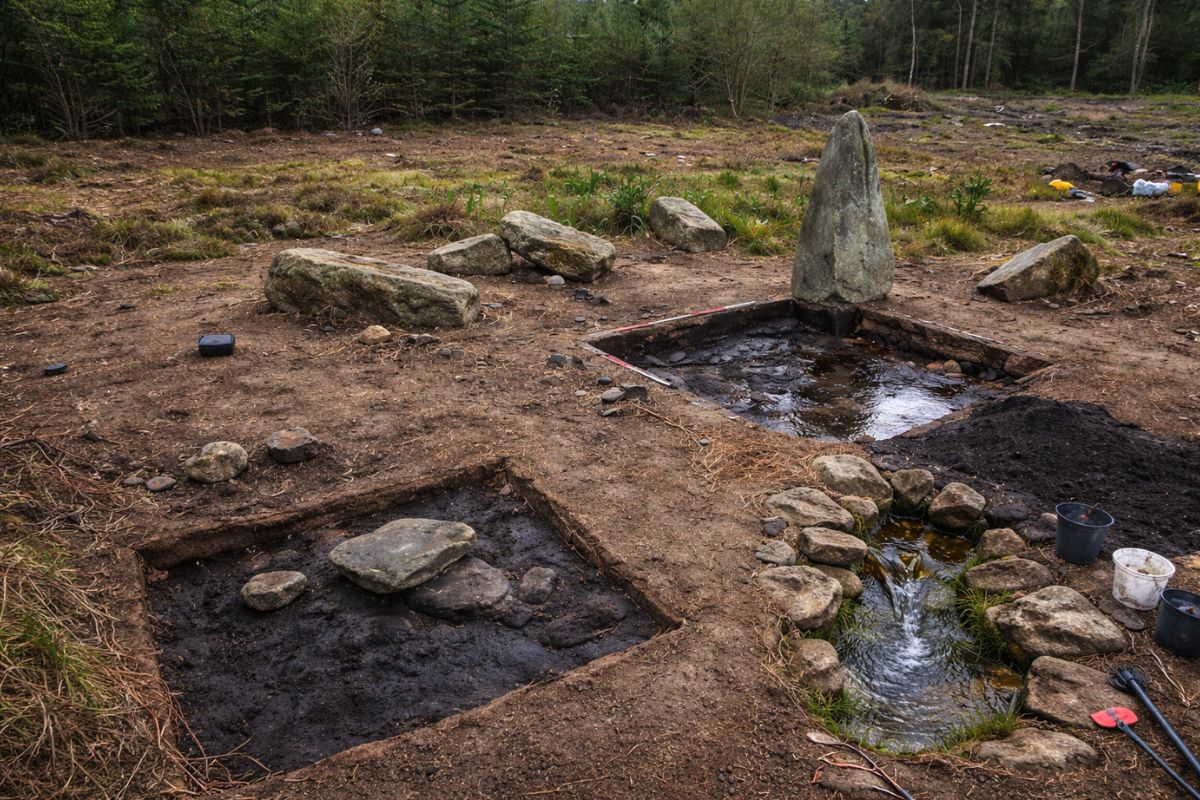
George Bird insisted for years that there was something more behind the stone of Farley Moor, in Derbyshire, and when a team of archaeologists finally dug the site with cameras from the Time Team program, they found an oval stone circle measuring 25 meters by 23 meters, dated to 1700 BC, built over a spring that feeds the River Derwent.
George Bird was 24 years old and had a habit that annoyed his friends. Every time he organized a hike through the forests of Derbyshire, in central England, the route always ended up passing by a stone circle. And the hike always ended up being eight kilometers longer than expected.
In the middle of one of those forests, in Farley Wood, there is a solitary stone 1.8 meters tall known as Farley Moor Standing Stone. For most people passing by, it is just a large rock in the middle of the trees. For Bird, it was a nuisance. “Over time, I started to wonder if there was something more behind this stone”, he told the BBC.
What did the student do with the suspicion?

image: BBC
Bird was not a professional archaeologist, but he was methodical. He documented everything he found around the stone: suspicious rock formations, patterns in the ground, anomalies that did not match the natural landscape. He compiled everything into a report and sent it to Forestry England, the agency that manages public forests in England.
-
With 80 kilometers in length and 152 meters in height, a gigantic underwater barrier could become the last resort of engineering to contain the Judgment Day Glacier and buy time against the rising oceans on the planet.

-
Why is Mercury so strange? The smallest planet in the Solar System has more iron than the others and days longer than years.

-
Tropical forests are nearing a temperature limit that could kill the leaves at the tops of trees and trigger a cascading collapse that would turn the planet’s largest carbon reservoir into a source of emissions.
-
The silent villain of the home office sits on the desk, stays on all day, and can increase the electricity bill.

The material was enough to catch the attention of Lawrence Shaw, the chief heritage consultant at Forestry England. It also attracted the interest of Time Team, a British television program specializing in archaeological excavations.
“We would never do anything without George”, Shaw told the BBC. “It was his idea, and he was part of the team as far as we were concerned.”
What did they find below the forest floor?

image: Time Team/bbc
When the archaeologists began to excavate, they discovered that the solitary stone was just the visible fragment of a much larger monument.
The site housed a ceremonial platform intentionally built over a natural spring. The spring feeds the Bentley Brook, which flows into the River Derwent. Analysis of the site identified that five nearby stones were down, but originally formed a stone oval measuring 25 meters long by 23 meters wide.

image: Time Team/bbc
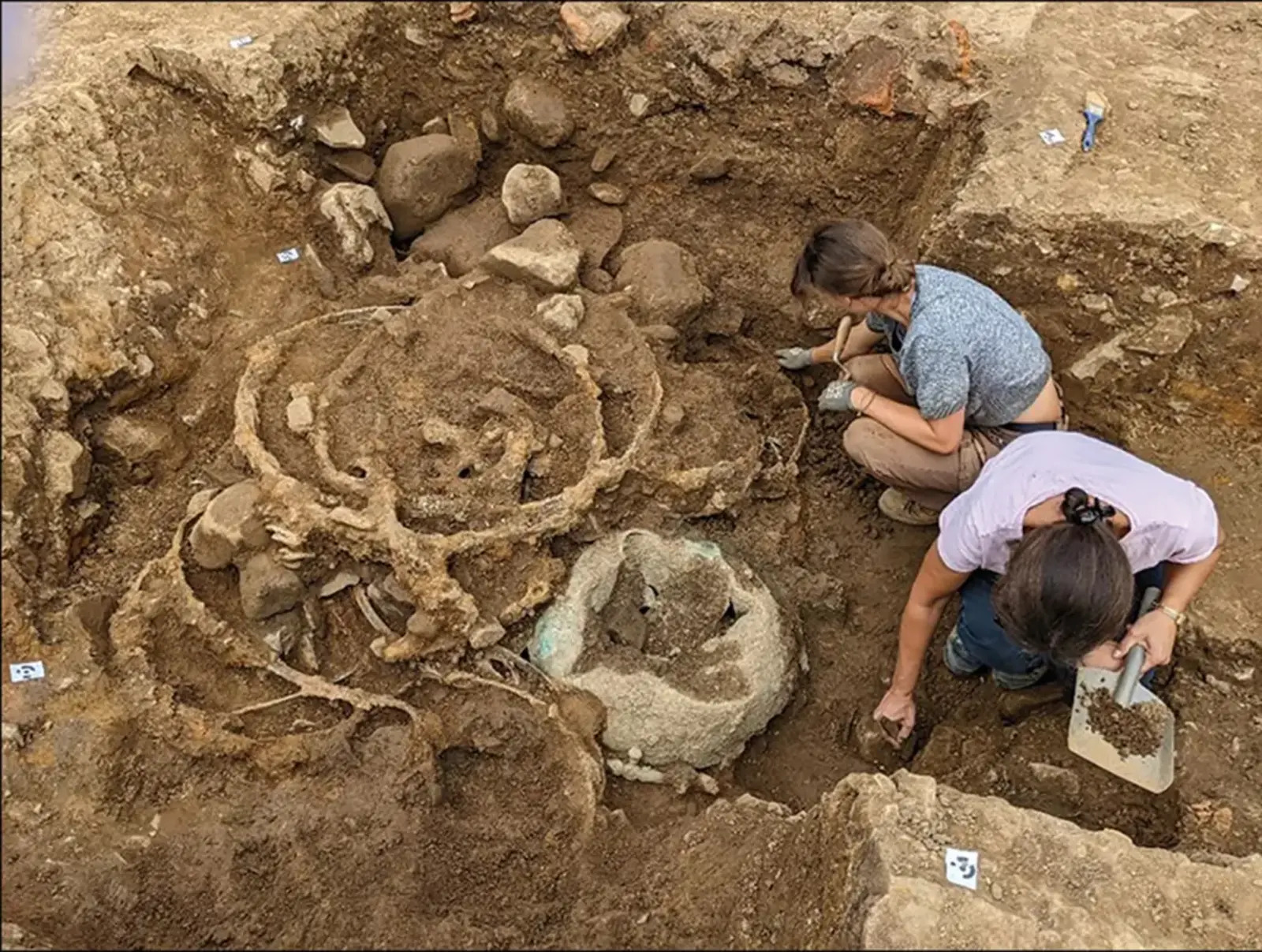
Radiocarbon dating placed the site at 1700 BC, during the height of the Bronze Age. And the ceremonial platform is even older than the standing stone, indicating continuous ritual use for hundreds of years.
Why was water so important in the Bronze Age?
The choice of location was not accidental. The platform was built directly over a spring, and archaeologists interpret this as evidence of the central role of water in Bronze Age rituals. Springs, rivers, and fountains were considered points of connection with the spiritual world by prehistoric communities throughout Europe.
“What we discovered is evidence of a much more complex ceremonial landscape, of which the original stone is a part”, Shaw said. “The stone platform predates the standing stone itself, suggesting continuous ritual use for hundreds of years, strongly linked to water and its importance to Bronze Age communities.”
How does this site compare to Stonehenge?
Stone circles and henges were common ceremonial monuments in the second and third millennia BC in the British Isles. The Farley Moor site is within the same timeframe as dozens of others in the region, including Stonehenge.
Derek Pitman, associate professor of archaeology at Bournemouth University, put the discovery in perspective: “The scale of activity that likely existed in this landscape shows the impact of ritual life in the Bronze Age far beyond known sites like Stonehenge.”
Pitman also highlighted that the discovery proves the value of investigating hidden sites within forests that have grown over them in recent decades. “This suggests a wealth of archaeology still waiting to be explored.”
What will happen now with the site?
Forestry England will protect the site, and the archaeology team plans to return in the summer of 2026 for further investigations of the newly identified stones. The goal is to discover when the site was first created and how far the ritual complex extended.
As for George Bird, he finally has a legitimate excuse to drag his friends through the forests of Derbyshire. “I couldn’t wait to get my hands dirty and help the team with the excavation,” he said. “It’s just fantastic to discover that all of this has been confirmed, that those strange rocks are indeed part of a larger monument.”
With information from Popular Mechanics, BBC and Forestry England.






Seja o primeiro a reagir!