






 Portuguese
  Spanish
  4 min of reading
  4 comments


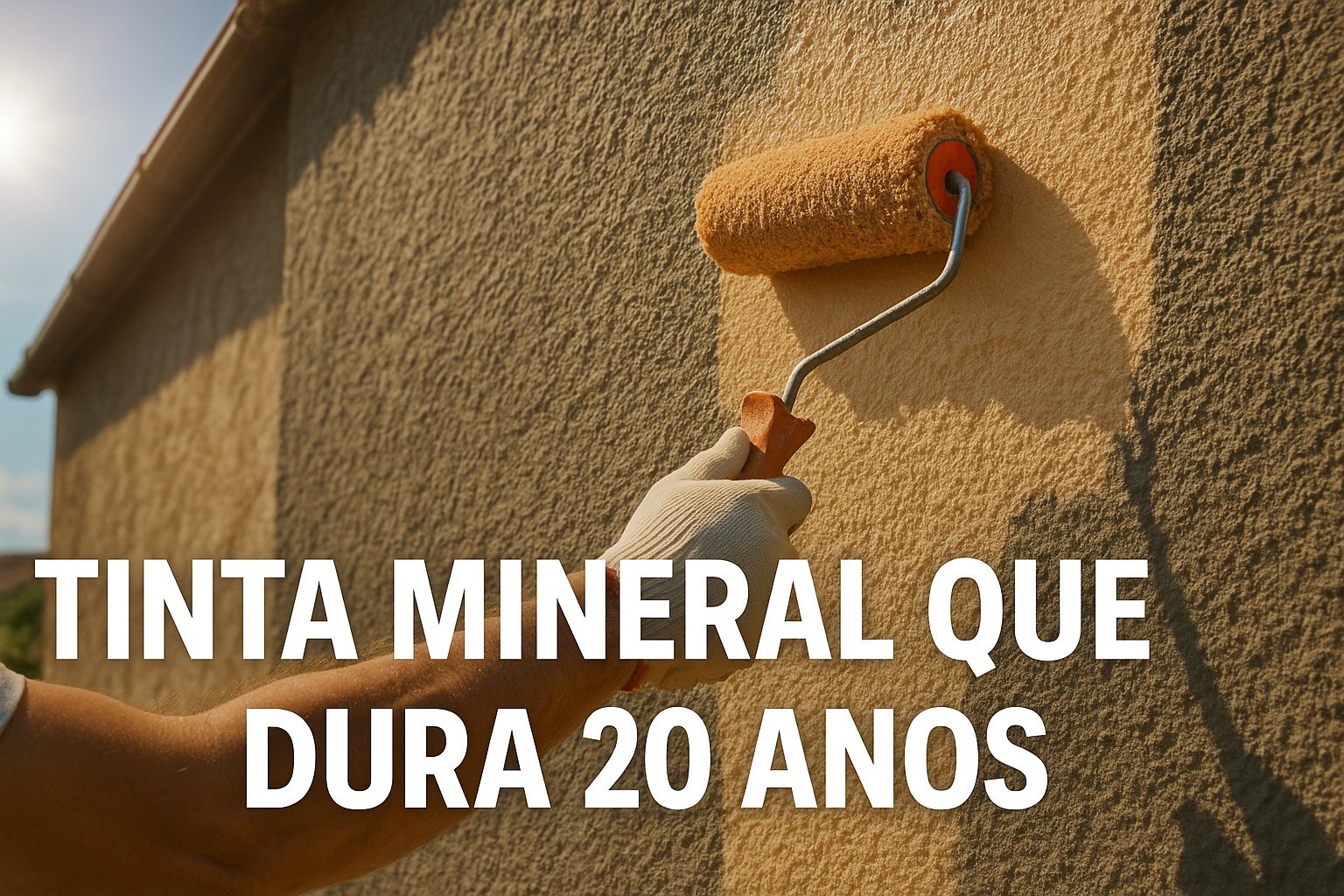


Mineral Silicate Paint Lasts More Than 20 Years Without Fading, Resists Intense Sun and Rain, and Bonds to the Wall, Creating an Extremely Durable Coating.
The search for more durable coatings has always accompanied the evolution of construction. However, while a large part of modern paints relies on organic polymers that degrade over time, a technology created in the 19th century has gained prominence again for a characteristic that puts it on another level of performance: mineral silicate paints, known for their ability to last decades without fading, even under intense sun, constant rain, coastal air, or abrupt temperature changes.
The promise is not an exaggeration. Technical studies and specialized manufacturers confirm that this technology can maintain color and performance for 20, 30, 50, and even over 100 years, depending on the surface conditions and application. This uncommon longevity can be explained by a unique chemical process, capable of literally bonding the pigment to the wall, creating a mineral coating that does not form a “film” and, therefore, does not peel.
A Unique Chemical Process: How the Paint Becomes Part of the Wall
Unlike common acrylic paints, latex and PVA that create a superficial film, mineral paints work with a reaction called silication.
-
A river buried under a highway became an urban park in Seoul after a multimillion-dollar project at Cheonggyecheon, attracting 64,000 visitors per day, increasing biodiversity by 639%, and showing why cities are replacing concrete with water and green areas.

-
How much does it cost to build a pool in 2026? See the average construction costs, licensing fees, and the most common extra expenses that may arise throughout the project.
-
Ship under construction will have an 81.3-meter slide that descends 12 decks at sea, next to an 8-ton sculpture with 150 meters of LED, and will start sailing in December 2026.

-
City of Santa Catarina uses a 50-meter crane to install 17.9-meter beams on the 200-meter bridge that will cost R$ 44 million, change the traffic direction between two neighborhoods, and be completed in April 2027.


When the paint is applied over suitable substrates, such as mineral plaster, concrete, or mortar, potassium silicate chemically reacts with the surface and creates a permanent microscopic bond. The result is a layer that does not peel, blister, or flake, as there is no “film” to break.


Furthermore:
- the paint is highly permeable to vapor, allowing the wall to breathe;
- the risk of mold and mildew is lower, as silicate is naturally inhospitable to fungi;
- the resistance to UV rays is extremely superior, which prevents premature fading.
This combination places mineral paints among the most stable coatings ever developed for facades.
Why Do They Last So Long? The Secret Is in the Silicate
Potassium silicate is composed of mineral elements similar to those found in rocks and quartz. Thus, it does not undergo the same chemical reactions that degrade polymer-based paints, such as:
- oxidation;
- UV photodegradation;
- yellowing;
- degradation from acid rain.
In practice, this means that the coating behaves like a thin homogeneous mineral layer, whose color comes from the chemical structure of the pigment and not from an organic polymer that deteriorates over time.
In tests conducted by companies specialized in this type of paint, there are records of facades maintaining stable coloration for complete decades, even with significant sun exposure.
Extreme Performance: Where This Paint Is Commonly Used
This technology is traditionally applied in places where durability is essential:
- historical facades and monuments;
- constructions exposed to intense sun;
- humid environments or areas with high rainfall;
- coastal regions affected by sea air;
- projects that require low maintenance costs over the years.
The use in historical facades is explained by another reason: since the coating is mineral and allows vapor diffusion, it does not trap moisture inside the walls—essential in old buildings with more porous construction systems.
Technical Advantages That Explain High Durability
In addition to resistance to sun and rain, mineral paints present specific benefits that enhance their lifespan:
Stable Coloration for Decades
Mineral pigments do not suffer accelerated fading as they are more resistant to ultraviolet radiation.
High Permeability
The wall breathes, preventing internal seepage caused by trapped vapor.
Low Dirt Absorption
The mineral surface has less adhesion for dust particles and urban pollution.
Flame Resistance
Being inorganic, the paint is non-combustible and does not release toxic gases.
Low Environmental Impact
The silicate has a mineral origin and does not rely on resins derived from petroleum.
These characteristics make it one of the most durable and stable coatings ever used in long-term architectural projects.
Limitations: Why This Paint Has Not Replaced Common Paints?
Despite the advantages, there are factors that limit its widespread use:
- the initial cost is often higher than conventional paints;
- application requires proper substrate preparation;
- it does not adhere to plastic surfaces or old paint films;
- it requires trained labor to ensure perfect silication.
Therefore, its use is more common in high-performance projects, historical facades, premium buildings, and places where frequent maintenance would be costly or unfeasible.
The Future of This Technology: Durability as a Differential
With the growing concern for sustainability and long-term maintenance, mineral paints are gaining traction again.
The promise is simple: a coating that can last decades without losing color and without peeling, reducing repainting costs and offering superior protection against the elements.
The silicate technology, far from being experimental, has proven its efficiency for over a century—and now returns as a modern solution for constructions that demand strength and stability.




de fato
lteste
legal