





Closed for over a decade, former Thomson industrial complex enters new phase in France, with public consultation allowing residents to weigh in on uses, circulation, green spaces, and preservation of local memory
The former Thomson industrial complex in Angers, in western France, has been inactive since 2012 and will now be the focus of a citizen consultation organized by Angers Loire Métropole. Residents will have the opportunity to present proposals for the repurposing of the old factory before the future urban planning of the area is determined.
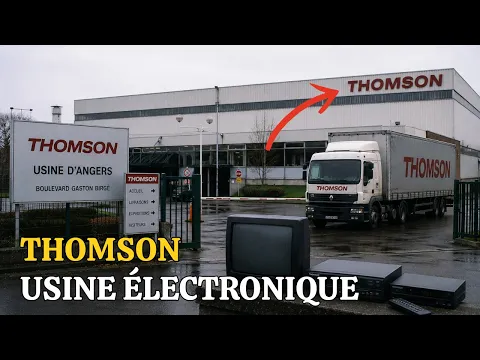

Former Thomson factory remains unused for over a decade
The former Thomson factory represents one of the industrial voids left by changes in the electronics sector.
-
Brazilians Face Challenges in Finland Despite Its Top Ranking in Happiness for 2026

-
Historic Bahia Palace to be Transformed into a Six-Star Hotel Worth R$ 250 Million with 90 Suites After Nearly 500 Years as Government Headquarters, Barracks, and More

-
City Begins Draining Pond to Remove Tilapia, Fears Exotic Species May Escape Through Drainage System to Rivers and Streams in Cascavel
-
Special Snow Trains Confront Snowdrifts Taller than Locomotives with Front Plows, Steel Wings, and Giant Rotors to Clear Buried Railways in Donner Pass after Over 13 Feet of Snow Block Vital U.S. Corridor


The complex includes warehouses, yards, water towers, and other structures that have had no productive function since closure in 2012.
The site is located in Angers, in the Maine-et-Loire department of the Pays de la Loire region. The city is about 90 kilometers northeast of Nantes and approximately 300 kilometers southwest of Paris.
During the 20th century, the electronics industry and other manufacturing activities were significant in the city’s peripheral areas.
Thomson was part of this reality as a manufacturer in the consumer electronics sector.
Later on, the former company underwent changes and was incorporated into corporate structures that used names like Technicolor.
Concurrently, its industrial plants faced a reduction process linked to Asian competition and technological changes in electronic devices.
With the closure of operations in Angers, the land became part of the collection of former industrial areas, known in France as “friches industrielles,” that continue to await some form of repurposing.
These areas hold an important characteristic for urban planning: although abandoned, they occupy already urbanized locations, close to roads, infrastructure networks, and existing neighborhoods.
In the case of the former Thomson factory, over a decade has passed without the space taking on a permanent function within the city.

Residents Can Help Decide the Future of the Former Thomson Factory
Angers Loire Métropole is preparing a public consultation this fall, which spans from September to November, aimed at discussing the future of the complex.
The proposal is to engage with residents before finalizing the urban project for the site. This process will include workshops, public meetings, digital platforms, and other means to gather contributions.
Topics for discussion may include potential uses for the land, circulation, green spaces, and ways to preserve the industrial heritage that defined the area.
The primary difference in this approach lies in the order chosen. Instead of presenting residents with a fully developed project, the metropolitan administration aims to conduct consultations before determining the future of the space.
The newspaper Ouest-France reported on the planned timeline by Angers Loire Métropole, highlighting that this stage of discussion will occur before the final urban project is defined.
This means that no definitive use for the complex has been announced yet.
Housing, recreation, public facilities, new economic activities, and preservation of elements related to the former factory are among the mentioned possibilities, but none have been predetermined as the final solution.
Additionally, the total area of the land, the cost of future interventions, or a winning architectural project have not been officially disclosed.

Reconversion Aims to Utilize Area Already Integrated into the City
The transformation of the former Thomson factory is part of a broader discussion on the repurposing of deactivated industrial areas.
In the case of Angers, the land is not isolated from urban development. It remains part of a region with neighborhoods, infrastructure, and the daily movement of residents.
Thus, reconversion could allow an already urbanized area to gain new functions rather than remaining closed and inactive.
The metropolis also links this type of repurposing to the intention of reducing urban expansion over new areas in the Loire Valley, a region tied to heritage and tourism.
The logic presented is to reuse lands that are already part of the city’s built fabric.
French projects for transforming former industrial areas can combine different functions, such as housing, green spaces, amenities, and economic activities. In Angers, however, the specific composition will depend on the consultation phase.
Public participation also opens a space for nearby residents, former Thomson workers, and people commuting daily through the area to share insights on local needs and historical elements they deem important to preserve.
Consultation Will Be the First Step Before Defining the Infrastructure Works
The opening of public participation does not mean that construction will begin immediately.
The process described for such areas involves different stages, which may include land and existing building assessment, public consultation, urban planning, and subsequently, physical interventions.
In Angers, the currently announced stage is precisely the listening to residents.
Therefore, there is still no confirmed information regarding investment amounts, the number of future homes, the number of jobs that could be created, or a definitive timeline for the transformation’s completion.
There is also no official data available on how many workers lost their jobs when the factory closed in 2012.
The absence of these definitions is part of the format chosen by Angers Loire Métropole. The administration wants to gather contributions before determining how the land will be used.
More than ten years after the closure of Thomson, the area thus enters a new stage.
The warehouses and yards that remained tied to the city’s industrial memory are now at the center of a public discussion about land use, mobility, green spaces, new facilities, and the preservation of historical elements.
The consultation expected for the French autumn should indicate which proposals received the most attention from residents and which guidelines may be carried forward into the next stages of planning.
Until then, the former complex remains without a defined function, but transitions from an abandoned industrial area to a space whose future will be discussed with direct participation from the community.
This article was prepared based on information from Angers Loire Métropole and Ouest-France, with data, numbers, and statements preserved as per the consulted material.


