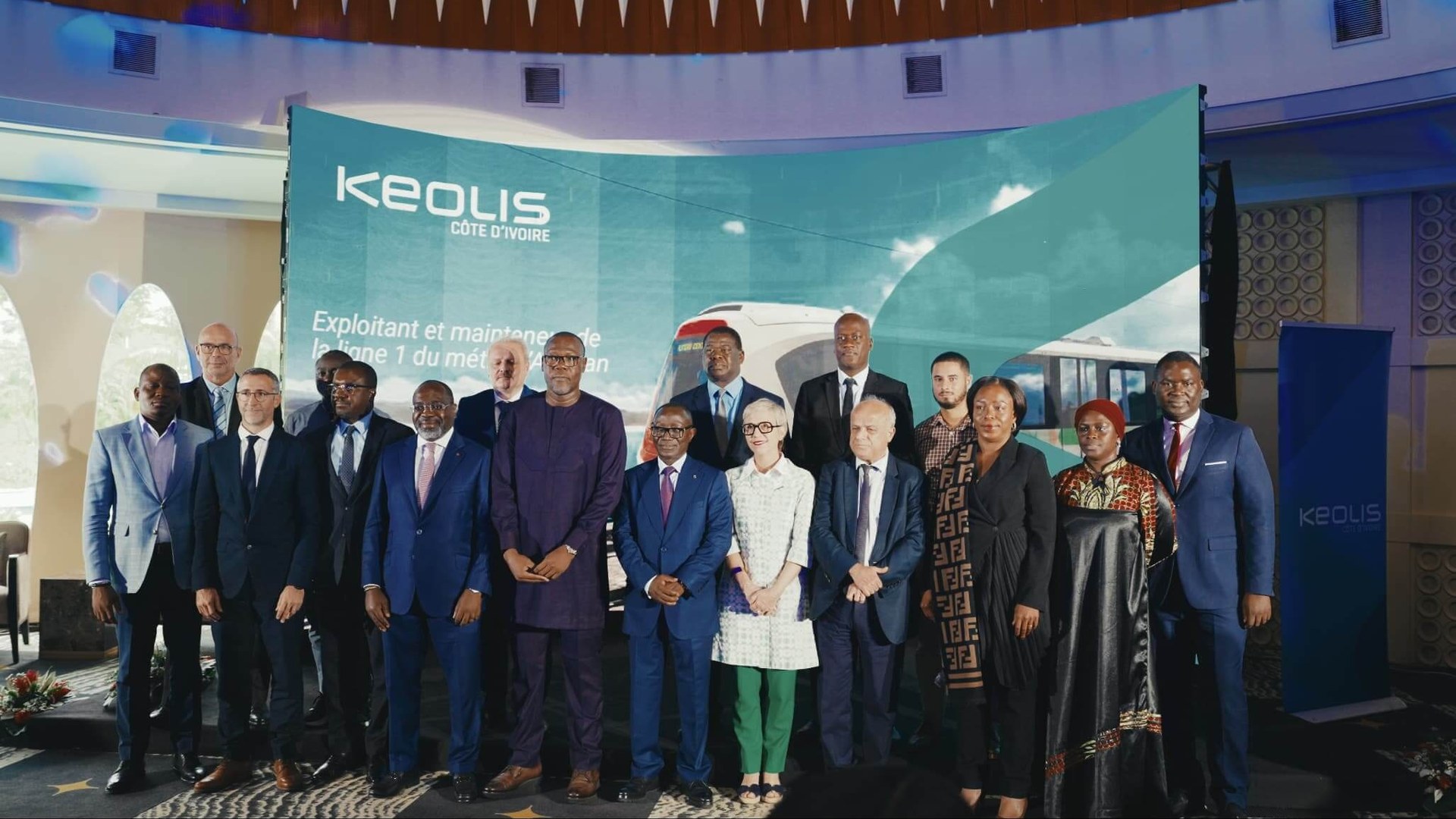
Ivory Coast’s first metro line entered its pre-operation phase on Friday, November 20, when operator Keolis Côte d’Ivoire began preparing the teams and procedures that will run trains across Abidjan from 2029.
The launch ceremony was held at the Sofitel Abidjan Hôtel Ivoire in Cocody. Government representatives, local officials, the French ambassador and executives from the Keolis group attended.
Line 1 will run north to south across Abidjan, the country’s economic capital, from Anyama to Port-Bouët, where the city’s airport is located.
37.4 km, 18 stations and seven districts
According to figures given by Prime Minister Robert Beugré Mambé on November 11, the line is 37.4 kilometres long and has 18 stations.
-
Prime Minister Narendra Modi walked across Nitish Setu after opening the 9.76-km, six-lane bridge over the Ganges, built for about ₹4,280 crore to give north and south Bihar a new road link and take traffic off two older bridges.

-
Singapore Transport Minister Jeffrey Siow broke ground on Tuas Port’s third and largest finger, almost 400 hectares of reclaimed land with 21 mega berths 23 metres deep and an 8.6 km wharf that will start operating in 2028.
-
Salvador Metro digs 22-meter shaft beneath Barris to begin tunnel to Campo Grande as R$1.5 billion expansion advances

-
Brazil’s first immersed-tube tunnel requires six 48-hour closures of the Port of Santos shipping channel during R$6.8 billion project



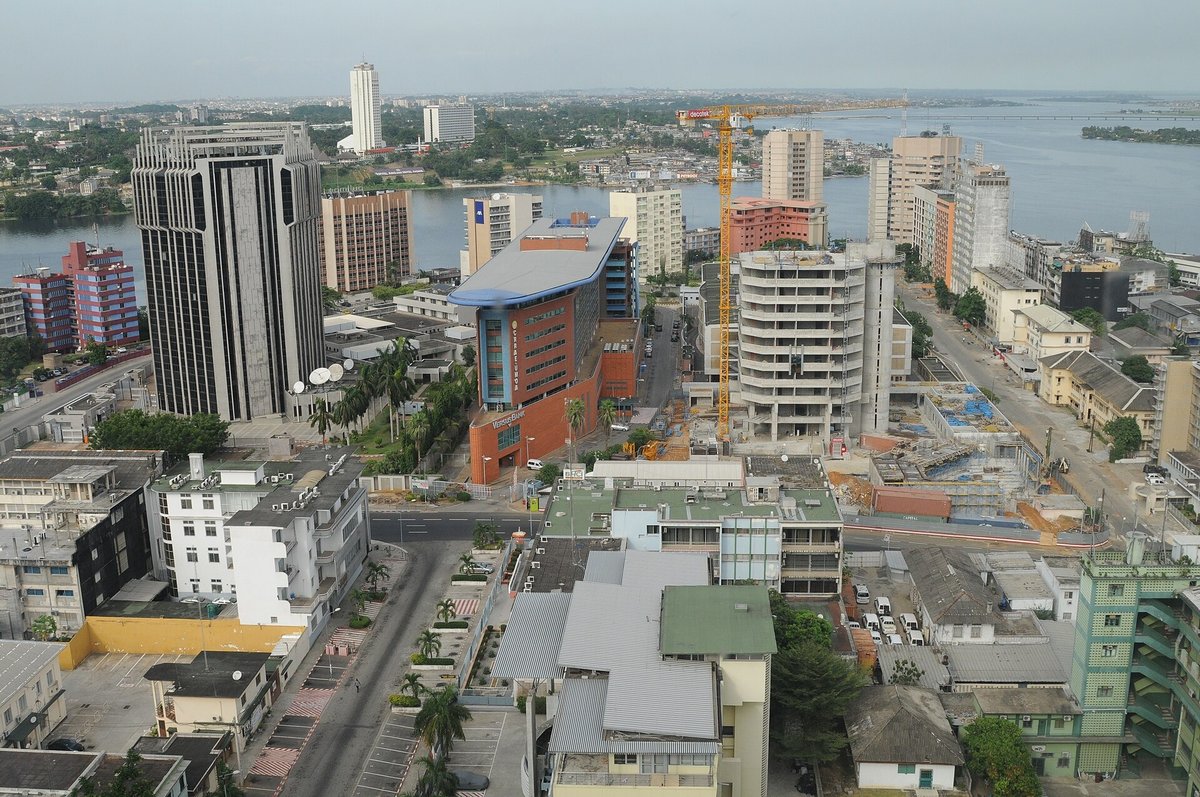
It passes through seven municipalities: Anyama, Abobo, Adjamé, Plateau, Treichville, Marcory and Port-Bouët. The route crosses some of Abidjan’s most crowded residential and business areas.
The published figures vary slightly. A note from the Ministry of Transport quoted by Benin Web TV gives about 37.5 kilometres and 20 stations, while Afrique Économie, reporting on the Keolis ceremony, gave 38 kilometres and 18 stations.
Up to 540,000 passengers a day
The Prime Minister said the line is expected to carry up to 540,000 passengers a day, The Rio Times and Logistafrica reported after his site visit.
He called the project “a jewel for Ivory Coast” and said it should ease traffic jams and help people reach housing along the route.
He also invited Ivorian private operators to prepare to run shops and services in the largest stations. “Big stations are places of commerce,” he said.
Trains for 1,333 passengers each
Each train will carry up to 1,333 passengers, and 20 trains are planned for the start of service, Afrique Économie reported from the ceremony.
During his visit on November 11, the Prime Minister gave a capacity of about 1,300 passengers per train. Logistafrica reported an operating plan of 25 to 30 trains over time.
66% of the works done, first trains at the end of 2028
The Prime Minister said construction was about 66 percent complete as of November 11, according to Logistafrica.
The first trains are due to arrive for testing at the end of 2028, and commercial service with paying passengers is planned for January 2029. No exact day has been announced.
What pre-operation means
Pre-operation does not mean the trains are running. It is the phase in which the operator writes safety procedures, organises maintenance and builds the teams that will run the metro every day.
The work runs alongside construction, which continues on the line. “Passenger safety is being prepared today, in our procedures, in how we organise maintenance and in how we train our teams,” said Paulin Murhula, managing director of Keolis Côte d’Ivoire.
“Our responsibility is also to pass on this know-how to the Ivorian professionals who will run the metro day to day,” he added.
Training Ivorian railway workers
Keolis Côte d’Ivoire is working with the Félix Houphouët-Boigny National Polytechnic Institute (INP-HB) and has signed an agreement with the ministry in charge of technical education.
The aim is to train Ivorian professionals in railway operation and maintenance for the country’s first metro line.
“Every city is unique, which is why we decided to work with local employees,” said Sophie Durand, executive director of communication for the Keolis group.
2,000 workers on site and 5,000 jobs expected
According to government figures, more than 2,000 Ivorians already work on the construction sites, including 200 engineers and 150 young women recruited for the project.
The authorities expect about 5,000 jobs in total, including 2,000 permanent positions once the line is in operation, The Rio Times reported.
Four companies share the work
The metro is being built by the STAR consortium. Bouygues handles civil engineering, Colas Rail builds the track and power systems, and Alstom supplies the trains and signalling.
Keolis is in charge of preparing operations and will then run and maintain the network.
In December 2022, Colas put the value of the contract at 1.77 billion euros, with 66 months of construction, according to The Rio Times.
‘Zero compromise’ on safety
Claude Zongo, chief of staff representing the Minister of Infrastructure and Road Maintenance, Yacouba Hien Sié, said safety and service quality are the state’s first demands on the operator.
“Our common goal is clear: to offer users, from day one, a metro that is safe, reliable and of high quality,” he said, according to Koaci.
“The Abidjan metro will then be proof that our great Ivory Coast knows how to build, but also how to operate, maintain and pass on,” Zongo added.
With two-thirds of the works done and training under way, do you think Abidjan will see its first paying passengers in January 2029 as planned?