





 Portuguese
  English
  Spanish
  4 min of reading
  0 comments


Open Shelves Are Replacing Traditional Cabinets in Modern Kitchens by Offering a Light Style, Visible Organization, Lower Cost, and a Practical Solution Against Moisture and Mold
Open shelves have moved from being a feature only in gourmet environments or magazine projects to integrating into real kitchens, whether in apartments or single-story homes. This shift in preference occurs because shelves simultaneously address three issues that bothered traditional closed kitchen cabinets. They occupy less visual volume, allow for quick access to daily use items, and reduce issues of dampness that lead to mold and warping of doors.
Another reason for the popularity of shelves is cost. While complete cabinets require woodwork, hardware, doors, and alignment, open shelves can be installed in modules, at different heights, and with a much lower investment. It is a functional solution that accompanies the style of integrated kitchens, which are lighter and more airy.
Why Shelves Have Won Over Cabinets in the Kitchen
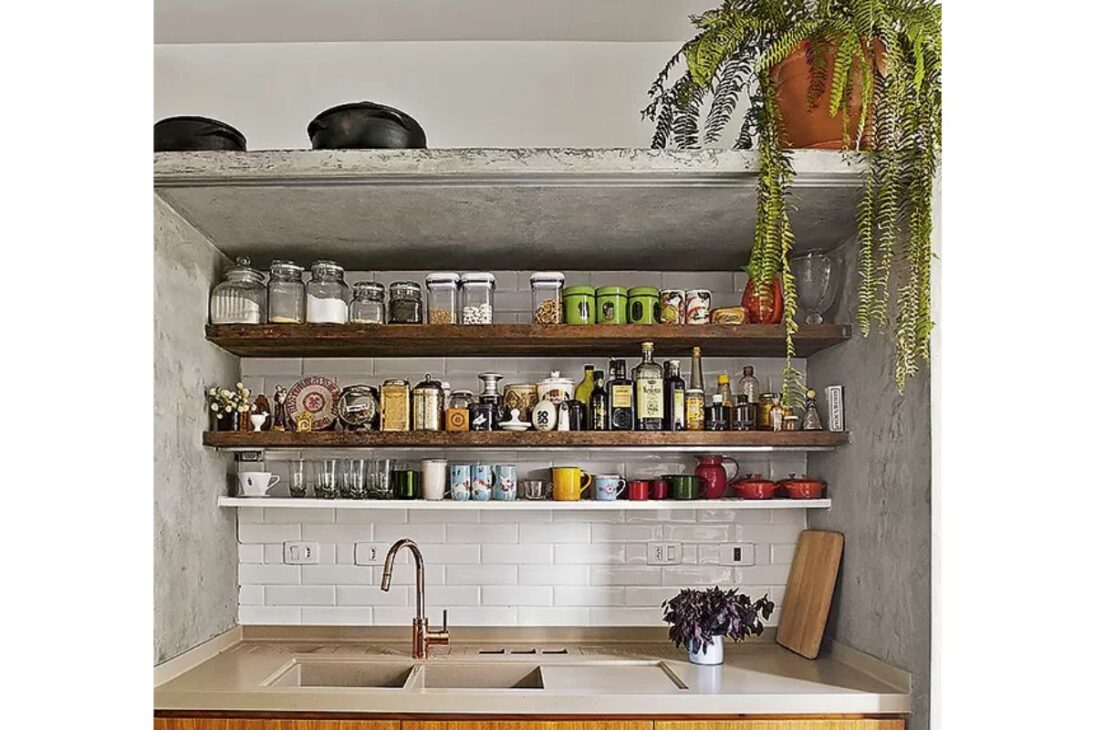
Modern kitchens demand practicality. Instead of opening doors constantly to grab plates, glasses, and spices, shelves keep everything visible and accessible. This reduces steps and makes meal preparation faster, especially for those who cook every day.
-
Giant Roman treasure found at the bottom of Lake Neuchâtel in Switzerland reveals an advanced trade system, circulation of goods, and armed escort in the Roman Empire about two thousand years ago.

-
He buried 1,200 old tires in the walls to build his own self-sufficient house in the mountains with glass bottles, rainwater, and an integrated greenhouse.
-
The aircraft carrier HMS Prince of Wales is heading to the Arctic with F-35 fighters, helicopters, and warships in an operation that repositions the United Kingdom at the forefront of NATO in 2026.

-
He found the largest gold shipwreck in the United States with tons of the precious metal at a depth of 2,400 meters in the Atlantic and recovered a treasure that no one thought possible to reach, but 500 gold coins disappeared without explanation.


Visible use also helps maintain organization, because the resident sees what is out of place.
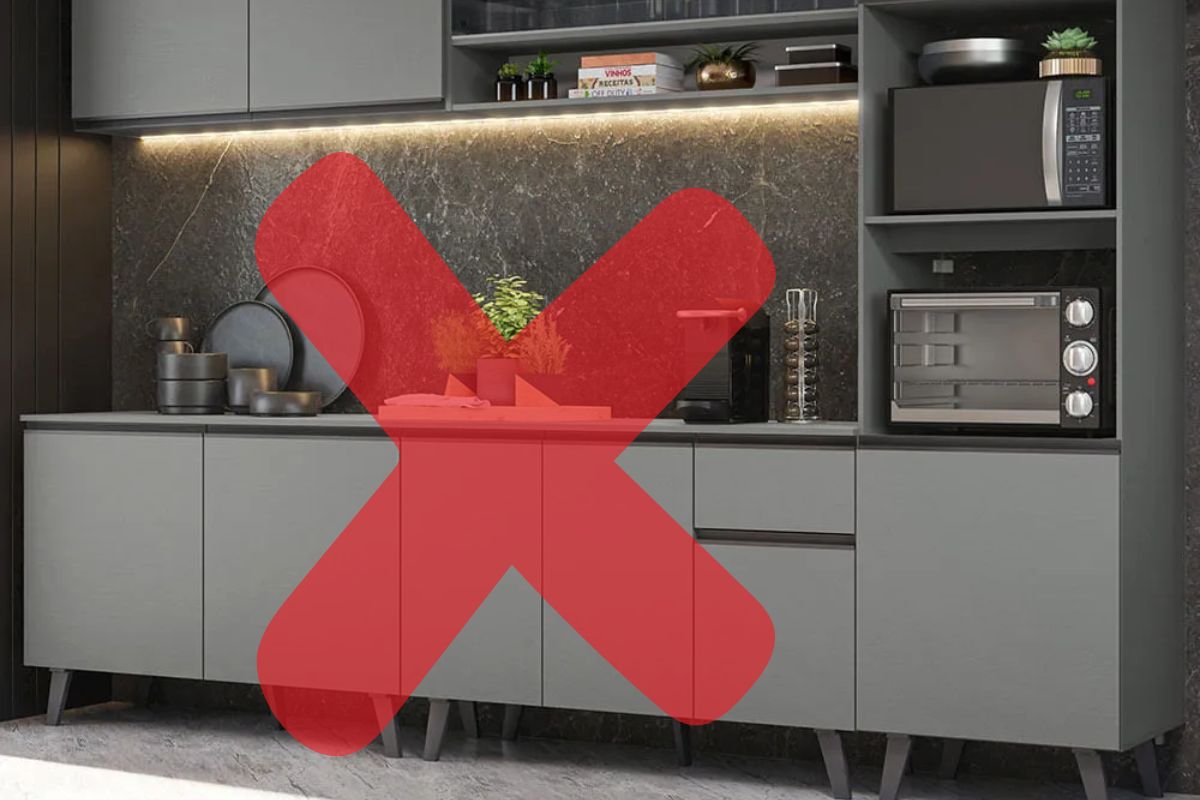
Another factor is the visual aspect. Tall, closed cabinets create a sense of weight and reduce the perception of space, especially in small kitchens. With open shelves, the wall feels lighter and allows coatings, textures, or paint to show through. It is a trade-off of volume for aesthetics and functionality.
More Space and Zero Mold
One of the main issues affecting kitchen cabinets is moisture. Cooking steam, poor air circulation, and proximity to sinks and outside walls favor mold and warping, especially in low-resistance furniture.
Open shelves practically eliminate this risk because air circulates freely and there is no closed compartment to accumulate moisture. Well-ventilated environments mean drier surfaces and better-preserved materials.
The absence of doors also favors lighting. Natural light reaches more areas, contributing to the sense of spaciousness. In kitchens integrated with the living room, this effect is even more evident, as the eye moves directly without encountering a block of cabinets interrupting the visual field.
Savings and Decor in the Same Element
One of the reasons for this trend is cost-effectiveness. Wooden shelves, MDF with finishing, glass, or metal structures can be found ready-made in stores and online, which reduces the initial investment.
For those assembling the kitchen gradually, installing shelves first and then adding another module is a viable strategy. It is a way to have an organized kitchen without relying on complete carpentry.
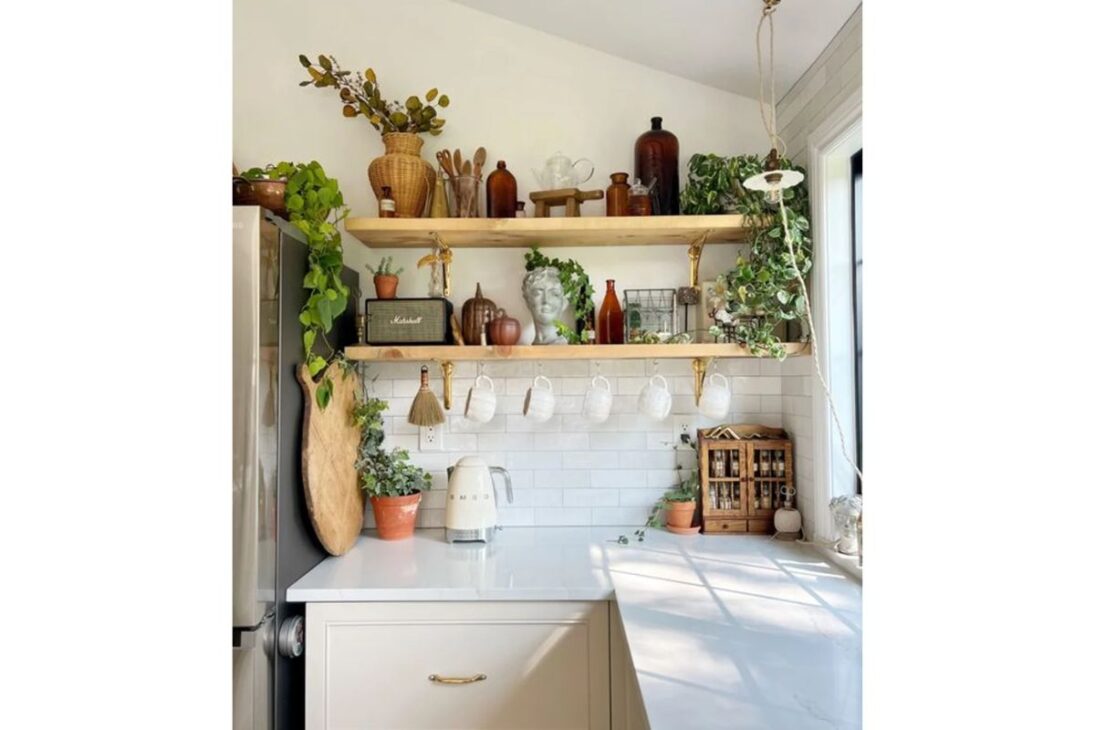
In terms of decoration, shelves open up space to showcase beautiful dishes, organized jars, reference utensils, and even plants. Instead of hiding everything behind doors, the resident begins to compose the kitchen’s scenery with their own objects. This aligns with the proposal of more personal kitchens and biophilic design, which seeks bright, ventilated environments with natural elements.
How to Use Shelves in Place of Cabinets
To keep the kitchen functional, it is ideal to plan what will remain exposed and what needs to be stored. Daily use items such as plates, mugs, easy-to-clean glasses, glass jars, and spices can go on the shelves.
Conversely, food items, larger pots, and appliances that are not used every day can be stored in lower cabinets or other storage points. The secret is not to overload the shelves to maintain the light effect.
Another recommendation is to vary heights and widths. Shelves at different levels create movement and allow for accommodating objects of various sizes. Installing a higher shelf just for decorations or plants adds a finishing touch to the project and prevents everything from being at the same level.
On long walls, using metal brackets or a black structure combined with light wood reinforces the contemporary look that is trending.
When It Is Worth Keeping Cabinet and Shelf Together
In kitchens for large families or those with many utensils, shelves may not be sufficient for the volume of objects.
In these cases, the most efficient approach is to combine closed modules at the bottom or on one of the walls with open shelves in the areas of greater visibility.
This way, the kitchen maintains storage capacity without losing the sense of lightness. It is entirely possible to have an organized kitchen while also appearing modern.
Keeping at least one closed cabinet is also useful for storing cleaning products, food items that cannot be exposed, and utensils that do not contribute to the decor. The concept of this trend is not to eliminate all cabinetry but to reduce excess doors and give prominence to what is most used.
Open shelves have shown that it is possible to organize, save money, and modernize the kitchen at the same time, eliminating the heavy visual of tall cabinets and the moisture issues they brought.
It is a simple, adaptable solution for small kitchens and even for quick renovations, because it can be installed directly on the wall and used immediately.









Seja o primeiro a reagir!