





 Portuguese
  English
  Spanish
  3 min of reading
  0 comments


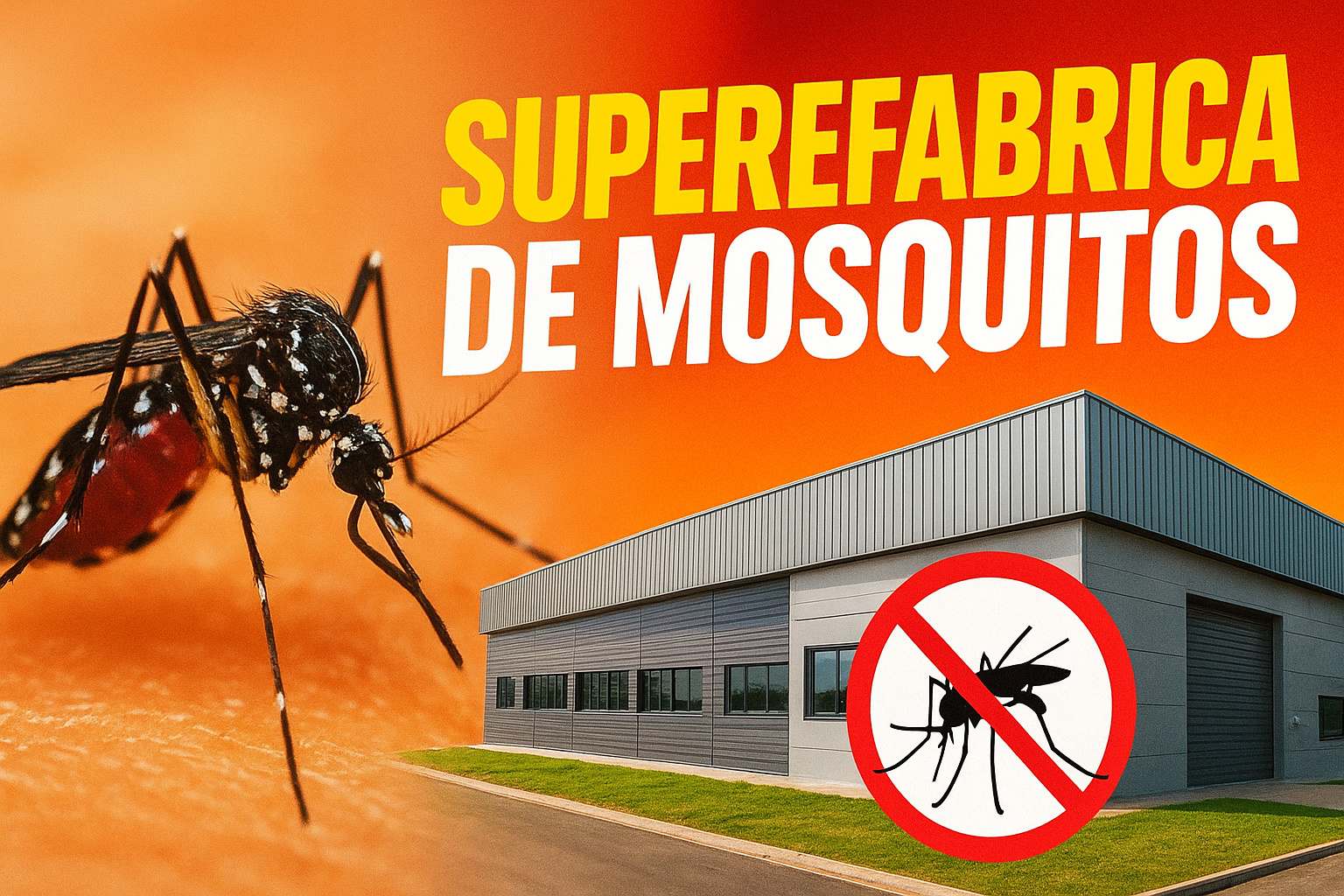
Brazil Inaugurates Unique Super Factory in Curitiba to Combat Dengue with Wolbachia Mosquitoes and Protect 140 Million People.
A Revolution Against Dengue in Brazil
Brazil has inaugurated a mosquito super factory that promises to protect up to 140 million people from dengue in the coming years. The initiative arises at a critical moment, as the disease recorded alarming numbers in 2024, with thousands of deaths.
The unit, located in Curitiba and opened on July 19, marks a historic advance in public health and positions the country as a global reference in combating Aedes aegypti.
Wolbito do Brasil leads the project in partnership with the World Mosquito Program, Oswaldo Cruz Foundation (Fiocruz), and the Paraná Institute of Molecular Biology.
-
They were brilliant! Scientists discover that our ancestors in China were already making super advanced tools 160,000 years ago, changing everything we knew.

-
Scientists unveil 3 million years of climate secrets hidden in the ice of Antarctica.

-
Ancient farmers created “aggressive plants” that changed nature forever.

-
Astronomers find a “backward” solar system that ignores all the rules of space and leaves scientists scratching their heads!

The Ministry of Health supports the operation, which is already considered the largest biofactory in the world in this sector.
How Protection Against Dengue Works
The technique used by scientists is simple yet effective. They infect the mosquitoes with the Wolbachia bacteria, which prevents the transmission of dengue, Zika, and Chikungunya.
After being released into the environment, the mosquitoes breed with local populations and pass on the bacteria naturally. In just a few breeding cycles, the number of transmitting insects significantly decreases.
According to Luciano Moreira, executive president of Wolbito do Brasil, the factory produces 100 million eggs per week. This number ensures protection for 7 million people every six months.
Dengue in Brazil: Alarming Numbers
Dengue, known as “breakbone fever” because of the intense pain, still represents one of the biggest public health challenges in Brazil.
In the past year alone, the disease killed 6,297 people — the worst number ever recorded, according to the World Health Organization (WHO).
In light of this scenario, the country is investing in innovative solutions. Thus, the mosquito factory with Wolbachia emerges as a game changer.
Safety and Effectiveness of the Wolbachia Technology
To alleviate concerns, experts clarify that Wolbachia poses no risks to humans. This is because the bacteria live exclusively within insect cells.
Furthermore, it is already present in over 60% of insects in nature. According to Antonio Brandão, production manager at Wolbito do Brasil, humans have never come into contact with the bacteria throughout the centuries.
Finally, he emphasizes an important point: when the mosquito dies, the bacteria die with it.
How Mosquitoes Are Released in Cities
The operation also stands out for its logistics. For this, teams use adapted vehicles that circulate through areas with the highest dengue cases. With the press of a button, the agents release the already infected mosquitoes.
Additionally, the definition of release areas follows technical criteria. According to Tamila Kleine, regional operations coordinator for the company, the team selects neighborhoods with the highest number of recorded cases.
This way, the action focuses where there is the most urgency and risk for the population.
A Future with Less Dengue?
Brazil is betting on a bold and innovative solution against dengue: the Wolbachia mosquito super factory. The project costs less than hospital treatments and is safe and sustainable.
By protecting 140 million people, the country can become a global reference in combating mosquito-borne epidemics.
Meanwhile, health authorities urge the population to maintain individual care and eliminate breeding sites. Controlling Aedes aegypti requires everyone’s effort.










Seja o primeiro a reagir!