





 Portuguese
  English
  Spanish
  5 min of reading
  0 comments


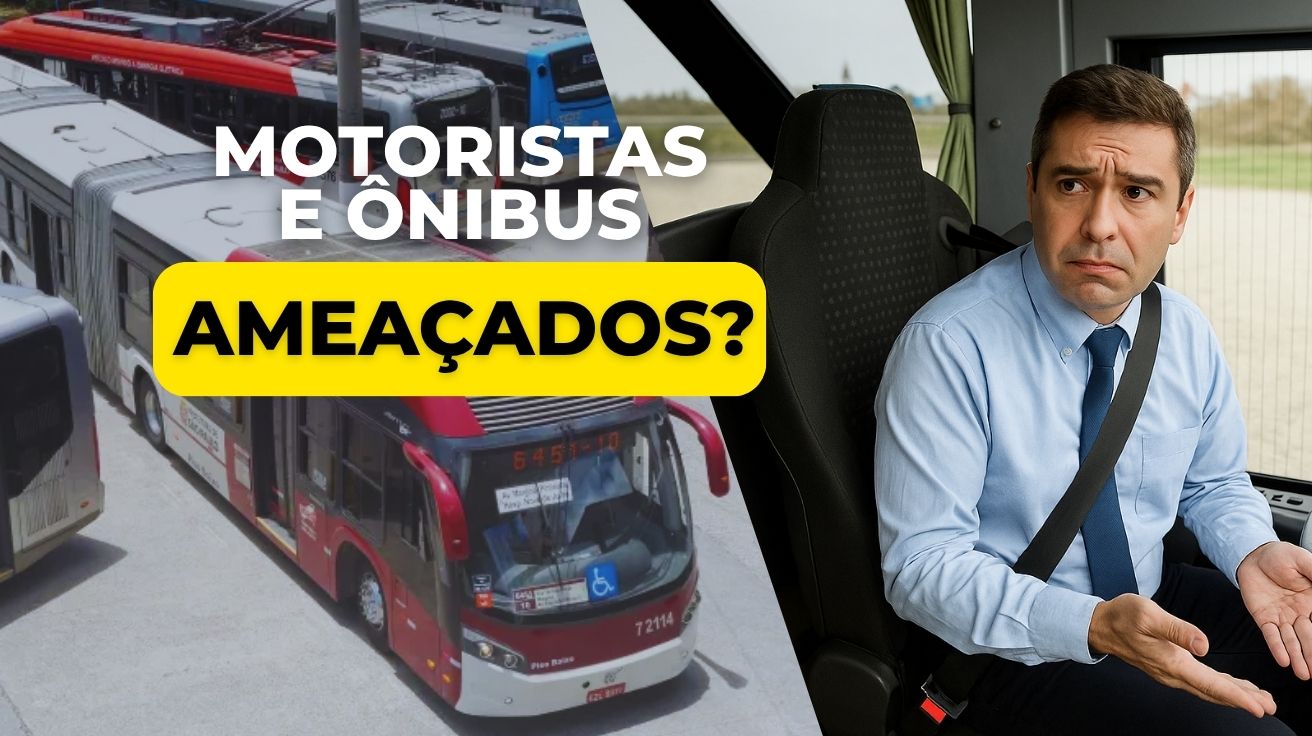
Connected Bus Technology Challenges The Articulated Model And Reduces The Need For Drivers. Autonomous Vehicles In Convoy Advance In Europe And Point To A New Urban Future.
The use of articulated buses faces growing challenges, such as high energy consumption and difficulties on narrow and winding routes.
To overcome these barriers and the shortage of drivers in some regions of Europe, a new era for urban public transport is beginning.
This is platooning, a technology that connects autonomous buses in a convoy, with only the leading vehicle operated by a driver, while the others follow in synchronized rhythm and direction via IT.
-
Brazil’s nuclear submarine with a speed 5 times greater than normal advances after nearly 50 years and R$ 40 billion spent.
-
A Brazilian island charges R$ 0.50 to receive visitors and prohibits any new residents.

-
Why was the Great Wall of China built? The truth that many are unaware of!

-
At 73.8 meters tall, the world’s tallest teapot-shaped building has 15 floors, ensures stability, and impresses with an internal space of 28,000 cubic meters.


This solution has been subject to practical tests on different continents — the United States, Europe, China, and India — to assess its viability and efficiency.
Researchers and authorities seek alternatives to current mobility, especially in urban environments where the use of articulated buses proves limited during off-peak hours.
Project MINGA Tests Connected Buses In Germany
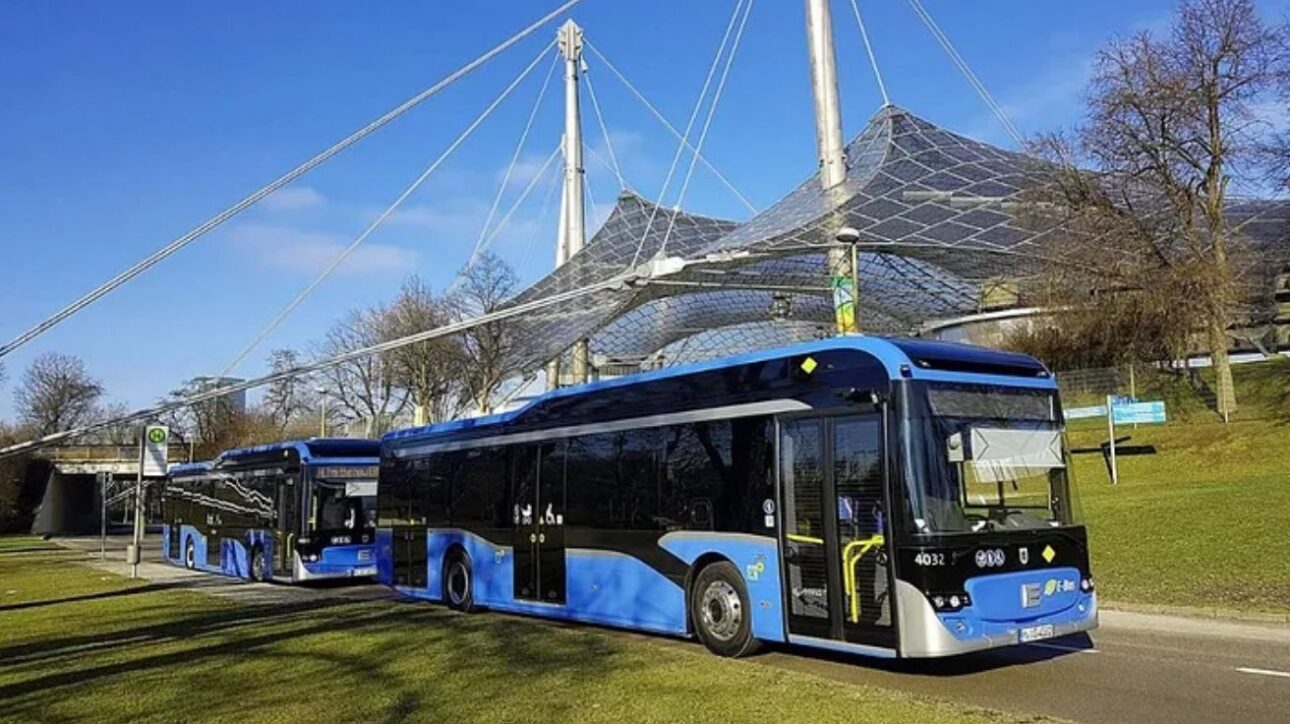
In Munich (Germany), the Ministry of Transport invested in a project called MINGA, with a budget of 13 million euros, to test bus platooning until mid-2027.
It is expected that by the end of 2025, two autonomous electric buses from the Dutch manufacturer Ebusco, with technology developed by FZI and the Karlsruhe Institute of Technology (KIT), will begin operating on a regular line during major events.
The system operates with an “electronic trailer”: the buses connect and disconnect automatically according to demand, maintaining reduced distance — similar to tests with trucks, where the distance between vehicles is between 15 and 20 meters.
In an urban context, this allows for flexibility to increase or decrease transport capacity as needed.
Dynamics And Functioning Of The Digital Convoy System
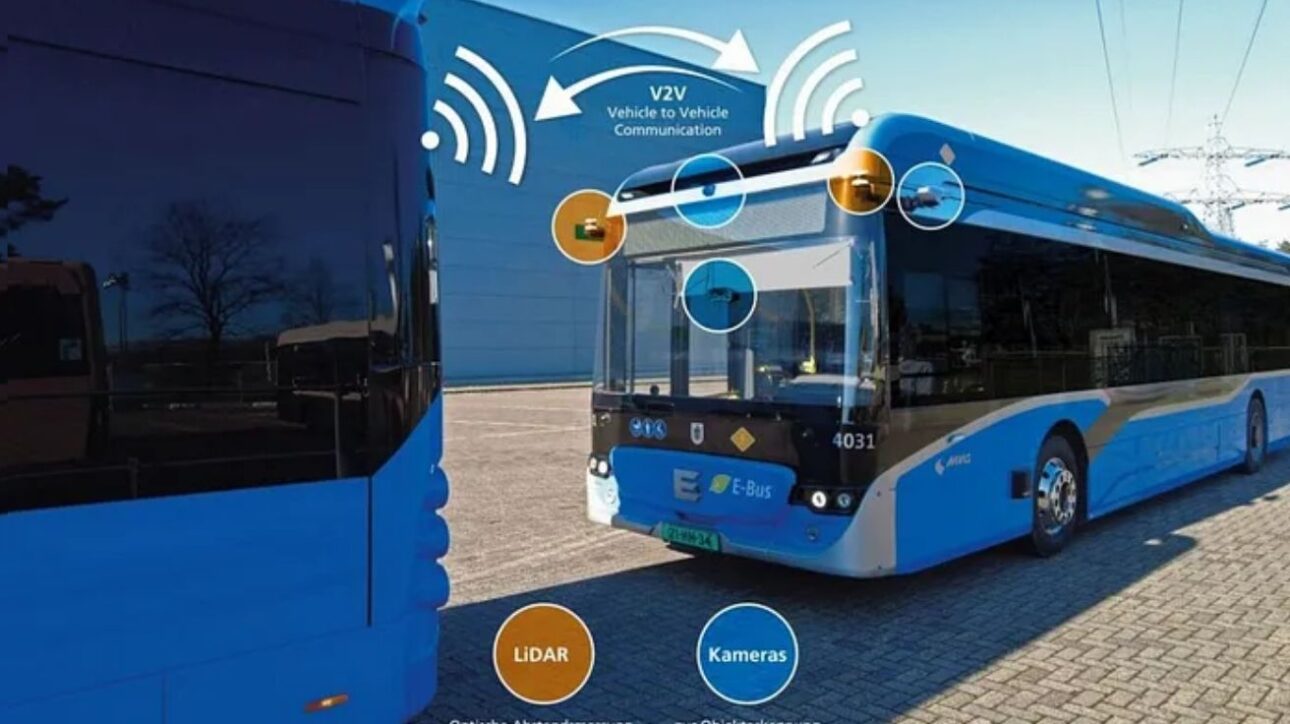
The lead vehicle, driven by a driver, emits real-time signals that guide the others, autonomously, to replicate acceleration, braking, and steering.
Synchronization is ensured by sensors, cameras, radars, and high-frequency communication, creating a digital convoy.
Unlike traditional articulated buses, there is no physical limit between buses, which reduces rigidity on routes and minimizes impacts from turns and narrow streets.
Benefits And Challenges Of Platooning
Operational Flexibility: possibility of instant decoupling for lower demand services or in emergency situations.
Energy Savings: elimination of the reinforcement engine (common in articulated buses) can reduce consumption per passenger.
Reduction Of Driver Costs: only the leading vehicle requires a driver, which can relieve pressure for skilled labor.
Regulatory And Infrastructure Challenges: it is necessary to adapt legislation and invest in compatible urban communication and monitoring systems.
Comparison With Truck Systems
In the freight transport sector, platooning is already progressing: convoys with three trucks travel roads with minimal distance between them, ensured by automatic control systems.
The adaptation of this technology for urban buses required specific development in automation and IT technology, especially for heavy traffic and frequent interaction with pedestrians and light vehicles.
Timeline Of The MINGA Project
Technical And Regulatory Preparation: completed in 2024.
Start Of Passenger Testing: expected throughout 2025.
Operation With Passengers On A Regular Line: expected for late 2025 or early 2026.
End Of The Project And Complete Evaluation: expected by mid-2027.
Situation Of Articulated Buses In Brazil
In Brazil, several cities have already adopted articulated or bi-articulated buses as a strategy to transport a larger volume of passengers — mainly in dedicated corridors and BRT systems.
Curitiba was pioneering, being the first in the country and the world to operate bi-articulated buses (three sections), a central part of the Integrated Transport Network (RIT), which moves about 2.3 million passengers per day.
São Paulo, Rio de Janeiro, and Campinas also have bi-articulated buses, utilizing structured BRT systems.
Cities such as Goiânia, Manaus, and Boa Vista operate or have experimented with bi-articulated buses, albeit on a smaller scale.
In Fortaleza, the “Expresso Fortaleza” introduced articulated buses in 2014, but many were deactivated during system reevaluation cycles.
The BRT Belém has infrastructure for articulated buses, but faces delays in the definitive operation of the mode.
These vehicles are essential in highly demanded corridors, but require ample space for maneuvering and are subjected to challenges such as sharp curves and narrow streets — problems that platooning aims to mitigate.
Applicability Of Platooning In The Brazilian Scenario
Adaptability On Urban Streets
Unlike traditional articulated buses, platooning connects independent buses in a digital convoy. This allows navigation through narrow sections or curves without the long, rigid chassis of articulated buses.
Dynamic Supply Scaling
With platooning, it would be possible to couple or decouple buses according to passenger flow, avoiding underutilization during off-peak times.
Relief From Driver Shortages
The technology that allows for operating two or more buses with only one driver (in the lead vehicle) could reduce costs and expand coverage, especially in metropolitan areas.
Integration With Electric Fleets
Cities like São Paulo, Curitiba, and Goiânia are renewing their fleets with electric buses. Autonomous platooning, combined with electric propulsion, tends to enhance environmental and energy efficiency gains.
Existing Infrastructure As A Base
The already implemented BRT corridors provide a conducive environment for testing bus connectivity, requiring only adaptations to IT and communication systems.
Articulated Or Connected: What Will Be The Future Of Urban Transport?
The adoption of articulated and bi-articulated buses in Brazilian cities already demonstrates a focus on high-capacity mobility, with success primarily in dedicated corridors.
However, limitations of urban space, variations in demand throughout the day, and a shortage of drivers indicate that autonomous platooning emerges as a plausible evolution.
The technology could leverage existing BRT infrastructure, renew electric fleets, and offer greater flexibility while maintaining operational efficiency.
Do you think implementing connected buses in a convoy, with only one driver, would be more advantageous than continuing to invest in articulated buses in major Brazilian cities? Comment!







Seja o primeiro a reagir!