





 Portuguese
  English
  Spanish
  4 min of reading
  0 comments


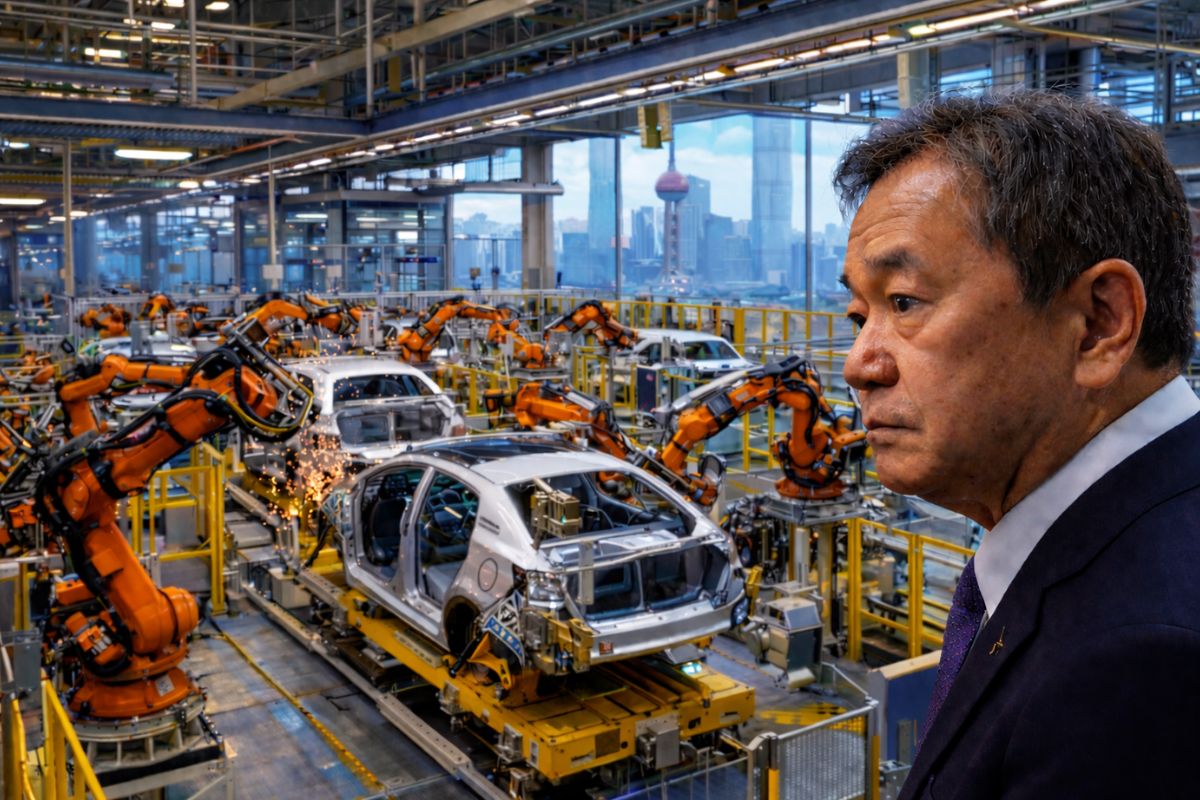
The fully automated factory seen in Shanghai revealed China’s pressure on Honda, with continuous production, lower costs, and a pace that challenges traditional automakers.
The visit to a Chinese factory in Shanghai led Honda’s president, Toshihiro Mibe, to directly express a concern that has been looming over the automotive industry for years. Upon encountering a fully automated operation, with no operators on the production line and capable of supplying Tesla and local brands, the executive summarized the shock in a harsh statement: “we don’t stand a chance against this”.
The statement exposes more than just the impact of a technical visit. It shows how Honda has begun to confront a scenario where China is no longer just a consumer market, but a center of speed, scale, automation, and cost reduction in the automotive sector.
The factory that became a warning sign for Honda
At the end of February, Mibe visited the facilities of a major Chinese component manufacturer in Shanghai. What he found was a factory operating continuously, with a high level of automation and a strong ability to reduce labor costs.
-
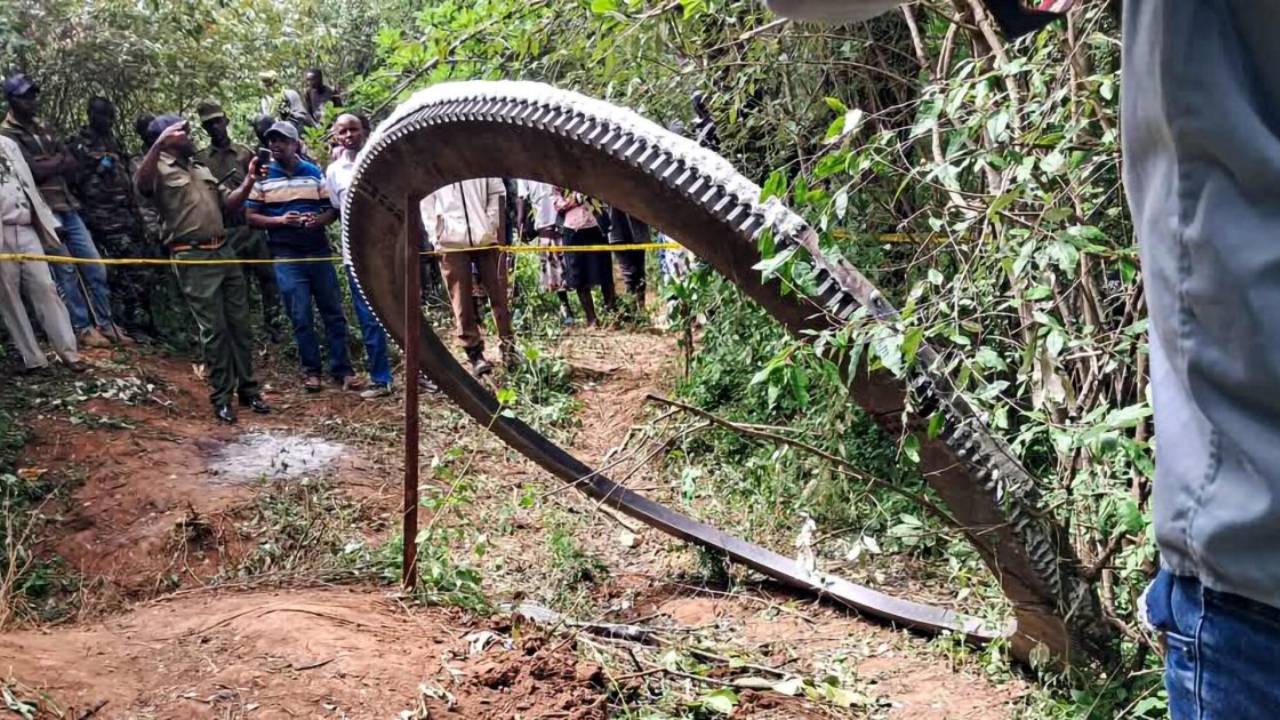
A giant half-ton ring fell in Kenya from space, and more than a year later, scientists still do not know where it came from.
-
Dubai eliminates the term “housewife” from official documents and adopts “generation builder,” redefining the role of mothers and changing the way society views motherhood.

-
60 meters above the ground, the Eiffel Tower once again offers a crossing over the void on a suspended walkway that has already attracted more than 24,000 people and transforms the visit into an experience of tension and an open view over Paris.

-
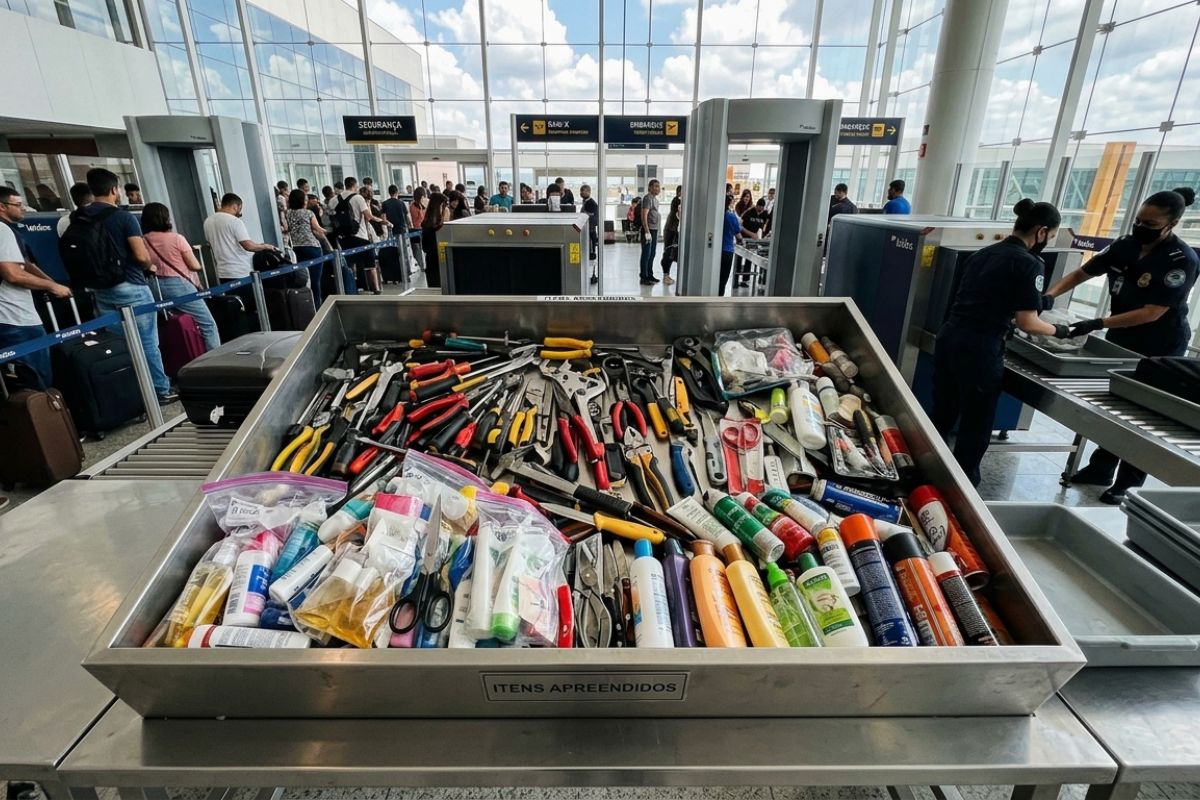
X-ray at the airport shows no mercy: tools lead the seizures, followed by liquids over 100 ml, blades, and flammable items; see what gets taken at security and how to avoid losses by checking in items when in doubt.
The impact was immediate because this structure represents exactly the type of advantage that traditional automakers struggle to replicate in the short term. It’s not just about producing more, but about producing faster, at lower cost, and with greater technological integration.
Why the words of Honda’s president carry so much weight
The statement made by Mibe draws attention because it came from the head of one of the most traditional brands in the automotive industry. It was not an external criticism nor a distant market analysis. It was the reaction of someone who witnessed up close an operation that helps explain the Chinese surge in the sector.
The concern is not isolated. The root of the problem lies in the fact that Chinese automakers have managed to reduce the development time for new models to between 18 and 24 months, about half the time required for Japanese or European manufacturers. Speed, software, and automation have become a difficult package to contend with.
The numbers show the size of the crisis
The situation of Honda in China helps to understand why the visit to the factory had such weight. In 2020, the automaker sold 1.62 million vehicles in the country. By 2025, that number fell to 640,000 units, with a decline of 24% in just the last year and the fifth consecutive year of decline.
At the same time, the company’s factories in China operate at 50% to 60% capacity, below the level of 70% to 80% considered necessary to generate profit. The projection for 2026 still points to production below 600,000 units. The problem has shifted from being occasional to structural.
Honda tries to react, but still faces doubts
To try to regain speed, Honda decided to revive its research and development division as an autonomous entity, returning to a model that existed since 1960 and was dismantled in 2020 when the company centralized management.
This independent structure has played a decisive role in important moments for the brand, such as the development of the low-emission CVCC engine in 1972 and the advancement of the original Civic in the global market.
Now, the company is betting on this formula again to give more operational freedom to thousands of engineers. Still, even within Honda itself, there is no guarantee that the change will be sufficient.
The Chinese advance is already worrying other giants
Honda is not alone in this scenario. The industrial and technological advance of China has also raised alarms in other global automakers. The common fear is the same: China’s ability to produce at scale, gain competitiveness, and pressure traditional markets.
This concern is growing because the new game in the industry does not depend solely on engines, design, or tradition. It requires quick responses, mastery of software, and the ability to cut costs without losing pace. China has begun to dictate the rhythm of a transformation that the sector is still trying to keep up with.
India becomes a bet for the next step
While some automakers seek alliances with Chinese companies to absorb some of that speed, Honda has chosen to take a different route. The company has selected India as the production base for its next generation of electric cars.
The Alpha, identified as the brand’s strategic global electric vehicle and scheduled for 2027, will be produced there. The decision shows that Honda is trying to reorganize its operations outside of China, but it also reveals that the company is still searching for a path capable of responding to the new balance in the industry.
China expands advantage and exposes global imbalance
The scenario becomes even more sensitive when observing the growing presence of Chinese brands abroad. In the first two months of 2026, BYD reached 1.8% market share in Europe, while Honda stood at 0.5% in the same period.
These figures reinforce the magnitude of the imbalance. China has ceased to be just a relevant piece of the automotive chain and has consolidated itself as a central competitor in the global electric market. The words of Honda’s president, in this context, serve almost as a raw portrait of the new reality.
And for you, does this Chinese factory show an advantage that Honda can still recover, or has the gap to traditional automakers become too large?





Seja o primeiro a reagir!