





 Portuguese
  English
  Spanish
  5 min of reading
  0 comments


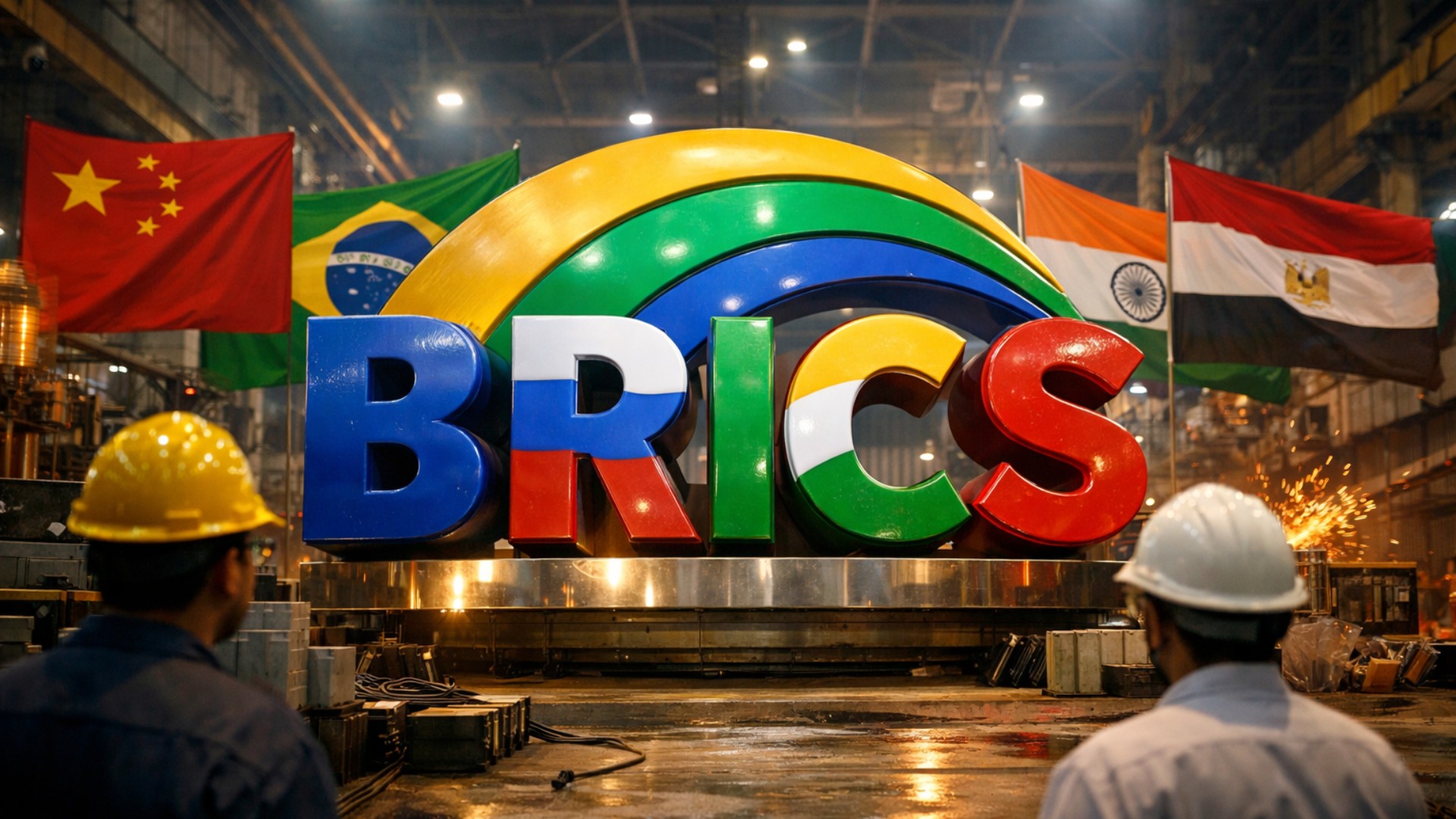
Movement between Egypt and India expands trade, boosts industrial investments, and strengthens productive integration in the BRICS, with direct impact on global chains and growth strategies of emerging economies.
Egypt and India have expanded economic and industrial coordination in a new round of talks in Cairo, in a move that combines trade expansion, investment attraction, and advancement of manufacturing projects in strategically considered areas.
The rapprochement occurs at a time of greater articulation among emerging economies within the BRICS and gains relevance as it brings together two countries that are trying to enhance their industrial, commercial, and diplomatic weight simultaneously.
The meeting was led by the Egyptian Minister of Investment and Foreign Trade, Mohamed Farid Saleh, with the participation of the Indian ambassador to Egypt, Suresh K. Reddy.
-
Goodbye to kitchen cabinets: innovation retires the traditional furniture of Brazilian kitchens by introducing modern pantries with modules of up to 2.40 m, 40% more organization, ergonomic access, adjustable shelves, and smart lighting in 2026.

-
Church from 1888 becomes a mansion of over 330 m² in Canada after a renovation of R$ 3.4 million and is eventually sold for nearly R$ 4.3 million.

-
How an innovative city combines high technology, well-being, and sustainability to become the largest reference in clean energy on the planet.

-
Couple buys 1846 church in ruins for R$ 660,000, invests R$ 3.2 million in renovations, transforms it into a millionaire mansion, and even preserved a historic cemetery with over 300 graves.

According to reports released by the Egyptian press and official channels of the country, the agenda included measures to increase trade exchange, deepen productive cooperation, and create space for new private investments, especially in higher value-added industrial segments.
Bilateral trade between Egypt and India gains scale and relevance
The numbers help explain the weight of this rapprochement.
Trade between Egypt and India reached approximately US$ 4.203 billion in 2025, with an annual increase of 12%, while Indian investments established in Egyptian territory have already surpassed US$ 4 billion, spread across dozens of companies and factories.
In parallel, the Indian embassy in Cairo reports that more than 55 companies from the Asian country operate in the Egyptian market in different branches of the economy.
This combination of robust trade with a growing industrial presence gives the relationship a broader profile than that of a merely diplomatic partnership.
In practice, what the two governments are discussing is an integration that involves local production, export, transfer of manufacturing capacity, and the use of Egypt as a regional platform for business with Africa, the Middle East, and the Mediterranean.
On the Egyptian side, the effort aligns with the strategy to expand domestic manufacturing and increase the share of exports in economic activity.
The assessment presented in the talks is that new Indian industrial plants can reinforce this objective, especially if accompanied by supply chains, increased local content, and production aimed at external markets.
Strategic industrial sectors concentrate new investments
The areas treated as priorities in the negotiation include manufacturing, chemicals, textiles, and engineering, sectors in which Indian business presence already exists and can gain additional scale.
Egyptian authorities have also expressed interest in attracting Indian capital for renewable energies, automotive, and pharmaceutical industries, in an attempt to associate foreign investment with the expansion of the local industrial base.
This point is central because the bilateral relationship has ceased to rely solely on the exchange of goods to incorporate the establishment of productive units.
The logic is simple: producing within Egypt can reduce logistical costs, facilitate access to neighboring markets, and take advantage of economic zones and infrastructure aimed at export.
For India, this represents an additional avenue for the internationalization of companies; for Egypt, it means attracting capital, technology, and industrial jobs.
Even though recent announcements have been described broadly, the indication is one of continuity, not an isolated movement.
In February, prior to the most recent meeting in Cairo, there were already records of talks between representatives of the two countries about an Egyptian trade mission to India, focusing on industrial exports and expanding cooperation between companies.
On that occasion, Ambassador Suresh K. Reddy stated that Indian investments in Egypt had surpassed US$ 5 billion, distributed across nearly 70 factories, which shows that some of the available data varies according to the source and the time frame adopted.
Expanded BRICS strengthens alliances between emerging economies
The rapprochement between Cairo and New Delhi also needs to be read in the context of the expanded BRICS.
Egypt joined the group in January 2024, joining a bloc that has included India since its original formation.
In 2026, the Asian country assumed the rotating presidency of the BRICS, which enhances the visibility of its economic and diplomatic agenda with other members and partners of the Global South.
This political backdrop does not replace concrete commercial interests but helps to understand why cooperation has gained momentum.
Instead of relying exclusively on traditional trade and financing flows concentrated in Western economies, countries like Egypt and India seek to open new business routes, consolidate their own coordination instruments, and increase their maneuvering margin in multilateral forums.
In the case of Egypt, the association with India has an additional component.
The African country seeks to establish itself as a regional center for production and distribution, leveraging its geographical position, its connection with the Suez Canal, and facilitated access to different markets.
India, on the other hand, is trying to expand the international presence of its industrial companies, diversify investment destinations, and strengthen an external production network that accompanies its geoeconomic projection.
Industrial expansion and impact on global chains
In practice, the advancement of this relationship tends to produce effects on three fronts.
The first is the increase in industrial density, with more factories and greater integration between local and foreign suppliers.
The second involves trade, which has already returned to a level above US$ 4 billion and remains an objective basis for the expansion of the partnership.
The third is diplomatic: by tightening ties within the BRICS, Egypt and India transform a bilateral rapprochement into part of a broader architecture of cooperation among emerging economies.
Even so, the situation still requires attention to the accuracy of publicly disclosed data.
Part of the available information pertains to bilateral trade; another part refers to the stock of Indian investments in Egypt; and there are numbers that change according to the base year or the consulted agency.
The movement, however, is clear: the partnership has moved from the protocol realm to revolve around production, export, and effective business presence, with Egypt trying to capture more industry and India expanding its insertion into global production chains.







Seja o primeiro a reagir!