





 Portuguese
  English
  Spanish
  4 min of reading
  0 comments


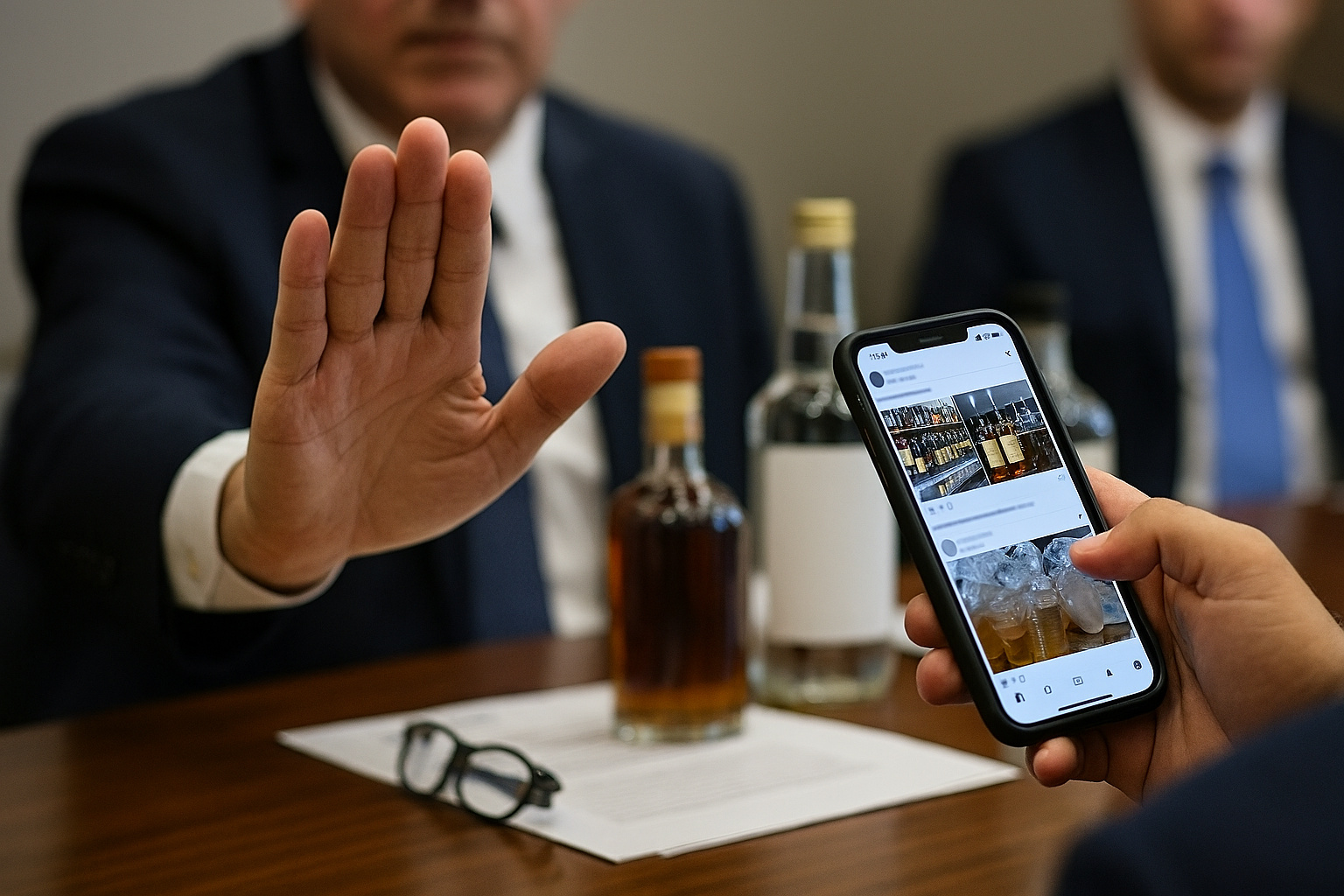
Action by the Attorney General’s Office Requires Company to Remove Ads for Ingredients Used in Counterfeit Beverages and Preserve Evidence for Investigation
The Attorney General’s Office (AGU) notified Meta, owner of Facebook and Instagram, on October 5, 2025, demanding the immediate removal of posts about counterfeiting of alcoholic beverages. Therefore, the company must prove within 48 hours the measures taken and submit detailed reports to the authorities.
According to the AGU, active profiles on the platforms offered seals, labels, caps, and bottles of well-known brands, as well as forged seals from the Federal Revenue Service. These materials were sold in large volumes by groups with thousands of participants, spread across the country.
Moreover, the products were used to produce adulterated beverages with methanol, a highly toxic substance and extremely dangerous to human health. The Ministry of Health highlighted that methanol causes blindness, seizures, neurological damage, and even death.
-
They seemed like common bones, but scientists were surprised to find a relic over 12,000 years old that dates back to before the Bronze Age.

-
With an almost perfect ring of 70 km visible from space, known as the “Eye of Quebec” and over 100 km in length, the Manicouagan Crater in Canada reveals the colossal mark left by a giant asteroid and has become one of the most impressive formations ever identified on the Earth’s surface.

-
Scientists have found in China dinosaur embryos dating back 190 million years in various stages of development, and the discovery still preserves traces of extremely rare proteins in the bones, something that could change what is known about life before hatching.

-
The CEO of Honor in Spain says that smartphones will change with AI, foldables, and even robot phones; the component crisis is making cheap models more expensive in 2026 and shifting the focus to premium.

BBC Report Exposes Illegal Trade and Provokes Government Reaction
The notification came after a report by BBC News Brazil, published on October 3, 2025, revealed an illegal market for ingredients operating within Meta’s platforms. Consequently, the government reacted swiftly, demanding immediate action from the company.
According to data from the Ministry of Health, 14 people were poisoned by methanol and two died by October 4, 2025. In addition, 181 suspected cases are still under analysis, demonstrating the severity of the situation.
The AGU stated that Meta needs to cooperate fully with Brazilian authorities. Therefore, the company must identify those responsible and prevent the continuation of illegal practices on its platforms.
AGU Invokes the Internet Civil Framework and the Penal Code
Based on the Internet Civil Framework (Law No. 12.965/2014) and the Brazilian Penal Code, the AGU reinforced that Meta is jointly responsible for illicit content. Thus, the company must act whenever it is notified to avoid legal penalties.
If Meta fails to meet the 48-hour deadline, it may face civil, administrative, and criminal liabilities. Additionally, the AGU ordered the preservation of all digital evidence, which will be sent to the Federal Police and the Federal Public Ministry (MPF).
In a statement, the AGU declared that “digital platforms cannot remain silent in the face of the dissemination of illegal practices”. Therefore, experts in digital law, such as Patrícia Peck and Danilo Doneda, advocate for constant oversight and proportional punishment in cases of omission.
Government Intensifies Monitoring of Digital Platforms
The incident occurs at a time of tightening the rules on digital responsibility. In September 2025, the Supreme Federal Court (STF) affirmed decisions that require platforms to act swiftly in the face of content that threatens public health.
Moreover, the Ministry of Justice and Public Security, through the National Consumer Secretariat (Senacon), reported that it is monitoring the case. If Meta fails to comply with the notification, it may face administrative sanctions and legal repercussions.
The report by BBC News Brazil also revealed that the ingredients are sold by anonymous reseller networks, making traceability difficult. However, the government considers the notification a decisive step to protect consumers and strengthen corporate accountability.
Timeline of Events
September 30, 2025 – The Ministry of Health issues an alert about the risk of methanol poisoning.
October 3, 2025 – BBC News Brazil reveals illegal trade of ingredients on Meta’s platforms.
October 4, 2025 – Health confirms 14 cases and two deaths from counterfeit beverages.
October 5, 2025 – AGU notifies Meta and gives 48 hours for action and official response.
October 7, 2025 – Deadline for Meta to present evidence and reports to AGU ends.
So far, the company has not publicly commented. Therefore, if it fails to meet the deadline, it may be legally prosecuted and face severe sanctions provided by law.
Sector Reaction and Consumer Defense
The Brazilian Institute of Consumer Defense (Idec) praised the action of the AGU, advocating for greater vigilance over digital platforms. Furthermore, experts state that the case serves as a wake-up call on corporate omission and reinforces the importance of responsible digital oversight.
According to attorney Walter Capanema, the decision shows that “the era of digital impunity is coming to an end”. Thus, the Brazilian government is adopting firmer standards for technological accountability.
The Future of Digital Regulation
As investigations progress, the government expects that technology companies enhance their moderation policies. Thus, Meta’s case may set new standards for digital accountability and serve as a global reference.
Meanwhile, authorities emphasize the importance of a balanced digital environment, where freedom of expression and legal duty go hand in hand. Consequently, this episode marks a turning point in the relationship between large technology companies and the Brazilian State.
The discussion is just beginning. The challenge will be to ensure a free, safe, and responsible internet, without giving room for criminal practices or risks to public health.
What do you believe should be a priority for digital platforms: strict moderation and full transparency or freedom of expression without direct interference?






Seja o primeiro a reagir!