





 Portuguese
  English
  Spanish
  6 min of reading
  1 comment





Reduce Water Waste with a Homemade Reuse System! Learn How to Use Rainwater Sustainably and Save on Your Bill
Imagine reducing your water bill by half just by taking advantage of something that falls for free from the sky. In Brazil, where we waste the equivalent of 7,636 Olympic swimming pools of treated water daily, according to the Trata Brasil Institute, adopting a rainwater reuse system is more than a sustainable choice; it’s an urgent necessity. With the new Law No. 14,546, enacted in 2022, the Brazilian government reinforces the importance of reusing rainwater and gray water in new constructions and agricultural, industrial, and landscaping activities. But the good news? You don’t need to wait for a law to force you. With simple and accessible systems, anyone can turn rainwater into savings and environmental awareness. We’ll show you how!
Why Invest in Rainwater Harvesting?
In Brazil, water waste is a glaring problem. Data from the Trata Brasil Institute indicates that 7 billion m³ of treated water goes down the drain daily during distribution. Inside the home, the scenario is not much different: we use potable water to wash cars, water plants, or clean yards, when rain could do that work. “Rainwater harvesting is a practical and accessible solution to reduce treated water consumption and relieve pressure on public systems,” explains Bárbara Gomes, an architect for a network of construction material stores.
Additionally, the National Water Agency (ANA) highlights that reuse systems help face increasingly common drought periods due to climate change. With a relatively low initial investment, it is possible to collect, store, and use rainwater for tasks that do not require potable water, such as cleaning and irrigation. And the best part? Savings on the water bill can reach 50%, according to experts.
-
The village where two rivers run side by side without mixing in Santarém and Alter do Chão reveals some of the most beautiful freshwater beaches on the planet.

-
Brazil’s nuclear submarine with a speed 5 times greater than normal advances after nearly 50 years and R$ 40 billion spent.

-
A Brazilian island charges R$ 0.50 to receive visitors and prohibits any new residents.

-
Why was the Great Wall of China built? The truth that many are unaware of!



Simple Systems: Technology and Investment Within Reach of Everyone
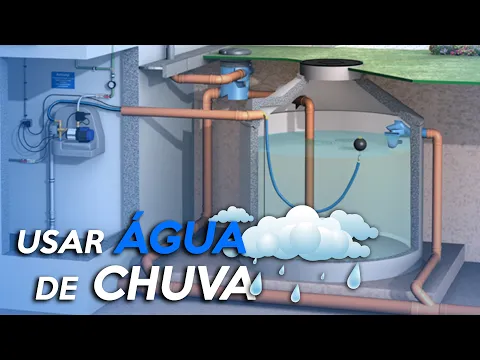
You don’t need to be an engineer to set up a reuse system. For those living in houses, the technology can be as simple as installing gutters on the roof, connecting PVC pipes, and directing the water to a reservoir. Bárbara Gomes explains: “With gutters, a few meters of pipes, a reservoir, and a hose, you can already collect water for immediate uses, such as washing the car or watering the garden.” A basic kit, like the 240-liter Mini Cistern with filters, two meters of 200 mm PVC pipes, and a 15-meter elastic hose, costs around R$ 557, according to the architect’s survey. If your house doesn’t have gutters yet, that’s an extra cost, but it’s worth the investment.
For those wanting to go further, more elaborate systems include underground cisterns, pumps, and advanced filters. These systems allow for longer storage of water and its use in activities such as laundry or toilet flushing, as long as it is properly treated. “Recycling technology is becoming increasingly accessible. Today, even small polyethylene or fiberglass reservoirs are durable and easy to install,” says João Silva, an environmental engineer from the Federal University of São Paulo (Unifesp).
The Right Materials for a Sustainable System
Choosing the right materials is the key to an efficient and long-lasting system. Here’s the checklist of the best items, according to Bárbara Gomes:
- Roof: Opt for ceramic, concrete, metal (galvanized steel or aluminum), or fiber cement tiles. These materials are durable, do not release toxic substances, and facilitate clean water capture. Fiber cement, for example, is lightweight and repels debris, simplifying filtration.
- Gutters: Prefer PVC, aluminum, or galvanized steel. They resist corrosion and are easy to clean. Avoid materials like untreated iron, which rusts quickly.
- Piping: PVC or high-density polyethylene (HDPE) pipes are ideal for their resistance and ease of installation.
- Reservoirs: Reinforced concrete, polyethylene, or fiberglass are safe choices, as they do not rust and have high durability.
- Filters: Use screens or grates at the reservoir’s entrance to block leaves and debris. Sand, activated carbon, membrane, or even ultraviolet (UV) filters ensure cleaner water for prolonged uses.
- Pumps: Choose submersible or centrifugal pumps made of stainless steel or durable plastic, with sealed motors to prevent infiltration.
Want a practical example? Tigre, one of the largest manufacturers of construction materials in Brazil, offers gutters and PVC pipes that are perfect for these systems, with affordable prices and simple installation.
Care to Keep the Water Clean
Reusing rainwater is sustainable, but it requires attention to avoid contamination. “Rainwater is naturally clean, but it can carry dirt from the roof or gutters,” warns Bárbara. To ensure quality, follow these tips:
- Install filters: Screens at the reservoir entrance remove leaves and debris. More advanced filters, such as activated carbon filters, eliminate smaller impurities.
- Perform regular maintenance: Periodically clean gutters and reservoirs to avoid dirt buildup.
- Treat the water: For more demanding uses, like laundry, use chlorine or UV radiation systems. According to Sabesp, simple treatments can make the water safe for various purposes.
- Protect the reservoir: A well-sealed lid prevents insects and rodents from entering.
- Monitor quality: Periodic testing, such as those recommended by the World Health Organization (WHO), ensures that the water is suitable for its intended use.
- Take care of the roof: Keep the surface clean and in good condition to avoid contaminated water capture.
Benefits That Go Beyond Savings
Beyond reducing the water bill, investing in a reuse system helps the environment. “We are seeing longer and more severe droughts. Harvesting rainwater alleviates the demand for water resources and reduces the burden on reservoirs,” explains Ana Ribeiro, a hydrologist at Embrapa. In 2024, Brazil faced historic droughts in regions like the Southeast and Northeast, which reinforces the importance of solutions like this.
Technology is also an ally in rural areas. According to the National Confederation of Agriculture (CNA), farmers who adopt cisterns for irrigation can maintain production even during drought periods. For urban families, the financial savings are an immediate attraction. “With a well-planned system, the reduction in the water bill can be significant, especially in homes with large yards,” says Bárbara.
Do It Yourself: Investment Is Easier Than It Seems
Setting up a basic system doesn’t require an engineering degree. With gutters on the roof, PVC pipes, and a reservoir, you can start right away. “It’s like putting together a puzzle: the pieces are simple, and the result is rewarding,” jokes João Silva from Unifesp. For those wanting something more robust, it’s worth hiring a professional to install underground cisterns or pumps, but the initial investment is still affordable.
Want a step-by-step? Start by checking if your roof is clean and in good condition. Install gutters that direct water to a reservoir with a filter. Connect a hose or pump to use the water where needed. Websites like Tigre offer detailed guides for installing gutters and pipes.
Join the Sustainable Water Revolution
Reusing rainwater is more than just a trend; it’s an attitude that combines investment, sustainability, and responsibility. With accessible materials and a little planning, anyone can transform rain into an ally. “It’s a change that starts at home but impacts the planet,” summarizes Ana Ribeiro.
So, have you thought about capturing the water that falls in your yard? Share your thoughts on these tips in the comments or share the article with someone who needs this idea! Your story can inspire others to adopt this sustainable practice.








Existe desde 2007 a norma ABNT 15.527 (atualizada em 2019) que dá regras para aproveitar a água de cchuva. Além disso, muitas cidades já tem leis que pedem a retenção da chava para que o que sai do lote não aumenta o volume que causa enchentes nas ruas.