





 Portuguese
  English
  Spanish
  5 min of reading
  0 comments


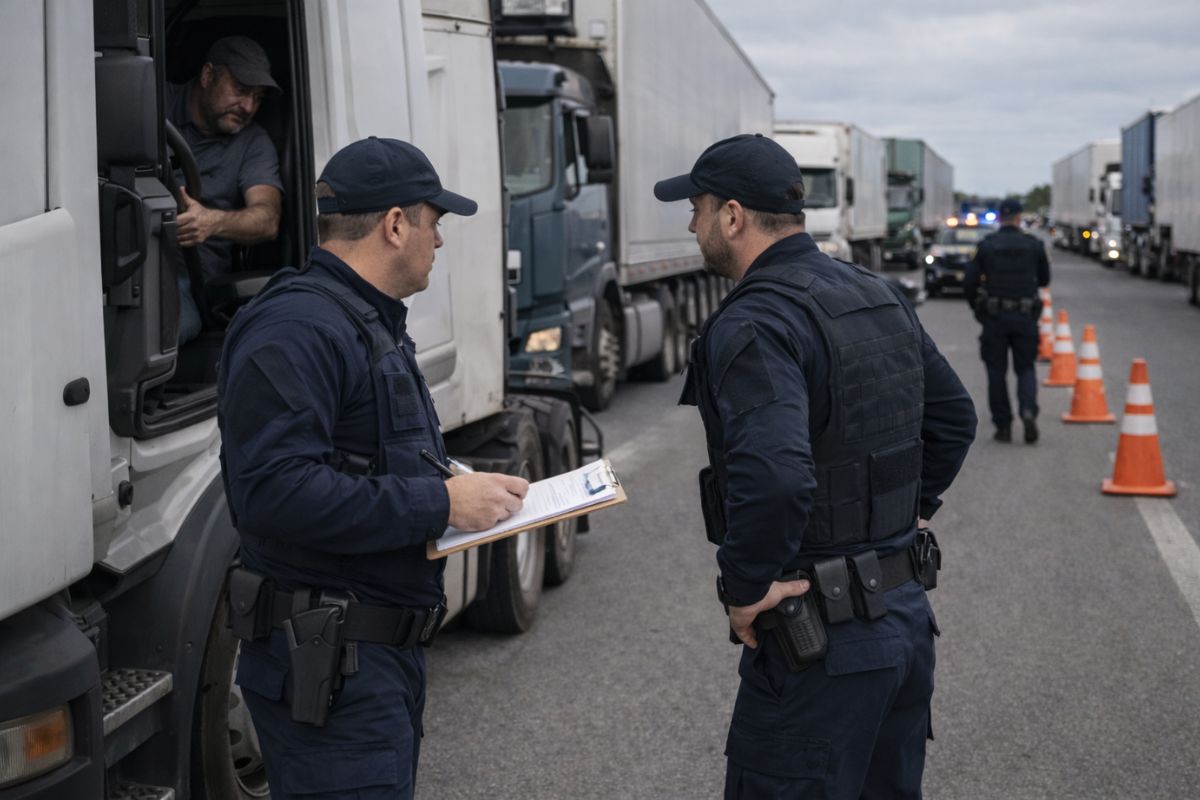
The US government has determined that all truck drivers and bus drivers must take commercial driver license tests exclusively in English, ending the practice of several states that offered tests in other languages while almost 500 drivers have already been disqualified for not being able to communicate.
From now on, all truck drivers and bus drivers who wish to obtain a commercial driver’s license in the United States will have to take the tests in English. Transportation Secretary Sean Duffy announced the measure as part of a campaign to improve safety in the sector and remove from the highways drivers who do not meet federal language proficiency requirements. The requirement includes the ability to read traffic signs and communicate with police during stops or traffic inspections.
The decision alters a practice that existed in several American states. Until now, many states allowed truck drivers and bus drivers to take the licensing tests in other languages, even though proof of English proficiency was required. California, for example, offered tests in 20 different languages. A recent federal inspection, which involved 8,215 checks, resulted in the disqualification of almost 500 drivers due to difficulties with English, and California, which initially resisted the measure, ended up preventing more than 600 drivers from continuing to drive on the highways.
What motivated the requirement for English for truck drivers and bus drivers

According to FOX, the measure did not come out of nowhere. A series of fatal accidents involving commercial drivers who did not master English accelerated the decision of the Department of Transportation. In August, a truck driver who, according to Duffy, was not authorized to be in the United States made a prohibited turn in Florida and caused an accident that resulted in the loss of three lives.
-
Buying a car may suspend Bolsa Família in 2026 and trigger automatic government oversight.

-
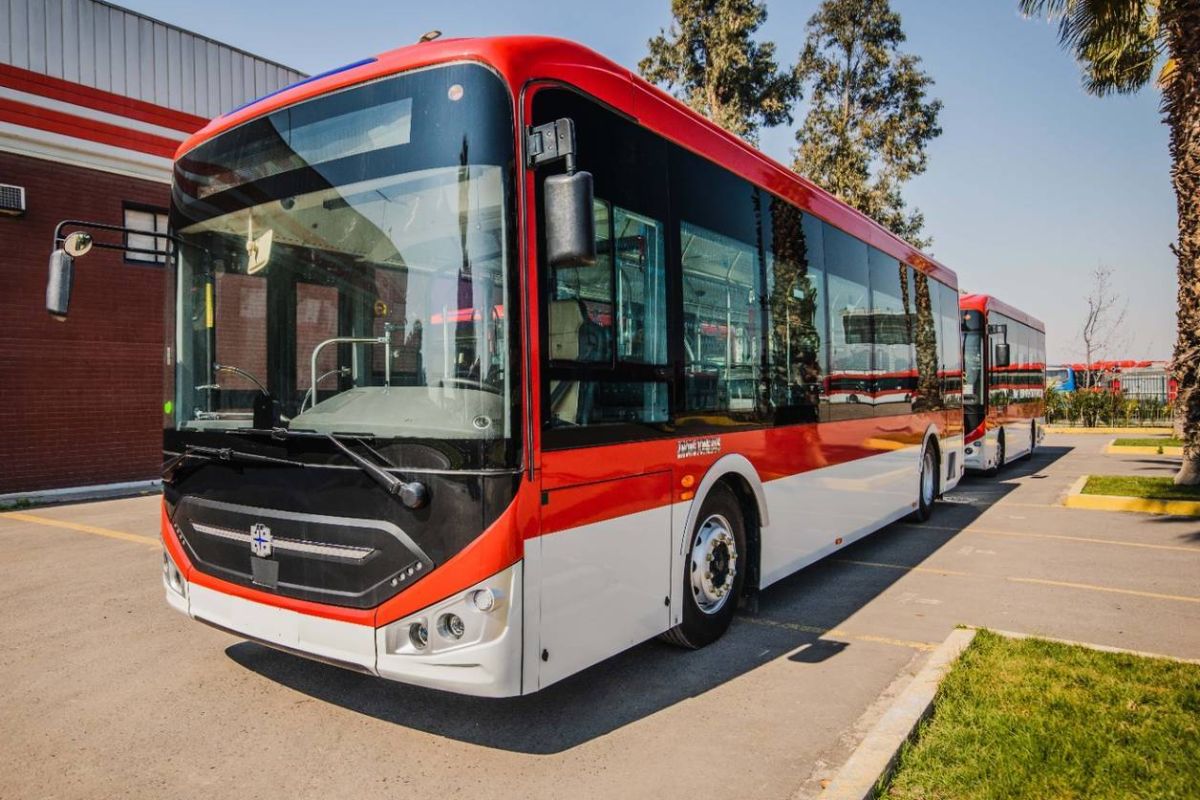
Chile reaches 4,088 electric buses and puts 62% of the fleet in zero emissions; Santiago already has the largest fleet of e-buses outside of China, with a decrease in PM2.5, less noise, and 60 million liters of diesel saved.
-
Coca-Cola with less water: groundbreaking technology comes to life with the help of BNDES with an investment of R$ 102 million in a factory that promises to reduce water usage by 10%, energy consumption by 15%, and costs by 35.5%.

-
The president of Colombia defended Brazil’s Pix, publicly requested that the system be brought to his country, and criticized the United States for using financial sanctions as a tool for political control in the world.

Another accident in Indiana earlier this year involved a truck driver from Kyrgyzstan who attempted to overtake a vehicle and collided with a van in the opposite lane, hitting four members of an Amish community.
Secretary Duffy stated that problems in the trucking sector have been “allowed to worsen for decades” without anyone paying attention. The requirement for truck drivers and bus drivers to demonstrate mastery of English during licensing tests is a direct response to these incidents.
“When you start paying attention, you realize that all these bad things have been happening. And the consequence of this is that Americans get hurt,” he stated in an official statement.
How the new rule works in practice for truck drivers and bus drivers
Florida has already begun to apply the tests exclusively in English, and the expectation is that all other states will follow suit. Truck drivers and bus drivers who cannot communicate effectively during stops or traffic inspections may be immediately prohibited from driving.
The verification of language skills will now be part of the inspection routine, and not just the licensing process.
Duffy also revealed that several states had hired third-party companies to administer commercial driver license tests, and that these companies were not applying the required standards for drivers to demonstrate driving skills and mastery of English.
The new federal guideline closes this loophole by requiring that tests be conducted exclusively in the official language, ensuring that all truck drivers and bus drivers meet the same requirements before taking the wheel of vehicles that can weigh over 36 tons.
The closure of 557 driving schools and the issue of ghost companies
The measures against truck drivers and bus drivers who do not meet the standards are part of a broader campaign. A few days before the announcement about English, the Department of Transportation closed 557 driving schools for not meeting basic safety requirements.
In December 2025, the Federal Motor Carrier Safety Administration (FMCSA) had already taken steps to decertify up to 7,500 of the 16,000 schools across the country.
One of the most serious problems in the sector is the existence of so-called “chameleon carriers.” These fraudulent companies register under different names, and when they receive closure orders due to accidents or violations, they simply change their name and registration number to continue operating.
Currently, it is enough to pay $300 and present proof of insurance to register a transportation company, and the first audit can take more than a year. Duffy revealed that the companies involved in the Indiana accident were all registered at the same apartment.
The reaction of the trucking industry in the United States
The American Trucking Associations, the main trade association in the sector, supports the enforcement measures. Dan Horvath, the association’s operations director, stated that the problem of fraudulent companies is longstanding and that over the years there has been a lack of effective oversight of trucking companies.
According to him, only a small fraction of transportation companies undergo a complete review with an on-site inspection, which facilitates the operation of operators who do not meet the standards.
The tightening of rules for truck drivers and bus drivers includes more random checks, on-site audits at driving schools and transportation companies, and verification of the electronic logging devices used by drivers to track working hours.
The system for registering new transportation companies will also be strengthened to make it more difficult for chameleon carriers to operate. The FMCSA promises to increase the frequency of inspections and toughen the consequences for those who do not comply with the regulations.
What changes in the daily life of American highways with the new requirement
For those driving on the roads of the United States, the promise is for more safety. The requirement that truck drivers and bus drivers take tests in English and demonstrate effective communication during inspections creates an additional layer of verification that did not exist uniformly across all states.
The goal is to ensure that those driving heavy vehicles can read signs, understand emergency signals, and communicate with authorities in critical situations.
Duffy summarized the government’s position directly: “When we take to the road, we should expect to be safe. And that those who drive these 36-ton trucks are well-trained, well-qualified, and drive safely.”
The enforcement campaign is just beginning, and the expectation is that new measures will continue to be announced as the results of inspections reveal more problems accumulated over the past decades in the American trucking industry.
What do you think about the requirement for truck drivers and bus drivers to take licensing tests in English in the United States? Do you believe that safety improves with this measure or that it may exclude qualified professionals who speak other languages? Leave your comments. This debate about safety, immigration, and transportation is stirring opinions on both sides.










Seja o primeiro a reagir!